O-Level / SEC

The GCE O-Level is Singapore's national examination for secondary students, transitioning to the new Singapore-Cambridge Secondary Education Certificate (SEC) from 2027 under Full Subject-Based Banding. Our 64+ articles cover subject strategies, the O-Level to SEC transition, and revision techniques across all key subjects.

Content verified Q2 2026· Based on current MOE/SEAB syllabus

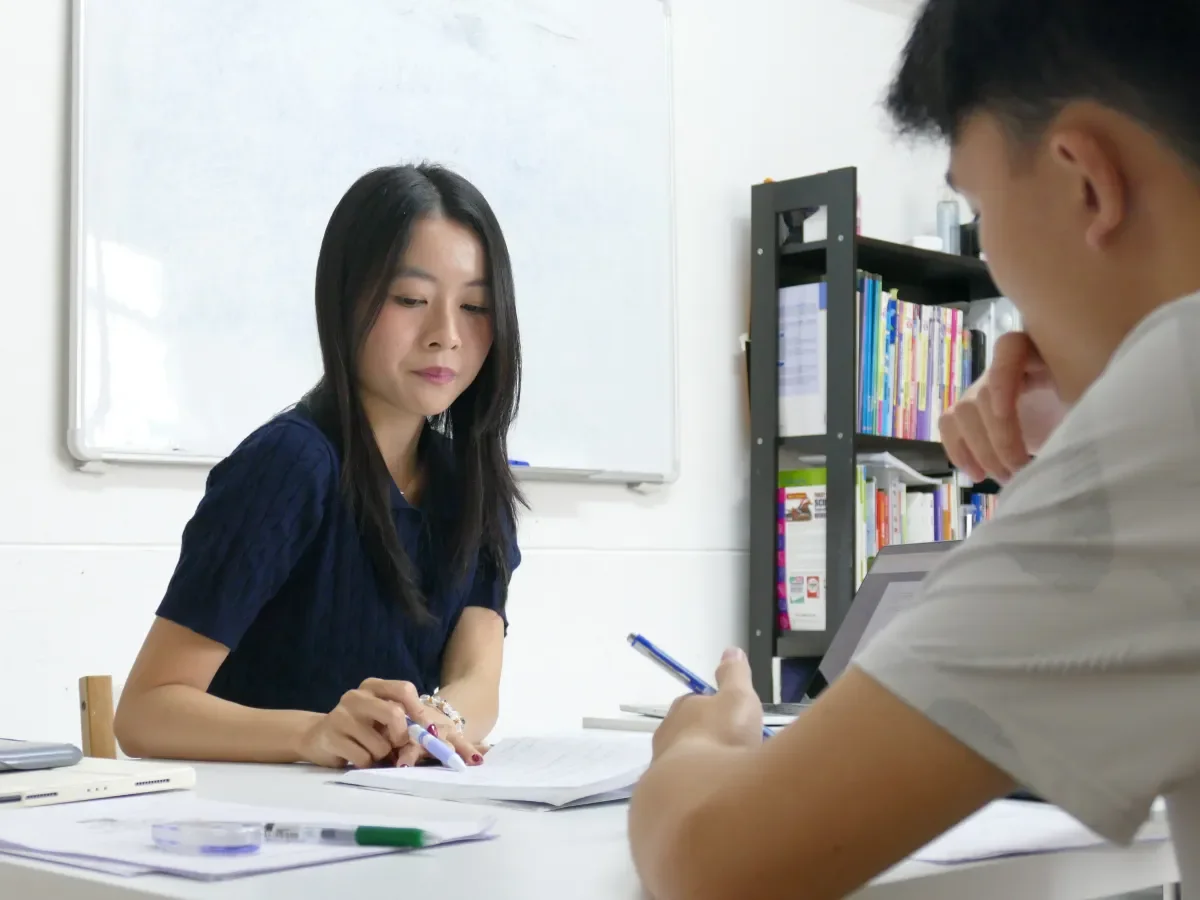
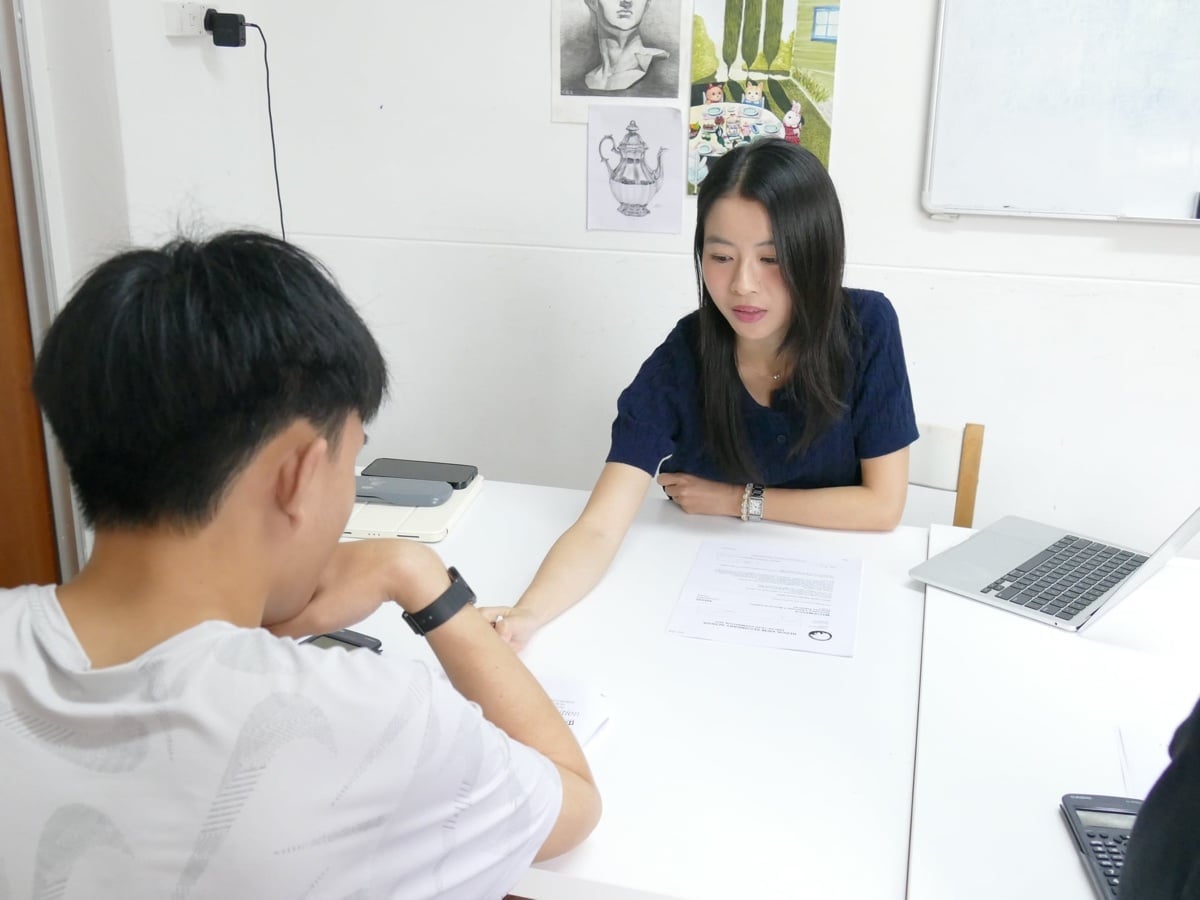
What I tell my Secondary students is this: the O-Level to SEC transition changes the exam framework, not the Mathematics or the Science. If you can solve a quadratic equation and explain why each step works, that skill transfers regardless of the assessment label. Focus on understanding, and the format takes care of itself.

Gabriel Wong — educator at Ancourage Academy
Gabriel Wong

Economics & Mathematics Educator, Ancourage Academy

NTU Economics · O-Level Specialist

5from 69 Google Reviews
MOE-Registered Centre
11+ Years Experience
Bishan & Woodlands
O-Level / SEC key statistics
MetricValue
Articles in this hub(Ancourage Academy content library)64+
SEC transition year(MOE Full Subject-Based Banding timeline)2027
Subject levels under Full SBB(MOE Full SBB framework)G1, G2, G3

About O-Level / SEC

The GCE O-Level has been the cornerstone of Singapore's secondary education assessment for decades. With the introduction of Full Subject-Based Banding (Full SBB), the O-Level will transition to the Singapore-Cambridge Secondary Education Certificate (SEC) starting in 2027, unifying the current N-Level and O-Level tracks into a single national examination.

Under Full SBB, students take subjects at G1, G2, or G3 levels based on their ability in each subject, rather than being placed in a fixed stream. The SEC examination will reflect this flexibility, with papers set at different G-levels.

  • Subject mastery: Our 64+ articles cover Mathematics (E-Maths and A-Maths), English, Science (Pure and Combined), and Chinese — with topic-specific breakdowns and worked examples.
  • Exam technique: Time management, question interpretation, and answering strategies differ significantly between subjects. Each article addresses these nuances.
  • Transition readiness: For students sitting the O-Level now and those who will sit the SEC, the core content knowledge remains largely the same — what changes is the assessment framework.

This hub brings together our most practical resources for secondary students preparing for national examinations, whether you are revising for the current O-Level or preparing for the SEC ahead.

What changes in 2027 with SEC

The Singapore-Cambridge Secondary Education Certificate (SEC) replaces the GCE O-Level and N-Level from 2027, unifying the current Express, N(A), and N(T) streams into G1, G2, and G3 subject levels under Full SBB. Subject content remains broadly similar; the certification framework and progression pathways into JC/polytechnic/ITE are what change. Subject codes shift from Cambridge syllabus codes to the K-series (e.g., K300 English, K310 E-Maths, K341 A-Maths). Students currently in Sec 4 (the 2023 Secondary 1 intake) sit the existing GCE O-Level in 2026; the 2024 Secondary 1 intake — currently in Sec 3 — is the first cohort to sit SEC fully in 2027. Specifics on JC posting equivalence, polytechnic admission scoring, and university prerequisites remain under MOE/SEAB review. The full guide covers transition timelines, K-code mappings, and what families should plan for now versus later.

For the full guide → SEC exam 2027 — Singapore's new national examination

How G1, G2, G3 levels work

Under Full Subject-Based Banding, secondary students take each subject at G1 (foundational), G2 (standard), or G3 (more demanding) level — based on PSLE performance and subject-specific aptitude. Most students take a mix of G2 and G3 subjects. The level affects pacing, content depth, and the final SEC paper version. A student strong in Mathematics but developing in Mother Tongue can take Maths at G3 and Chinese at G2 — flexibility the previous fixed-stream system did not allow. Subject offerings re-evaluate at the end of Sec 2 and Sec 3, so students can move between G-levels as ability changes; specifics on G-level mobility rules remain under MOE/SEAB review for the SEC cohort. The full guide covers the PSLE-to-G-level mapping, how schools handle level-up applications, the impact on JC eligibility, and which subjects most students choose at G3 to preserve university pathways.

For the full guide → O-Level preparation guide for Singapore students
O-Level vs SEC — what changes from 2027
AspectO-Level (until 2026)SEC (from 2027)
Streams / BandsExpress / N(A) / N(T)G1 / G2 / G3 under Full SBB
Subject codesCambridge syllabus codesK-series (e.g., K300 English, K310 E-Maths)
CertificationSingapore-Cambridge GCE O-LevelSingapore-Cambridge Secondary Education Certificate
Pathway to JCL1R5 scoreEquivalent G3 score (specifics under MOE review)

5 highest-leverage SEC subjects to prepare early

  1. A-Maths (G3) — gateway for H2 Mathematics at JC
  2. Pure Chemistry (G3) — required for Medicine, Engineering university pathways
  3. English (G2/G3) — universal prerequisite; high-impact summary writing technique
  4. Pure Biology (G3) — Medicine and Life Sciences pathway
  5. Higher Chinese (G3) — bonus points for S1 posting + early MT requirement fulfilment

Articles

Essential Guides (8 articles)

Mathematics (17 articles)

English (9 articles)

Science (9 articles)

Chinese (13 articles)

Art (2 articles)

A-Maths (1 article)

General O-Level (18 articles)

Related Topics

Frequently Asked Questions