
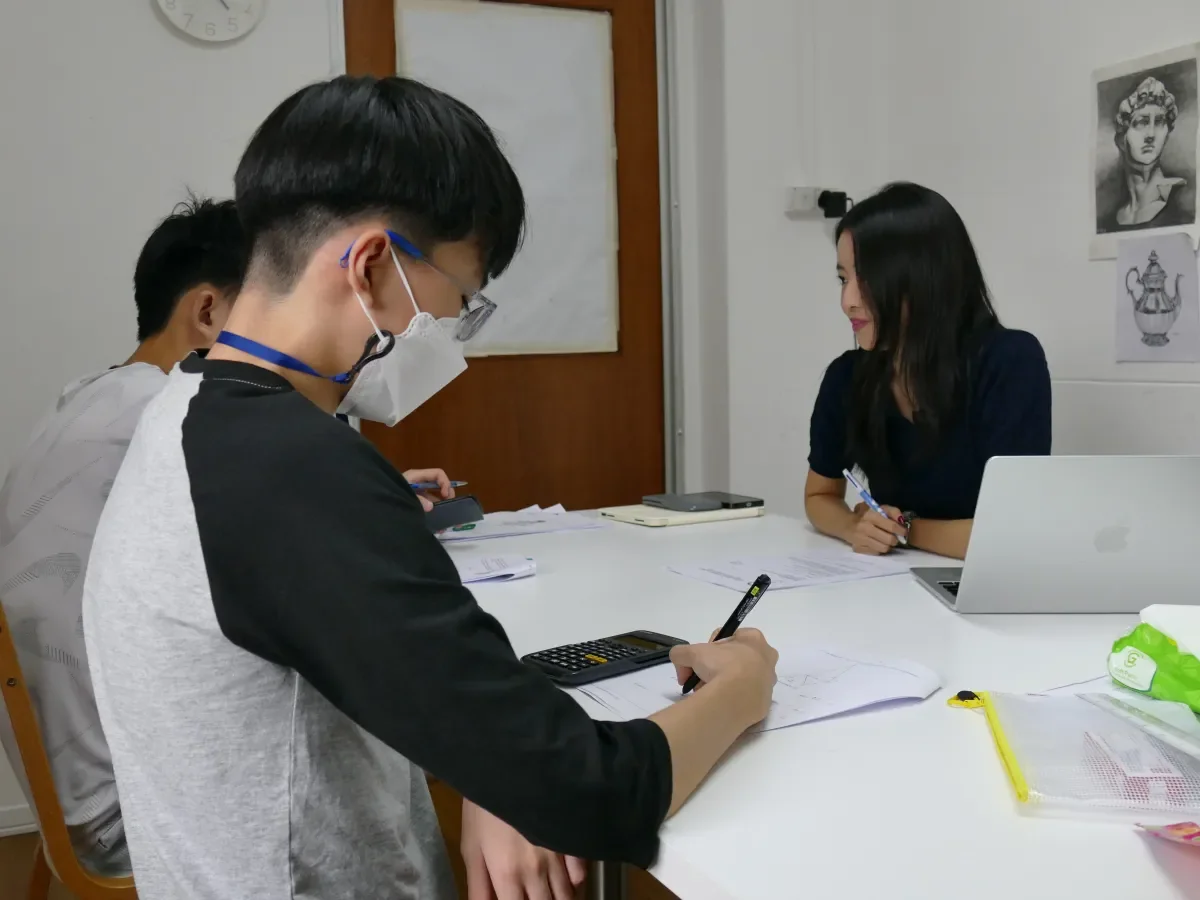
Bishan is one of a handful of districts where a SAP secondary school — Catholic High — sits within walking distance of an MRT station, and that SAP environment creates both distinct advantages and overlooked blind spots for O-Level Chinese preparation. Students at Catholic High, Kuo Chuan Presbyterian, Raffles Institution, and Whitley Secondary each face different Chinese examination challenges depending on their school's language culture and home environment. This guide is by Ancourage Academy, whose Bishan centre supports students from local secondary schools through O-Level / SEC Chinese (K320).
With years of teaching experience working with students from these Bishan schools, Ancourage Academy's educators have observed that SAP and non-SAP students need fundamentally different preparation strategies — and that strong daily Chinese ability does not automatically translate to top O-Level grades.
The O-Level Chinese Language examination (syllabus 1160) totals 200 marks across three papers — Writing, Comprehension, and Oral/Listening. For a complete breakdown of the exam structure, mark allocations, and paper-by-paper format, see the O-Level Chinese preparation guide. This article focuses on strategies specific to Bishan schools.
Important transition note: From 2027, the SEC examination replaces O-Levels as Singapore's national examination. The Chinese Language syllabus content and paper structure remain equivalent under the new SEC framework, so all preparation strategies in this guide continue to apply.
The SAP School Chinese Advantage — And Its Hidden Risk
Catholic High's SAP environment provides daily Chinese immersion that non-SAP students simply cannot replicate — but this fluency creates a complacency trap where students plateau at B3-B4 because their natural ability masks gaps in examination technique.
Ancourage Academy's Secondary Chinese programme helps students from these schools in small groups of 3–6 at our Bishan centre — book a trial class (usually $18) for a diagnostic assessment.
The advantage is real: Catholic High students attend assemblies in Mandarin, participate in cultural activities conducted entirely in Chinese, and encounter 文言文 (classical Chinese) from Secondary 1 through the school's bilingual programme. This immersion builds spoken fluency and reading comfort that takes non-SAP students years of deliberate effort to develop.
The hidden risk is equally real. SAP students who score comfortably in school Chinese tests often assume their daily fluency will carry them through the O-Level. In practice, Ancourage Academy tutors observe three specific ways this assumption fails:
- 口语 infiltration in essays: Daily Mandarin conversation builds fluency in spoken register, but O-Level essays require formal written register (书面语). SAP students frequently write the way they speak — producing essays that sound natural but lack the formal precision markers need to award top marks. The shift from conversational to academic Chinese is harder for SAP students to detect precisely because they feel comfortable writing in Chinese.
- Vocabulary breadth without depth: SAP students develop broad recognition vocabulary through immersion but may not command the specific literary and formal expressions (成语, 修辞手法) that distinguish A1-A2 essays from B3-B4 work. They know enough to communicate clearly but not enough to write with the sophistication the marking scheme rewards.
- Weaker Paper 2 inference skills: The HCL curriculum at Catholic High emphasises literature appreciation and classical Chinese, which develops different analytical muscles from the inference and synthesis questions on the standard O-Level Paper 2. Students trained in literary analysis may approach comprehension passages too literally.
Which Secondary Schools Near Bishan Offer Strong Chinese Programmes?
Bishan and the surrounding District 20 area is home to several secondary schools with strong Chinese language programmes, including one SAP school that provides an immersive bilingual environment.
The table below lists secondary schools near Bishan MRT that Ancourage Academy students commonly attend:
| School | Type | Chinese Programme Highlights | Approx. Distance from Bishan MRT |
|---|---|---|---|
| Catholic High School | SAP School (Boys) | Higher Chinese or Chinese Language, with most of the cohort taking Higher Chinese; immersive bilingual culture; strong 文言文 and essay writing tradition | ~0.7 km |
| Kuo Chuan Presbyterian Secondary | Government-Aided (Co-ed) | Higher Chinese offered for qualified students; structured Chinese enrichment activities | ~0.6 km |
| Raffles Institution | Independent (Boys, IP) | Higher Chinese and Chinese Literature; bilingual programme for selected students; IP pathway | ~0.9 km |
| Whitley Secondary School | Government (Co-ed) | Standard Chinese and Higher Chinese; supportive environment for Mother Tongue development | ~1.0 km |
Catholic High School is the only SAP secondary school in the immediate Bishan vicinity; Ai Tong and Pei Chun are the SAP primary schools nearby. As a Special Assistance Plan school, its students take Higher Chinese or Chinese Language, and most of the cohort sits Higher Chinese. The school's bilingual culture means students are immersed in Chinese through assembly talks, cultural activities, and co-curricular activities conducted in Mandarin. Catholic High students typically have strong Chinese foundations but still need examination-specific strategies to convert language ability into top O-Level grades.
Kuo Chuan Presbyterian Secondary School, located about 600 metres from Bishan MRT, offers Higher Chinese for students who meet the criteria. The school provides a balanced approach to Mother Tongue, with structured enrichment activities that complement the formal curriculum. Students here benefit from the school's proximity to Ancourage Academy's Bishan centre, making after-school tuition sessions convenient.
Raffles Institution follows the Integrated Programme (IP) track, meaning students do not sit the O-Level examination. However, RI students taking Higher Chinese still sit the O-Level / SEC Higher Chinese paper at the end of Year 4 — not for Joint Admissions Exercise (JAE) bonus points (IP students continue to their affiliated junior college without going through JAE posting), but to fulfil the Mother Tongue requirement and earn the H1 Mother Tongue exemption (D7 or better in HCL) for their A-Level years. RI students often have strong academic profiles but may need dedicated Chinese support if their home environment is primarily English-speaking.
Whitley Secondary School provides a supportive environment for Chinese language development. Students here may take either standard Chinese Language or Higher Chinese, depending on their proficiency level. The school's focus on holistic development means Chinese language support through tuition can help students who need more targeted examination preparation than classroom time allows.
Where Do SAP and Non-SAP Students Diverge?
The Bishan district's mix of SAP and non-SAP schools creates two distinct student profiles, each requiring different Chinese examination strategies.
SAP students (Catholic High)
Catholic High students typically arrive with strong spoken fluency and broad reading comfort — their challenge is converting this natural ability into examination precision. The most common pattern Ancourage Academy tutors see: a Catholic High student who speaks beautiful Mandarin, reads Chinese novels for pleasure, and still scores B3 on practice papers. The gap is almost always in written register and essay structure.
Specific SAP-student pitfalls include: relying on familiar vocabulary instead of stretching to literary expressions (成语, 修辞手法 such as 排比句 and 反问句), treating 议论文 as opinion-sharing rather than structured argumentation with thesis and counter-argument, and underestimating Paper 2 inference questions because their literary-analysis training at school develops different skills from what the standard O-Level comprehension demands.
Non-SAP students (Kuo Chuan Presbyterian, Whitley, Raffles Institution)
Students from Kuo Chuan Presbyterian and Whitley face different obstacles. Their home environments are more often English-dominant, which means formal Chinese vocabulary develops primarily through school lessons and tuition rather than daily immersion. These students need systematic vocabulary expansion, building from high-frequency words toward the wider reading vocabulary that O-Level / SEC comprehension passages assume. MOE publishes character targets for primary school only — 1,600-1,700 characters recognised by the end of P6 — and the secondary syllabus sets no character quota, so the practical benchmark is comfort with unseen passages rather than a word-count milestone.
Raffles Institution students on the IP track do not sit the full O-Level series but take the HCL O-Level paper at the end of Year 4 to fulfil the Mother Tongue requirement and earn the H1 Mother Tongue exemption (D7 or better in HCL) for their A-Level years — IP students continue to their affiliated junior college without the JAE bonus-point posting, so the exemption, not bonus points, is the goal. Their challenge is maintaining Chinese proficiency in an overwhelmingly English-medium school environment — consistent weekly Chinese tuition acts as an anchor preventing skill erosion.
From SAP Fluency to A1: The Refinement Strategy
For students who already command conversational Chinese — as most Catholic High students do — the path to A1 is about refinement and examination precision, not content acquisition.
Essay polishing for already-fluent writers
The goal for SAP students is 升华 (elevation): taking essays from competent to excellent. This means replacing comfortable vocabulary with sophisticated alternatives — not the basic register shifts that weaker students need, but the literary flourishes that push scores from B to A. Specifically: incorporating 成语 naturally rather than forcing them, using advanced connectors (不仅...而且, 即使...也, 与其...不如) instead of defaulting to 但是/可是/所以, and deploying rhetorical techniques like 排比句 (parallel structure) and 设问 (rhetorical questions) to strengthen argumentative essays.
Classical Chinese (文言文): a SAP enrichment advantage
Catholic High students encounter 文言文 from Secondary 1 — an advantage that non-SAP students rarely have. Classical Chinese is not a formally examined component of the Higher Chinese paper, but SAP students who absorb its vocabulary and allusions bring a depth to their modern Higher Chinese essays that examiners reward. The strategy is deliberate transfer: reading 古文观止 excerpts and identifying phrases that strengthen modern argumentative writing.
Oral depth through bilingual perspective
SAP students possess a unique oral examination asset: they can draw on both Chinese cultural knowledge and English-medium academic learning. During the video discussion component, students who reference Chinese literary concepts, cultural values, or historical examples alongside contemporary analysis demonstrate the intellectual depth examiners look for. Practise by discussing one bilingual topic weekly — take an English current affairs article and prepare a Mandarin response that incorporates a Chinese cultural perspective.
HCL Timing Strategy: The Two-Stage Sec 3 / Sec 4 Mother Tongue Sequence
For Catholic High students — most of whom take Higher Chinese — understanding the two-stage Mother Tongue timeline is a strategic advantage that shapes preparation from Secondary 1 onwards.
Catholic High, like most SAP schools, enters its Higher Chinese students for the standard Chinese (CL) O-Level paper at the end of Secondary 3 (arrangements are set by the school) — one year early — and the Higher Chinese (HCL) paper at the end of Secondary 4. Under SEAB's registration rules for school candidates, the Sec 3 sitting covers the standard Mother Tongue paper, and that Sec 3 grade does not count towards the Secondary 4 O-Level subject total — so it banks the Mother Tongue requirement early and lightens the Sec 4 load. A D7 or better in HCL later exempts the student from H1 Mother Tongue in junior college. The 2 bonus points (awarded when both English and HCL are graded A1-C6) are deducted from the gross L1R5 aggregate to give the net aggregate used for Joint Admissions Exercise (JAE) posting, and can make the decisive difference for a place at a competitive junior college.
The preparation timeline across the two-stage Sec 3 / Sec 4 Mother Tongue sequence:
- Sec 2 Term 4: Begin structured essay writing practice — one timed essay per week with tutor feedback. Identify and close vocabulary gaps between daily conversational Chinese and formal examination register.
- Sec 3 Terms 1-3: Intensive Chinese training across Paper 1 and Paper 2 ahead of the year-end standard Chinese paper, while building the wider Higher Chinese range needed for Sec 4; classical Chinese (文言文) runs alongside as enrichment. Build a personalised 好词好句 bank organised by the five core 议论文 topics (教育, 科技, 环境, 社会, 家庭), and work through past papers.
- End of Sec 3: Sit the standard Chinese (CL) O-Level paper at the year-end sitting if the school enters its Higher Chinese cohort early — most do, but arrangements are set by the school, so confirm with Catholic High. The grade is banked and does not count towards the Sec 4 O-Level subject total, securing the Mother Tongue requirement before the HCL year.
- Sec 4: Sit the Higher Chinese (HCL) O-Level paper. With standard Chinese already banked from Sec 3, Sec 4 Mother Tongue effort concentrates on HCL alone, and a D7 or better then exempts the student from H1 Mother Tongue in junior college. Watch time allocation across the examined papers, and keep classical-Chinese enrichment (文言文) from crowding out exam practice.
For non-SAP students at Kuo Chuan Presbyterian or Whitley considering HCL, the decision hinges on consistent performance: students scoring A1-B3 in school Chinese should seriously consider HCL for the bonus points. Those scoring B4-C6 may benefit from focusing on securing an A1-A2 in standard Chinese instead. See the Higher Chinese tuition guide for a detailed cost-benefit analysis.
Effective Chinese Practice Between Lessons
Consistent daily exposure matters more than marathon weekend revision sessions — students who integrate Chinese into their daily routine improve faster than those who only practise during tuition.
- Read Chinese news daily (10-15 minutes): 联合早报 opinion columns (社论) expose students to formal written register and argumentative structures. SAP students should focus on vocabulary they recognise in speech but would not use in essays. Non-SAP students should start with shorter news summaries before progressing to editorials
- Maintain a 好词好句 vocabulary notebook: Record useful phrases, 成语, and sentence patterns from reading. Organise by the five core 议论文 topics (教育, 科技, 环境, 社会, 家庭). Review the notebook before each essay practice session
- Write one timed paragraph daily: Pick a random essay prompt and write one body paragraph in 10 minutes. This builds fluency and formal register habits without the time commitment of a full essay. Review it the next day with fresh eyes
- Listen to Chinese podcasts or news broadcasts: This builds the listening comprehension component and helps students process formal spoken Chinese at exam speed
The key difference between students who plateau at B3 and those who reach A1 is usually not lesson quality — it is what happens between lessons. Students who practise daily, even briefly, make faster progress than those who only engage with Chinese during tuition sessions.
Why Choose Chinese Tuition Near Bishan MRT?
Location convenience directly affects tuition attendance consistency, and Bishan MRT's position at the intersection of the North-South and Circle Lines makes it one of the most accessible tuition locations for students from across central and northern Singapore.
Ancourage Academy's Bishan centre is situated at 152 Bishan Street 11, a short walk from Bishan MRT station. This location offers specific advantages for Chinese tuition students:
- After-school convenience: Students from Catholic High, Kuo Chuan Presbyterian, and Whitley Secondary can walk to the Bishan centre directly after school, minimising travel time and maximising productive study time.
- MRT accessibility: Students from further schools — including those from Ang Mo Kio, Toa Payoh, and Marymount areas — can reach Bishan within minutes via the North-South or Circle Line.
- Consistent attendance: Tuition that requires long commutes leads to irregular attendance, especially during examination periods when students feel time-pressed. A conveniently located centre removes this barrier.
- Safe neighbourhood: Bishan is a mature residential estate with well-lit walkways, making evening tuition sessions safe for students travelling independently.
Ancourage Academy's secondary Chinese tuition programme at Bishan operates in small groups of 3 to 6 students, allowing Ancourage Academy tutors to provide individualised feedback on essay writing, comprehension techniques, and oral skills. Ancourage Academy's Bishan tutors find that students from Catholic High and Kuo Chuan Presbyterian who attend regular weekly Chinese tuition sessions show the most consistent improvement, particularly in the writing and oral components where structured practice makes the greatest difference. Ancourage Academy aligns its teaching with school examination schedules, ensuring students are prepared for both school assessments and the O-Level examination.
"The biggest leap in O-Level Chinese scores comes from essay writing — once students replace spoken register with formal written Chinese and learn to plan before they write, the improvement is immediate and measurable."
— Ancourage Academy
For students preparing for Sec 3 Chinese or Sec 4 Chinese, Ancourage Academy's programme covers all three papers with emphasis on the high-value essay and oral components. Book a trial class (usually $18) to assess your child's current level and receive personalised recommendations, or WhatsApp us with any questions. For exam guides across every subject, browse the O-Level / SEC article hub.
Common Questions About Chinese at Bishan Secondary Schools
How does Catholic High's SAP curriculum prepare students for O-Level / SEC Chinese?
Catholic High's Higher Chinese programme — taken by most of the cohort — together with Mandarin-medium assemblies and 文言文 exposure from Sec 1 build spoken fluency and reading comfort that other schools cannot match. However, this SAP immersion develops daily communication skills rather than examination technique — students still need targeted practice on essay register, timed writing, and Paper 2 inference strategies to convert fluency into A1-A2 grades.
My child attends Catholic High — does he still need Chinese tuition?
Often yes, specifically for examination precision. Ancourage Academy tutors observe that Catholic High students frequently plateau at B3-B4 despite daily Chinese fluency. The gap is between comfortable communication and the formal 书面语 precision the O-Level marking scheme demands. Tuition for SAP students focuses on essay elevation (成语, advanced connectors, rhetorical techniques) and Paper 2 inference skills — a different approach from the foundational vocabulary building that non-SAP students need.
How do RI IP students handle the HCL O-Level / SEC?
Raffles Institution students on the IP track do not sit the full O-Level series but typically take the HCL O-Level paper at the end of Year 4 to fulfil the Mother Tongue requirement and earn the H1 Mother Tongue exemption (D7 or better in HCL) for their A-Level years — IP students continue to their affiliated junior college without the JAE bonus-point posting, so the exemption, not bonus points, is the goal. The challenge is maintaining Chinese proficiency in RI's overwhelmingly English-medium environment — students need weekly structured Chinese practice to prevent skill erosion. Ancourage Academy's Sec 3 Chinese programme includes HCL preparation tailored for IP students.
Is it worth taking Higher Chinese for the 2 JC bonus points?
For Catholic High students taking Higher Chinese, the question is execution rather than whether to take it — they sit standard Chinese at the end of Sec 3 and Higher Chinese at the end of Sec 4, and a strong HCL grade (D7 or better) then exempts them from H1 Mother Tongue in junior college. For Kuo Chuan Presbyterian and Whitley students, the decision depends on consistent performance: A1-B3 in school Chinese suggests HCL is worthwhile; B4-C6 students may gain more by securing an A1-A2 in standard Chinese. See the Higher Chinese guide for a full analysis.
How do SAP and non-SAP students differ in Chinese preparation needs?
SAP students (Catholic High) need refinement: essay register polishing, advanced vocabulary depth, and exam technique to convert fluency into top grades. Non-SAP students (Kuo Chuan Presbyterian, Whitley) need foundation-building: systematic vocabulary expansion beyond the end-of-P6 recognition target (1,600-1,700 characters) into the wider reading vocabulary secondary passages assume, listening comprehension development through structured audio exposure, and oral confidence building. Ancourage Academy groups Bishan students by proficiency level, not school, to match teaching approach to need.
What resources help SAP students reach A1 in HCL?
For students already comfortable with standard Chinese reading, the path to HCL A1 requires advanced materials: 古文观止 selections for classical-Chinese enrichment, 联合早报 opinion columns (社论) for argumentative essay models, advanced 议论文 model essay collections organised by topic, and past HCL papers from SEAB. This is a different resource list from the foundational materials (news articles, basic readers) that non-SAP students start with.
When should Catholic High students start HCL preparation?
By Secondary 2 Term 4 at the latest. Catholic High students sit the standard Chinese O-Level paper at the end of Sec 3 and the Higher Chinese paper at the end of Sec 4, so the runway spans Sec 2-4: Sec 2 Term 4 for essay register and vocabulary gap analysis, Sec 3 for intensive Paper 1/Paper 2 training and the year-end standard Chinese paper, and Sec 4 for argumentative-essay depth and oral practice before the HCL exam. Ancourage Academy's Sec 3 Chinese programme aligns with this Catholic High HCL timeline.
Related: O-Level Chinese Woodlands · Higher Chinese Tuition Guide · PSLE Chinese for SAP Schools · Sec 3 Chinese Programme · Sec 4 Chinese Programme · Find Us in Bishan · Trial Class (Usually $18) · Secondary Chinese Tuition · a guide to Teenager Struggles with Chinese