
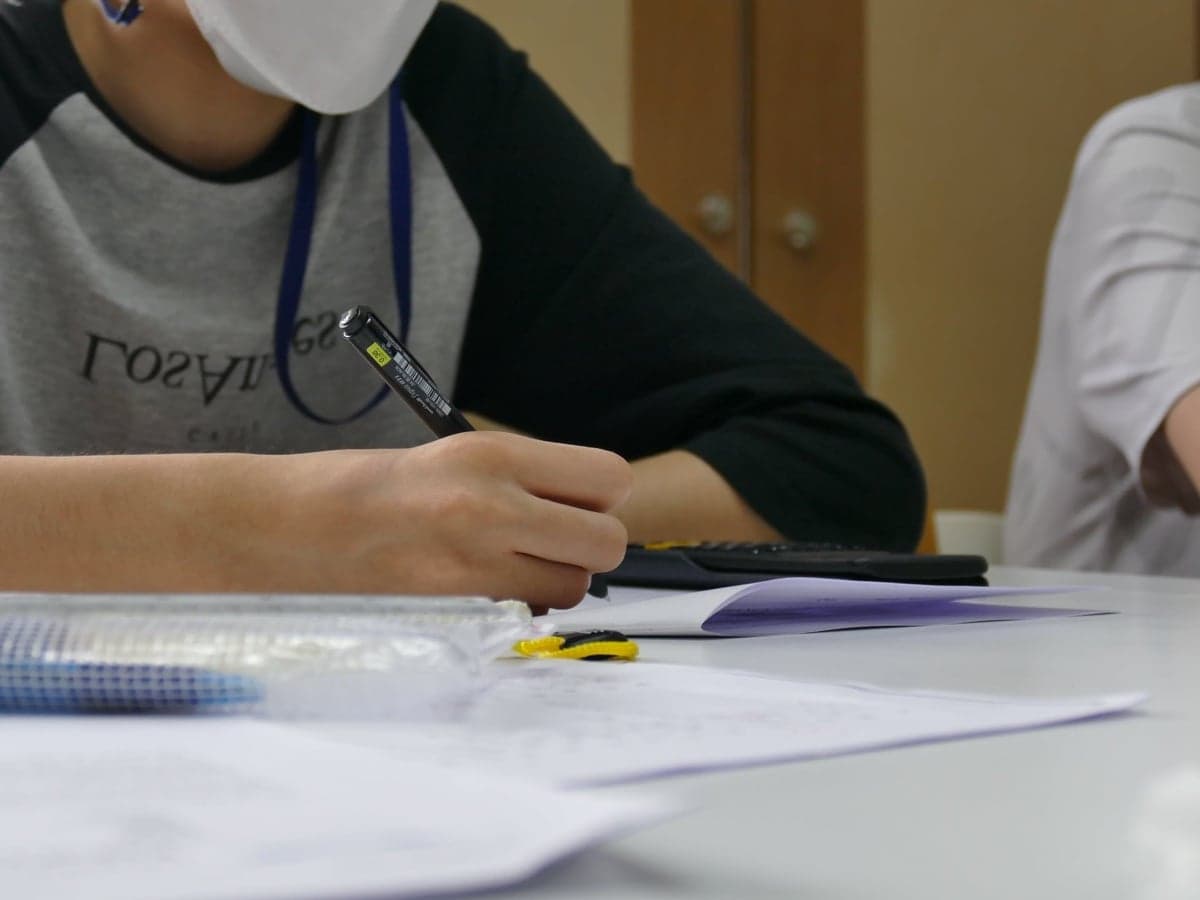
The Polytechnic Early Admissions Exercise (Poly EAE) allows Sec 4 and Sec 5 students to secure a conditional polytechnic place based on aptitude and interest — before their O-Level / SEC results are released — and Ancourage Academy supports students through the full process. Unlike the Joint Admissions Exercise (JAE), which is grades-based, EAE evaluates students on their passion for the course, relevant skills and experiences, and performance during an interview or aptitude test. According to MOE, EAE is open to all current O-Level, SEC, and ITE students, and successful applicants receive a conditional offer that is confirmed once minimum O-Level / SEC grade requirements are met.
As Economics and Mathematics educator at Ancourage Academy, Gabriel has supported students through the EAE process — from course selection to write-up preparation to interview coaching, alongside secondary tuition programmes that keep grades on track for the conditional offer. This guide from Ancourage Academy covers the complete EAE process, practical preparation strategies, and common mistakes to avoid.
What Is Poly EAE and Who Can Apply
Poly EAE is an aptitude-based admissions exercise that allows students to apply for up to three polytechnic courses across Singapore's five polytechnics — Ngee Ann (NP), Singapore (SP), Temasek (TP), Republic (RP), and Nanyang (NYP).
"Polytechnic Early Admissions Exercise (Poly EAE) is an aptitude-based admissions exercise that allows students to apply for and receive conditional offers for admission to polytechnics prior to receiving their O-Level examination results or final Higher Nitec Grade Point Average (GPA)."
— Ministry of Education, Singapore, Polytechnic Early Admissions Exercise (Poly EAE)
Eligibility:
- Graduating Sec 4 or Sec 5 students taking the GCE O-Level / SEC examination in the same year — Singapore Citizens and PRs, plus international students in government, government-aided and independent schools
- Final-year ITE students in their Nitec or Higher Nitec courses
- Working adults — Singapore Citizens or PRs with two or more years of relevant work experience, applying through the separate EAE (Working Adults) track
- No minimum grade requirement to apply — EAE evaluates aptitude, not academic results. However, each course has minimum grade requirements for confirming the offer after O-Level / SEC results.
- Not eligible: anyone currently enrolled, or previously enrolled, in a polytechnic
The key advantage of EAE: it allows students whose strengths are not fully captured by exam grades — those with strong portfolios, relevant CCAs, or genuine passion for a specific field — to secure a polytechnic place on merit beyond academics.
EAE Application Timeline: Key Dates and Deadlines
The EAE process spans roughly seven months, from application in late June to confirmation in January — and the timeline is fixed, so missing a deadline means waiting another year.
| Phase | Typical Timing | What Happens |
|---|---|---|
| Application opens | Late June | Students submit online application with write-up and portfolio |
| Application closes | Early July | Applications are reviewed by polytechnics |
| Selection exercises | July-September | Shortlisted students attend interviews, aptitude tests, or auditions |
| Offer results | Late August - September | Conditional offers are released |
| Acceptance | September | Students accept or decline the conditional offer |
| O-Level / SEC results | January (following year) | Students must meet minimum grade requirements to confirm the offer |
| Offer confirmation | January-February | Conditional offers are confirmed or withdrawn based on O-Level / SEC results |
For the current cycle — the 2026 EAE exercise, for the AY2027 polytechnic intake (the exercise year differs from the intake year): the O-Level / SEC student application window was 25 June–1 July 2026, the final-year ITE window was 11–17 June 2026, and the working-adult window was 1–28 June 2026 (all three have closed; the next cycle opens in June 2027). Selection activities (interviews, aptitude tests, auditions) run 6 July–1 September 2026, with conditional offers released from 8 September 2026. For the full dated calendar, see our Singapore education key dates.
Preparation should begin in Sec 3 Term 4 or Sec 4 Term 1 — well before the June application window. Students who start thinking about course selection and portfolio building early have a significant advantage. The when to start tuition guide covers timing decisions for academic preparation more broadly.
Ancourage Academy supports EAE preparation alongside academic tuition — book a trial class (usually $18) at Bishan or Woodlands, small groups of 3-6.
How to Choose the Right Polytechnic Course
EAE allows up to three course choices — and selecting courses that genuinely match your interests is critical, because the interview panel will assess whether your passion for the field is authentic.
Course selection framework:
- Interest alignment: Choose courses in fields you have genuine curiosity about, not just fields with high employment rates. Interviewers can tell the difference between genuine enthusiasm and rehearsed answers.
- Evidence of engagement: Can you point to activities, projects, or experiences that demonstrate your interest? A student applying for Engineering who has built things, participated in robotics CCA, or completed online courses has stronger evidence than one who simply says "I like Engineering."
- Career awareness: Research what graduates of the course actually do. If the career prospects do not appeal to you, the course may not be the right fit — even if the subject sounds interesting.
- Strategic diversification: With three choices, consider applying to related courses across different polytechnics rather than three identical courses. This increases your chances while staying within your area of interest.
Preparing Your EAE Write-Up and Portfolio
Each EAE course choice needs a 600-character course-specific write-up (including spaces and punctuation) explaining why you are suited for it — plus an optional but highly recommended 1,000-character write-up on your wider talents and achievements. These are the primary documents that determine whether you are shortlisted for an interview.
What makes a strong write-up:
- Specific examples: "I built a mobile app for my school's CCA using Python" is stronger than "I am passionate about technology." Concrete evidence of engagement beats generic statements.
- Connection to the course: Explain how your experiences connect to what the course offers. If applying for Business, describe a time you sold something, organised an event, or analysed a business problem — and link it to what you hope to learn in the diploma programme.
- Self-awareness: Acknowledge what you do not yet know and what you hope to learn. "I have basic Python skills and want to develop expertise in data analytics" shows both honesty and direction.
- Clear structure: Introduction (who you are and what you are applying for), body (evidence of aptitude and interest), conclusion (what you hope to achieve). Do not waste words on vague filler.
Portfolio items (if applicable): certificates from relevant CCAs or competitions, photos of projects, links to websites or apps you have built, artwork (for design courses), or videos of performances (for media courses). Quality over quantity — 3-5 strong portfolio items outweigh 15 weak ones.
EAE Interview: What to Expect and How to Prepare
The EAE interview typically lasts 10-20 minutes and assesses three things: genuine interest in the field, relevant knowledge or skills, and communication ability.
Common interview formats:
- One-on-one interview: Conversation with a lecturer about your interest, experiences, and understanding of the field
- Group discussion: Discussion with other applicants on a topic related to the course, assessing collaboration and communication
- Aptitude test: Practical assessment of skills relevant to the course (e.g., drawing for design courses, coding for IT courses)
Preparation strategies:
- Research the course thoroughly: Know the modules, specialisations, and career outcomes. Visit the polytechnic's website and read the course description in detail.
- Prepare 2-3 stories: Anecdotes that demonstrate your aptitude and interest. "Tell me about a time you solved a problem" is a near-universal interview question — have a ready answer.
- Practise articulating your motivation: Why this course? Why this polytechnic? What do you want to do after graduation? Practise saying these answers aloud until they feel natural.
- Stay current: Know recent developments in your chosen field. An Engineering applicant who can discuss current infrastructure projects in Singapore demonstrates awareness beyond the classroom.
Students who are also considering JC should weigh EAE alongside other pathways. The L1R4 JC admission guide and secondary school selection guide provide context for the broader post-secondary decision.
What Happens After You Receive an EAE Offer
An EAE offer is conditional — it is confirmed only after O-Level / SEC results are released and the student meets the minimum grade requirements specified by the polytechnic.
After receiving an offer:
- Accept or decline: You must formally accept the offer within the specified window. If you accept, you are committed — you will not be posted to any other course through JAE.
- Continue studying: The offer is conditional on meeting minimum O-Level / SEC grades (typically a pass in English and Mathematics). Students who stop studying after receiving an EAE offer risk having the offer withdrawn.
- EAE commitment: By accepting an EAE offer, you withdraw from JAE. If you subsequently want to change course, you would need to apply through a separate appeals process.
How O-Level / SEC Results Still Matter After EAE
O-Level / SEC results matter even after securing an EAE offer — minimum grade requirements must be met, and stronger results provide a safety net if the EAE course does not work out.
MOE sets two conditions for confirming an EAE offer, and both must be met:
- A net ELR2B2 aggregate of 26 points or better (the Diploma in Nursing allows 28). From the 2028 Post-Secondary Admissions Exercise these bars become 22 and 24.
- The minimum entry requirements (MER) of the course you have been offered. MOE publishes no single sitewide grade bar — each course sets its own subject grade bands, and they vary widely: most polytechnic diplomas accept English Language at grade 7 (D7), while courses such as Mass Communication require grade 4 or better. Check your course on MOE CourseFinder or the polytechnic's own site.
Grades run from A1 (1 point, best) down to 9, so a lower grade number is stronger — a "grade 6 or better" requirement means C6 or above, not the reverse. If you meet both conditions, MOE confirms the offer automatically when O-Level / SEC results are released; miss either one and the conditional offer lapses.
At Ancourage Academy, students preparing for EAE are encouraged to maintain their secondary Maths exam preparation in parallel. The Sec 4 English and E-Maths programmes ensure students meet the conditional requirements while also building skills that are valuable in polytechnic coursework.
For students who do not receive an EAE offer or whose offer is withdrawn, strong O-Level / SEC results provide the alternative route through JAE. This is why Ancourage Academy advises treating EAE as a bonus opportunity, not a replacement for exam preparation.
Book a trial class (usually $18) at Bishan or Woodlands — or WhatsApp Ancourage Academy to discuss your child's post-secondary preparation.
Common Questions About Poly EAE
Do I need good grades to apply for Poly EAE?
No. There is no minimum grade requirement to apply — EAE assesses aptitude and interest, not academic results. However, to confirm the offer after O-Level / SEC results you must meet the course's minimum entry requirements — an ELR2B2 net aggregate of 26 or better under the 2026-2027 JAE bars, plus the course's specific subject grades, which for most diplomas include passes in English and Mathematics. From the 2028 Post-Secondary Admissions Exercise the bar becomes 22 or better, with only the B2 slot allowed at G2. Students with weaker grades can still secure EAE offers if they demonstrate strong aptitude and genuine interest.
How many courses can I apply for through EAE?
You can apply for up to three courses across all five polytechnics. You can choose three courses at the same polytechnic or spread them across different polytechnics. Strategic selection — choosing related courses that match your genuine interests — gives you the best chance of receiving an offer.
What happens if I accept an EAE offer but fail to meet the minimum grades?
The conditional offer is withdrawn, and you can still apply through the JAE, where posting is based on your O-Level / SEC results. This is why maintaining exam preparation alongside EAE preparation is essential. An EAE offer is a conditional safety net, not a guaranteed outcome.
Can I apply for EAE and still participate in JAE?
If you accept an EAE offer and meet the course's admissions criteria when your O-Level / SEC results are released, you are not eligible to participate in JAE. If you do not receive an offer, decline it, or withdraw your acceptance during the withdrawal stage (mid-September to mid-October), you participate in JAE normally. If you accept an offer but do not meet the minimum entry requirements, the offer is not confirmed and you re-enter the JAE process.
When should I start preparing for EAE?
Ideally, start thinking about course selection and building relevant experiences in Sec 3. The formal application opens in late June of Sec 4, but students who have spent months building a portfolio and developing genuine engagement with their chosen field produce significantly stronger applications than those who start in June.
Visit Ancourage Academy at Bishan or Woodlands, check secondary courses, or WhatsApp us with any questions.
Related: JC vs Polytechnic · O-Level Preparation · N-Level Pathways · SEC Exam 2027 · Sec 3 Subject Combinations · DSA Guide · NAFA/LASALLE Portfolio Guide