JC / A-Level Economics Tuition
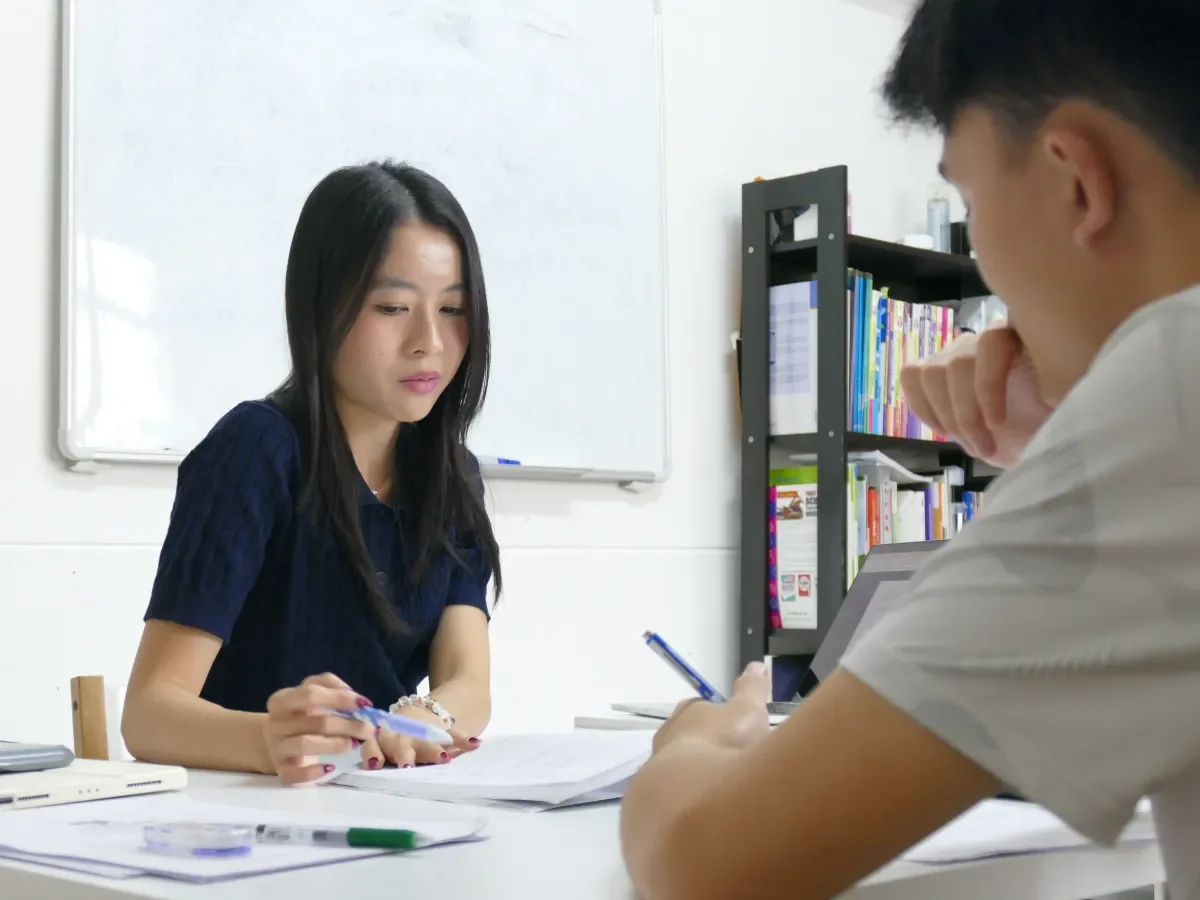
Ancourage Academy's JC Economics tuition in Singapore covers JC1 and JC2, including H2 Economics (9570) and H1 Economics (8843). Economics is a new subject for most JC students — unlike Mathematics or English, there is no O-Level foundation to build on. H2 Economics covers microeconomics (demand and supply, market failure, firm behaviour) and macroeconomics (national income, international trade, economic growth) in depth, assessed through case studies and essays across 2 papers. H1 Economics covers the same topics at a broader level through a single case study paper. Our small classes of 3-6 students at tuition centres near Bishan MRT and Woodlands South MRT develop the analytical thinking, diagram skills, and structured essay writing that Economics demands. JC1 establishes microeconomics foundations and introduces macroeconomics concepts. JC2 deepens macroeconomics, focuses on case study technique, and builds exam-ready essay speed. A comprehensive review of 10 learning techniques rated practice testing and distributed (spaced) practice as the two highest-utility strategies — benefiting learners of all ages across a wide range of materials (Dunlosky et al., Psychological Science in the Public Interest, 2013). Our ESB methodology — combining Ebbinghaus spaced retrieval for economic concepts and diagram patterns, Socratic questioning through policy debates and 'what would happen if' scenarios, and Bruner's scaffolding from basic demand-supply analysis to multi-concept evaluation essays — builds the critical evaluation skills needed for A-Level success. All materials are included with no registration fees, and parents receive regular progress updates plus 24/7 WhatsApp homework support.
Reviewed by Min Hui, Founder & Academic Director ·
At a Glance
Key details about our JC / A-Level Economics tuition programme, including class size, locations, and exam focus.
| Subject | Economics |
|---|---|
| Levels | JC1 - JC2 |
| Class Size | 3-6 Students |
| Locations | Bishan & Woodlands |
| Exam Focus | A-Level |
| Trial | Free (usually $18) |
What Your Child Learns at Each Level
Our Economics programme takes students from H2 JC1 to H1 JC2, building from h2 foundations all the way to A-Level readiness
H2 Foundations
- •Demand, supply & price mechanism
- •Elasticity concepts
- •Market failure & government intervention
- •Firm behaviour & market structures
- •Introduction to macroeconomics
H2 A-Level Prep
- •National income & standard of living
- •International trade & globalisation
- •Macroeconomic policies
- •Case study analysis techniques
- •Essay writing & exam revision
H1 Core Economics
- •Market mechanism basics
- •Government intervention
- •Macroeconomic indicators
- •Trade & globalisation overview
H1 A-Level Prep
- •Case study techniques
- •Data interpretation
- •Policy evaluation
- •Exam revision & timed practice

How We Teach Economics
Our ESB methodology adapts specifically to economics learning — building lasting understanding through evidence-based teaching strategies.
Ebbinghaus Memory Theory
For JC Economics, spaced retrieval means revisiting demand-supply diagrams, policy evaluation frameworks, and case study techniques at expanding intervals — so microeconomics concepts stay sharp when tackling macroeconomics months later.
Socratic Questioning
In Economics class, we debate real policies: 'Should Singapore raise GST?' or 'Is free trade always beneficial?' — forcing students to apply theory, consider trade-offs, and evaluate competing perspectives under scrutiny.
Bruner's Scaffolding
Economics concepts scaffold from basic demand-supply diagrams to market failure analysis to multi-concept evaluation essays — building the layered analytical thinking that distinguishes A-grade Economics responses.
“Economics is about how societies make choices under scarcity. The students who excel are the ones who can see both sides of a policy debate and evaluate trade-offs with precision. We teach students to think like economists — not just memorise definitions, but analyse real-world problems and construct evidence-based arguments.”

What Economics Challenges Do Students Face?
These are the most frequent difficulties we help JC / A-Level students overcome
- Economics is entirely new — no O-Level foundation means students start from scratch with unfamiliar concepts and terminology
- Diagram skills are weak — demand-supply shifts, cost curves, and macroeconomic models require precise drawing and labelling
- Cannot move beyond description to evaluation — examiners reward trade-off analysis, not just listing advantages and disadvantages
- Case study data interpretation feels overwhelming — extracting relevant information from tables, charts, and text under time pressure
- Essay structure lacks economic rigour — arguments need thesis, analysis, evidence, and evaluation, not just general discussion
- Confusing micro and macro concepts — mixing up firm-level analysis with economy-wide policy effects
How Do We Prepare for A-Level Economics?
Understanding the A-Level Economics format — 2 components with targeted strategies for each
Paper 1 (H2)
Case Studies — 2 compulsory
60 marks · 2h 30min
Paper 2 (H2)
Essays — 3 of 6 (min 1 Micro, 1 Macro)
75 marks · 2h 30min
Our Exam Strategies
- H1 Economics (8843) has 1 paper only: Case Studies (2 compulsory), 80 marks, 3 hours — no essay paper
- Case studies: always refer to the data provided — extract specific figures, trends, and quotes to support your analysis
- Essays: structure each paragraph as Point → Explanation → Diagram → Example → Evaluation for maximum marks
- Draw diagrams large and clear with labels — a well-drawn demand-supply diagram can earn 2-3 marks on its own
- Evaluation is where top marks are earned — explain limitations, assumptions, and trade-offs of every economic argument
- Time management: for H2 Paper 2, allocate 50 minutes per essay including planning time
H2 Economics vs H1 Economics
H2 Economics goes deeper with an additional essay paper. H1 covers core concepts through case studies only. Choose based on your interest and university pathway:
| Comparison aspect | H2 Economics (9570) | H1 Economics (8843) |
|---|---|---|
| Content | Microeconomics and macroeconomics in depth — firm behaviour, market structures, trade theory, development | Core micro and macro concepts — market mechanism, government policy, national income, trade |
| Papers | 2 papers: Case Studies (60 marks, 2.5h) + Essays (75 marks, 2.5h) = 135 marks | 1 paper: Case Studies only (80 marks, 3h) |
| Skills | Case study analysis + structured essay argumentation + diagram fluency | Case study analysis + data interpretation — no essay component |
| University | Valued for Business, Economics, Law, Public Policy degrees; demonstrates analytical depth | Acceptable for most programmes; shows economics awareness without specialist depth |
| Best for | Students interested in business, policy, or social sciences who enjoy analytical writing | Students taking 3 other H2 subjects who want economics breadth as a contrasting subject |
H2 Economics does not require H2 Mathematics. The subject tests analytical thinking and essay skills more than mathematical ability.
Why Choose Ancourage for Economics?
Proven results with a personalised approach to economics learning
Small Class Sizes
3-6 students per class for focused attention
MOE-Aligned
Curriculum follows MOE syllabus closely
A-Level Experts
Teachers experienced in A-Level preparation
H1 & H2 Economics
Both levels taught with A-Level exam focus
What’s Included
Everything every student receives — no hidden costs
No Registration or Material Fees
All worksheets, notes, and learning materials included
24/7 WhatsApp Support
Direct access to teachers for homework help between lessons
Progress Reports & PTC
Regular updates plus annual Parent-Teacher Consultation
Tailored Learning Materials
Resources targeted to each student’s core needs
Flexible Scheduling
Weekly reminders, plus replacement lessons and schedule adjustments on 24 hours' notice, subject to availability
Competition Support
Help with academic competition registration and preparation
JC / A-Level Economics classes are also available online — live via Microsoft Teams, island-wide, with the same teachers and small groups of 3-6. Learn about online classes
Deepen Your Learning
Comprehensive topic guides covering everything in this subject area.
Junior College (JC)
Navigate Junior College life in Singapore — from choosing H1/H2 subject combinations to mastering A-Level content, managing the JC workload, and preparing for university admissions.
Browse guide →Study Tips & Exam Prep
Practical study tips and exam preparation strategies that work — from effective revision techniques and time management to past year paper strategies and exam day tips for Singapore students.
Browse guide →
Frequently Asked Questions
Yes — Ancourage Academy's A-Level JC economics tuition (H1 and H2) is led by experienced economics tutors in small groups at Bishan and Woodlands. Our tutors coach micro, macro, and case-study and essay technique for the A-Level. Trial class (usually $18).
H2 Economics (9570) covers micro and macroeconomics in depth across 2 papers — case studies and essays, 135 marks total. H1 Economics (8843) covers the same topics at a broader level with 1 paper — case studies only, 80 marks. H2 is for students taking Economics as a main subject; H1 suits those taking it as a contrasting subject.
No. H2 Economics does not require H2 Mathematics — it is not a maths-heavy subject. However, students must be comfortable with basic graphs, percentage changes, and interpreting data. Strong analytical and essay writing skills matter more than mathematical ability.
Case studies present real-world economic data and scenarios — students must extract information, apply economic theory, and evaluate policies. Essays require structured argumentation on a given economics question. H2 students face both; H1 students only face case studies.
No. Economics examiners reward application and evaluation, not recall. Students must apply economic concepts to unfamiliar scenarios and evaluate competing perspectives. The strongest answers explain trade-offs, consider limitations, and reach reasoned conclusions — not just define terms.
Our trial class is usually $18. Regular fees vary by level. We keep our rates competitive for small-group Economics tuition of 3-6 students at our Bishan and Woodlands centres. Contact us for the latest pricing.
JC1 is ideal. Economics is a new subject for most students — unlike Maths or English, there is no O-Level / SEC foundation. The microeconomics concepts taught in JC1 form the basis for macroeconomics and the case study skills needed in JC2.
Yes. H2 Economics is valued by Business, Law, Public Policy, and Social Sciences programmes. It develops analytical thinking, data interpretation, and structured argumentation — transferable skills that universities and employers value across many disciplines.
Our Economics tuition is available at two locations: Bishan (near Catholic Junior College, Anderson Serangoon JC, and Bishan MRT) and Woodlands (Vista Point, near Yishun Innova JC and Woodlands South MRT). Both centres offer small-group classes of 3-6 students.
Ready to Excel in Economics?
Book a trial class and see how our approach helps students master economics.
Available at our Bishan and Woodlands centres, near Bishan MRT and Woodlands South MRT.
Serving JC and A-Level students from junior colleges across Singapore, including Raffles Institution, Hwa Chong Institution, Anglo-Chinese Junior College (ACJC), Victoria Junior College (VJC), Nanyang Junior College (NYJC), National Junior College (NJC), Anderson Serangoon Junior College (ASRJC), Catholic Junior College (CJC), Eunoia Junior College (EJC) and Yishun Innova Junior College (YIJC) — our Bishan centre is minutes from Eunoia JC and our Woodlands centre from Yishun Innova JC.
Also from Ancourage: Art classes for kids, teens & adults →