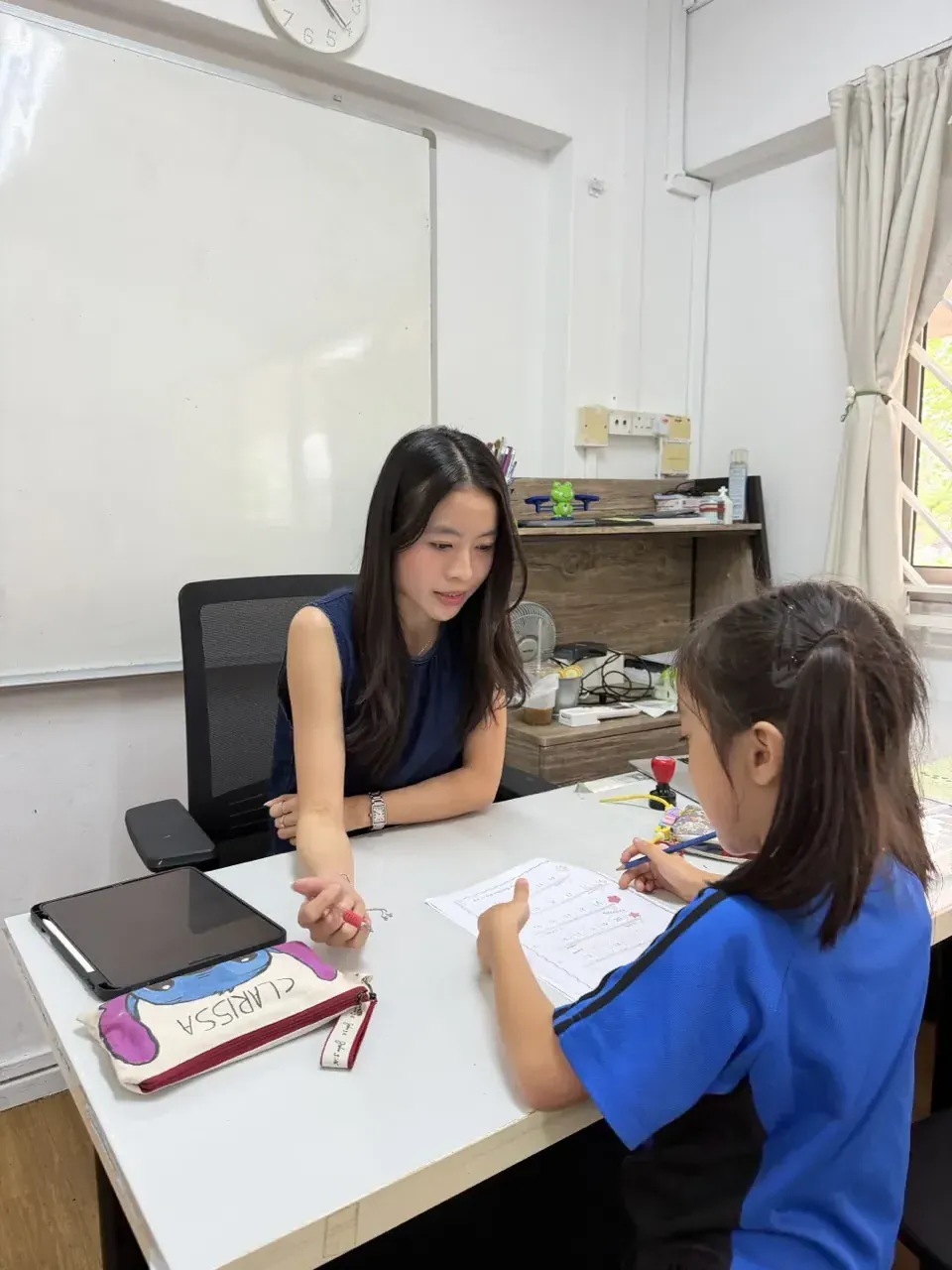


How kindergarten tuition prepares for Primary 1
P1 readiness builds on three pillars: literacy (phonics, sight words, simple reading), numeracy (number sense to 20, basic addition), and Mandarin foundations (pinyin, character recognition). The biggest jump is the move from play-based learning to structured 30-40 minute lessons — practising this transition during K2 reduces P1 anxiety. K1 (age 5) typically focuses on letter recognition, basic counting, and verbal Chinese; K2 (age 6) moves to early reading, addition within 20, and structured writing routines. Children entering P1 with comfortable phonics decoding and 10-minute focused-task stamina settle faster than those still learning to sit through structured time. The MOE Nurturing Early Learners (NEL) Framework covers six learning areas; complementary tuition bridges the academic skills (literacy, numeracy, bilingual fluency) that P1 builds on directly. The full guide covers age-by-age readiness markers and what to look for in early-years instruction.
| Focus area | K1 (age 5) | K2 (age 6) |
|---|---|---|
| English literacy | Letter recognition, phonics awareness and sight words | Early reading, expanded sight words and sentence writing |
| Mathematics | Number recognition and counting to 10 (MOE NEL core) | Number sense to 20 and addition within 20 |
| Chinese (Mandarin) | Listening and speaking, with pinyin introduced early | Pinyin consolidated, character recognition, expanded vocabulary and sentence writing |
| Lesson format | Weekly 1-hour lesson built on play-based activities | Weekly 1-hour lesson with short structured tasks that rehearse the 30-40 minute Primary 1 lesson routine |
For our complete guide → preparing for Primary 1 in Singapore