
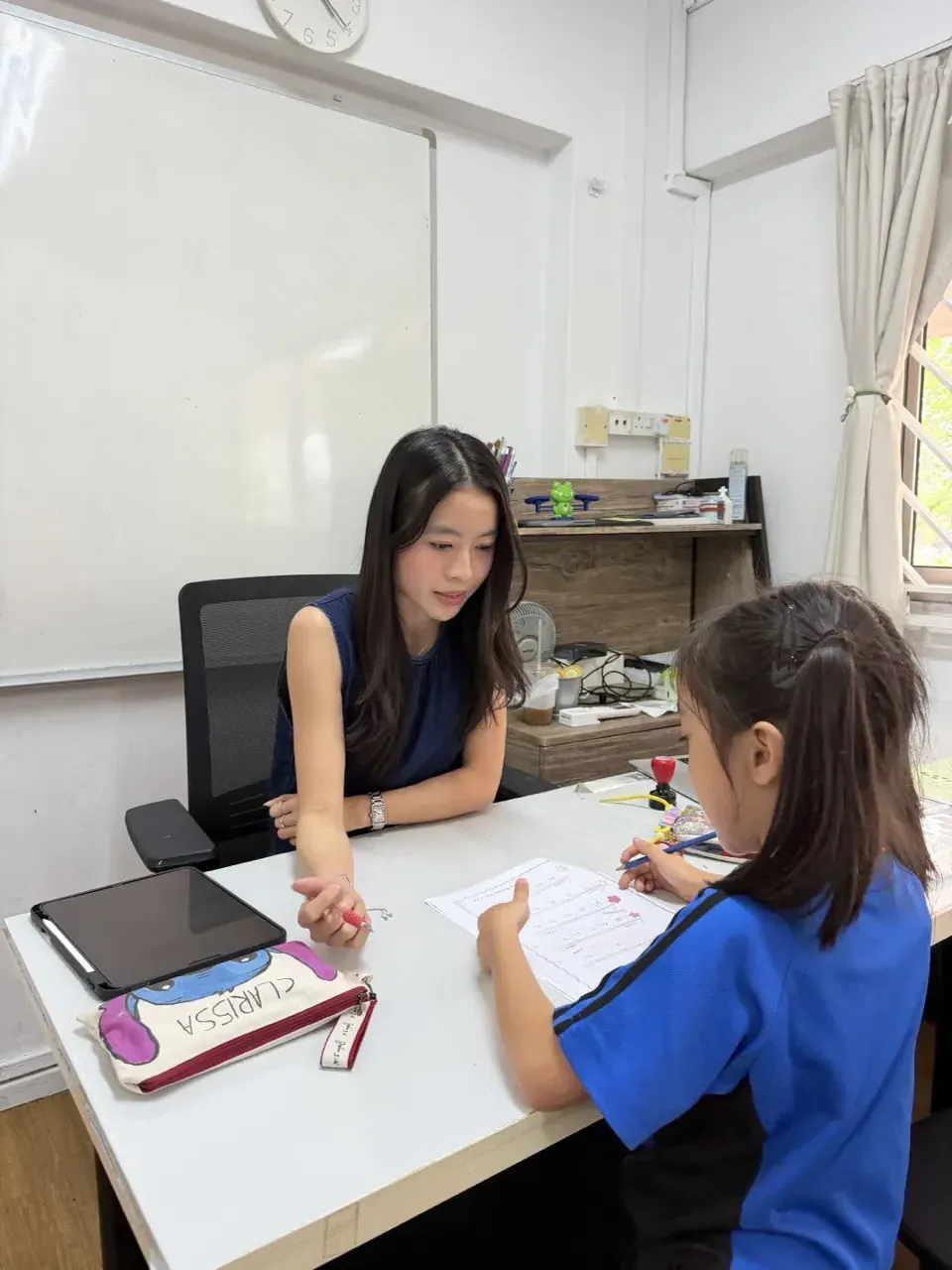
If your child is failing maths in Singapore, the first step is to diagnose the root cause: a knowledge gap, a confidence issue, or a mismatch between teaching style and how your child learns. You are not alone — thousands of Singapore families face this every term. According to the MOE Primary Mathematics syllabus, each year builds directly on the one before, so a single unresolved gap in P3 or P4 can cascade into sustained failure by upper primary. Once you identify the cause, you can act on it. This parent guide is by Ancourage Academy, whose Mathematics tutors work daily with students who have stopped progressing.
This guide is written for parents, not teachers. It walks you through how to figure out what is really going on, what you can try at home first, and when outside help makes sense. If your child struggles across multiple subjects, see our broader guide on helping a struggling student catch up academically. This article goes deep on maths only.
First: This Is More Common Than You Think
Failing maths in Singapore is not rare. In a system where the PSLE Mathematics syllabus expects multi-step problem-solving from age 10, a significant number of students hit a wall at some point between P3 and Sec 2. You are not dealing with a broken child — you are dealing with a common, diagnosable problem that thousands of families navigate every year.
Singapore's maths curriculum is among the most rigorous in the world. That rigour produces strong outcomes for many students, but it also means the difficulty curve is steep. When a child falls behind, the gap widens quickly because each new topic assumes mastery of the previous one. A child who did not fully grasp fractions in P3 will struggle with ratio in P6, which then makes algebra in secondary school feel impossible.
The anxiety you feel is normal. But reacting from anxiety — piling on worksheets, raising your voice during homework, comparing your child to peers — usually makes the problem worse. The rest of this guide helps you respond with a plan instead of panic.
Is It Really Failing or Is It a Dip?
One bad test is not failing. Before you escalate, look at the pattern: has your child's performance declined steadily over two or more terms, or did they score poorly on a single paper? A one-off dip after a difficult topic or a stressful week is normal. Sustained decline over multiple assessments signals something structural that needs attention.
Age-typical struggles also matter. Many parents panic at moments that are actually predictable difficulty spikes in the Singapore maths curriculum:
- P3 — the fractions wall: Fractions start at P2, but P3 is where parts of a whole replace counting discrete objects as the main way of thinking. It is conceptually different from everything before it, and many children need extra time to adjust.
- P6 — the algebra and ratio shock: Ratio and early algebraic thinking arrive together, on top of the percentage work introduced in P5. Students who coasted on arithmetic suddenly find themselves lost. This is the most common trigger point for maths failure at primary level.
- Sec 1 — the abstract maths transition: Secondary maths introduces formal algebra, negative numbers in context, and geometric reasoning that demand abstract thinking. Students who relied on memorised procedures in primary school often struggle here, which is where our Sec 1-4 maths tuition for struggling students rebuilds the underlying reasoning. See our guide on E-Maths vs A-Maths for more on what secondary maths involves.
If your child's dip aligns with one of these transitions, it may resolve with targeted support at that specific stage rather than a complete intervention.
Five Root Causes That Look Like Laziness
When a child avoids maths homework, rushes through problems, or says "I don't care," parents often assume laziness — but the usual drivers are knowledge gaps from earlier levels, procedures memorised without understanding, maths anxiety, working-memory limits or a teaching-style mismatch, and identifying which one applies to your child determines which solution will work.
- Knowledge gaps from previous levels. Maths is cumulative. A child who missed equivalent fractions in P3 cannot do ratio in P6. The gap compounds silently until the child is so far behind that every new lesson feels impossible. They are not lazy — they are lost. For specific mistakes to watch for at primary level, see our guide on common primary maths mistakes.
- Conceptual vs procedural confusion. Some children memorise steps without understanding why they work. They can follow a model answer but cannot solve a problem that looks slightly different. When the exam presents an unfamiliar format, they freeze — not because they lack ability, but because they never built genuine understanding.
- Maths anxiety. Fear of getting wrong answers leads to avoidance. The child refuses to attempt problems, rushes to finish as quickly as possible, or shuts down during tests. This is an emotional response, not an intellectual one. Punishing avoidance makes anxiety worse.
- Working memory limitations. Multi-step problems require holding several pieces of information in mind simultaneously. Some children understand each step individually but lose track when combining them. This is especially common in PSLE problem sums that require three or four operations.
- Teaching style mismatch. In a class of 30-40 students, the teacher uses one approach. If that approach does not match how your child processes information — visual, hands-on, verbal — the child may disengage despite having the ability. Smaller class settings can make a significant difference here.
Most struggling students have a combination of two or three of these causes. A knowledge gap creates frustration, frustration triggers anxiety, and anxiety looks like laziness. Breaking the cycle starts with identifying the primary driver.
If you cannot tell which driver is dominant on your own, that is exactly what a diagnostic assessment is for — book a trial class (usually $18) at Bishan or trial class (usually $18) at Woodlands, where the session starts by pinpointing the root cause before any teaching begins.
How to Talk to Your Child About Struggling
The conversation you have with your child about their maths struggles matters more than the tuition you choose or the worksheets you buy. A child who feels safe to admit confusion will accept help. A child who feels shamed will hide their gaps and resist every intervention you try.
Start by listening, not lecturing. Ask open-ended questions: "Which parts of maths feel hardest right now?" or "What happens in your head when you see a problem sum you don't know how to start?" You may learn something their teacher has not noticed.
Use growth mindset framing. Replace "I can't do maths" with "I can't do this yet." The word "yet" is powerful — it reframes failure as a temporary state rather than a permanent identity. Research on growth mindset consistently shows that children who believe ability can be developed outperform those who believe it is fixed.
What NOT to say:
- "You're just not trying hard enough." — They may be trying their hardest with a broken foundation.
- "Your sister could do this at your age." — Comparison destroys motivation and damages sibling relationships.
- "If you fail PSLE, your future is ruined." — Catastrophising increases anxiety without increasing effort.
- "I was bad at maths too." — Well-intentioned, but it gives the child permission to give up by suggesting failure is genetic.
Instead, try: "I can see maths is frustrating right now. Let's figure out together where it got hard. No pressure — we'll take it one step at a time." For more on rebuilding a child's motivation, see our guide on motivating reluctant learners.
What You Can Try at Home First
Before investing in tuition, try a focused two-week experiment at home. The goal is not to reteach the curriculum — it is to observe where your child gets stuck and whether targeted practice at the right level produces improvement. If it does, you may not need external help at all.
Activities by level:
- P1-P2: Use concrete materials — counting blocks, coins, household items. Play number bonds games: "I say 7, you tell me what adds to 10." Make maths physical and playful. At this age, the goal is building number sense, not drilling worksheets.
- P3-P4: Practise model drawing with simple problems before attempting complex ones. Use fraction manipulatives — cut paper plates into halves, quarters, and thirds. Let your child see that 2/4 and 1/2 are physically the same size. Concrete understanding must come before abstract notation.
- P5-P6: Work through past PSLE papers together, but focus on method rather than score. After each wrong answer, ask: "Did you not know what to do, or did you know but make an error?" This distinguishes knowledge gaps from execution mistakes — and the two require different fixes.
- Sec 1-4: Create concept maps linking related topics (e.g., algebra connects to simultaneous equations connects to graphs). Make formula cards for quick reference during practice. Use targeted problem sets on specific weak topics rather than full papers. For A-Maths specifically, see our A-Maths survival guide.
Keep sessions short — 20 to 30 minutes of focused work beats two hours of frustrated drilling. If your child makes progress during the two weeks, continue. If they remain stuck despite your best efforts, that is useful information: it tells you the problem is beyond what home support can solve.
When Professional Help Makes the Difference
Home support works for minor dips and confidence issues, but four signals call for structured, professional intervention — results declining over two or more terms despite effort, outright avoidance of maths, a PSLE or O-Level / SEC exam within 12 months, or knowledge gaps that span several levels — and waiting too long makes the gap harder to close.
Consider seeking help when you observe any of the following:
- Declining results over two or more terms despite genuine effort. If your child is studying but grades keep dropping, the problem is not effort — it is a gap they cannot see or fix on their own.
- Your child avoids maths entirely. Refusal to attempt homework, tears before maths tests, or physical complaints (stomach aches, headaches) on days with maths exams are signs of maths anxiety that needs professional handling.
- A major exam is approaching. With PSLE or O-Level / SEC within 12 months, the stakes are high and the timeline is short. Structured revision with an experienced tutor is more efficient than self-study at this point.
- Knowledge gaps span multiple levels. A Sec 2 student who still struggles with P6 ratio concepts needs systematic gap-filling that most parents are not equipped to provide — not because of lack of ability, but because of the diagnostic skill required.
The question of whether tuition is worth it depends on your child's specific situation. For some children, two months of targeted support resolves the problem permanently. For others, ongoing weekly sessions provide the structure they need through a critical exam year.
Choosing the Right Math Support
Not all maths support is the same, and the most expensive option is not always the best fit. The right choice depends on your child's personality, the severity of their gaps, your budget, and how much structure they need.
Here is an honest comparison:
- Private tutor (1-to-1): Maximum individual attention. Flexible scheduling. Best for children with severe gaps or social anxiety. Expensive — typically $50-$120 per hour depending on level and tutor qualifications. Quality varies widely.
- Small-group tuition (3-6 students): Combines individual attention with peer learning. Students benefit from hearing how classmates approach problems differently. More affordable than private tuition while still allowing the tutor to track each child's progress. See our comparison of group vs private tuition.
- Large-group tuition (15+ students): Cheapest option. Works for children who are fairly independent and just need structured revision. Limited individual attention — struggling students may fall through the cracks.
- Online tuition: Convenient, no travel time. Works for self-disciplined teenagers. Younger children and those who need hands-on guidance often struggle with the format.
- Self-study with guidebooks: Free or low-cost. Works for motivated children with minor gaps. Requires the child to diagnose their own weaknesses, which struggling students typically cannot do.
Questions to ask any centre or tutor before committing:
- "What is your maximum class size?" — Anything above 8 limits meaningful individual attention.
- "How do you track progress?" — Look for specific methods (diagnostic tests, progress reports), not vague promises.
- "Can I see my child's assessment results?" — Transparency matters. You should know exactly where your child stands.
- "What happens if my child does not improve after a term?" — The answer reveals whether the centre is outcome-focused or enrolment-focused.
How Ancourage Academy Approaches Struggling Math Students
At Ancourage Academy, maths recovery starts with diagnosis, not drilling. The ESB methodology — built on Ebbinghaus spaced repetition, Socratic questioning, and Bruner's scaffolding — is specifically designed to rebuild understanding from the ground up rather than papering over gaps with more worksheets.
Here is how it works in practice. Every new student begins with a diagnostic session that identifies exactly where their understanding broke down — not just which topics they got wrong, but why. A child who fails ratio questions might have a fraction gap from P3, an inability to interpret word problems, or both. The intervention is different in each case.
With class sizes of 3 to 6 students, Ancourage Academy's tutors can observe each child's working process in real time. They catch misconceptions as they happen — before wrong methods become habits. Socratic questioning ("Why did you multiply here? What would happen if you divided instead?") builds the reasoning skills that transfer across topics, rather than teaching isolated procedures.
Spaced repetition ensures that once a gap is filled, it stays filled. A concept taught in week one reappears in weeks two, four, and eight — each time in a slightly different context. This is how long-term retention works, according to the Ebbinghaus memory curve.
One P5 student joined us scoring below 40 in maths after two terms of decline. Her diagnostic revealed that fraction equivalence — a P3 concept — was the root cause. Every percentage and fraction question collapsed because she was guessing at fraction relationships instead of understanding them. We spent three weeks rebuilding fractions using visual models before touching P5 content. Within two months, she was scoring above 70. The foundation repair made everything else accessible.
Book a trial class (usually $18) at Bishan or trial class (usually $18) at Woodlands for a diagnostic assessment with personalised feedback. Ancourage Academy's primary and secondary maths programmes are designed around exactly this kind of recovery. See packages and what is included. For more maths guidance spanning primary through secondary, explore the maths article hub.
Common Questions from Parents of Struggling Math Students
At what point should I worry about my child's maths grades?
A single bad result is not cause for alarm — look at the trend over two or more terms. If grades are declining steadily, or if your child has dropped more than one grade band (e.g., from B to D), investigate now rather than waiting. The earlier you identify the root cause, the easier and faster it is to fix. P3-P4 gaps are far simpler to close than P6 gaps discovered three months before PSLE.
Is it too late to catch up if my child is in P5 or P6?
No. It is harder and requires more intensive effort, but real improvement is normal within a term when the right gaps are targeted. The key is precision — not studying everything, but identifying the two or three foundational weaknesses causing the most damage and fixing those first. A structured P5 programme or P6 revision plan focused on weak areas is more effective than blanket revision.
Should I get tuition in the subject my child is failing, or strengthen their best subject?
In most cases, address the failing subject first — especially if it is a core subject like maths that affects overall academic performance. A child who is failing one subject carries stress that bleeds into other areas. However, if your child's confidence is extremely low, starting tuition in their stronger subject and building success there before tackling the weaker one can work. Discuss this with the tutor during the initial assessment.
How long does it take for tuition to show results in maths?
For most students, expect steady improvement over a term of consistent, targeted tuition. The first signs are behavioural — your child attempts problems they used to skip, asks questions instead of shutting down, and shows less resistance to maths homework. Grade improvement typically follows 2 to 4 weeks after the behavioural shift. Students with gaps spanning multiple years may need a full term before grades reflect the foundational rebuilding happening underneath.
My child says they hate maths. Is that normal?
Extremely normal — and almost always fixable. Children say they hate maths when maths has become associated with failure, frustration, and shame. The emotion is real, but it is about the experience, not the subject. When a child starts succeeding — even on small problems — the "hatred" fades surprisingly quickly. It is one of the most common things families say when they first arrive at Ancourage Academy, and it usually softens once a child starts getting questions right in a supportive small-group setting.
Related: Common Primary Maths Mistakes • My Child Is Failing Secondary English • Helping Struggling Students Catch Up • Coping with A-Maths • Is tuition worth the money? • Motivating Reluctant Learners • Primary Courses • Secondary Courses · H2 Math Sequences & Series guide