
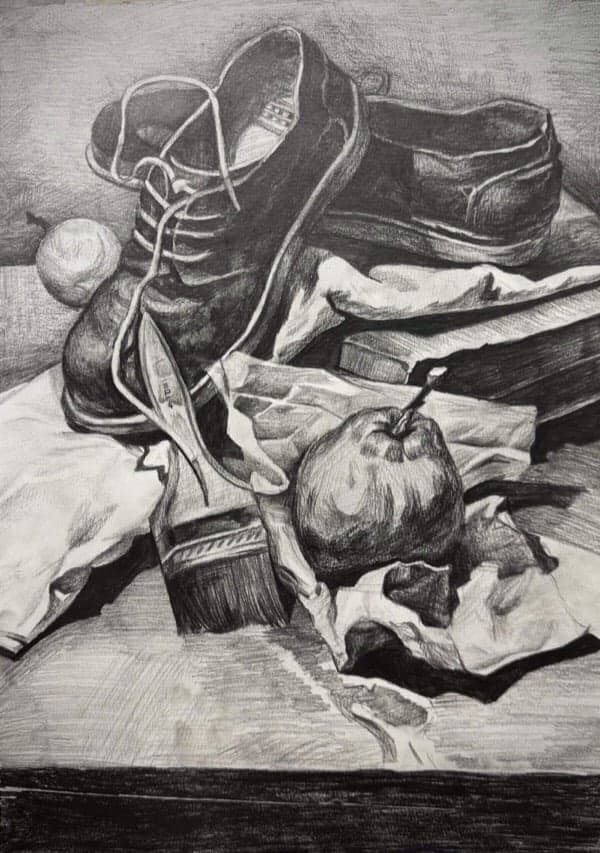
O-Level Art (Syllabus 6114, first examined in 2026 — from the 2027 SEC the same syllabus is examined as SEC Art K347, and Higher Art 6124 becomes K348) assesses students through two equally weighted components: a Portfolio worth 50% and a Visual Response exam worth 50%. Understanding this assessment structure — and what examiners actually look for in each component — helps students prepare strategically rather than scrambling in Secondary 4. This guide covers every aspect of the O-Level Art examination: syllabus requirements, portfolio expectations, exam format, and how to build the skills needed for a strong grade. Art by Ancourage prepares Sec 4 students for O-Level / SEC Art coursework with technique-led classes and exam-paper coaching.
As the founder of Art by Ancourage and a graduate of LASALLE College of the Arts and Goldsmiths, University of London, I have guided secondary students through O-Level Art coursework — from developing their preparatory studies to refining final pieces for submission. This guide draws on that experience and on the official SEAB Syllabus 6114 requirements.
What Is O-Level Art?
O-Level Art (Syllabus 6114) is a GCE O-Level subject offered by SEAB that assesses students' ability to create, appreciate, and respond to visual art through a Portfolio coursework component and a timed Visual Response paper. It is offered at secondary schools across Singapore to candidates taking Art at O-Level standard.
N(A)-Level Art 6127 and SEC G2 Art K236 in Singapore
Students in the Normal (Academic) course sit N(A)-Level Art, Syllabus 6127, not O-Level Art 6114 — the same Portfolio-plus-Visual-Response shape with expectations set at the N(A) standard. From the 2027 SEC examinations, 6127 is examined as SEC G2 Art, subject code K236.
O-Level Art is distinct from Higher Art (Syllabus 6124), which is taken by students in the Art Elective Programme (AEP) and by students in the Enhanced Art Programme (EAP) whose schools offer it. The comparison between these two syllabuses is covered in detail further below.
An important development to note: from 2027, the O-Level examination transitions to the new SEC (Singapore-Cambridge Secondary Education Certificate) framework as part of Full Subject-Based Banding. Students sitting the 2026 examination still take the current O-Level Art syllabus; from 2027, the subject becomes O-Level / SEC Art under the unified national examination structure, examined as SEC Art (K347; Higher Art K348) with the same two-paper structure. For details on the SEC transition and what it means for future cohorts, see the SEC Exam 2027 guide.
How Is O-Level Art Assessed?
O-Level Art (6114; SEC K347 from 2027) is assessed by Paper 1 Visual Response — 2 hours 15 minutes, 50 marks, 50% — and Paper 2 Portfolio — 30 hours of coursework within 12 weeks, 50 marks, 50% — and students must perform well in both for a strong overall grade.
| Paper | Component | Marks | Weighting | Duration |
|---|---|---|---|---|
| Paper 1: Visual Response | Section A: Visual Analysis (written) | 10 | 50% | 2h 15min |
| Section B: Exploratory Sketching | 40 | |||
| Paper 2: Portfolio | Part A: Selection of Visual Materials (max 15 screens, at least 3 art forms) | 30 | 50% | 30 hours within 12 weeks |
| Part B: Commentary (3 works, max 800 words, under 10 A4 pages) | 20 |
Both components carry equal weight at 50% each, which means consistent effort on the Portfolio over months matters just as much as exam-day performance. Paper 1 is externally marked by SEAB; Paper 2 is internally assessed by the school and externally moderated. Both components require dedicated preparation.
The full syllabus document is available from the Singapore Examinations and Assessment Board (SEAB).
What Do Examiners Look For in the Paper 2 Portfolio?
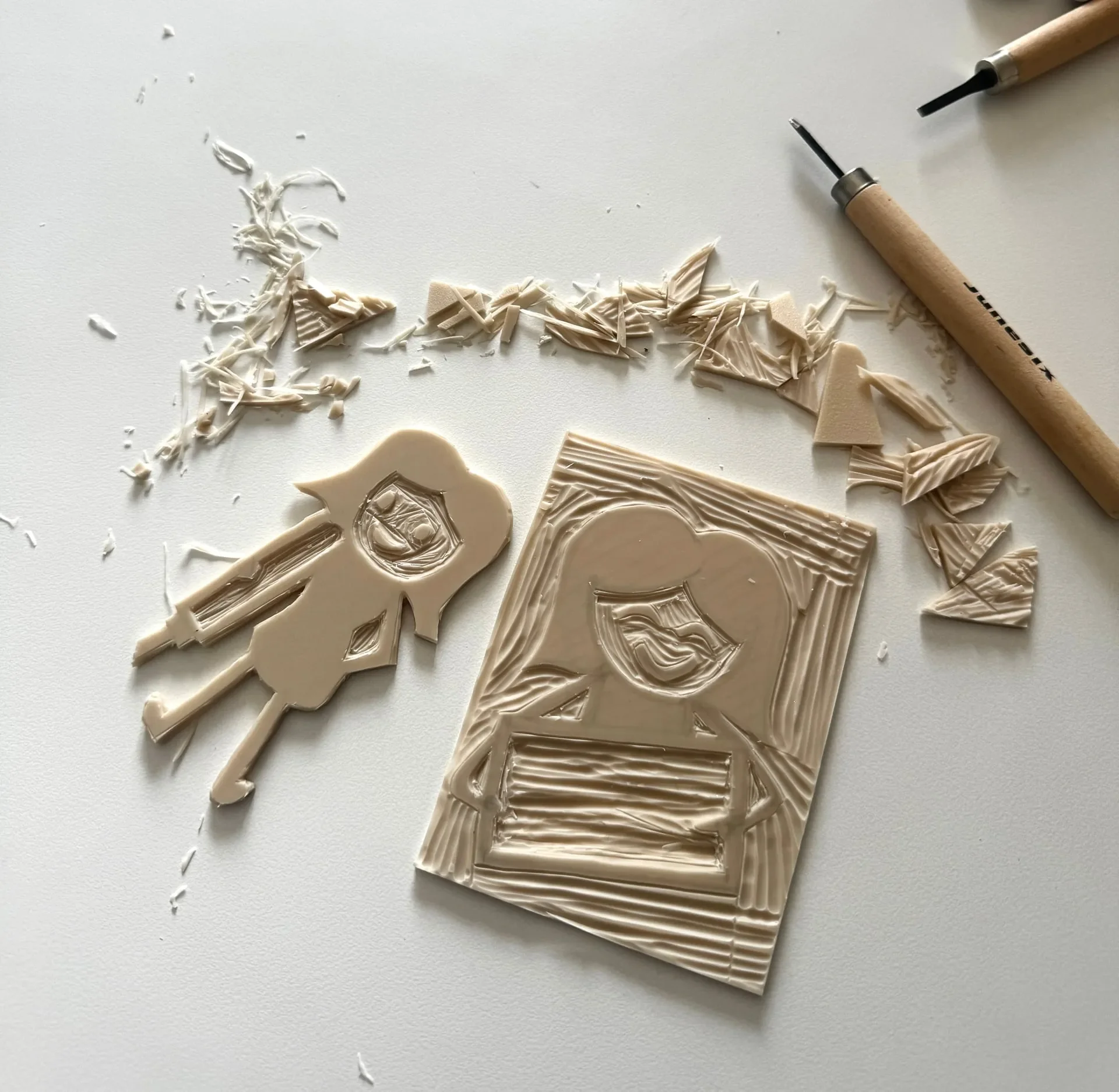
The Portfolio (Paper 2) is not simply a collection of finished artworks — examiners assess both the selection of visual materials (Part A, max 15 screens covering at least three art forms and media, with one from Fine Art and one from either Design or Time-based) and a written commentary (Part B) articulating personal artistic growth.
A strong O-Level Art portfolio demonstrates:
- Range of media and techniques: The Portfolio must show study of at least three art forms and media, with at least one from Fine Art (painting, printmaking, photography, mixed media, sculpture, ceramics and similar) and at least one from Design (illustration, graphic, product, jewellery, textile and similar) or Time-based (video, animation, motion graphics). A portfolio built only from painting, printmaking and mixed media does not satisfy that requirement, because all three sit in the Fine Art category. Separately, over the two years the syllabus asks students to explore at least three elective art forms beyond the foundational drawing and digital imaging, so most candidates have more than the Portfolio minimum to draw on
- Process documentation: Sketchbook pages showing thumbnail sketches, compositional studies, colour experiments, artist research, and iterative development. Examiners want evidence of thinking, not just execution
- Personal voice: Work that reflects the student's own perspective, interests, and visual language rather than generic or copied imagery. Original subject matter and a distinctive approach to themes score significantly higher
- Technical skill: Control of materials, understanding of tonal range, accurate observation, and competent handling of colour. Technical ability must be appropriate to the O-Level standard
- Conceptual depth: The ability to explore a theme meaningfully, making connections between personal experience, visual references, and artistic outcomes. Superficial or purely decorative work scores lower
Students typically submit a body of work developed over Secondary 3 and 4. The exact number of pieces varies, but quality and depth of exploration matter far more than quantity. A focused portfolio of 6 to 8 well-developed works with thorough process documentation will outperform 15 rushed pieces with minimal sketchbook evidence.
Building a portfolio of this standard requires sustained skill development. Art by Ancourage's Secondary School Art Programme and Professional Fine Art Classes give students the technical range and conceptual confidence needed for strong coursework.
What Is the Paper 1 Visual Response Exam Format?
The Visual Response exam (Paper 1, 2 hours 15 minutes) has two sections: Section A Visual Analysis — a written response to an unseen visual stimulus worth 10 marks — and Section B Exploratory Sketching — a practical drawing task worth 40 marks where students develop annotated sketches showing their concept in response to the stimulus.
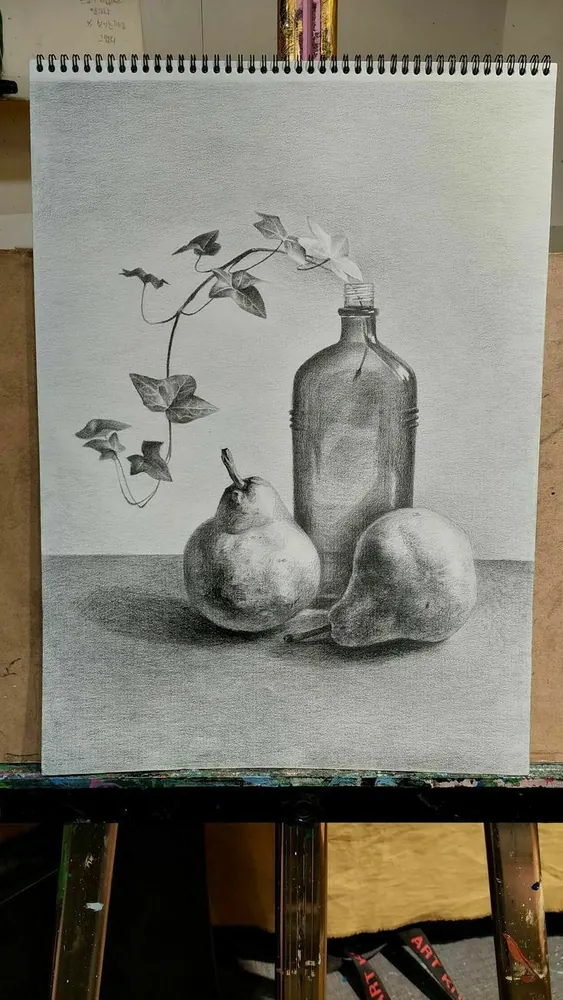
Section A requires students to analyse and discuss visual qualities or specific aspects of an unseen artwork, while Section B asks them to respond through exploratory sketching — developing ideas, concepts, and compositional layouts using drawing media (pens, markers, pencils, colour pencils, and colour markers are permitted; wet media and soft pastels are not). Key challenges include:
- Time management: 2 hours 15 minutes must cover both the written Visual Analysis and the Exploratory Sketching. Students should allocate roughly 30 minutes to Section A and 1 hour 45 minutes to Section B. Rushing the written analysis to gain sketch time is a common mistake — Visual Analysis marks are easy to earn with structured responses
- Visual Analysis technique: Section A assesses the ability to interpret visual stimuli, discuss subject matter, and evaluate visual qualities or effectiveness. Students who practise structured art criticism (describe → analyse → interpret → evaluate) perform significantly better
- Exploratory Sketching approach: Section B is not a finished artwork — examiners want to see ideation, exploration, and concept development through annotated sketches. Students should show multiple compositional possibilities before arriving at a resolved concept. Annotations explaining artistic choices strengthen the response
- Material choice: Syllabus 6114 permits only a closed list of drawing media — pens, markers, pencils (H or HB), colour pencils and colour markers. SEAB classifies charcoal, soft graphite, chalk / soft pastels and oil pastels as dry media and bans them, alongside all wet media. Students must be comfortable with these restricted materials
Students who practise timed analysis and sketching exercises regularly develop the observation skills and decision-making speed needed for exam conditions. Art by Ancourage's drawing classes build the observational skills and confident mark-making that translate directly to exam performance.
O-Level Art (6114) vs Higher Art (6124) — SEC K347 vs K348 from 2027
O-Level Art (6114) and Higher Art (6124) share identical Paper 1 and Paper 2 components; Higher Art adds a third paper, the Higher Art Project, and serves a different student profile. From the 2027 SEC the same pair continues as SEC Art (K347) and Higher Art (K348).
| Aspect | O-Level Art (6114) | Higher Art (6124) |
|---|---|---|
| Who takes it | Any student offering Art at O-Level | AEP students, plus EAP students whose schools offer it |
| Portfolio | Paper 2: Portfolio — 15 screens + commentary (50%) | Paper 2: Portfolio — identical to 6114: max 15 screens + 800-word commentary on 3 works (50%) |
| Exam | Paper 1: Visual Response — analysis + sketching, 2h 15min (50%) | Paper 1: identical to 6114 — Visual Response, 2h 15min (50%) |
| Additional paper | None — Papers 1 and 2 only | Paper 3: Higher Art Project — one of 3 set project questions, 1000–1200 word report, 100 marks, completed over 12 weeks |
| Depth expected | Competent exploration with personal voice | Advanced conceptual and critical engagement |
| Pathway to | H1/H2 Art at JC, polytechnic, arts institutions | H2 Art at JC (AEP continuation) |
Students in the Art Elective Programme receive additional curriculum hours and specialised instruction through their school. However, O-Level Art students can absolutely achieve strong results with dedicated external preparation and consistent studio practice. The key difference is Paper 3, the Higher Art Project: Papers 1 and 2 are identical to 6114 and produce the O-Level / SEC grade, while Paper 3 is a separately weighted studio-research project that, combined with the Papers 1 and 2 grade, earns a Distinction or Merit award in Higher Art.
Preparing for O-Level Art: A Timeline
Effective O-Level Art preparation spans Secondary 3 and 4, with each year serving a distinct purpose — and students who begin building skills before Secondary 3 have a measurable advantage.
Secondary 3: Build Skills and Explore
- Develop proficiency across multiple media: drawing, painting, mixed media, and at least one additional technique
- Experiment with different styles and subject matter to discover personal interests and strengths
- Start maintaining a visual journal or sketchbook with regular entries — this becomes the backbone of coursework documentation
- Study artists whose work resonates with you. Understanding how professional artists develop themes informs your own creative process
- Consider enrolling in structured art classes outside school to accelerate technical development
Secondary 4: Develop Coursework and Practise Under Exam Conditions
- Focus coursework development around clear themes with genuine personal connection
- Refine and resolve portfolio pieces with instructor feedback — this is where external guidance from experienced art educators makes a significant difference
- Practise timed Visual Analysis and Exploratory Sketching exercises weekly, working through complete responses in 2-hour 15-minute blocks matching the exam duration
- Document your creative process thoroughly — photograph works in progress, annotate sketchbook pages, and articulate your artistic intentions
- Review and curate your portfolio, ensuring it demonstrates range, depth, and a cohesive personal voice
Students who only begin focused preparation in Secondary 4 often find themselves rushing both coursework development and exam preparation simultaneously. Starting external art classes in Secondary 3 — or even Secondary 2 — provides the technical foundation that makes Secondary 4 coursework development much more productive.
How Art by Ancourage Supports O-Level Art Students
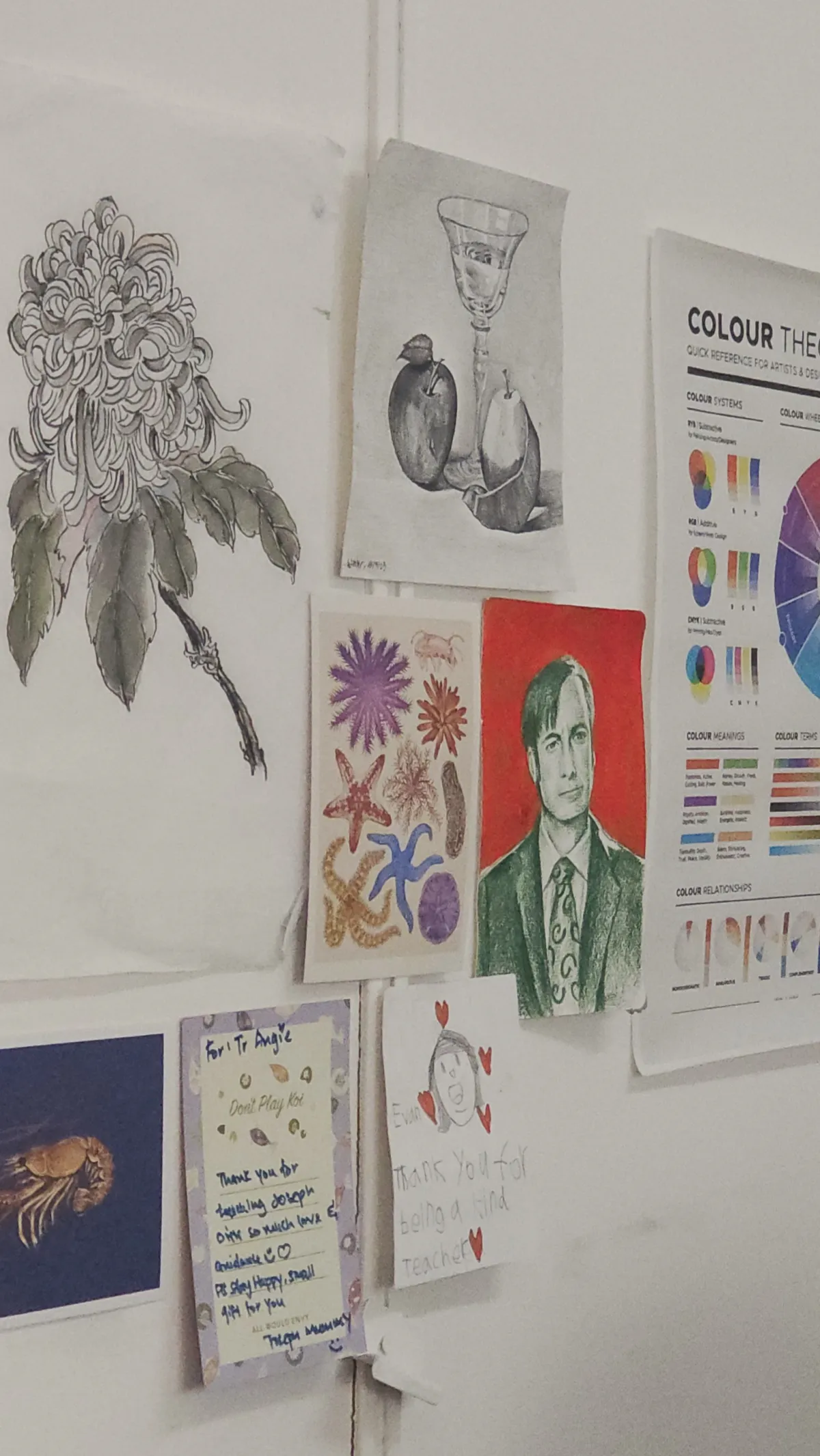
Art by Ancourage provides structured support for O-Level Art students through small-group classes of 3 to 6 at both Bishan and Woodlands, combining technical skill development with coursework and exam preparation.
The Secondary School Art Programme aligns with the MOE art curriculum while building skills beyond what school art lessons alone typically cover. For students who want more intensive preparation, the Professional Fine Art Classes develop advanced technical proficiency across drawing, painting, and mixed media — skills that directly elevate both coursework quality and exam performance.
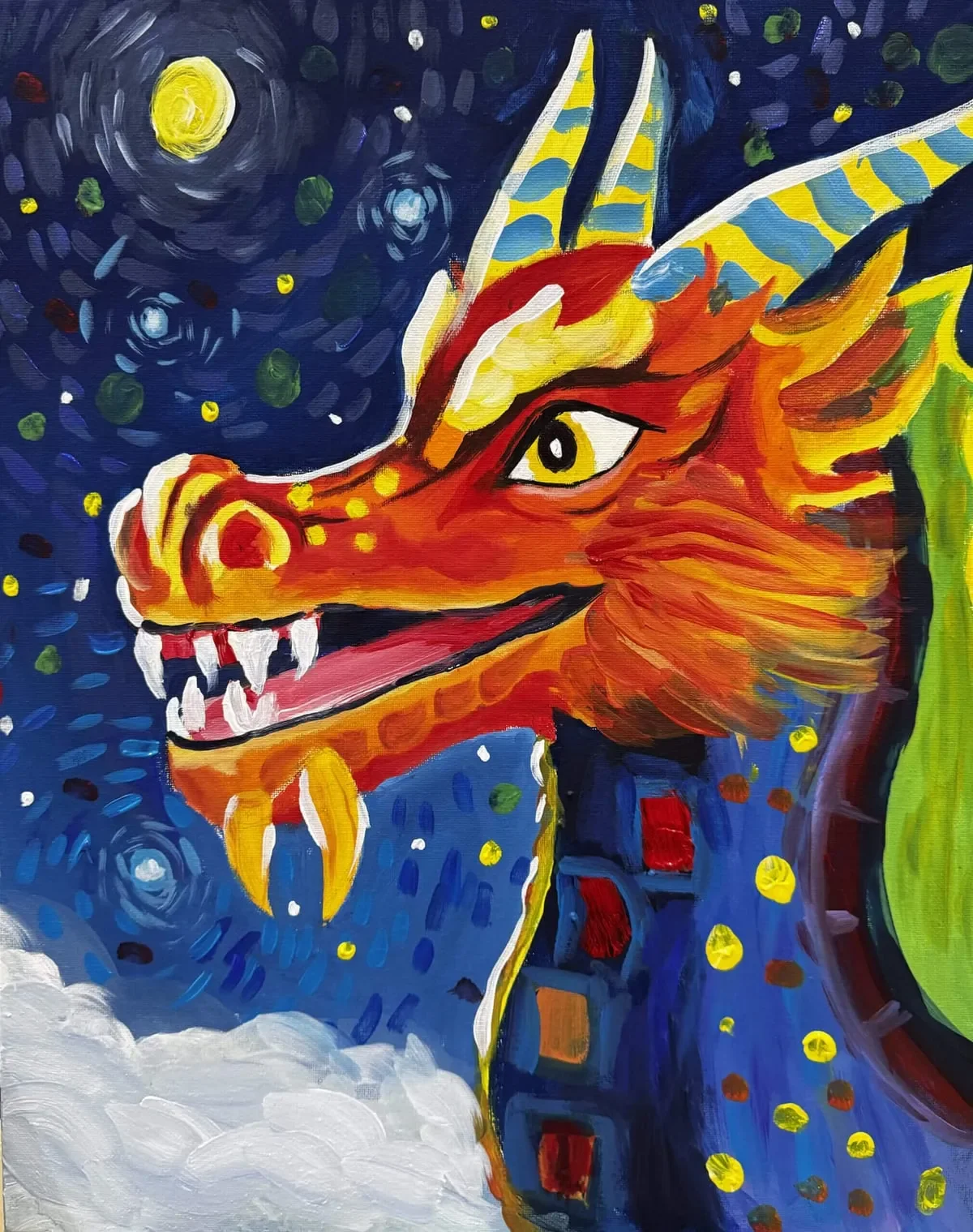
What Art by Ancourage offers O-Level Art students specifically:
- Coursework guidance: Help with theme development, media selection, and process documentation that meets examiner expectations
- Technical skill building: Structured drawing and painting instruction that develops the proficiency needed for strong practical work
- Exam practice: Timed exercises that simulate exam conditions, building confidence and time management skills
- Portfolio review: Critical feedback on coursework pieces from experienced art educators who understand SEAB assessment criteria
- Small class sizes: Groups of 3 to 6 students ensure personalised attention and feedback that larger school classes cannot provide
Book a trial class (from $18) at Bishan or Woodlands to discuss your O-Level Art preparation needs with Art by Ancourage instructors.
O-Level Art and Beyond: Pathways After the Exam
A strong O-Level / SEC Art grade opens multiple post-secondary pathways in the visual arts, from A-Level H2 Art to direct admission to specialist arts institutions.
- H2 Art at Junior College: Students with strong O-Level Art results can pursue H2 Art at A-Level, which deepens both studio practice and critical study. H2 Art is the specialist subject of the AEP at HCI, NJC and NYJC, but it is a national SEAB syllabus rather than an AEP-only one — MOE's AEP pathway chart counts 12 further pre-university institutions offering GCE A-Level Art, including Millennia Institute
- If you were not in AEP: Students who were not in the AEP during secondary school can still take H2 Art at a college that offers it — entry arrangements are set institution by institution, so check the college directly. Eunoia Junior College requires a selection test, while Yishun Innova Junior College publishes no prerequisite for the subject
- Polytechnic design and media courses: O-Level Art provides relevant preparation for polytechnic diploma programmes in visual communication, product design, animation, and interactive media
- LASALLE and NAFA: Singapore's specialist arts institutions — LASALLE College of the Arts and Nanyang Academy of Fine Arts — accept students with O-Level qualifications. A strong Art grade strengthens the application. See the NAFA and LASALLE portfolio admission guide for details
- NTU ADM and overseas art schools: For students aiming at university-level fine art or design programmes, O-Level Art is the first step in building the portfolio and academic profile needed for admission
- DSA-JC through Visual Arts: Some JCs accept students through Direct School Admission based on visual arts talent — the application is made before the O-Level / SEC exam, so it rests on the portfolio, with the exam result confirming the offer afterwards. See the DSA art FAQ for more information
The O-Level Art grade matters most for students pursuing art-focused pathways. Even for students who choose non-art paths after secondary school, the skills developed — observation, composition, creative problem-solving, and the ability to sustain a long-term project — transfer directly to many fields. For more art coursework and pathway guides, browse the full Art article hub.
One Portfolio criterion this guide only touches on is Making Connections, which credits acknowledging the works, expressions and ideas of others. For what the syllabus requires on authenticity, reference photographs, citation and AI tools, read our guide to reference photos and originality in student art.
Common Questions About O-Level Art
Is O-Level Art easy to score well in?
O-Level Art is not an easy subject — it requires consistent effort over two years, not last-minute cramming. The Portfolio component (50%) demands sustained creative development and thorough documentation. Students who treat art as a "light" subject and do not invest regular studio time typically achieve lower grades than those who approach it with the same discipline they give to academic subjects. That said, students who genuinely enjoy art and practise regularly can achieve excellent results.
Can I take O-Level Art without prior art classes?
Yes, students can take O-Level Art based on school art lessons alone. However, students who supplement school art with external classes — such as Art by Ancourage's Secondary School Art Programme — develop stronger technical skills and receive more individualised feedback than typical school art periods allow. The additional studio time and expert guidance make a measurable difference to coursework quality and exam preparedness.
What materials should I prepare for the drawing exam?
Under Syllabus 6114, Paper 1 (Visual Response) permits only a closed list of drawing media: pens, markers, pencils (H or HB), colour pencils, and colour markers. SEAB classifies charcoal, soft graphite, chalk, soft pastels and oil pastels as dry media and bans them, alongside all wet media (watercolour, acrylic, ink). The key is to practise extensively with these permitted materials — the exam is not the time to discover limitations.
Does O-Level Art help with DSA-JC applications?
Not directly — DSA-JC applications are made in Secondary 4 before the O-Level / SEC examination is sat, so the Art grade does not exist at selection time. JCs offering Visual Arts or the Art Elective Programme select on the portfolio and interview; the O-Level / SEC result matters afterwards, because a DSA-JC offer is only confirmed if the student also meets the JC's admission criteria. DSA-JC is therefore portfolio-based, and the quality of your artwork matters more than a grade you have yet to receive. Building a strong portfolio through structured preparation — such as Art by Ancourage's Professional Fine Art Classes — gives you both the skills for a good grade and the work for a compelling portfolio.
How does Art by Ancourage help with O-Level Art coursework?
Art by Ancourage supports O-Level Art coursework through structured classes at Bishan and Woodlands where students receive guidance on theme development, media experimentation, and process documentation. Instructors provide critical feedback on work in progress, helping students refine their pieces to meet examiner expectations. The Secondary School Art Programme and Professional Fine Art Classes both build the technical skills and conceptual thinking that O-Level Art coursework requires. Book a trial class (from $18) to discuss your specific needs.
Related: H2 Art A-Level Guide · Applying for the AEP · School Art Programme · Drawing classes for beginners · EAP for upper secondary art · Colour Theory for Art Students · H2 Chemistry guide · H2 Economics JC guide · H2 Physics explained