
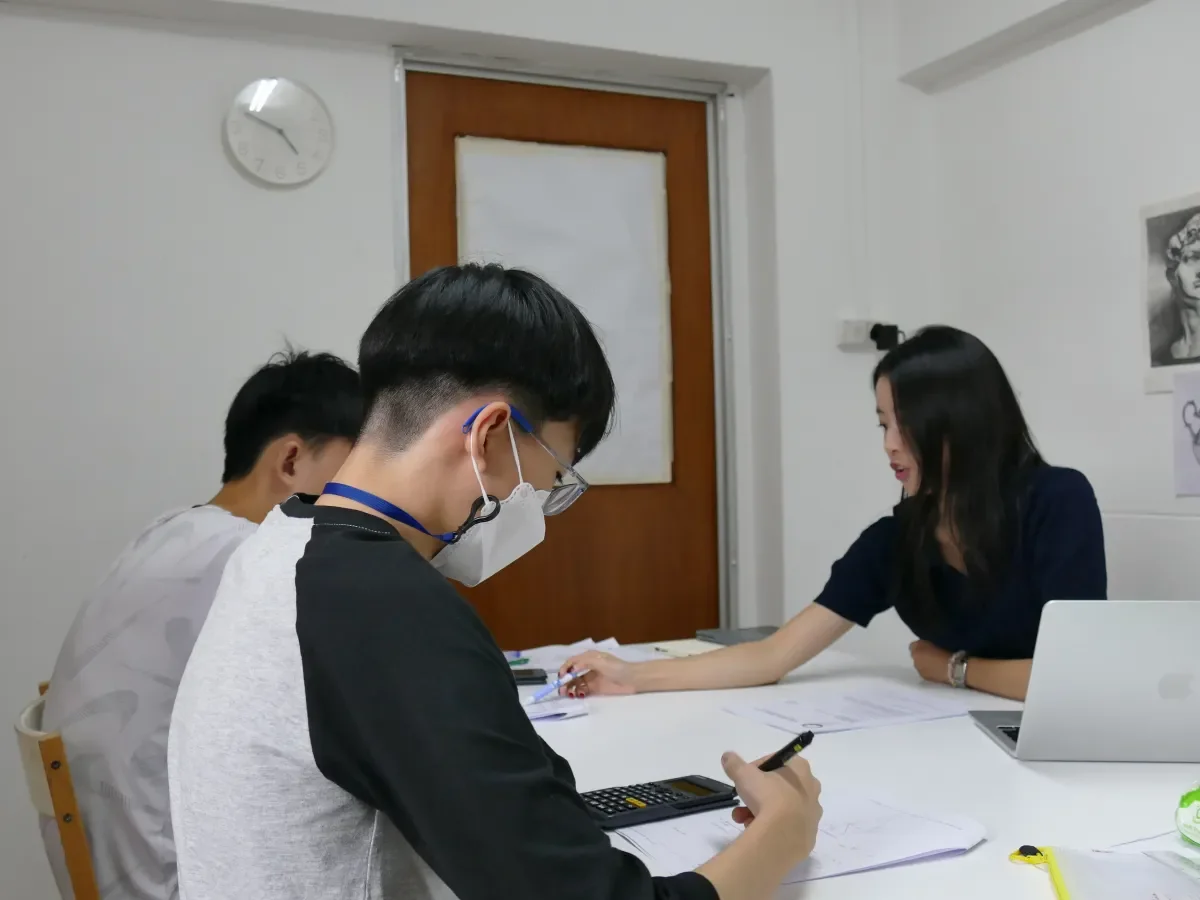
For Woodlands families where English is the primary home language, O-Level Chinese tuition serves a fundamentally different purpose than for students at SAP schools — it builds the vocabulary base, listening comprehension, and formal register confidence that home environment alone does not provide. This guide addresses the specific challenges Woodlands secondary students face with Chinese Language (syllabus 1160) and Higher Chinese (1116), and practical strategies that account for an English-dominant starting point. This guide is by Ancourage Academy, whose Woodlands centre supports students from local secondary schools through O-Level / SEC Chinese (K320).
As a multilingual educator fluent in four languages, Angie understands the experience of learning in a language that is not the home language. She has helped Woodlands secondary students build Chinese confidence from a range of starting points — from students who barely speak Mandarin at home to those with conversational Mandarin but examination-register gaps.
Singapore is transitioning to Full Subject-Based Banding (Full SBB), where Mother Tongue Languages can be taken at G1, G2, or G3 level. Whether preparing for O-Levels now or the SEC examination under Full SBB, the Chinese Language strategies in this guide apply equally.
The O-Level Chinese Language examination (syllabus 1160) totals 200 marks across Writing (60), Comprehension (70), and Oral/Listening (70). For a full exam structure breakdown, see the O-Level Chinese preparation guide. This article focuses on the specific challenges Woodlands students face — particularly those from English-dominant homes — and practical strategies to address them.
Book a trial class (usually $18) at Ancourage Academy's Woodlands centre for a diagnostic Chinese assessment that pinpoints your child's vocabulary and comprehension gaps.
Higher Chinese Language (1116): The 2-Point JC Advantage
Higher Chinese Language (HCL, syllabus 1116) offers 2 bonus points towards the L1R5 (L1R4 under the 2028 PSE) aggregate when both English and HCL are graded A1 to C6 — a significant advantage for competitive JC admissions where 1-2 points can determine acceptance. A D7 or better in HCL also exempts students from H1 Mother Tongue at JC.
- Who should take HCL: Students with strong Chinese foundations — typically those who earned a Distinction, Merit or Pass in PSLE Higher Chinese or demonstrated consistent A1-B3 grades in secondary Chinese
- Exam timing: most schools enter HCL students for the standard Chinese (CL) O-Level paper at the end of Sec 3 and the HCL paper at the end of Sec 4 — schools set their own arrangements and Integrated Programme schools differ, so check with the school
- Additional components: HCL has longer, denser comprehension passages and more demanding essay requirements, including argumentative writing (议论文) at a higher level (classical Chinese, 文言文, is enrichment beyond the exam, not an examined component)
- Risk assessment: Students who are likely to score E8 or worse in HCL should reconsider — they would not receive the bonus points, and the effort might be better directed at improving other subjects
For a detailed analysis of HCL costs and benefits, see Ancourage Academy's Higher Chinese tuition guide.
Which Secondary Schools Near Woodlands Offer Chinese Programmes?
Four secondary schools within about 2 km of our Woodlands centre — and a fifth, Marsiling Secondary, just beyond it — offer Chinese Language programmes, but none is a SAP school — meaning Woodlands students who take Higher Chinese do so by individual choice, not school mandate.
| School | Chinese Programme Highlights | Distance from Vista Point |
|---|---|---|
| Woodlands Ring Secondary | Standard and Higher Chinese tracks; Future of Transportation ALP (STEM) analytical skills transfer well to Chinese comprehension and argumentative essay writing | ~1.8 km / short bus ride |
| Riverside Secondary | G1/G2/G3 Chinese under Full SBB; supportive Mother Tongue environment with cultural enrichment activities | ~1.3 km / short bus ride |
| Woodgrove Secondary | Full Chinese language programme; STEM-Sustainability ALP supports analytical thinking applicable to oral examination preparation | ~0.4 km / 5 min walk |
| Christ Church Secondary | Standard Chinese programme; walking distance to Vista Point for convenient after-school Chinese tuition | ~0.5 km / 5 min walk |
| Marsiling Secondary | Chinese language programme serving the Marsiling-Woodlands corridor; at Marsiling MRT (NS8), 1 stop from Woodlands (NS9) | ~2.1 km / short MRT or bus ride |
Unlike the Bishan area, which has Catholic High, a SAP school where students take Higher Chinese or Chinese and most sit Higher Chinese, Woodlands does not have a SAP secondary school. This means Woodlands students who take Higher Chinese do so without that surrounding cohort and immersion — making targeted HCL tuition support particularly valuable for maintaining motivation and exam readiness.
Ancourage Academy offers Sec 3 Chinese and Sec 4 Chinese classes at the Woodlands centre, covering both standard Chinese and Higher Chinese preparation.
The English-Dominant Home Challenge
Unlike the Bishan area — where Catholic High, a SAP school, puts most of its cohort through Higher Chinese alongside daily Mandarin immersion — Woodlands has no SAP secondary school, and most families in the district communicate primarily in English at home.
This creates a measurable impact on Chinese language development. Students who hear formal Chinese only during school Mother Tongue lessons — MOE's 2021 Secondary Mother Tongue syllabus allocates 3 to 4 hours a week at Secondary 3 and 4 — develop fundamentally different language profiles from SAP students, whose school day layers Chinese-medium assembly, cultural activities and peer conversation on top of a Higher Chinese curriculum. The specific gaps Ancourage Academy tutors observe in Woodlands students include:
- Vocabulary acquisition ceiling: SAP students absorb Chinese vocabulary through daily immersion — assembly talks, cultural activities, peer conversation. Woodlands students from English-dominant homes may still be working below the 1,600-1,700 characters MOE targets for the end of P6, while O-Level / SEC passages assume comfortable handling of unseen text well beyond it. This vocabulary gap cannot be closed by memorising word lists; it requires sustained reading and listening exposure.
- Listening processing speed: Formal Mandarin audio processing is directly correlated with hours of exposure. Students who watch English-language YouTube and Netflix develop fast English audio processing but may struggle when the Paper 3 listening section plays formal Chinese speech at natural speed. The listening paper cannot be effectively crammed — it requires months of daily audio exposure.
- The confidence spiral: Students who feel weak in Chinese participate less in classroom MTL discussions, which further reduces their exposure. By Sec 3, this spiral can produce students who are capable of scoring B3-C5 but who have internalised a belief that Chinese is "not their subject" — a belief that limits effort and performance.
The encouraging reality: Woodlands students who commit to structured daily Chinese exposure — even just 30 minutes combining reading, listening, and speaking — can close the gap within two to three terms. The key is consistency, not intensity.
What Are Common Challenges for Woodlands Chinese Students?
The challenges Woodlands students face in O-Level Chinese are distinct from those at SAP schools — rooted not in complacency but in limited formal Chinese exposure outside the classroom.
Thinking in English, writing in Chinese
The most common pattern Ancourage Academy tutors see in Woodlands students: they mentally compose answers in English, then translate into Chinese. This produces grammatically awkward Chinese with English sentence structures — 被动句 (passive voice) overuse from English passive constructions, word-order calques that put time and place phrases after the verb, English-style (我去图书馆在星期六 instead of 我星期六去图书馆), and direct translation of English idioms that do not work in Mandarin. For example, a student who thinks "The environment is being destroyed by humans" will write 环境被人类破坏了 (passive) instead of the more natural Chinese construction 人类不断地破坏环境 (active). Breaking this translation habit requires training students to think in Chinese sentence patterns from the outset.
The vocabulary ceiling
Unlike SAP students who have broad vocabulary but need depth, Woodlands students often hit a vocabulary ceiling around Sec 2 level that prevents access to the higher-register words that distinguish A1-B3 essays from C5-C6 work. The solution is thematic vocabulary building — not random word lists, but systematic acquisition organised by the five themes Ancourage Academy tutors find recur most in O-Level / SEC composition prompts: 环境 (environment), 科技 (technology), 教育 (education), 社会 (society), and 家庭 (family). Each topic has 20-30 key formal expressions that recur across exam years.
Oral exam anxiety in a second language
Students who are confident, articulate speakers in English may freeze during the Chinese oral examination. The video discussion component requires spontaneous opinion-forming in formal Mandarin — an unfamiliar cognitive task for students who think, argue, and express emotions in English. This is not a content problem (the student may have strong views) but a language-switching problem. Regular oral practice in Mandarin, starting with low-stakes conversation and building to structured debate, is the most effective remedy.
G-Level Chinese Under Full SBB: Choosing the Right Track
Under Full Subject-Based Banding (Full SBB), Woodlands students can take Chinese at G1, G2, or G3 level — and choosing the right track is a critical decision, because every Full SBB cohort sits the SEC examination from 2027 and the JC/MI aggregate counts only G3 grades.
- G3 Chinese (equivalent to former Express Chinese / O-Level): For students consistently scoring B3 or better in school Chinese. This is the track that earns G3 grades on the SEC certificate (the O-Level standard) and qualifies for the 2 HCL bonus points if combined with Higher Chinese.
- G2 Chinese (equivalent to former Normal Academic Chinese): For students scoring C5-C6 who would struggle at G3 intensity. G2 allows students to secure a better grade at a manageable level — a strategic choice for students whose strengths lie in other subjects. Under the SEC examination from 2027, G2 and G3 grades will appear on the same certificate.
- G1 Chinese (equivalent to former Normal Technical Chinese): For students with significant Chinese language challenges who need foundational support.
The key insight for Woodlands parents: choosing G2 is not giving up — it is a strategic decision that can protect overall results instead of struggling at G3. Be clear about the trade-off, though: the JC admission aggregate counts G3 subjects only (L1R5 today, L1R4 from the 2028 PSE), so a G2 grade does not feed it. Schools like Riverside Secondary already operate under Full SBB, and Ancourage Academy tutors can advise on the right level based on your child's current performance. See our G2 vs G3 guide for detailed analysis.
Building Chinese Vocabulary from an English-Language Home
For Woodlands students from English-dominant homes, Chinese preparation is fundamentally about building the vocabulary base and listening fluency that daily immersion would otherwise provide — a different starting point from SAP students who already have these foundations.
Sec 1-2: Foundation building
- Bilingual reading: Start with Chinese-English bilingual texts (side-by-side editions) to build reading confidence without frustration. The Pleco dictionary app provides instant character lookup for independent Chinese reading.
- Chinese subtitles on English content: Add Chinese subtitles when watching English shows — this builds character recognition passively without feeling like study.
- Conversation with family: If grandparents speak Mandarin, regular phone or video calls in Chinese provide natural speaking practice. Even 10 minutes twice weekly builds oral confidence.
- Daily Chinese audio: CNA Chinese news clips (shorter and more accessible than 早报新闻) build listening speed gradually. Start with 5 minutes daily and increase.
Sec 3: Exam-oriented vocabulary
- Topic-specific word banks: Build personalised vocabulary banks for the five core essay themes. For each topic, learn 20-30 formal expressions with example sentences.
- Essay phrases by register: Create a personal reference sheet mapping casual Mandarin to formal 书面语 equivalents — organised by function (expressing agreement, disagreement, cause, consequence, concession).
- Comprehension practice: Work through past O-Level Paper 2 passages focusing on inference questions. For English-dominant students, the strategy is: read the question first, then scan the passage for relevant sections, rather than reading the entire passage first (which is slower for weaker readers).
Sec 4: Speed and application
- Timed writing: One full Paper 1 (functional writing + essay) under timed conditions every week. After each practice, review with a tutor to identify register slips.
- Past-year vocabulary extraction: After completing each practice paper, extract 10 unfamiliar words and add them to your topic word bank. This builds exam-specific vocabulary efficiently.
Comprehension and Oral for English-Dominant Students
English-dominant Woodlands students need different comprehension and oral strategies from students who already read and speak Chinese fluently — the focus is on building processing speed, not just technique.
- Comprehension: question-first approach. Read the questions before the passage. This gives English-dominant students a search target, making passage reading more efficient than the open-ended "read everything carefully" approach that works for fluent readers.
- Cloze: context pattern recognition. For weaker readers, cloze passages feel overwhelming. Train students to identify the sentence structure around the blank (是...的, 不仅...而且, 虽然...但是) and select words that complete the grammatical pattern, even when the overall passage meaning is unclear.
- Oral: confidence before complexity. Start oral practice with topics the student cares about — school life, hobbies, current events they follow in English — and build Mandarin discussion skills from familiar ground. Record practice sessions for self-review. The goal is reducing the "freeze" response before adding sophisticated vocabulary and examples.
- Listening: graded audio exposure. Start with CNA Chinese (accessible), progress to Channel 8 news (moderate), and build towards 早报新闻 audio (formal). Attempting formal news broadcasts too early produces frustration and disengagement.
Why Choose Chinese Tuition Near Woodlands MRT?
Ancourage Academy's Woodlands centre at Vista Point is within 15 minutes of six local secondary schools, and consistent attendance at a conveniently located centre is the strongest predictor of sustained improvement in Chinese.
- Travel time: Students from Woodlands Ring, Riverside, Christ Church, and Woodgrove secondary schools can reach Vista Point within 5-15 minutes by bus or walking
- Marsiling and Admiralty access: Families in Marsiling (NS8, 1 stop away) and Admiralty (NS10, 1 stop away) can reach Woodlands MRT within 2-3 minutes
- After-school scheduling: Ancourage Academy's Chinese classes are scheduled around local school dismissal times, minimising wasted travel time for students juggling CCAs and homework
- Small group focus: 3-6 students per group allows tutors to provide individualised feedback on essay writing, comprehension techniques, and oral skills — critical for Chinese where teacher feedback on written expression is essential for improvement
Ancourage Academy's Chinese tutors at the Woodlands centre run a secondary Chinese tuition programme familiar with the exam schedules and teaching pace of local secondary schools. Ancourage Academy's Chinese tutors find that students who combine regular essay writing practice with systematic comprehension technique training show the most consistent improvement, typically within one to two terms of weekly attendance.
"The biggest shift for O-Level Chinese is moving from spoken register to written register — once students hear the difference, their essay marks improve noticeably within a term," notes Angie, founder of Art by Ancourage and a multilingual educator at Ancourage Academy. "I focus on building a bank of formal expressions that replace the casual Mandarin students default to under exam pressure."
Ancourage Academy offers Sec 3 Chinese and Sec 4 Chinese tuition. For more school-by-school and Higher Chinese guidance, browse our full Chinese guides hub. Book a trial class (usually $18) at Ancourage Academy's Woodlands centre to assess your child's current Chinese level and receive personalised recommendations, or WhatsApp us with any questions.
Common Questions About O-Level / SEC Chinese in Woodlands
My child scores well in school Chinese tests but poorly in O-Level practice papers — why?
School Chinese tests are calibrated to the class and tend to recycle question patterns students have practised. O-Level papers test a wider vocabulary range, present unfamiliar passage topics, and require genuine inference rather than pattern matching. Woodlands students who score B3-C5 in school often score one to two grades lower on their first O-Level practice paper. Closing this gap requires exposure to diverse question types and vocabulary beyond school materials.
How much Chinese exposure does my child need outside school?
A minimum of 30 minutes daily across three activities: 10 minutes reading (Chinese news articles, 小红书 posts, or graded readers), 10 minutes listening (CNA Chinese clips or Channel 8 segments), and 10 minutes speaking or writing (conversation with family, voice recording practice, or short diary entries). This exposure does not need to be formal study — the goal is surrounding the brain with formal Mandarin to build processing speed.
Should my child take G2 or G3 Chinese under Full SBB?
If your child scores consistent B3 or better in school Chinese, G3 is achievable with tuition support. For students scoring C5-C6, G2 can produce a better overall result — a solid G2 grade is worth more than a barely-passing G3 grade. Note the trade-off: the JC admission aggregate counts G3 subjects only (L1R5 today, L1R4 from the 2028 PSE), so a G2 grade does not contribute to it. Ancourage Academy tutors assess students individually to recommend the right track. See our G2 vs G3 guide for a detailed analysis including SEC examination implications from 2027.
Is it worth taking Higher Chinese for the 2 JC bonus points?
For Woodlands students from English-dominant homes, the HCL decision requires honest assessment. Students with consistent A1-B3 school grades and willingness to commit to intensive preparation should pursue HCL — the 2 bonus points can be decisive for competitive JC admission. Students scoring B4-C6 may gain more by securing an A1-A2 in standard Chinese. See the Higher Chinese guide.
What free Chinese learning resources work for English-dominant students?
Start with accessible resources rather than jumping to advanced materials: the Pleco dictionary app for instant character lookup while reading, Chinese subtitles on Netflix or YouTube for passive vocabulary building, CNA Chinese news clips (shorter and simpler than 早报新闻), 小红书 for informal Chinese reading at natural difficulty levels, and the MOE recommended Chinese reading list for exam-relevant literary vocabulary. Progress to 联合早报 and past-year SEAB papers once reading confidence builds.
When should Woodlands students start Chinese tuition?
For English-dominant students, earlier is better — Sec 1-2 tuition focuses on vocabulary foundation and listening fluency that cannot be fast-tracked later. For students with adequate school Chinese grades, structured exam preparation should begin by Sec 3 Term 1. HCL students should start by Sec 2 Term 4. Ancourage Academy's Sec 3 Chinese programme provides SEAB-aligned preparation.
What Chinese tuition is available near Woodlands?
Ancourage Academy offers Sec 3 Chinese and Sec 4 Chinese tuition at the Vista Point centre near Woodlands MRT. Classes of 3-6 students are scheduled around local school dismissal times. Tutors are experienced with English-dominant learners and adjust teaching approach accordingly. Book a trial class (usually $18) to get started.
Related: Higher Chinese Tuition Guide · Secondary Chinese Tuition Guide · O-Level Science Woodlands · O-Level Maths Woodlands · O-Level English Woodlands · O-Level Prep for Woodlands · Higher Chinese 文言文 explained · Secondary English Tuition explained