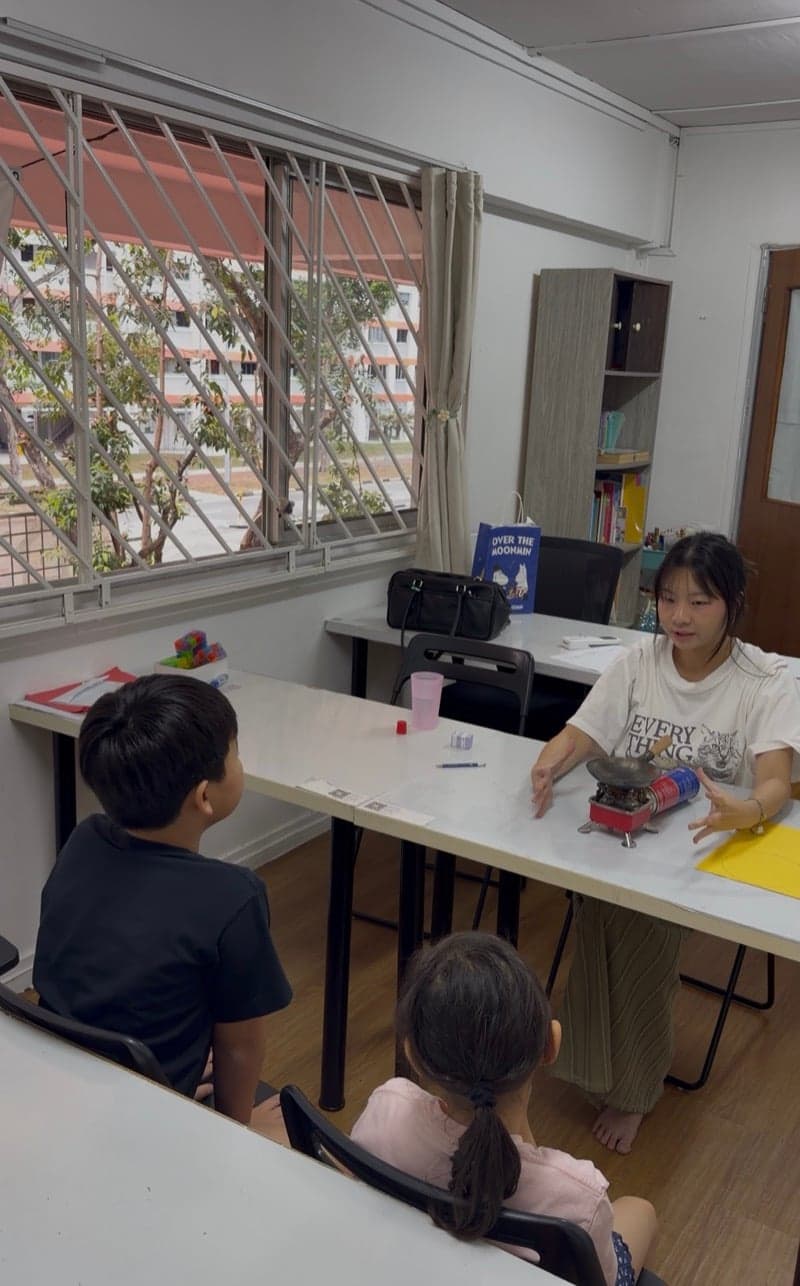
Primary Science Tuition
Ancourage Academy's Primary Science tuition covers P3 to P6, fully aligned with Singapore's MOE Primary Science Syllabus (2023). Our small classes of 3-6 students at tuition centres near Bishan MRT and Woodlands South MRT build scientific inquiry skills across five core themes: Diversity, Cycles, Systems, Interactions, and Energy. P3-P4 develops observation, classification, and experiment design skills. P5-P6 focuses on intensive PSLE preparation — including open-ended questions, data-based questions, and process skill application across topics like cells, electrical systems, forces, and the water cycle. Our ESB methodology — combining Ebbinghaus spaced retrieval for concept retention, Socratic questioning to develop scientific reasoning, and Bruner's spiral curriculum from concrete examples to abstract principles — ensures deep understanding, not rote memorisation. All materials are included with no registration fees, and parents receive regular progress updates plus 24/7 WhatsApp homework support.
Reviewed by Charmaine, Early Childhood & Primary Education Specialist ·
At a Glance
Key details about our Primary Science tuition programme, including class size, locations, and exam focus.
| Subject | Science |
|---|---|
| Levels | P3 - P6 |
| Class Size | 3-6 Students |
| Locations | Bishan & Woodlands |
| Exam Focus | PSLE |
| Trial | Free (usually $18) |
What Your Child Learns at Each Level
Our Science programme takes students from P3 to P6, building from diversity & cycles all the way to PSLE readiness
Diversity & Cycles
- •Observation & classification
- •Living & non-living things
- •Life cycles
- •Magnets
Systems & Matter
- •Digestive system
- •States of matter
- •Light & heat energy
- •Fair test design
Systems & Circuits
- •Respiratory & circulatory
- •Electrical circuits
- •Plant reproduction
- •Application questions
PSLE Year
- •Energy & forces
- •Cross-topic integration
- •OEQ techniques
- •Exam strategies
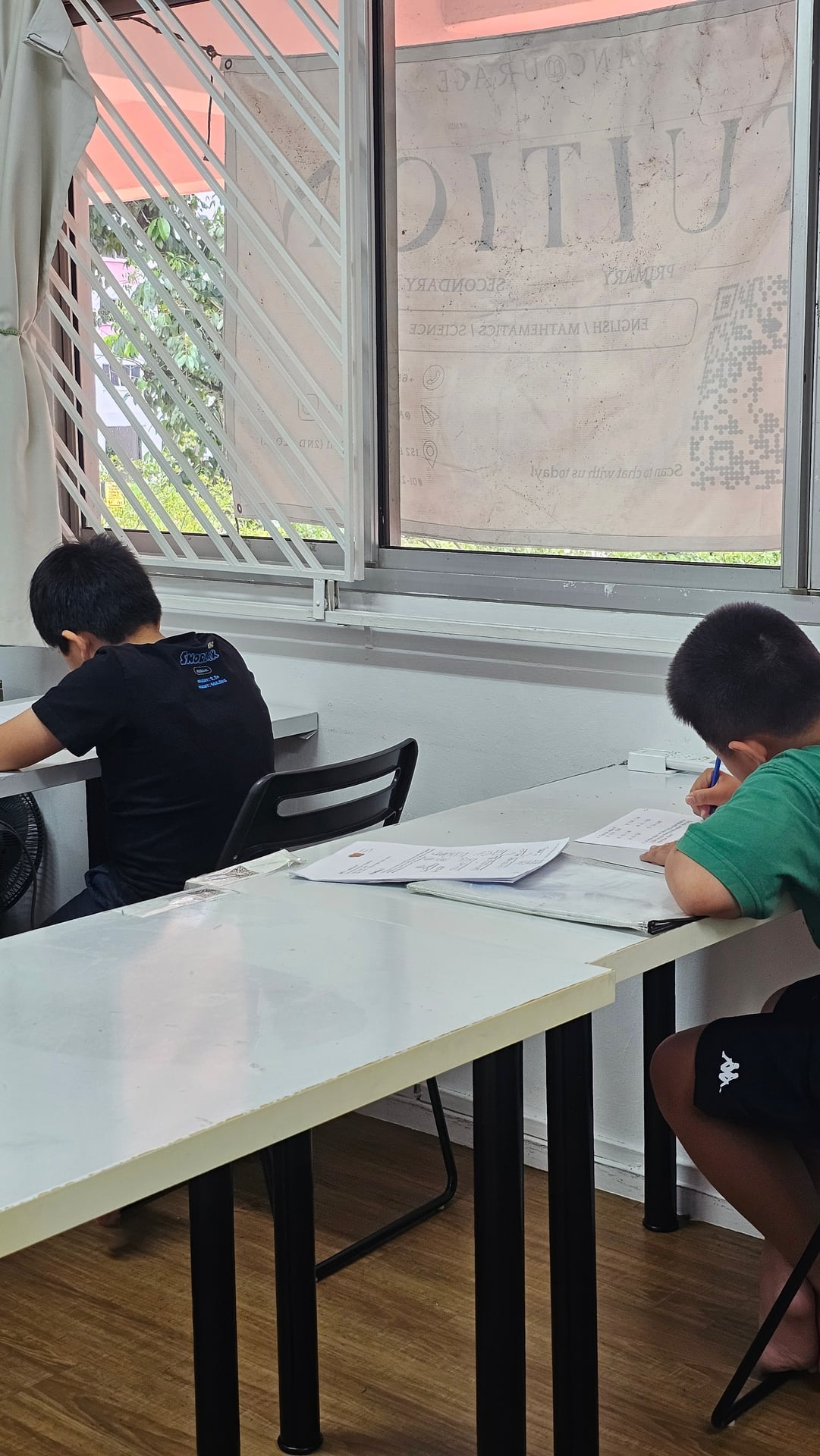
How We Teach Science
Our ESB methodology adapts specifically to science learning — building lasting understanding through evidence-based teaching strategies.
Ebbinghaus Memory Theory
For Science, spaced retrieval means revisiting key concepts like energy conversion, life cycles, and system interactions at expanding intervals — so scientific vocabulary and process skills remain accessible for PSLE open-ended questions.
Socratic Questioning
In Science class, we ask 'What evidence supports your conclusion?' and 'What would happen if we changed this variable?' — guiding students to think like scientists rather than memorise textbook definitions.
Bruner's Scaffolding
Science concepts progress from concrete observations (hands-on experiments) to pictorial diagrams (labelled drawings) to abstract explanations (written scientific reasoning) — building genuine understanding of how the natural world works.
“Science at the primary level is about nurturing curiosity — teaching children to observe, question, and test ideas rather than memorise definitions. When students learn to think like young scientists, PSLE Science becomes a chance to show what they understand, not something to fear.”

Early Childhood & Primary Education Specialist, Ancourage Academy
SUSS · Early Childhood Specialist
What Science Challenges Do Students Face?
These are the most frequent difficulties we help Primary students overcome
- Cannot structure open-ended answers — writes vague explanations without scientific keywords
- Struggles to link concepts across different topics (e.g., connecting water cycle to states of matter)
- Memorises definitions but cannot apply them to novel scenarios in exam questions
- Difficulty designing fair tests — confuses variables to change, measure, and keep constant
- Cannot interpret graphs and tables accurately or draw evidence-based conclusions
- Finds it hard to explain cause-and-effect relationships in complete scientific sentences
How Do We Prepare for PSLE Science?
Understanding the PSLE Science format — 2 components with targeted strategies for each
Booklet A
30 MCQ
60 marks · 1h 45min
Booklet B
Open-ended questions
40 marks · (combined)
Our Exam Strategies
- Explain the science in full — PSLE markers credit correct understanding in the pupil's own words, so name the process ('evaporation', 'photosynthesis', 'conductor') and say what causes it and what it leads to
- Structure OEQ answers with cause-effect-conclusion format for full marks
- Eliminate MCQ distractors by identifying which options contain scientific inaccuracies
- Time management — spend 1.5 minutes per mark on Booklet B and check answers systematically
Source: SEAB PSLE Examination Information
References: MOE Primary Science Syllabus · SEAB PSLE Format
Why Choose Ancourage for Science?
Proven results with a personalised approach to science learning
Small Class Sizes
3-6 students per class for focused attention
MOE-Aligned
Curriculum follows MOE syllabus closely
PSLE Experts
Teachers experienced in PSLE preparation
Hands-On Experiments
Inquiry-based learning with real experiments
What’s Included
Everything every student receives — no hidden costs
No Registration or Material Fees
All worksheets, notes, and learning materials included
24/7 WhatsApp Support
Direct access to teachers for homework help between lessons
Progress Reports & PTC
Regular updates plus annual Parent-Teacher Consultation
Tailored Learning Materials
Resources targeted to each student’s core needs
Flexible Scheduling
Weekly reminders, plus replacement lessons and schedule adjustments on 24 hours' notice, subject to availability
Competition Support
Help with academic competition registration and preparation
Primary Science classes are also available online — live via Microsoft Teams, island-wide, with the same teachers and small groups of 3-6. Learn about online classes
Deepen Your Learning
Comprehensive topic guides covering everything in this subject area.
PSLE
Everything parents and students need to know about the Primary School Leaving Examination — from subject-specific strategies to scoring, stress management, and school selection.
Browse guide →Science
Your guide to Science education in Singapore — from Primary school foundations to Secondary combined and pure sciences, including Biology, Chemistry, and Physics.
Browse guide →Study Tips & Exam Prep
Practical study tips and exam preparation strategies that work — from effective revision techniques and time management to past year paper strategies and exam day tips for Singapore students.
Browse guide →
Frequently Asked Questions
Yes — P3-P6 primary science tuition at Bishan and Woodlands is tutor-led in small groups of 3-6. Your child gets a dedicated tutor building inquiry skills, experiment understanding, and PSLE exam technique. A trial class (usually $18) lets you meet the tutor first.
Our trial class is usually $18. Regular fees vary by level — P3-P4 and P5-P6 have different rates reflecting the progression from foundational inquiry skills to intensive PSLE Science preparation. Contact us for the latest pricing. We keep our rates competitive for small-group Science tuition of 3-6 students at our Bishan and Woodlands centres.
Science is introduced in the MOE curriculum at Primary 3 and spirals from P3 to P6 across five themes: Diversity, Cycles, Systems, Interactions, and Energy. Before P3, students develop foundational observation and reasoning skills through English and Mathematics that prepare them for scientific inquiry. Starting tuition at P3 builds good habits early — structured note-taking, keyword usage, and fair test design.
Our programme covers all five PSLE Science themes: Diversity (classifying living and non-living things), Cycles (life cycles, water cycle, states of matter), Systems (human body systems, plant systems, electrical circuits), Interactions (forces, food chains, man's impact on the environment), and Energy (forms, conversions, conservation). Each theme is revisited with increasing depth from P3 to P6.
We teach a structured answering approach: identify the science concept, use scientific keywords precisely, explain cause-and-effect relationships, and link back to the question. Students practise with past-year PSLE open-ended questions across all five themes to build confidence, accuracy, and the ability to earn full marks on Booklet B.
Yes, we incorporate hands-on activities and inquiry-based learning aligned with the MOE approach. Students conduct experiments on magnetism, heat conduction, and electrical circuits to understand concepts firsthand. They learn to design fair tests, identify variables to change and keep constant, record observations, and draw evidence-based conclusions — process skills directly assessed in PSLE Booklet B.
With only 3-6 students, our teachers can facilitate genuine scientific discussions, ask probing questions, and address individual misconceptions about topics like energy conversion, life cycles, and forces. Students are more willing to ask 'why' questions, discuss experimental observations, and think critically in small-group settings — essential habits for PSLE Science success.
Ready to Excel in Science?
Book a trial class and see how our approach helps students master science.
Available at our Bishan and Woodlands centres, near Bishan MRT and Woodlands South MRT.
Serving students from nearby schools including Catholic High Primary, Kuo Chuan Presbyterian Primary, Ai Tong School, Marymount Convent School, CHIJ St Nicholas Girls' School, Admiralty Primary, Woodgrove Primary, Si Ling Primary, Innova Primary, and Fuchun Primary.
Also from Ancourage: Art classes for kids, teens & adults →