
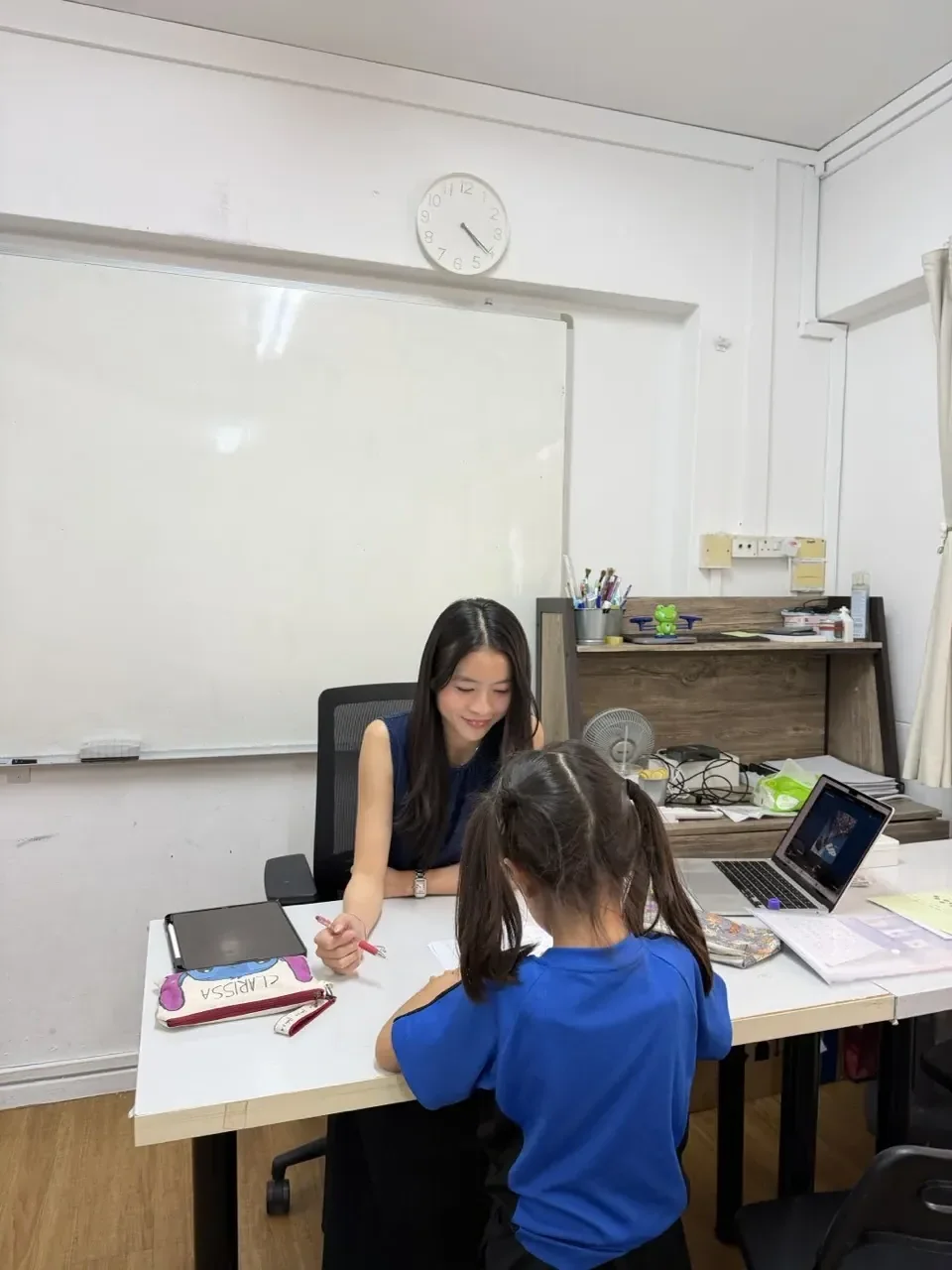
If your child has come home with a failing English grade, you are not alone — and the grade itself does not tell you what is actually going wrong. Secondary English in Singapore is not one subject but four distinct components, each testing different skills. A student can speak fluent English at home yet fail the exam because academic English proficiency and conversational fluency are fundamentally different. The first step is not panic or more homework — it is diagnosis. This guide is from Ancourage Academy, whose English tutors work with secondary students rebuilding skills mid-track.
At Ancourage Academy, tutors see this pattern repeatedly: parents arrive saying "my child is failing English" but do not know which part of English is the problem. A student who struggles with composition needs entirely different support from one who loses marks on comprehension inference. This guide helps you identify the real problem, understand what you can do at home, and recognise when professional support will make a measurable difference.
Secondary English Failure Is Often Invisible Until It Is Urgent
Unlike mathematics — where a wrong answer is immediately visible — English decline is gradual and often masked by a child's ability to speak the language fluently at home, which leads parents to assume academic English is equally strong.
In a typical scenario, a Sec 1 or Sec 2 student loses 2-3 marks per comprehension question on inference, scores 14/30 on composition because ideas lack development, and scrapes through oral with surface-level responses. Individually, none of these results triggers alarm. But across a full exam, these small losses compound into a C6, D7, or worse. According to the O-Level English Syllabus 1184, the exam tests writing, reading, listening, and speaking as separate papers — each with its own skill demands.
Parents miss the warning signs because spoken English at home can sound perfectly fine. A child who watches English-language media, speaks English with friends, and reads social media in English appears fluent. But academic English requires formal register, structured argumentation, inference skills, and summary technique that casual English exposure does not build. By the time parents see a failing grade on a report card, the underlying weaknesses may have been accumulating for two or three terms.
The Four Components Where Secondary Students Fail
The O-Level / SEC English exam has four distinct papers, each testing a different skill — and most failing students are weak in one or two components, not all four, which means targeted intervention is more effective than generic English tuition.
| Paper | Component | Weighting | Where Marks Are Lost |
|---|---|---|---|
| Paper 1 | Writing (Editing + Situational + Continuous) | 35% | Undeveloped arguments, weak structure, language errors |
| Paper 2 | Comprehension + Summary | 35% | Inference questions, summary paraphrasing, time management |
| Paper 3 | Listening Comprehension | 10% | Missing implied information, note-taking speed |
| Paper 4 | Oral Communication | 20% | Shallow responses, lack of elaboration, poor video stimulus analysis |
Papers 1 and 2 together carry 70% of the total grade. A student who is weak in both writing and comprehension is fighting an uphill battle with 70% of the marks. However, the fastest improvement often comes from oral and listening — Paper 4 (oral) rewards structured practice within weeks, and Paper 3 (listening) responds to targeted note-taking strategies. When time is limited, focusing on the components with the highest marks-per-effort ratio can shift an overall grade by one to two bands.
Diagnosing the Real Problem
Before spending money on tuition or buying assessment books, sit down with your child's most recent English exam paper and identify the specific pattern of errors — this 30-minute exercise is more valuable than weeks of unfocused revision.
English underperformance typically falls into four categories, each requiring a different approach:
- Vocabulary gaps: The student does not understand enough words to access comprehension passages or express ideas precisely in writing. Signs include blank answers on vocabulary-in-context questions and repetitive, simple word choices in essays.
- Structural writing weakness: The student has ideas but cannot organise them. Essays lack clear topic sentences, arguments are undeveloped, and paragraphs do not connect logically. The student may write long essays that score poorly because length does not equal quality.
- Comprehension inference difficulty: The student answers literal questions correctly but loses most marks on inference — questions that ask "What does the writer suggest?" or "Why did the writer use this word?" The student reads for information but not for meaning.
- Exam technique gaps: The student understands English well enough but does not know how to answer in the format that scores marks — summary technique, situational writing formats, or oral response structure.
Use this parent diagnostic checklist on your child's last exam paper:
- Did they lose more marks on Paper 1 (writing) or Paper 2 (comprehension)?
- On Paper 2, were errors concentrated on inference questions or on literal/factual questions?
- On Paper 1 composition, did the teacher's comments mention ideas, structure, or language?
- Did the summary score sit in the lower half of the marks available for it? (This usually signals a technique issue, not a comprehension issue.)
- Did they attempt all questions or leave some blank? (Blank answers suggest time management or avoidance.)
- Is the oral score consistently below 20 out of 30? (Oral often has the most room for quick improvement.)
- Are grammar errors consistent across papers? (Repeated subject-verb agreement or tense errors indicate a systematic gap.)
The answers determine where to focus. A student weak in inference needs reading and analytical practice. A student weak in composition needs writing frameworks. A student weak in summary needs a specific paraphrasing technique — not more reading.
If the pattern is not obvious from the paper alone, a trial class (usually $18) at Bishan or Woodlands includes a diagnostic assessment that pinpoints which component is costing the most marks — before you commit to any programme.
The Secondary 1-2 to Secondary 3-4 Cliff
Many students who pass English comfortably in Sec 1-2 hit a sudden drop in Sec 3 because upper secondary English demands abstract thinking, complex argumentation, and sophisticated language that lower secondary does not fully prepare them for.
The difficulty jump from lower to upper secondary English is steeper than most parents expect. Several factors converge at Sec 3:
- Abstract comprehension themes: Lower secondary passages often deal with concrete, relatable topics — school life, family, nature. Upper secondary passages tackle abstract themes: ethics, societal change, philosophical arguments. Students who read literally struggle with texts that operate on multiple levels of meaning.
- Higher-order inferencing: Questions move beyond "What does the writer imply?" to "How does the writer's use of contrast reinforce the argument?" This demands not just inference but analysis of technique — a cognitive step that many Sec 3 students have not practised.
- Argumentative and discursive writing expectations: In Sec 1-2, narrative composition still earns decent marks. By Sec 3, students are expected to write argumentative essays with a clear thesis, supporting evidence, counter-arguments, and a logical conclusion. The shift from storytelling to structured argumentation trips up students who relied on creative writing skills.
- Expository text types: Situational writing in upper secondary demands more sophisticated formats — formal proposals, reports with recommendations, letters to editors. Students must adopt an appropriate tone and register, not just convey information.
The transition catches students and parents off guard because lower secondary grades provided a false sense of security. A B4 in Sec 2 does not guarantee a B4 in Sec 3 — the standard has shifted. For students already hovering around C5-C6 in lower secondary, the upper secondary cliff can push them into failing territory. For a broader look at academic recovery strategies, see the guide on helping a struggling student catch up.
What Parents Can Do at Home
The most effective home strategies for secondary English do not involve essay drilling or assessment book marathons — they involve building the reading habit, vocabulary exposure, and thinking skills that underpin every exam component.
- Reading — curated by interest, not by "classics": A teenager who reads 20 minutes daily — even graphic novels, sports journalism, or science blogs — develops vocabulary and comprehension faster than one forced to read literature they find boring. The key is consistent exposure to written English that is more complex than texting. Ask your child what topics interest them and find quality writing in those areas.
- Conversation — discussing news and debating topics: Dinner-table discussions about current affairs build the same skills tested in oral and argumentative writing. Ask your child: "What do you think about this?" and follow up with "Why?" and "What would someone who disagrees say?" This mirrors the oral exam structure of Planned Response and Spoken Interaction.
- Writing — low-pressure journaling, not essay drilling: A student who writes 150 words daily in a journal — about anything — builds writing fluency without the anxiety of assessment. The goal is comfort with expressing ideas in written form. Do not correct every error; focus on the habit first. Accuracy improves naturally with reading and guided practice.
- Vocabulary — contextual learning through reading: Word lists and vocabulary workbooks are less effective than learning words in context. When your child encounters an unfamiliar word while reading, encourage them to guess the meaning from context before looking it up. Words learned this way stick because they are attached to a meaningful sentence, not an isolated definition.
These strategies work because they address the root causes of English weakness — limited exposure to complex written English, underdeveloped analytical thinking, and reluctance to write. They complement rather than replace school or tuition instruction.
When Professional English Tuition Helps
Professional English tuition is worth considering when specific, persistent patterns of weakness — sustained grades in the C5-9 range, active avoidance of writing tasks, or comprehension scores consistently below 50% — indicate that home support and school instruction are not enough.
Situations where English tuition makes a measurable difference:
- Sustained underperformance (2+ terms at C5 or below): One bad test can be a fluke. Two or more terms of consistently weak results suggest a structural gap that will not self-correct. The gap tends to widen, not narrow, without intervention.
- Avoidance of writing tasks: A student who procrastinates on essays, writes the bare minimum, or claims they "don't know what to write" has likely internalised the belief that they cannot write well. Structured feedback from a tutor who identifies what they do well — and builds from there — breaks this cycle.
- Comprehension scores below 50%: This signals that the student is not yet reading at the analytical level required. A tutor can teach specific inference strategies and answering techniques that school English classes, with 30-40 students, cannot address individually.
What tuition can provide that home support cannot: structured, written feedback on composition drafts (not just a grade, but line-by-line commentary), explicit teaching of exam technique for each paper type, and peer discussion that builds oral confidence. For a deeper analysis of whether tuition is the right investment, see Is Tuition Worth It?
How Ancourage Academy's English Programme Works
Ancourage Academy's secondary English programme uses small groups of 3-6 students and an ESB methodology to deliver the individual feedback and component-specific focus that larger classes cannot provide.
The component-focused secondary English track is structured around the four exam components rather than a generic "English" curriculum. Each session targets a specific paper — one week focuses on comprehension inference technique, the next on argumentative essay structure, the next on summary paraphrasing. This rotation ensures every component receives dedicated attention over a term rather than defaulting to essay practice every lesson.
The small group format is particularly important for English because the subject requires productive practice — speaking, writing, discussing — not just receptive learning. In a group of 3-6, every student writes, every student speaks, and every student receives feedback on their specific errors. A student who makes subject-verb agreement errors gets different correction from one who struggles with paragraph coherence. The Sec 1 and Sec 3 English programmes are designed to meet students at their current level, whether that means foundation-building or exam-technique sharpening.
Book a trial class (usually $18) at Bishan or Woodlands — the trial includes a diagnostic assessment so you will know exactly which components need the most attention. WhatsApp Ancourage Academy if you have questions.
The Transition to O-Level / SEC English
The O-Level / SEC English exam (Syllabus 1184 to 2026; SEC G3 K300 from 2027, same four papers and weightings) is the culmination of secondary English, but students who build strong foundations in Sec 1-3 find the exam manageable — those who wait until Sec 4 to address weaknesses face an uphill battle with limited time.
The O-Level exam structure tests the same four components covered throughout secondary school: Writing (35%), Comprehension (35%), Listening (10%), and Oral (20%). Students who have been addressing component-specific weaknesses from Sec 1-3 are already preparing for the O-Level — the exam format simply formalises what they have been practising. For detailed O-Level exam technique, paper-by-paper strategies, and the full Syllabus 1184 breakdown, see the comprehensive O-Level English Preparation Guide.
From 2027, the new Singapore-Cambridge Secondary Education Certificate (SEC) will replace the O-Level and N-Level exams. Students will sit English papers at their respective G-level (G1, G2, or G3) under Full Subject-Based Banding. The core skills tested — writing, reading, listening, speaking — remain the same. Parents do not need to worry about the label change; the preparation strategies in this guide apply to the O-Level / SEC formats. For more English guides spanning primary through O-Level / SEC, browse our English learning hub.
Common Questions About Secondary English Struggles
My child speaks English fluently but fails English exams. Why?
Spoken fluency and academic English proficiency are different skills. Speaking English at home builds conversational ability, but the O-Level / SEC English exam tests formal writing (structured essays, situational writing in specific formats), comprehension inference (reading between the lines), summary technique (paraphrasing within a word limit), and analytical oral responses. A student can speak fluently and still lack the academic register, paragraph structure, and inference skills that exams demand. The gap is most visible in composition — a fluent speaker may write essays that sound natural but lack the formal argumentation that earns marks.
Which English component should we focus on first?
Focus on the component where your child loses the most marks relative to the paper's weighting. At O-Level / SEC G3 and at SEC G2, Paper 1 Writing (editing, situational writing and composition together) and Paper 2 Comprehension each carry 35%, so start with whichever of the two loses more marks — writing first if writing is weakest, comprehension inference first if comprehension is. At SEC G1 the split is different: Writing carries 30% and Language Use and Comprehension 40%, so use the weighting for your child's level. For students who are weak across all components, oral (20%) often delivers the fastest visible improvement because structured practice produces results within 4-6 weeks. Check your child's exam paper to identify the specific marks lost per component before deciding.
How long does it take to improve secondary English grades?
With targeted, diagnostic-based support, most students see measurable improvement within 6-10 weeks. Oral and listening skills tend to improve fastest (4-6 weeks of focused practice). Comprehension technique improves within 6-8 weeks when students learn specific inference and answering strategies. Composition takes longest because it requires both structural and language development — expect 8-12 weeks for a meaningful grade shift. These timelines assume consistent practice and targeted instruction, not just additional hours of generic revision.
Is one-to-one or group tuition better for English?
For English specifically, small group tuition (3-6 students) offers something one-to-one structurally cannot, because English requires interactive practice — discussing ideas, debating perspectives, and listening to how peers express arguments. These activities mirror the oral exam format and build the analytical confidence needed for comprehension and essay writing. One-to-one tuition suits students with severe anxiety or very specific gaps, but the absence of peer interaction limits oral development. Ancourage Academy uses small groups of 3-6 for this reason.
Should my child read more fiction or non-fiction to improve?
Both serve different purposes, and the best approach is a mix weighted toward your child's weakness. Non-fiction — news articles, opinion pieces, essays — builds the argumentative thinking and formal vocabulary tested in comprehension and essay writing. Fiction builds empathy, narrative awareness, and creative language use. For a student who struggles with argumentative writing and comprehension inference, prioritise non-fiction. For a student who struggles with composition creativity and vocabulary range, fiction is more helpful. The most important factor is that your child reads something consistently — 20 minutes daily of any quality text is better than sporadic reading of "recommended" books.
Visit Ancourage Academy at Bishan or Woodlands, explore secondary English courses, or check pricing.
Related: My Child Is Failing Maths · Motivating Reluctant Learners · O-Level English Preparation Guide · Helping a Struggling Student Catch Up · Sec 1 English Struggles · Does tuition actually help? · Bishan O-Level English support · O-Level / SEC English guide · a guide to P5-P6 English Tuition in Bishan