Crafty Corner (Ages 3–5)
Art by Ancourage · Crafty Corner (Ages 3–5)
Content reviewed: Sep 2026
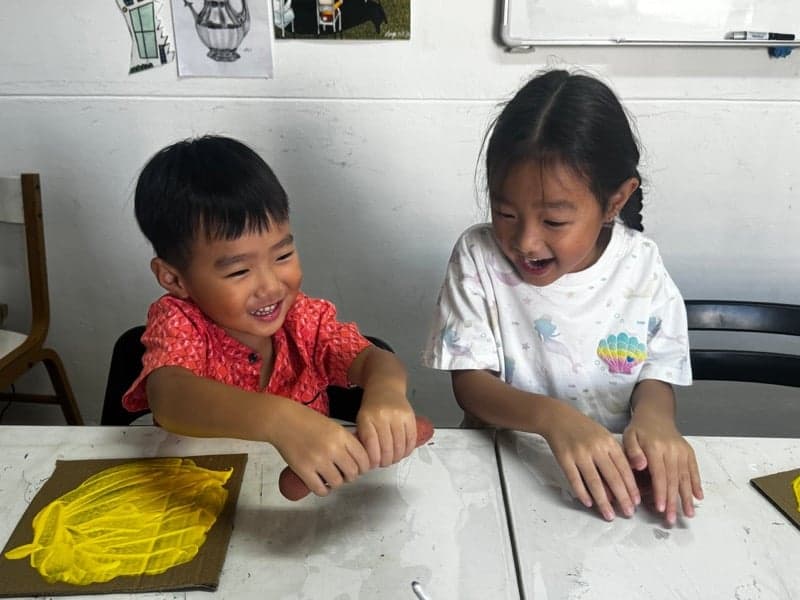
Crafty Corner at Art by Ancourage offers hands-on art classes for children ages 3–5 in Singapore (Bishan & Woodlands). Weekly sessions for small groups of 3-6 students focus on crafts and playful drawing to build fine motor skills, creativity, and confidence. Research shows that children engaged in arts from ages 0–8 develop stronger collaboration and communication skills with peers and teachers (National Endowment for the Arts, 2015). Each lesson introduces sensory play activities including finger painting, sponge stamping, and texture exploration that engage multiple senses and support cognitive development. Children work with safety scissors, chunky crayons, and large brushes, building grip strength and hand-eye coordination through guided practice. Structured colour activities introduce primary colours, simple mixing, and pattern recognition in a playful context. "Every child is an artist—our role is to nurture that creativity with proper technique," note our LASALLE- and NAFA-trained instructors. The programme prepares children for more structured art learning in Mini Masters. Materials included.
Children learn to express ideas freely, build patience and focus, and gain confidence creating imaginative artworks with pride and joy.
Each term follows a thematic arc—from nature and animals to festivals and storytelling—so children revisit core techniques in fresh contexts. Parents receive a brief progress update each term highlighting motor skill milestones, creative growth, and suggested activities to continue art play at home.
At a Glance
Key Details
| Age Range | Ages 3-5 |
|---|---|
| Duration | 1 hour |
| Class Size | 3–6 Students |
| Locations | Bishan & Woodlands |
| Trial Class | $18 / $60 peak |
What's Included
All materials provided
Paints, brushes, paper, and craft supplies
Weekly progress reports
Detailed feedback on your child’s development
24/7 WhatsApp support
Direct communication with the teacher
Take home artwork
Keep every finished piece
Try Academy tuition too
Ask us about a separate academic trial class

“Children's art classes work best when joy comes first. We use mixed media, storytelling, and process-led activities to build observational skills and creative confidence — not just technical drills. The kids who keep coming back are the ones who associate art with play.”
Early Childhood & Primary Education Specialist
Singapore ranked #1 in Creative Thinking — 58% top performers vs 27% OECD average (OECD PISA 2022)
Our Teaching Approach
Three proven pedagogical methods adapted for visual arts education
Ebbinghaus
Children revisit basic skills such as cutting, pasting, colour recognition, and shape drawing through repeated, varied activities that reinforce learning and coordination over time.
Socratic
Teachers use gentle, open-ended questions to spark curiosity and imagination—encouraging children to think about their creations, make choices, and share their ideas confidently.
Bruner
Activities are scaffolded step by step, guiding children from simple tasks to more complex projects. Support is gradually reduced as they gain independence, fine motor control, and creative problem-solving skills.
Class details
| Metric | Value |
|---|---|
| Class size(Art by Ancourage class policy) | 3-6 children |
| Age range(Art by Ancourage Crafty Corner programme) | 3-5 years |
| Mediums(Art by Ancourage curriculum) | Drawing, painting, mixed media, craft |
What Your Child Will Learn
Core skills and growth outcomes from this programme
Hands-on crafts and tactile projects
Strengthen fine motor skills and hand-eye coordination through tactile, hands-on projects.
Drawing and painting activities
Develop focus, patience, and confidence through guided drawing, painting and craft activities.
Fine motor skill development
Boost creativity and imagination through open-ended art exploration.
Creative self-expression
Enhance early cognitive growth by connecting art-making to thinking and observation.
Exploring a variety of art materials and more
Build a joyful foundation for future art learning through crafts, drawing, painting and more.
When Should Children Start Art Classes?
Children can start structured art classes from age 3. MOE's Nurturing Early Learners (NEL) Framework identifies aesthetics and creative expression as one of six core learning areas for preschoolers, recognising that early creative play builds fine motor skills, visual-spatial reasoning, focus, and emotional expression — all critical for school readiness. Crafty Corner at Art by Ancourage is designed specifically for children aged 3–5 and bridges the gap between unstructured play and guided creative learning. Each session includes age-appropriate activities: playful drawing, cutting, pasting, painting, and simple mixed-media projects that develop pencil grip, hand-eye coordination, colour recognition, and early composition awareness. Classes are kept small at 3–6 children with a LASALLE-trained instructor who understands early childhood development. Parents are welcome to stay for the first few sessions until children feel comfortable participating independently. As children grow, they progress naturally to our Mini Masters programme (ages 6–8), where skills become more structured and technique-focused — aligned with MOE's refreshed 2024 Primary Art Syllabus, which covers a wider range of media, themes and topics. Both programmes run at the Bishan studio (152 Bishan Street 11, near Bishan MRT CC15/NS17) and Woodlands studio (Vista Point, 548 Woodlands Drive 44, near Woodlands South MRT TE3); trial classes are $18 off-peak or $60 during MOE school holiday peak windows (March, June, September, Year-End).
Structured Art Classes vs. Art Jamming for Preschoolers
Art jamming for young children is unstructured free-play with paint — fun, but without guided instruction or skill progression. Crafty Corner at Art by Ancourage is fundamentally different: each session follows a structured curriculum designed for ages 3-5, with activities that intentionally develop fine motor skills, colour recognition, hand-eye coordination, and early composition awareness. Our LASALLE-trained instructor provides step-by-step guidance and adapts to each child's developmental stage. Class sizes are kept to 3-6 children, ensuring every child receives individual attention. Each session works on pencil grip, focus, and creative confidence. As children grow, they progress naturally to Mini Masters (ages 6-8) and beyond — building a continuous creative pathway that art jamming cannot provide.
What Happens in a Crafty Corner Session
Warm-Up Play
Children settle in with a short sensory activity — finger painting, colour sorting, or playful drawing — to build comfort and focus.
Guided Project
The instructor introduces the session's creative project with step-by-step guidance adapted to each child's developmental stage.
Create & Explore
Children work on their artwork using age-appropriate materials — paint, clay, collage, crayons — with individual support throughout.
Show & Share
Each child presents their finished piece. The instructor highlights what they achieved, building confidence and pride in their work.
Prefer a curriculum-aligned School Art track?
If you're looking for MOE-aligned support for school Art, explore our School Programme pages:
What Crafty Corner students commonly work on
Challenges we frequently help students overcome
Fine motor control
Following steps
Focus and patience
Creative decision-making
Expressing ideas
Your Art Journey
Builds On
Early sensory play and free exploration with art materials
This Course
Purposeful creation awakens in young artists — children discover they can envision, plan, and bring meaningful artwork to life.
Prepares For
Mini Masters with more structured drawing and painting techniques
Builds On
Early sensory play and free exploration with art materials
This Course
Purposeful creation awakens in young artists — children discover they can envision, plan, and bring meaningful artwork to life.
Prepares For
Mini Masters with more structured drawing and painting techniques
Related Programmes
Explore other art programmes that complement your creative journey
Mini Masters
The next step for children ready to bridge playful art to fine arts training
K1 English Tuition
Build literacy foundations alongside creative development
K1 Mathematics Tuition
Develop early numeracy through hands-on learning
Holiday Art Camp
Holiday Art Camps in Singapore — themed artworks across our Bishan and Woodlands studios.
Deepen Your Learning
Comprehensive topic guides covering everything in this subject area.
Frequently Asked Questions
7 questions
Ready to Start Your Art Journey?
Small groups of 3–6 students, all materials provided, experienced instructors. Trial class $18 off-peak / $60 peak (MOE school holiday windows).
References: Art by Ancourage Crafty Corner Programme
Related Reading
Guides and insights to support your art education journey
Art Education Benefits for Children: What Research Shows
Research shows art education supports cognitive development, emotional regulation, and creative thinking in children. Evidence-based reasons to invest.
Read more →Art Enrichment for Preschoolers (Ages 3-5) in Singapore
Art enrichment for preschoolers ages 3-5 at Art by Ancourage Singapore develops fine motor skills, creativity, and confidence through structured creative play at Bishan and Woodlands.
Read more →Why Art Education Matters Beyond Drawing
The real benefits of art education for children — from cognitive development and problem-solving to DSA opportunities and emotional expression.
Read more →Art Enrichment vs Art Therapy Singapore: Parent Guide
Art enrichment develops creative skills through structured instruction. Art therapy is a clinical tool for emotional support. How they differ in Singapore.
Read more →When to Start Art Classes: Age-by-Age Guide Singapore
When to start art classes depends on your child's age and goals. Age-by-age guide covering developmental milestones and recommended programmes from ages 3 to 18.
Read more →Also from Ancourage: academic tuition — Maths, English, Science & Chinese →