
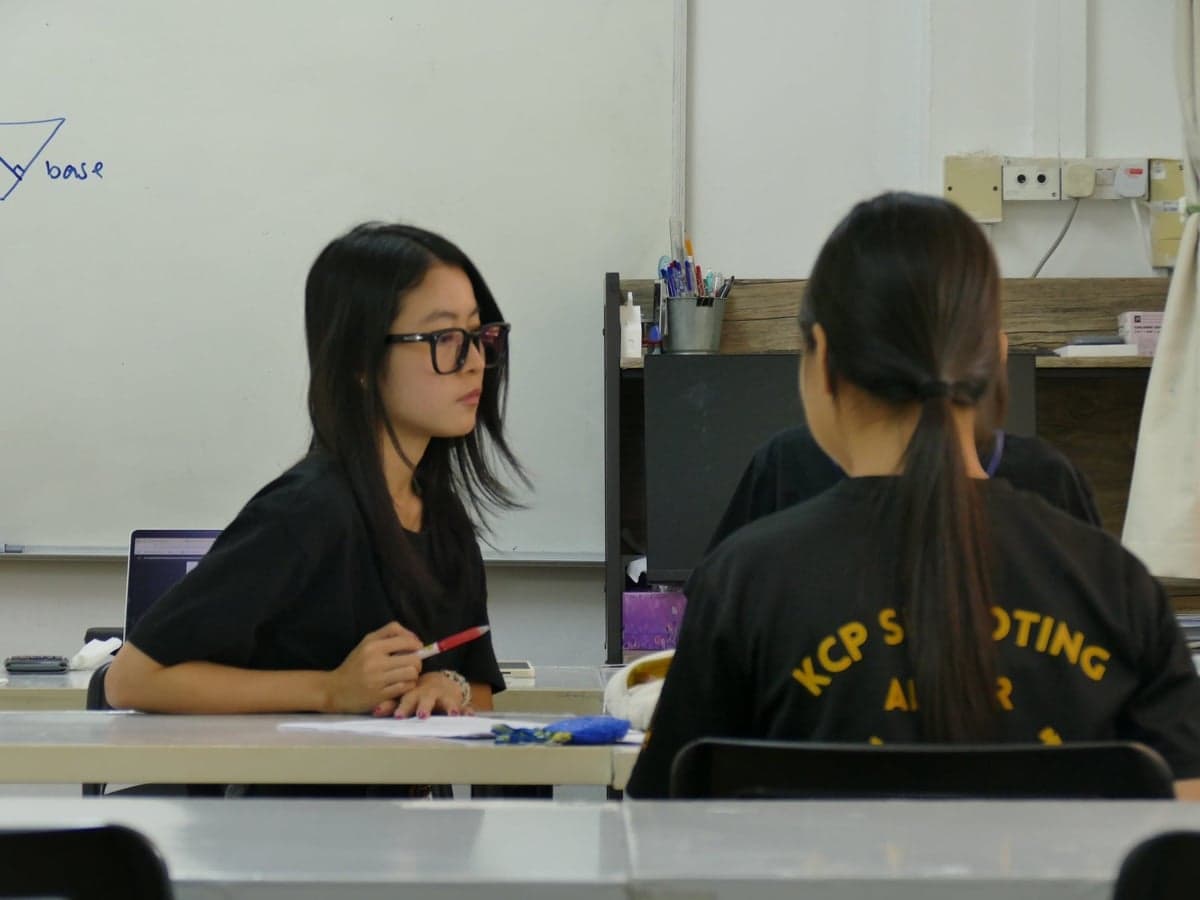
Most students improve by 1-2 grades per subject between their preliminary examinations and the actual O-Level / SEC exams — a pattern Ancourage Academy uses to guide targeted revision. This is not wishful thinking — it reflects deliberate differences in how prelim papers are set, combined with the focused revision that the roughly 8-week gap between prelims and O-Levels allows. In the 2024 national O-Level cohort of 22,661 candidates, 87.7% achieved at least five subjects at C6 or better, a result that would surprise many students based on their prelim performance alone.
As Academic Director at Ancourage Academy, Min Hui has guided hundreds of Sec 4 students through the prelim-to-O-Level window. The pattern is consistent: students who use prelim results as a diagnostic tool — rather than a verdict — make the strongest gains. This article breaks down the data behind prelim-to-O-Level improvement and provides a practical framework for using those 8 weeks effectively — at home or through structured secondary tuition.
How Much Do O-Level Scores Typically Improve from Prelims?
The most commonly observed improvement across Singapore secondary schools is 1-2 grades per subject, with L1R5 / L1R4 aggregate improvements of 5-10 points being realistic for students who revise strategically. A student scoring C5-C6 at prelims frequently reaches B3-B4 at O-Levels. A student at D7-E8 can realistically reach C5-C6 with targeted effort.
These improvements are not guaranteed. They depend on how the student uses the remaining weeks, not just on the difficulty gap between prelim and O-Level papers. Students who continue doing what they did before prelims tend to see smaller gains. Students who shift their approach — targeting specific weak areas identified by prelim results — see the largest jumps.
The Singapore Examinations and Assessment Board (SEAB) uses standards-referenced grading for O-Levels, meaning grade boundaries are pegged to absolute standards of performance rather than ranked against other students. This is an important distinction: your child is not competing against the cohort for a fixed number of A1s.
Why Prelim Papers Are Deliberately Harder
Schools intentionally set prelim papers at a higher difficulty level than the actual O-Level exam. This is a deliberate pedagogical strategy, not an accident. The reasoning is threefold: prelims serve as a diagnostic tool to expose remaining weaknesses, they prepare students mentally for challenging questions, and they create a buffer so that students who perform adequately at prelims are well-positioned for the national exam.
The difficulty gap varies significantly by school. Established schools with strong academic reputations tend to set prelims that are substantially harder than the O-Level standard. Neighbourhood schools may set papers closer to the actual exam difficulty. This means a C5 at a top school's prelim may represent a very different level of preparedness than a C5 at another school.
Understanding this context matters because it determines how much improvement is realistic. If your child's school is known for setting very difficult prelims, a 2-grade improvement is well within reach. If the school's prelims closely mirror O-Level difficulty, expect a more modest gain of about half a grade to one grade.
Ancourage Academy offers trial classes (usually $18) at Bishan and Woodlands — small groups of 3-6 students with diagnostic assessment to identify exactly where the gaps are after prelims.
Subject-by-Subject Score Patterns: Where Improvement Is Highest
Content-heavy subjects like the Sciences and Humanities tend to show the largest prelim-to-O-Level improvement, while skills-based subjects like English and Mathematics show more modest but still meaningful gains.
| Subject Group | Typical Improvement | Why |
|---|---|---|
| Pure Sciences (Physics, Chemistry, Biology) | 1-2 grades | Content revision in final weeks directly translates to marks; many questions test recall and application of specific topics |
| Combined Science | 1-2 grades | Narrower syllabus means targeted revision covers more ground |
| E-Maths | 0.5-1.5 grades | Skills-based; improvement depends on closing specific topic gaps (e.g. trigonometry, coordinate geometry) |
| A-Maths | 1-2 grades | Students who struggled in Sec 3 often see breakthroughs as concepts consolidate with practice |
| English | 0-1 grade | Language skills develop gradually; composition and comprehension techniques can still be refined |
| Chinese / Mother Tongue | 0.5-1.5 grades | Oral and listening components (35% weighting) respond well to focused practice |
| Humanities (SS, History, Geography) | 1-2 grades | Source-based question techniques and essay structures can be drilled effectively in short timeframes |
The key insight from this table is that students should not allocate equal time to all subjects. Subjects with the highest improvement potential — typically Sciences and Humanities — deserve proportionally more revision time in the final weeks.
How to Improve Grades Before O-Levels: What Top Improvers Do in the 8-Week Window
Students who achieve the largest prelim-to-O-Level gains consistently follow three practices: they analyse their prelim papers systematically, they prioritise high-yield topics, and they practise under timed conditions.
- Systematic prelim analysis: Rather than simply noting the grade, top improvers go through every question they lost marks on and categorise errors as conceptual gaps, careless mistakes, or time management issues. Each category requires a different fix.
- High-yield topic targeting: Using the prelim analysis, students identify 3-5 topics per subject where they lost the most marks and focus revision there. A student who lost 15 marks on organic chemistry and 10 marks on electrochemistry knows exactly where to spend time.
- Timed practice with past papers: The final 4 weeks should include at least one full timed paper per subject per week. Past papers from multiple schools help students encounter varied question styles.
An effective 8-week schedule typically follows this pattern: Weeks 1-3 focus on closing conceptual gaps and rebuilding weak topics. Weeks 4-6 shift to timed full papers and error analysis. Weeks 7-8 are for targeted revision of remaining weak areas and exam-day preparation.
When Prelim Results Should Trigger a Strategy Change
If prelim results reveal a consistent pattern of underperformance across multiple subjects — not just one bad paper — it is a signal that the current study approach needs to change, not just intensify.
Doing more of the same rarely works. A student who scored D7 in E-Maths despite months of practice likely has foundational gaps that repetition alone will not fix. This is where diagnostic assessment becomes critical: identifying whether the issue is conceptual understanding, exam technique, or time management determines the right intervention.
Common strategy changes that work in the final 8 weeks:
- Subject triage: Focus on subjects where improvement directly impacts L1R5 or L1R4. For a student with L1R5 of 20, improving the weakest two subjects by 2 grades each brings the aggregate to 16 — a meaningful difference for polytechnic or JC placement.
- Format-specific practice: A student who scores well on structured questions but poorly on MCQ likely has a different problem than one who struggles with open-ended answers.
- External support: Students who have been self-studying and underperforming at prelims should seriously consider whether structured tuition in the final 8 weeks could provide the guided practice they need.
How to Build a Subject-Specific Recovery Plan After Prelims
An effective recovery plan starts with the prelim paper itself — not a textbook. For each subject, the process is the same: review the prelim paper question by question, identify the mark-losing patterns, and build a revision plan that directly addresses those patterns.
For Mathematics (E-Maths and A-Maths), the recovery plan should focus on the 3-4 topics where the most marks were lost — the basis of our targeted secondary Maths revision after prelims. If a student lost 20 marks on trigonometry and vectors combined, those topics deserve 40% of Maths revision time. Practise with topical worksheets first, then move to full papers.
For Sciences (Physics, Chemistry, Biology), recovery centres on learning the precise keywords and explanation frameworks that examiners expect. Many students understand concepts but lose marks because their written answers lack the specificity that SEAB marking schemes require.
For English, the composition and comprehension papers respond differently to last-minute effort. Comprehension techniques — inference, summary writing — can be drilled effectively. Composition quality improves more slowly, but exam planning techniques such as the 5-minute outline method can still make a difference.
For Chinese, students should prioritise the oral and listening components, which carry 35% of the grade. These skills respond well to intensive practice over 4-6 weeks. Reading aloud daily and practising conversation responses with a partner or tutor are high-impact strategies.
The Role of Targeted Tuition in the Prelim-to-O-Level Gap
The 8-week window between prelims and O-Levels is one of the highest-impact periods for tuition — precisely because the diagnostic data from prelims makes targeted intervention possible.
At Ancourage Academy, Sec 4 students who join after prelims typically follow a focused programme: the first session is a diagnostic review of the prelim paper, followed by a customised revision plan targeting the specific topics and question types where marks were lost. With small groups of 3-6 students, tutors can adapt each lesson to address individual gaps rather than running through a generic revision schedule.
This is different from tuition that starts earlier in the year. Pre-prelim tuition builds understanding over time. Post-prelim tuition is surgical: it targets specific mark-losing areas with the goal of converting D7s to C6s and C5s to B3s within weeks.
Book a trial class (usually $18) at Bishan or Woodlands for a diagnostic assessment after prelims — or WhatsApp Ancourage Academy to discuss your child's prelim results.
Common Questions About Prelim vs O-Level Results
How much do O-Level results typically improve from prelim results?
Most students improve by 1-2 grades per subject, with L1R5 / L1R4 aggregates improving by 5-10 points. The size of improvement depends on how the student uses the 8-week gap and whether the school set a particularly difficult prelim paper. Students who follow a structured, diagnostic-based revision plan see the largest gains.
Which subjects show the biggest improvement between prelim and O-Level?
Content-heavy subjects like the Sciences and Humanities typically show the largest improvement (1-2 grades) because targeted revision of specific topics translates directly to exam marks. Skills-based subjects like English show more modest improvement — typically one grade, and sometimes none. A-Maths can also show strong improvement as concepts consolidate with practice.
Are prelims harder than the PSLE, N-Level or O-Level itself?
Generally yes, for all three national exams. Schools typically set preliminary papers at or slightly above the standard of the national exam they rehearse — PSLE prelims in Primary 6, N-Level and O-Level prelims in Sec 4 (both exams become the SEC from 2027) — so that the prelim exposes remaining gaps while there is still time to close them. A prelim grade is diagnostic, not a prediction: most O-Level candidates finish 1-2 grades above their prelim in each subject.
Should I panic if my prelim results are much worse than expected?
Prelim papers are deliberately set harder than the actual O-Level exam. A disappointing prelim result is diagnostic information, not a prediction. The critical question is whether you can identify the specific topics and question types where marks were lost and build a revision plan that addresses them. If you can, significant improvement is realistic. If you are unsure how to diagnose the issues, consider seeking support for exam stress alongside academic guidance.
Is it too late to start tuition after prelims?
The 8-week post-prelim window is one of the most effective periods for targeted tuition. Because prelim results provide clear diagnostic data, tutors can focus directly on mark-losing areas rather than covering the full syllabus. Ancourage Academy's post-prelim programmes at Bishan and Woodlands are specifically designed for this intensive revision period.
Do all schools set prelim papers at the same difficulty level?
No. Prelim difficulty varies significantly by school. Schools with strong academic reputations tend to set harder prelims, meaning a C5 at one school may represent better preparation than a B4 at another. This is why comparing prelim results between students at different schools is misleading. Focus on your own prelim paper analysis rather than peer comparison.
Visit Ancourage Academy at Bishan or Woodlands, check secondary course options, or WhatsApp us with any questions.
Related: Preparing for the O-Levels · Scoring in secondary maths · Secondary English Strategies · O-Level science strategies · SEC Exam 2027 Guide · Supporting a stressed student · Sec 3 Subject Combinations · Preparing for SEC 2027 without past papers · When strong PSLE students struggle in Sec 1 English · O-Level / SEC English Comprehension guide · a guide to O-Level / SEC English Oral & Listening