
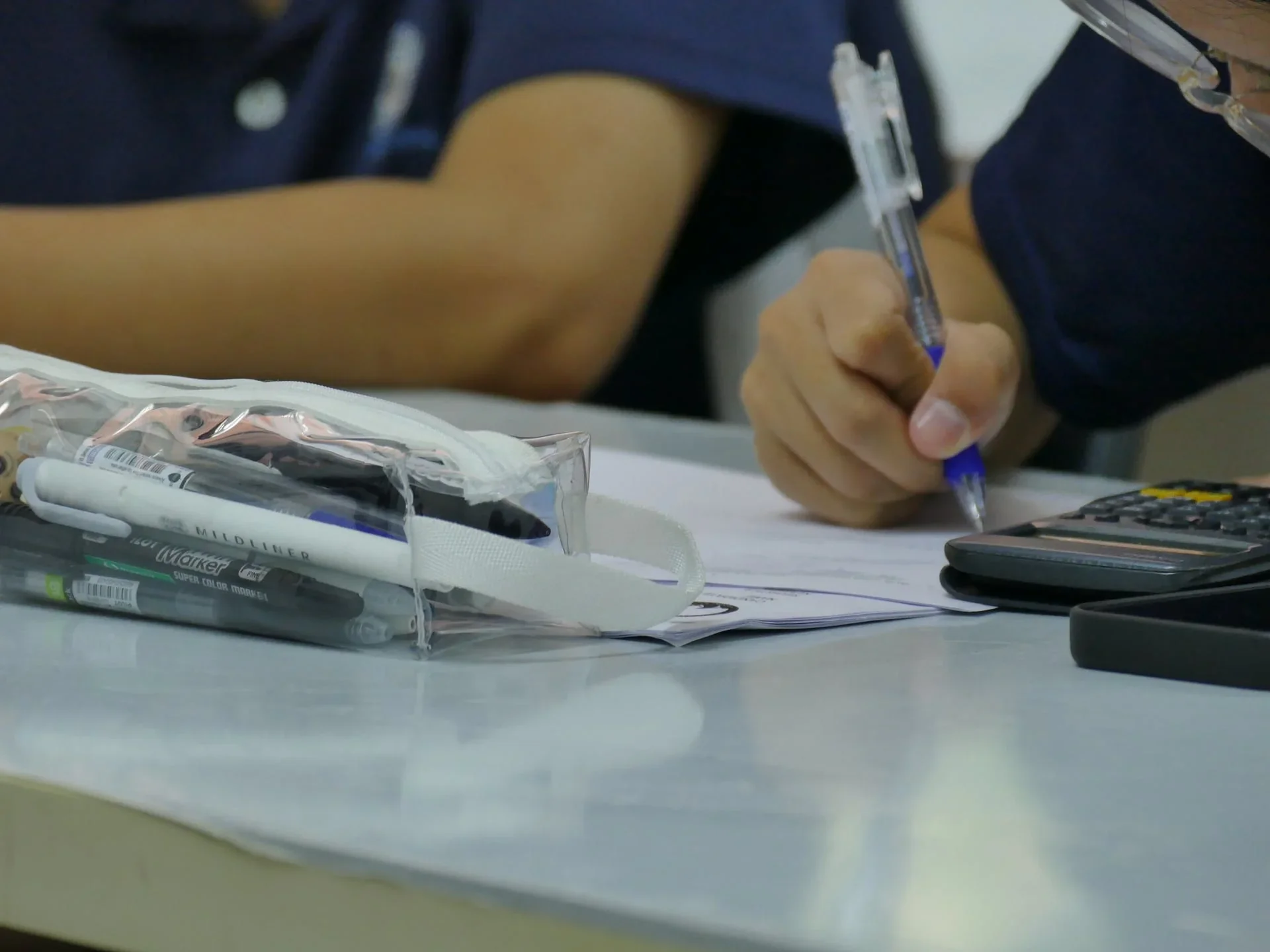
Effective PSLE revision combines structured daily practice, subject-specific strategies, and targeted review of weak areas — not last-minute cramming. Students who begin focused revision in Primary 5 and maintain a balanced timetable across English, Mathematics, Science, and Chinese consistently outperform those who rely on intensive last-minute preparation. The PSLE continues to reward application and reasoning over memorisation, making strategic revision even more critical. This guide is from Ancourage Academy, whose tutors run PSLE revision intensives across English, Mathematics, Science, and Chinese.
As a Mathematics educator at Ancourage Academy with over a decade of experience preparing students for PSLE, I have guided hundreds of P5 and P6 students through their revision journey. The difference between students who score well and those who struggle often comes down to how they revise, not how much.
Why PSLE Revision Strategy Matters More Than Hours
Research consistently shows that distributed practice — shorter, regular revision sessions — produces better retention than massed practice or cramming. A student who revises Mathematics for 30 minutes daily will retain more than one who does 3 hours on a Saturday. This aligns with MOE's emphasis on deep understanding over surface-level memorisation in the updated PSLE syllabus.
At Ancourage Academy, students in small groups of 3-6 receive structured revision plans tailored to their individual weak areas — something that is difficult to achieve in large classroom settings.
One parent shared: "My son used to spend entire weekends on assessment books with little improvement. Once he switched to focused 40-minute daily sessions targeting his weak topics, his SA2 results jumped by more than fifteen marks."
PSLE English Revision: Composition, Comprehension, and Oral
PSLE English revision should prioritise composition planning, comprehension answering techniques, and oral communication practice — these three components carry the most marks. The SEAB PSLE English paper tests language application across multiple formats, and each requires different revision approaches.
- Composition (Paper 1): Practise planning before writing. Outline the beginning (hook and setting), rising action, climax, and resolution before putting pen to paper. Aim to write one full composition per week with feedback
- Comprehension (Paper 2): Focus on inference questions and vocabulary in context — these are where most marks are lost. Practise identifying keywords in questions that signal what the answer requires
- Oral Communication: Read aloud for 10 minutes daily to build fluency and expression. For stimulus-based conversation, practise giving structured opinions with reasons
- Grammar and Vocabulary: Review common error patterns from corrected work rather than doing random grammar exercises
For subject-specific strategies, see Ancourage Academy's detailed PSLE English tips guide and composition scoring guide, or explore our primary English tuition programme.
PSLE Mathematics Revision: Heuristics and Problem Solving
PSLE Mathematics revision should focus heavily on heuristics and multi-step problem solving, which account for the majority of marks in Paper 2. Under the 2026 PSLE syllabus changes, Speed has been removed entirely, while Ratio and Average now sit in Primary 6 — adjust revision priorities accordingly.
- Paper 1 (50 marks): Practise time management — students often rush through Paper 1 and make careless errors. Allocate roughly 1 minute per mark
- Paper 2 (50 marks): Focus on heuristic problem-solving strategies including model drawing, working backwards, and before-after comparison
- Common mistakes: Misreading "remaining" vs "total", forgetting units in answers, and errors in fraction-decimal conversion. Review common Primary maths mistakes with your child
- Daily practice: Complete 3-5 word problems daily rather than full papers — quality over quantity
Ancourage Academy's P6 Mathematics programme focuses on PSLE Paper 2 heuristics through weekly timed practice in small groups of 3-6 students — book a trial class (usually $18) for a diagnostic assessment. See all Primary Maths levels for the full P1-P6 overview.
PSLE Science Revision: Concepts and Answering Techniques
PSLE Science revision should balance conceptual understanding with answering technique practice — knowing the science is only half the battle if students cannot express answers clearly. The SEAB Science paper tests application across five themes: Diversity, Cycles, Systems, Interactions, and Energy.
- Open-ended questions: Practise the CER method (Claim, Evidence, Reasoning) for structured answers. Many students lose marks not from wrong science but from incomplete explanations
- Concept maps: Create visual connections between topics — for example, linking photosynthesis to food chains to energy transfer. This mirrors how PSLE questions often cross topics
- Keyword precision: Science answers require precise vocabulary. "The plant absorbs water" scores differently from "The roots absorb water through root hairs by osmosis"
- Experimental skills: Revise fair test identification, variable control, and data interpretation from tables and graphs
Ancourage Academy's P6 Science tuition dedicates specific sessions to answering technique drills. Explore our full Primary Science programme for P3-P6 details. For broader strategies, see the Primary Science tips guide.
PSLE Chinese Revision: Composition, Oral, and Comprehension
PSLE Chinese revision benefits most from consistent daily exposure — 20 minutes of Chinese reading or listening daily builds the language familiarity that exam technique alone cannot replicate. Students who only practise through assessment books often plateau because they lack the vocabulary depth that comes from regular exposure, which is why our primary Chinese tuition programme pairs structured drills with weekly reading.
- Composition (作文): Memorise 10-15 good phrases and sentence structures that can be adapted across different composition topics. Practise writing the opening paragraph — a strong start sets the tone
- Comprehension (阅读理解): Focus on contextual vocabulary questions and inference-type answers. Underline keywords in questions before searching the passage
- Oral (口试): Read Chinese story books or news articles aloud to improve pronunciation and fluency. For the video conversation (看视频说话), practise describing what happens in the clip and giving your own view with 看到 (I see), 觉得 (I think), and 因为 (because) structures
- Higher Chinese: Students taking Higher Chinese should allocate additional revision time — the paper is significantly more demanding than standard Chinese
For Chinese-specific preparation strategies, see the Primary Chinese tips guide and PSLE Chinese strategies.
Building an Effective PSLE Revision Timetable
An effective PSLE revision timetable allocates roughly equal time to all four subjects while giving extra blocks to weaker areas. Many students over-invest in their strongest subject and neglect weaker ones — PSLE's AL scoring system means every subject contributes equally to the total score.
| Time | Monday | Tuesday | Wednesday | Thursday | Friday |
|---|---|---|---|---|---|
| 4:00-4:40pm | English Comprehension | Maths Heuristics | Science Concepts | Chinese Composition | Weak Subject Focus |
| 4:40-5:00pm | Break | Break | Break | Break | Break |
| 5:00-5:30pm | Maths Practice | Science Answering | English Grammar | Maths Practice | Full Paper Practice |
| Weekend | One timed full paper + review of errors from the week | ||||
Key principles for revision timetables:
- Short, focused blocks: 30-40 minutes per subject per session — attention drops significantly after 45 minutes for primary students
- Error review over new papers: Spend 60% of revision time reviewing mistakes from completed papers, 40% on new practice
- Weekly timed papers: One full timed paper per subject per fortnight from August onwards builds exam stamina
- Rest days: Include at least one full rest day per week — managing exam stress is part of effective revision
When to Start PSLE Revision
The ideal PSLE revision timeline starts in Primary 5, with structured exam practice intensifying from the start of P6. Students who wait until the June holidays of P6 to begin serious revision often find they cannot cover all topics adequately.
- Primary 5 (foundation building): Focus on understanding core concepts, clearing misconceptions, and building problem-solving habits. This is not "revision" yet but preparation for revision
- P6 Term 1-2 (structured practice): Begin topic-by-topic revision alongside school work. Complete topical assessments to identify weak areas
- P6 June holidays (intensive): Use the 4-week break for concentrated revision. Many students make the biggest gains during this period
- P6 Term 3-4 (exam practice): Switch from topical to full paper practice. Focus on time management and exam technique under timed conditions
For a deeper analysis of timing, read when to start tuition in Singapore.
Common PSLE Revision Mistakes to Avoid
The most damaging PSLE revision mistake is passive revision — re-reading notes and textbooks without active recall or practice. Research on learning science consistently shows that testing yourself is far more effective than re-reading.
- Doing papers without reviewing errors: Students who complete 50 papers but never analyse their mistakes repeat the same errors. Error journals are more valuable than additional papers
- Ignoring weaker subjects: Under the AL system, improving from AL6 to AL4 in a weak subject gains more points than improving from AL2 to AL1 in a strong subject
- Cramming the night before: Sleep consolidates memory. The American Academy of Sleep Medicine recommends 9-12 hours a night for children aged 6-12, and students who protect that sleep perform better than those who sacrifice it for last-minute revision
- Only using assessment books: Past PSLE papers and school prelim papers are more representative of actual exam difficulty than most commercial assessment books
- Studying alone without feedback: Students often cannot identify their own blind spots. Regular feedback from teachers, tutors, or parents who check work is essential
Ancourage Academy provides structured post-assessment review in every weekly session, ensuring students learn from their mistakes systematically.
How Ancourage Academy Supports PSLE Revision
Ancourage Academy's PSLE revision approach combines diagnostic assessment, targeted practice, and weekly progress tracking in groups of 3-6 students. This small-group format allows tutors to identify and address each student's specific weak areas — something that large-class tuition cannot provide effectively.
Available at Bishan (near Bishan MRT) and Woodlands (Vista Point), Ancourage Academy's Primary programmes cover all four PSLE subjects with teachers experienced in the current MOE syllabus.
Book a trial class (usually $18) to receive a diagnostic assessment of your child's PSLE readiness across any subject — Bishan or Woodlands.
Common Questions About PSLE Revision
How many hours should a P6 student revise daily for PSLE?
Most P6 students benefit from 1.5 to 2 hours of focused daily revision split across two subjects, in addition to school homework. Quality matters more than quantity — 40 minutes of active problem-solving beats 2 hours of passive re-reading. Include regular breaks to maintain concentration.
When should PSLE revision start in earnest?
Structured revision should begin at the start of P6, building on strong foundations laid in P5. The June holidays of P6 are a critical intensive revision window. Students who start serious revision only in August often struggle to cover all topics adequately — the oral papers are already sat in August, and the written papers begin in late September.
Is doing many practice papers the best way to revise for PSLE?
No. Completing papers without reviewing errors is one of the most common revision mistakes. A better approach is to complete one paper, spend twice as long reviewing every incorrect answer, then do targeted practice on weak topics before attempting the next paper. Error analysis trumps volume.
Should PSLE revision focus more on weaker or stronger subjects?
Under the PSLE AL scoring system, improving a weak subject from AL6 to AL4 takes two points off the total score, while improving a strong subject from AL2 to AL1 takes off only one — and the former is typically easier to achieve. Allocate 60% of revision time to weaker subjects while maintaining performance in stronger ones.
Does Ancourage Academy offer PSLE revision programmes?
Ancourage Academy offers structured Primary tuition programmes for all four PSLE subjects — Mathematics, English, Science, and Chinese — in small groups of 3-6 at Bishan and Woodlands. Book a trial class (usually $18) for a diagnostic assessment.
Related: How to Score Well in PSLE | What's changing in PSLE 2026 | PSLE Maths Heuristics Guide | Can AI Help with PSLE Preparation? · Common PSLE Science misconceptions · a guide to P6 Maths 2026 · a guide to PSLE English Editing