
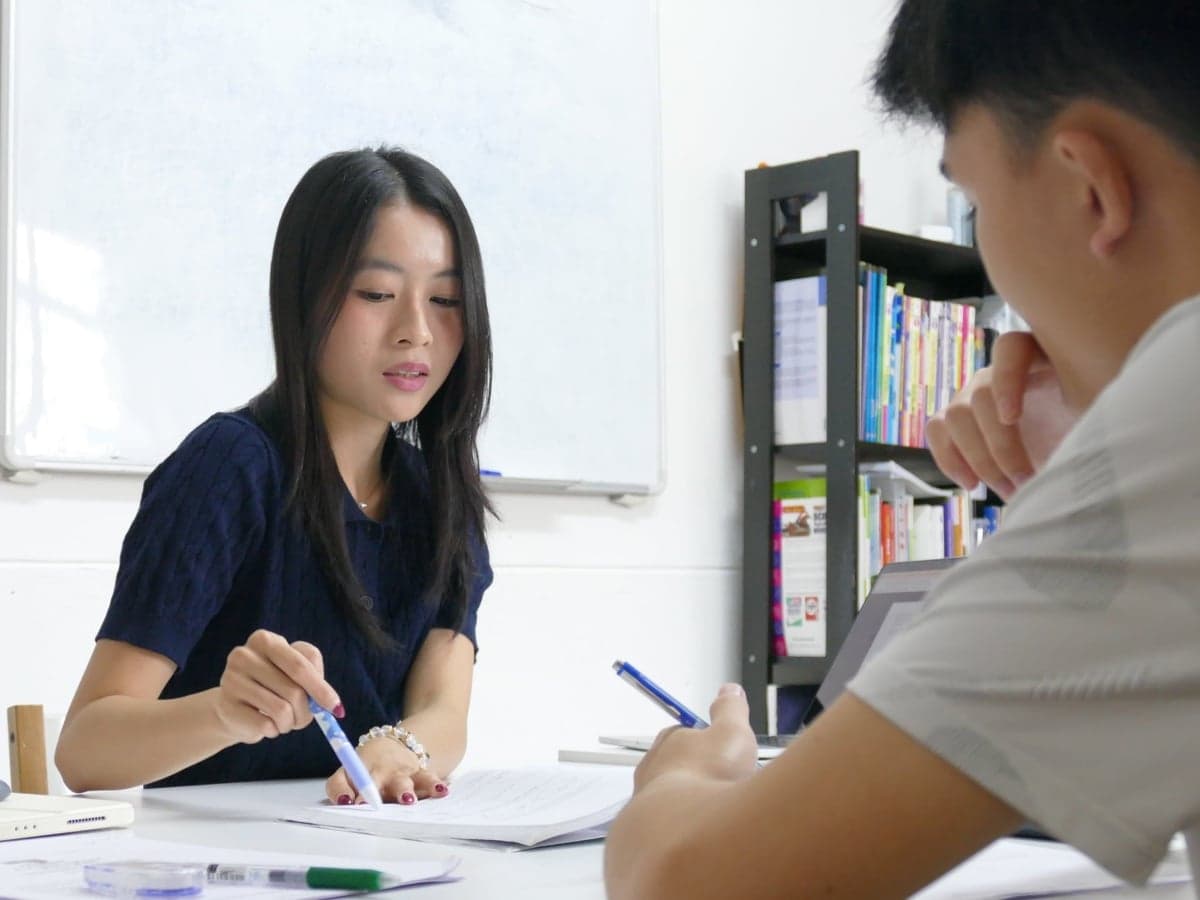
The 2026 P6 Mathematics syllabus broadens P6 algebra equation-solving beyond the old "simple context" limit (e.g., 3x + 5 = 20), consolidates ratio at P6, moves average from P5, and removes speed from primary entirely — and Ancourage Academy has already adapted its P6 Maths programme accordingly. This is the first P6 cohort sitting the fully updated MOE Mathematics syllabus, and these changes affect both what students learn and how PSLE questions are structured. Understanding each change in detail is essential for effective preparation.
In the 2025 PSLE, approximately 37,900 students sat the examination — the last cohort to sit P6 before the fully updated syllabus reached that level (MOE PSLE results press release). Because the 2021 syllabus was rolled out one level a year from P1 — reaching P5 in 2025 and P6 in 2026 — the 2026 cohort is the first to sit PSLE having studied the updated syllabus all the way through to P6.
As someone who has taught Primary Mathematics for over a decade — experience that led me to found Ancourage Academy — I have worked through every major syllabus revision since 2013. The 2026 changes are among the most significant because they extend P6 algebra from equation-solving in simple contexts to a wider range of question types, while consolidating ratio into a single dense year. Here is exactly what has changed for P6 Maths, why it matters, and how to prepare.
What Changed in the P6 Maths Syllabus
The 2026 P6 Mathematics syllabus reorganises topics across primary levels, broadens P6 equation-solving, and removes speed — creating a fundamentally different PSLE preparation landscape compared to previous years. These changes stem from the 2021 Primary Mathematics Syllabus introduced progressively from P1, with the 2026 P6 cohort being the first to sit PSLE under the fully updated curriculum.
Here is how the P6 Maths syllabus compares to the previous version:
| Topic | Before 2026 | 2026 Syllabus |
|---|---|---|
| Simple linear equations | P6, restricted to "simple context" | P6, "simple context" restriction removed |
| Ratio | Taught at P5 and P6 | Consolidated at P6 only |
| Average | Introduced at P5 | Shifted to P6 |
| Speed | Taught at P6 | Removed from primary entirely |
| Nets of 3D solids | Taught at P6 | Shifted to P4 (earlier) |
| Pie charts | Taught at P6 | Shifted to P4 (earlier) |
The net effect is a P6 year that trades speed problems for broader equation-solving, concentrates ratio and average into a single year for deeper exploration, and assumes students already mastered nets and pie charts at P4. For a broader view of all subject changes, see the overview of PSLE 2026 syllabus changes across Maths and Science.
P6 Equation-Solving Is Broadened
P6 algebra now takes equation-solving further. Simple linear equations were already in the P6 syllabus, but the 2013 version limited them to "whole number coefficient only in simple context"; the 2021 syllabus drops the "simple context" qualifier, so P6 students are expected to solve equations like 3x + 5 = 20 or 2x − 7 = 9 across a wider range of question types rather than only in familiar model-drawing settings.
Ancourage Academy's trial class (usually $18) includes a diagnostic assessment covering the broadened algebra component — book a P6 Maths session to identify gaps early.
What students need to learn:
- Using letters for unknowns: Understanding that "x" or "y" represents a number to be found
- One-step equations: Solving x + 4 = 12 or 3x = 15
- Two-step equations: Solving 2x + 3 = 11 or 5x − 8 = 17
- Forming equations from word problems: Translating "3 times a number plus 5 equals 20" into 3x + 5 = 20
Students who build comfort with equation-solving in P6 gain a real advantage when transitioning to Secondary 1, where multi-variable equations, inequalities, and more complex algebraic manipulation become the norm. In our primary Maths tuition for Singapore students, we introduce algebra using concrete examples first — "I have some sweets, I give away 5, and I have 7 left — how many did I start with?" — before moving to symbolic representation.
One common mistake we already see: students treating "x" as a label rather than a quantity. When a student writes "x = apples" instead of "x = 12," it signals a conceptual gap that needs attention. The guide to common Primary Maths mistakes covers related error patterns in detail.
Ratio and Average Concentrated at P6
Ratio is now consolidated entirely at P6 (previously split across P5 and P6), while average has moved from P5 to P6 — meaning P5 students have a lighter workload while P6 students face a more concentrated syllabus that combines these topics with fractions, percentages, and equation-solving. This is intentional — MOE designed the consolidation so that ratio and average are taught closer to PSLE, giving students less time to forget them before the exam.
What the ratio shift means in practice:
- Ratio is now a single-year topic at P6: The basics (ratio notation, equivalent ratios) previously introduced at P5 are now taught alongside the more advanced ratio content in one concentrated year
- Combined with fractions and percentages: PSLE questions now test the ability to convert between ratios, fractions, and percentages within a single problem
- Average as a P6 topic: Calculating mean, understanding how adding or removing values changes the average, and solving word problems involving averages
The challenge is density. Previously, ratio was introduced in P5 and reinforced in P6 across two years. Now the entire ratio strand is concentrated in P6 alongside equation-solving and average. This means P5 Mathematics preparation must build exceptionally strong foundations in fractions and percentages so that students are ready to layer ratio concepts on top in P6.
One parent shared with us: "My son found P5 Maths easier this year, but I'm worried about P6 — three new topics at once seems like a lot." That concern is valid — while ratio and algebra were already partly in P6, the added density of equation-solving and the consolidation of ratio into a single year creates a noticeably heavier workload. Early preparation makes the difference between manageable workload and overwhelming catch-up. For more on how heuristics and problem-solving strategies tie into these combined topics, see the detailed guide.
Speed Is No Longer in Primary Maths
Speed — previously one of the most challenging P6 topics combining distance, time, and rate in complex word problems — has been completely removed from the primary syllabus and moved to Secondary 1. This is arguably the most welcome change for students and parents, as speed problems historically accounted for a significant share of marks lost in PSLE Paper 2.
What this means for PSLE 2026 preparation:
- No speed-distance-time questions: Students will not encounter any speed-related problems in PSLE 2026
- Old assessment books are partly outdated: Any practice papers containing speed questions should be set aside for this cohort
- Freed-up study time: The hours previously spent on speed can now be redirected to mastering algebra, ratio, and average
- Secondary 1 preparation still matters: Speed concepts will appear in Sec 1, so foundational understanding of rates remains useful long-term
Ancourage Academy has updated its P6 Mathematics programme to reflect this change. Time previously allocated to speed is now used for extended algebra practice and ratio problem-solving, ensuring students gain depth rather than breadth.
Parents using older siblings' assessment books should check the publication date. Any PSLE practice paper published before 2024 likely includes speed questions that are no longer relevant. Using outdated materials wastes preparation time and can confuse students about what to expect.
How These Changes Affect PSLE 2026
The 2026 PSLE Mathematics paper will feature equation-solving questions no longer confined to simple contexts, heavier emphasis on ratio and percentage integration, and no speed problems — fundamentally changing the question types students must prepare for. Additionally, Paper 1 now carries 50 marks (up from 45), equal to Paper 2 (down from 55), so both papers carry equal weight.
Expected question patterns for PSLE 2026:
- Algebra in word problems: "John has 3 times as many stickers as Mary. Together they have 48 stickers. How many does Mary have?" — solvable by forming 3x + x = 48
- Ratio-percentage conversions: Problems requiring students to express ratios as fractions or percentages and vice versa
- Average with changing sets: "The average score of 5 students is 72. When a sixth student joins, the average becomes 75. What did the sixth student score?"
- Multi-step problems combining new topics: Questions that test ratio, algebra, and fractions together in a single problem sum
The equal weighting of Paper 1 and Paper 2 is also significant. Students who previously relied on strong Paper 2 performance to compensate for weaker MCQ skills now need balanced preparation across both papers. The PSLE Maths tips guide covers paper-specific strategies in detail.
Preparation Strategies for the Updated P6 Topics
Effective preparation for the 2026 P6 syllabus requires topic-specific strategies — algebra needs conceptual building before procedural practice, ratio needs visual representation, and average needs systematic worked examples. Generic drilling is less effective because equation-solving now spans a wider range of question types, and the consolidation of ratio into a single year leaves less time for gradual mastery.
For algebra:
- Start with concrete examples: Use real objects before introducing letters — "I have some marbles, I give away 4, I have 8 left"
- Build inverse-operation fluency: Practise "undoing" addition with subtraction and multiplication with division until it becomes automatic
- Progress to symbolic equations: Only move to x + 4 = 12 after the concept of "finding the unknown" is solid
- Practise forming equations from word problems: This is where most marks are — translating English into algebra
For ratio and average:
- Use bar models alongside ratio notation: Drawing ratio bars helps students visualise 3 : 5 as three units versus five units
- Connect to fractions explicitly: Show that a ratio of 3 : 5 means 3/8 and 5/8 of the total — this connection is heavily tested
- Practise average problems with changing data sets: Add a value, remove a value, and recalculate — these are common PSLE question formats
- Do mixed-topic practice: Combine ratio, percentage, and fraction problems in a single session to simulate PSLE conditions
Avoid the temptation to practise speed questions from old papers. That time is better spent on equation-solving, ratio, and average. For more structured practice approaches, see the guide on PSLE heuristics and problem-solving strategies.
How Ancourage Academy Supports the New Syllabus
Ancourage Academy's small group classes of 3 to 6 students allow tutors to address individual gaps in algebra, ratio, and average — critical for new topics where every student's starting point is different. Unlike large-class tuition where a single pace is set for everyone, Ancourage Academy's approach means a student struggling with forming equations gets additional guidance while a student who grasps algebra quickly moves on to more challenging applications.
How Ancourage Academy has adapted for 2026:
- Updated P6 curriculum: Speed removed, algebra and ratio-average modules added with dedicated practice sets
- Bridge-to-secondary preparation: Algebra is taught with an eye on Secondary 1, so students build transferable skills
- Diagnostic assessments: Every new student receives an assessment covering the updated syllabus to identify specific gaps
- Two convenient locations: Classes available at Bishan (near Bishan MRT) and Woodlands (near Woodlands MRT)
Ancourage Academy's Primary Mathematics programmes cover P1 through P6, which means students who join earlier benefit from a consistent teaching approach leading into the P6 syllabus changes. For families in the north, the Woodlands branch offers the same small-group format and updated curriculum.
Key Takeaways
The 2026 P6 Mathematics syllabus is a meaningful shift that rewards students who start preparation early and focus on genuine understanding rather than memorisation.
The three headline changes — the broadening of simple linear equations, the concentration of ratio and average into P6, and the removal of speed — collectively reshape what effective PSLE preparation looks like. Students can no longer rely on legacy materials or the study patterns that worked for older siblings. Instead, preparation must account for a denser P6 year where algebraic thinking, proportional reasoning, and statistical understanding all compete for attention. The equal weighting of Paper 1 and Paper 2 further shifts the balance, rewarding students who develop broad competence rather than specialising in one paper format. Families who recognise these structural changes early and adjust their approach accordingly give their children a measurable advantage heading into the 2026 PSLE.
- Equation-solving is broadened: Simple linear equations (e.g., 3x + 5 = 20) were already in the P6 algebra strand but were restricted to simple contexts; that restriction is gone — build from concrete to abstract
- Ratio and average concentrated at P6: Ratio (previously split across P5 and P6) and average (previously at P5) are now both entirely at P6 — strong P5 foundations in fractions and percentages are essential
- Speed is gone from primary: Removed entirely — redirect that preparation time to equation-solving, ratio, and average
- PSLE 2026 is different: New question types combining algebra, ratio, and percentages, with equal weighting across Paper 1 and Paper 2
- Start early: Students who build strong P5 Mathematics foundations are significantly better positioned for the denser P6 syllabus
If you are unsure whether your child is ready for the updated P6 syllabus, Ancourage Academy's trial class (usually $18) at Bishan or Woodlands includes a diagnostic assessment with personalised feedback — no commitment required. For more primary maths and PSLE preparation guides, browse our maths learning hub.
Common Questions About P6 Maths 2026
Is algebra in P6 the same as Secondary 1 algebra?
P6 algebra covers using letters for unknowns, algebraic expressions, simplification, evaluation by substitution, and solving simple linear equations with one unknown, now without the old "simple context" restriction (e.g., 3x + 5 = 20). Secondary 1 builds on this with multi-variable equations, algebraic manipulation, inequalities, and more complex expressions. The P6 component is designed as a bridge, building foundational comfort with algebraic thinking before the deeper work in secondary school.
Should my child still practise speed questions from old papers?
No, not for PSLE 2026 preparation. Speed has been removed from the primary syllabus entirely. Time spent on speed questions is better redirected to algebra, ratio, and average. However, if your child is interested or if you want to prepare them for Secondary 1, speed concepts can be revisited after PSLE. For current PSLE preparation, focus on materials published from 2024 onwards that reflect the updated MOE syllabus.
My child is in P5 — how should I prepare for the P6 changes?
Focus on building exceptionally strong foundations in fractions, decimals, and percentages during P5. These are the building blocks for ratio and average, which your child will encounter fresh in P6. Also introduce the concept of unknowns informally — for example, "I'm thinking of a number; when I double it and add 3, I get 11 — what is the number?" Ancourage Academy's P5 Mathematics programme is designed with this P6 transition in mind.
Will the 2026 PSLE be harder because of these changes?
Not necessarily harder, but different. The removal of speed eliminates one of the most challenging traditional topics. However, the wider range of equation-solving questions introduces a conceptual shift that requires new thinking skills. Students who prepare specifically for the updated syllabus should find the difficulty level comparable to previous years. The key is using current materials and avoiding outdated practice papers that include removed topics.
How do I know if my child's tuition centre is teaching the updated syllabus?
Ask specifically whether the centre has removed speed from its P6 curriculum and teaches simple linear equations beyond the old simple-context limit. If the centre is still teaching speed to P6 students, their materials are outdated. At Ancourage Academy, the curriculum is fully aligned with the MOE Primary Mathematics Syllabus as applied to P6 in 2026.
Related: PSLE 2026 Syllabus Changes · Where primary maths marks are lost · PSLE Maths Tips · PSLE Maths Heuristics Guide · Primary Courses · Trial Class — Bishan · Model Drawing to Algebra