P6 Science Tuition
Ancourage Academy · Primary · P6
Content reviewed: Sep 2026
P6 PSLE Science tuition at Ancourage Academy in Bishan and Woodlands, Singapore. The PSLE Science paper comprises Booklet A (30 MCQ) and Booklet B (10 to 11 structured open-ended questions), testing all P3-P6 topics including energy conversion, forces, and ecosystems. In our small classes of 3-6 students, P6 children master keyword precision and structured answering techniques for Booklet B. MOE-aligned.
In person at our Bishan and Woodlands centres.
What Makes Us Different
Our proven teaching methodology combines evidence-based approaches for maximum learning effectiveness

Ebbinghaus Memory Theory
Spaced retrieval practice across Physics, Chemistry, and Biology topics — weekly concept checks, monthly cross-topic quizzes, and term revision papers — timed to reinforce scientific vocabulary and process skills before they weaken.
Socratic Questioning
Questions that link experimental evidence to theory — 'What does your data suggest about this hypothesis?' and 'How would you redesign this experiment to improve reliability?' — training students to think like scientists, not just recall facts.
Bruner's Scaffolding
From fully guided practical reports to template-supported analysis to independent evaluation — tutors reduce scaffolding step by step, ensuring students can plan experiments, interpret data, and draw conclusions on their own.
Key Learning Outcomes
Master Key Concepts
Deep understanding of core topics aligned with MOE syllabus
Critical Thinking
Develop analytical and problem-solving skills
Exam Confidence
Strategic exam techniques and time management
Consistent Results
Improved grades and academic performance
What we hear from parents:
- Consistent improvement in mock exam and practice paper results
- Greater accuracy in applying concepts to unfamiliar scenarios
- Stronger confidence and composure when handling open-ended questions
Course Structure
Duration
1.5 hours per lesson
Full coverage with interactive learning time
Class Size
3-6 students per class
Close guidance, timely feedback, and ample practice
Materials
All materials provided
No material fees — all worksheets and resources included
Curriculum Overview
- ✓Scientific process skills: Hypothesis formation, experimentation, analysis, and evaluation aligned with PSLE requirements.
- ✓Cycles: Deep understanding of reproduction, states of matter, and interdependent life cycles.
- ✓Systems: Mastery of human body systems, plant transport systems, and their interactions.
- ✓Interactions: Forces (frictional, gravitational, elastic spring) and interactions within the environment, with P3 magnetism revisited for PSLE, applied to real-life contexts.
- ✓Energy: Complete knowledge of energy forms and uses (photosynthesis) and energy conversion.
- ✓Diversity: Confident classification of living and non-living things, and of the materials things are made from.
- ✓Application and exam strategies: Answering open-ended questions with precision, using correct scientific keywords and structured responses.
Why Do Students Lose Marks in PSLE Science?
- 1
Open-ended questions — structuring answers with keywords and complete explanations
- 2
Cross-topic application — connecting concepts from different themes
- 3
Experimental design — identifying variables and explaining fair testing
- 4
Data interpretation — reading graphs and tables accurately to draw conclusions
- 5
Exam techniques — managing time and avoiding careless errors
Learning Progression
Builds On
P5 Science with cycles, systems (plant, human, electrical), and application skills
Prepares For
Secondary Science with specialised subjects (Biology, Chemistry, Physics)
Key Transition
This is the upper primary PSLE year — P6 students must apply their scientific knowledge confidently to unfamiliar scenarios, as PSLE rewards application over memorisation.
“P5 and P6 Science preparation requires more than content knowledge — students must master process skills like analysing data tables, constructing explanations, and applying concepts to unfamiliar scenarios. We train students to think systematically so they can tackle any PSLE question with confidence.”
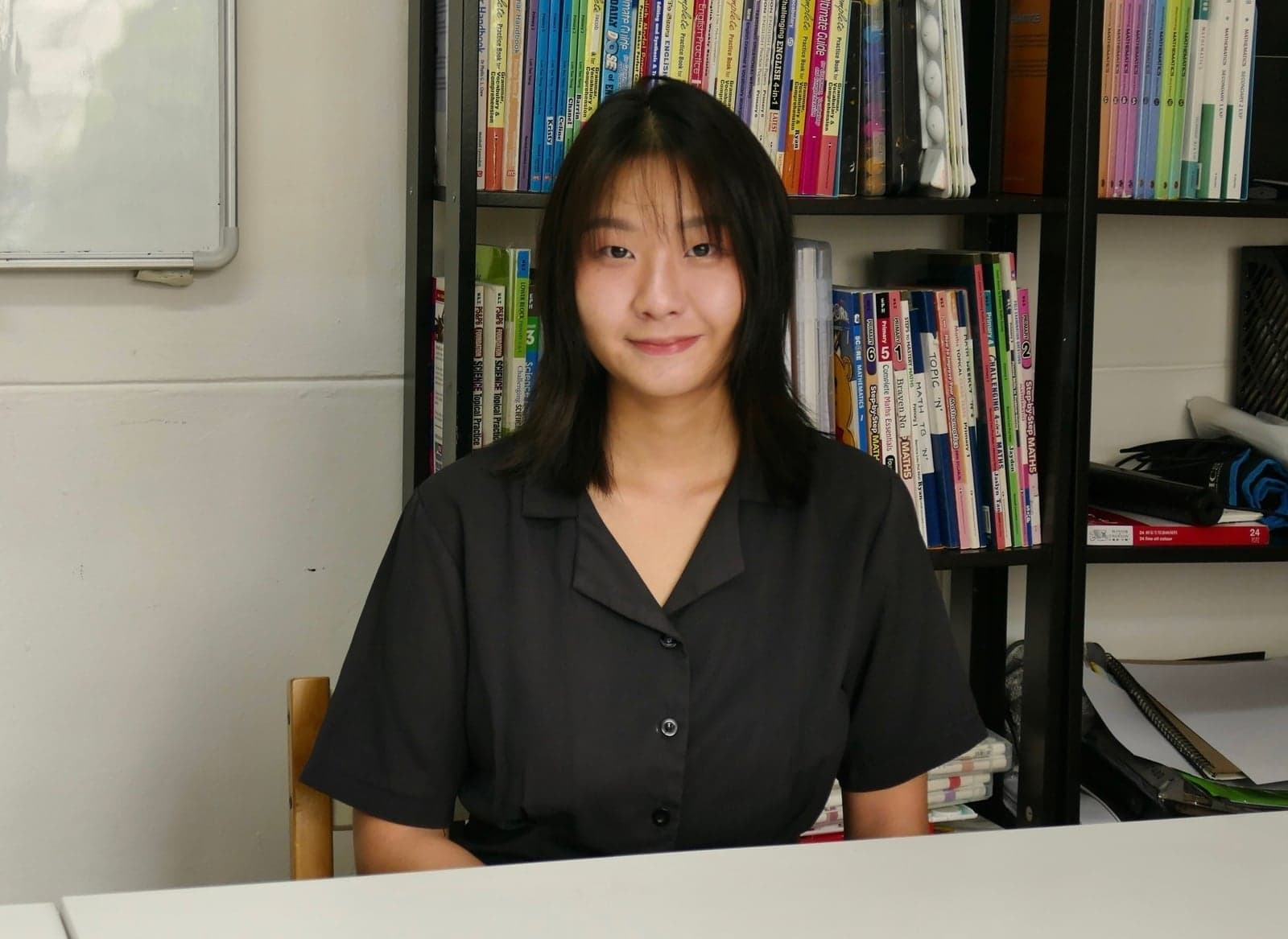
Early Childhood & Primary Education Specialist
Related Courses
Explore other courses that complement your learning journey
P6 Maths
Master PSLE Mathematics with heuristics and problem-solving strategies
P6 English
Comprehensive PSLE English preparation with composition and comprehension mastery
P6 Chinese
Master Chinese language skills for PSLE with oral and composition practice
P5 Science
Review P5 foundations for stronger continuity.
P3 Science
Same subject family: P3.
P4 Science
Same subject family: P4.
Frequently Asked Questions
We focus on conceptual understanding and application. Students learn to identify keywords in questions, structure answers with scientific terms, and apply knowledge to unfamiliar scenarios—the key skills tested in PSLE. Read our primary science tips.
Open-ended questions require precise scientific language, complete cause-and-effect explanations, and correct use of keywords. We drill students on structured answering formats, teach them to identify exactly what the question is really asking, and build a strong foundation of scientific vocabulary for clear, mark-worthy responses.
PSLE Science covers Diversity (living and non-living things, materials), Cycles (reproduction, water cycle, states of matter), Systems (body systems, plant systems, electrical systems), Energy (forms, conversions, and photosynthesis), and Interactions (forces, food chains, ecosystems). We ensure mastery of all five themes with cross-topic practice and integrated revision. Read our primary Science tips.
Yes! Our Woodlands centre at Vista Point is 5 minutes from Woodlands South MRT, serving Primary 6 Science students from Greenwood Primary, Innova Primary, Woodgrove Primary, Si Ling Primary and the wider Woodlands, Admiralty, Marsiling, and Sembawang area. Our lessons strengthen hands-on exploration and scientific inquiry skills. Book a trial class at Woodlands.
Our small-group classes are capped at 6 students and typically run 3 to 6, so every learner receives close guidance, timely feedback, and ample practice.
Each lesson is 1.5 hours, providing ample time for thorough coverage of topics and interactive learning.
Yes. All lesson materials and worksheets are provided and included in the fees. Students should bring regular stationery and, where applicable, school textbooks/workbooks for reference.
Yes. Our materials and pacing align with the MOE syllabus. External syllabuses (e.g. IGCSE, IB) are available upon request.
Helpful Resources for Parents
In-depth guides on preparation strategies and learning tips
PSLE Science Preparation for Bishan Primary Schools
PSLE Science strategies for Bishan — Kuo Chuan Presbyterian, Ai Tong, and Catholic High. Concept mastery, process skills, and exam techniques.
Read more →PSLE Science Preparation for Woodlands Primary Schools
Targeted PSLE Science strategies for Woodlands students from Riverside, Greenwood, Si Ling, and Fuchun primary schools. Master concepts and process skills.
Read more →Primary Science Tuition in Bishan: P3-P6 Guide for Parents
P3-P6 Science tuition in Bishan — process skills, open-ended answering techniques, and PSLE preparation for Kuo Chuan, Ai Tong, and Catholic High students.
Read more →PSLE Science: Answering Techniques That Score
PSLE Science answering techniques that target how examiners mark — structured responses, process skills, and common mistakes to avoid for Booklet A and B.
Read more →How to Score Well in PSLE: Subject-by-Subject Strategies
Score well in PSLE with subject-specific strategies for English, Maths, Science, and Chinese — target AL band boundaries where small mark gains shift achievement levels.
Read more →P5-P6 Science Tuition in Bishan: Upper Primary Guide
P5-P6 Science tuition guide for Bishan parents. Covers PSLE answering techniques, process skills, and exam strategies for Kuo Chuan, Ai Tong, and Catholic High.
Read more →P5-P6 Science Tuition in Woodlands: Upper Primary Guide
PSLE Science tuition at Vista Point Woodlands — CER answering for Booklet B, hands-on process skills, and cross-topic reasoning for P5 and P6 students.
Read more →P6 to Sec 1: What to Do After PSLE Results
The jump from P6 to Sec 1 is Singapore’s biggest school transition. Here is how to use the November–January window to prepare your child before Day 1.
Read more →PSLE Revision: A Complete Study Guide for All 4 Subjects
Effective PSLE revision requires subject-specific strategies, consistent practice, and targeted review of weak areas across all four subjects in Singapore.
Read more →Deepen Your Learning
Comprehensive topic guides covering everything in this subject area.
PSLE
Everything parents and students need to know about the Primary School Leaving Examination — from subject-specific strategies to scoring, stress management, and school selection.
Browse guide →Science
Your guide to Science education in Singapore — from Primary school foundations to Secondary combined and pure sciences, including Biology, Chemistry, and Physics.
Browse guide →Study Tips & Exam Prep
Practical study tips and exam preparation strategies that work — from effective revision techniques and time management to past year paper strategies and exam day tips for Singapore students.
Browse guide →
Ready to Get Started?
Enquire now and experience our proven teaching methodology
💬 Have questions? WhatsApp us anytime — we typically respond within 2 hours
Also from Ancourage: Art classes for kids, teens & adults →