
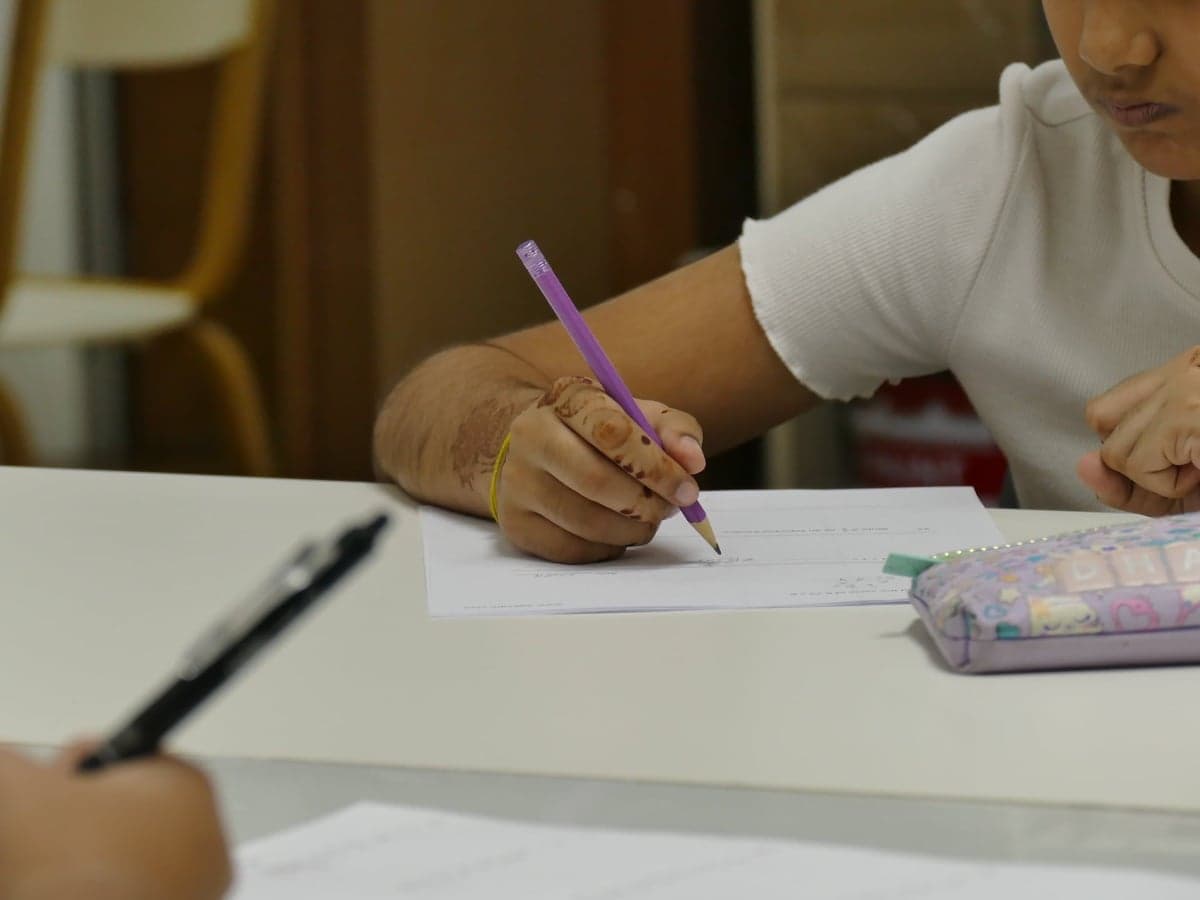
The PSLE English editing section is one of the easiest places to gain marks — if students know what to look for — and Ancourage Academy's analysis identifies 10 error types that account for most marks. Unlike composition or comprehension, editing tests a finite set of grammar rules that appear repeatedly across every PSLE paper. Students who memorise the 10 most commonly tested error types and apply a systematic checking method can score full or near-full marks consistently. Yet many students lose marks here simply because they rush through without a strategy.
As Early Childhood & Primary Education Specialist at Ancourage Academy, Charmaine has analysed editing sections across multiple years of PSLE papers. The same grammar errors recur with remarkable consistency — subject-verb agreement, tense errors, and wrong prepositions account for most of the grammar errors she sees. This guide from Ancourage Academy covers the 10 most common error types, a step-by-step checking method, and practice strategies that build accuracy — the same drills used in our P6 English tuition classes.
What the PSLE Editing Section Tests
The editing section presents a short passage containing deliberate grammar and spelling errors — students must identify each error and write the corrected word. SEAB publishes the component as 10 items worth 10 marks and does not describe how the items are laid out on the paper. In the practice papers Ancourage Academy uses in class, each item is flagged in the passage and the student writes the corrected word beside it.
The SEAB PSLE English Language syllabus 0001 lists this component in the Paper 2 examination format table as "Editing for Spelling and Grammar" — 10 items, 10 marks, open-ended. The syllabus names spelling and grammar only; it does not publish a fixed split between the two, so Ancourage Academy prepares students for both error types across all 10 items.
The format is straightforward: each error is worth 1 mark, and there is no penalty for incorrect corrections. This means students should always attempt every line — leaving a blank is a guaranteed zero, while an attempt has a chance of scoring.
What Are the 10 Most Common Grammar Errors in PSLE Editing?
The ten editing error types Ancourage Academy sees most often are subject-verb agreement, tense, wrong preposition, wrong article, pronoun errors, wrong conjunction, comparative/superlative, plural/singular nouns, wrong verb form and missing or extra words — students who can reliably identify these ten catch most of the errors in the editing section.
| Error Type | Example (Wrong) | Correction | Frequency |
|---|---|---|---|
| Subject-verb agreement | "The group of students were excited." | was | Very high |
| Tense errors | "Yesterday, she walk to school." | walked | Very high |
| Wrong preposition | "She is good in Mathematics." | at | High |
| Wrong article | "He picked up a umbrella." | an | High |
| Pronoun errors | "Me and my friend went to the park." | My friend and I | Medium |
| Wrong conjunction | "She was tired so she kept working." | but | Medium |
| Comparative/superlative | "She is more taller than her sister." | taller | Medium |
| Plural/singular noun | "She gave me many advice." | pieces of advice | Medium |
| Wrong verb form | "She enjoys to swim every day." | swimming | Medium |
| Missing/extra word | "She is more stronger now." | Remove "more" | Lower |
Students should memorise these 10 types and practise identifying them rapidly. When scanning an editing passage, mentally check each line against this list. For a broader view of PSLE scoring strategies across all subjects, see the companion guide.
Ancourage Academy's P5 and P6 English programmes include weekly editing practice with these 10 error types — book a trial class (usually $18) at Bishan or Woodlands.
How Should You Spot Editing Errors Systematically?
Rather than reading the passage normally and hoping errors "jump out," use a systematic line-by-line checking method that tests each line against the most common error types.
- Read the full passage first: Understand the overall meaning and tense (past, present, future). This gives you context for checking individual lines.
- Check each line individually: For every line, ask these questions in order:
- Does the verb agree with its subject? (Check for singular/plural mismatch)
- Is the tense correct? (Check against the overall passage tense)
- Is the preposition correct? (Check common preposition collocations)
- Are articles (a/an/the) used correctly?
- Does the pronoun match its antecedent?
- Read the corrected sentence aloud (in your head): After identifying an error and making a correction, re-read the entire sentence to confirm your correction makes the sentence grammatically complete.
- Do not stall on one item: If an item passes every check and nothing is clearly wrong, move on and come back at the end. Time spent staring at one item is time taken from the other nine.
This systematic approach takes slightly longer than a casual read-through but catches significantly more errors. With practice, the checking process becomes faster and eventually automatic.
Subject-Verb Agreement: The Most Frequently Tested Rule
Subject-verb agreement errors are the single most common error type in PSLE editing — and they are deliberately designed to be tricky, often separating the subject from the verb with intervening phrases.
The trick: ignore everything between the subject and the verb.
- "The box of chocolates were on the table." → Subject is "box" (singular), not "chocolates." Correct: was
- "One of the boys have finished." → Subject is "One" (singular). Correct: has
- "The students, together with their teacher, is going." → Subject is "students" (plural). Correct: are
- "Neither the teacher nor the students was ready." → When using "neither...nor," the verb agrees with the NEARER subject. Correct: were
Practice tip: collect 20 subject-verb agreement sentences from past PSLE papers. Read each one, identify the true subject, and check the verb. This targeted drill builds the pattern recognition needed for exam speed.
Tense Errors: How to Check Consistency
Tense errors in PSLE editing usually involve a single verb that breaks the tense pattern of the surrounding passage — the fix is to identify the dominant tense and check every verb against it, allowing for direct speech, general truths and conditionals.
Step 1: Read the first two sentences and identify the dominant tense. If the passage says "Last Saturday, Sarah walked to the park," the passage is in past tense.
Step 2: Check every verb in the passage against this dominant tense. A past-tense passage with one present-tense verb ("She walks to the gate") has a tense error — it should be "walked."
Exceptions to watch for:
- Direct speech: Dialogue can be in a different tense from the narrative. "She said, 'I am going home'" is correct even in a past-tense passage.
- General truths: Statements of fact use present tense even in past-tense passages. "She learned that water boils at 100 degrees" — "boils" is correct.
- Conditional sentences: "If" clauses may use different tenses from the main clause.
Pronoun and Determiner Mistakes
Pronoun errors in PSLE editing test whether the pronoun matches its antecedent in number (singular/plural) and gender — and whether the correct pronoun form (subject/object/possessive) is used.
Common patterns:
- Number mismatch: "Each student should bring their pencil." → "Each" is singular, so the safest exam answer is "his or her" (or restructure the sentence); singular "their" is widely accepted in everyday English.
- Case error: "Me and my friend went to the park." → "Me" is an object pronoun; as a subject, use "My friend and I."
- Ambiguous reference: "John told Peter that he was wrong." → Who is "he"? While this is more of a writing issue than an editing blank, understanding pronoun reference helps identify the intended correction.
- Possessive vs contraction: "It's tail was wagging." → "It's" means "it is." The possessive form is "Its."
Practice Strategies for the Editing Section
Editing accuracy improves fastest through high-frequency, short-duration practice — 10 minutes of daily editing practice is more effective than 1 hour once a week.
- Daily editing drill (10 minutes): Complete one editing passage per day. After checking answers, categorise each error by type (SVA, tense, preposition, etc.) to track which types you miss most often.
- Error-type focus weeks: Spend one week focused on subject-verb agreement errors only (using targeted worksheets), then one week on tense errors, and so on. This builds deep pattern recognition for each type.
- Create your own editing passages: Write a short passage with deliberate errors and exchange with a study partner. Creating errors requires understanding the rules, which reinforces learning.
- Speed drills: Once accuracy is consistent, practise under time pressure. The editing section should take 10-12 minutes in the PSLE — practise completing passages within this timeframe.
Spelling Errors in the Editing Section
Spelling is examined alongside grammar in the same 10 items, so misspelled words are worth exactly as much as grammar errors — SEAB does not publish a fixed split between the two, and Ancourage Academy drills both in every editing exercise.
Common PSLE spelling error patterns:
- Double letter confusion: "neccessary" (correct: necessary), "occassion" (correct: occasion), "accomodate" (correct: accommodate). Students should learn which letters double and which do not.
- Silent letters: "goverment" (correct: government), "enviroment" (correct: environment), "Wenesday" (correct: Wednesday). Pronouncing these words carefully during study helps — "gov-ern-ment" has three syllables, not two.
- ie/ei confusion: "recieve" (correct: receive), "beleive" (correct: believe), "acheive" (correct: achieve). The rule "i before e, except after c" covers most PSLE-tested words.
- Common word mix-ups: "definately" (correct: definitely), "seperately" (correct: separately), "independant" (correct: independent). Building a personal list of commonly misspelled words from past papers is the fastest way to address these.
- Suffix patterns: "-tion" vs "-sion" (e.g., "competition" vs "decision"), "-ence" vs "-ance" (e.g., "difference" vs "importance"). Pattern recognition reduces guesswork.
Practice strategy: After every editing drill, have your child maintain a "spelling error journal" — a running list of misspelled words they missed or find tricky. Review this journal weekly using spaced repetition. Students who keep such a journal typically eliminate recurring spelling errors within 4-6 weeks.
The cloze passage strategies guide covers grammar rules that overlap significantly with editing — practising both sections together reinforces the same grammar knowledge. For broader PSLE English preparation, see the PSLE English tips and comprehension guide.
Book a trial class (usually $18) at Bishan or Woodlands — or WhatsApp Ancourage Academy to discuss your child's PSLE English preparation.
Common Questions About PSLE English Editing
How many marks is the editing section worth?
From 2025, the editing section is worth 10 marks in Paper 2 — 10 items, each worth 1 mark, testing spelling and grammar. There are no partial marks: each answer is either fully correct or scores zero, so practising the common error types systematically pays off. (Mark allocation per the SEAB PSLE English syllabus.)
What if I cannot find an error in a line?
Check the item against the common error types (SVA, tense, preposition, article, pronoun) and, if nothing is clearly wrong, move on and return to it at the end. Come back before the paper is over and put down your best attempt: there is no penalty for a wrong correction, so a considered guess can only help, while a blank scores nothing.
Should I read the whole passage before starting to correct errors?
Yes. Reading the full passage first establishes the overall tense and context, which is essential for identifying tense errors and pronoun references. A quick first read (1-2 minutes) followed by a systematic line-by-line check is the most effective approach.
Is editing easier to score on than comprehension?
For most students, yes. Editing tests a finite set of grammar rules that can be memorised and practised. Comprehension requires real-time analysis of unfamiliar texts, which is harder to prepare for. Students aiming to maximise their Paper 2 score should consider editing as "free marks" that reward systematic preparation.
How can my child practise editing at home?
Use past PSLE papers and school assessment papers for editing practice. After each practice, categorise errors by type to identify patterns. If your child consistently misses subject-verb agreement errors, spend a week doing SVA-specific drills before returning to full editing passages. The PSLE scoring guide provides additional Paper 2 strategies.
Visit Ancourage Academy at Bishan or Woodlands, check primary English courses, or WhatsApp us with any questions.
Related: PSLE Cloze Passage Strategies · PSLE Comprehension Guide · PSLE Oral 2026 Guide · PSLE English exam techniques · PSLE Composition Guide · Primary English Tips · PSLE 2026: what's new · PSLE Synthesis and Transformation Guide