
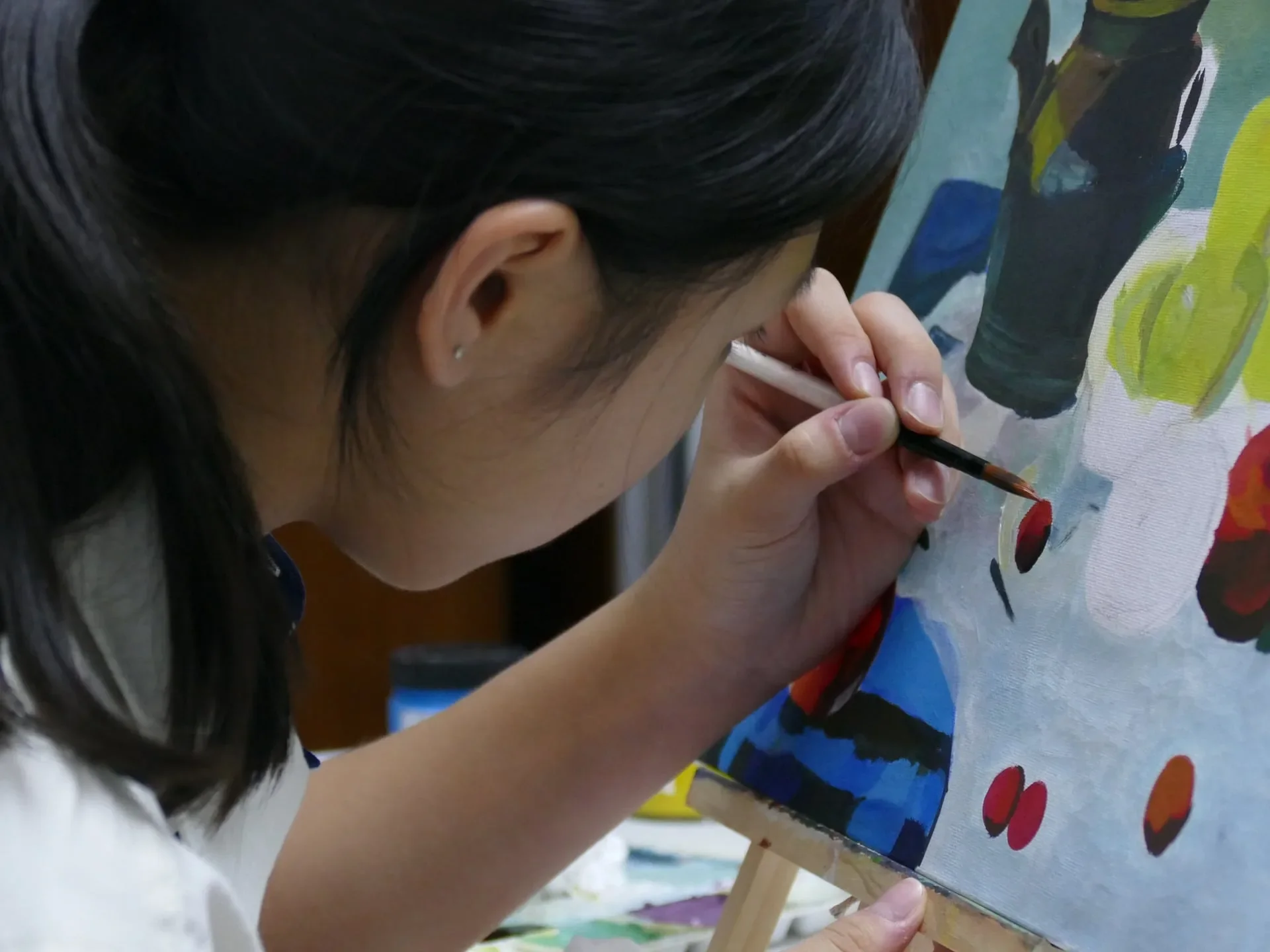
Art education develops critical thinking, problem-solving, and emotional intelligence — skills that transfer directly to academic performance and life success. At Art by Ancourage, children who engage in regular art practice show improved focus, creativity, and resilience. Yet art remains undervalued in Singapore's achievement-focused culture.
As the founder of Art by Ancourage, I have watched hundreds of children transform through art — not just in their creative skills, but in their confidence, focus, and approach to challenges. A shy P3 girl who barely spoke in class became a confident presenter after a year of art. A "hyperactive" boy who could not sit still for homework would focus intensely on his paintings for hours. Art does something academics alone cannot.
What Art Teaches Children
Art teaches process over product, experimentation over perfection, and observation over assumption. When a child paints, they are constantly making decisions: which colour, which stroke, what happens if I try this? They learn that mistakes can become features, that problems have multiple solutions, and that persistence produces results. These meta-skills carry over to every other domain.
The National Arts Council recognises arts education as essential for holistic development. In Art by Ancourage's experience, it correlates with:
- Academic performance improves, especially in subjects requiring creativity and analytical thinking
- Children develop stronger problem-solving abilities — art teaches that problems have multiple valid solutions
- Focus and concentration sharpen (completing artwork requires sustained attention)
- Emotional regulation becomes healthier through creative outlets
- Confidence grows from the experience of creating something that did not exist before
A dad recently shared that his son's maths teacher noticed a change in problem-solving approach. "He tries different methods now instead of giving up." The only change? He had started weekly art classes. The connection was not obvious, but the crossover was undeniable.
Art by Ancourage offers structured Art programmes for children and teens at Bishan and Woodlands — book a trial class (from $18) to see the approach in action.
The Myth of the "Creative Child"
Every child is creative — some just have not had the right environment to express it. At Art by Ancourage, instructors regularly hear parents say "my child isn't the creative type," but creativity is not a fixed trait. The children labelled "not artistic" have usually received early criticism that shut down their experimentation. With the right support, they rediscover creative confidence. In years of teaching, Art by Ancourage has never met a child who could not make art — only children who believed they could not.
Myths Art by Ancourage instructors hear all the time:
- "My child can't draw" — Drawing is a skill, not a talent. It improves with practice like any other skill
- "Art is just for fun, not useful" — Design, architecture, medicine, engineering — all require visual thinking skills developed through art
- "We should focus on academics first" — Art enhances academic performance, not competes with it. Taking breaks for creative work improves overall productivity
- "My child isn't the creative type" — There is no "creative type." Creativity is a muscle that strengthens with use
A P5 boy came to Art by Ancourage convinced he "couldn't do art." His previous art experiences had been criticised, and he had internalised the belief. The instructors started with abstract techniques — no "right" way to do them. Within months, he was creating work he actually felt proud of. His belief system changed, not his inherent ability.
How Does Art Help Academic Performance?
Art exercises the cognitive skills used in planning, focus, and decision-making. Regular art practice strengthens attention, persistence, and creative problem-solving. Children who create art also develop stronger visual-spatial reasoning, which supports mathematics, science, and reading comprehension.
Specific academic connections:
- Maths: Understanding proportions, symmetry, spatial relationships, and patterns
- Science: Observation skills, documentation through drawing, understanding processes
- Language: Visual storytelling, sequencing, vocabulary for description
- Critical thinking: Analysing compositions, making aesthetic decisions, evaluating outcomes
Art by Ancourage sees this regularly. Students in art programmes frequently report improved grades in other subjects. Not because art is magic, but because the habits carry across: patience, attention to detail, willingness to revise, and comfort with uncertainty.
DSA Through Art: An Alternative Pathway
Direct School Admission (DSA) through art opens doors at SOTA, the three Art Elective Programme (AEP) secondary schools that run an art talent area under DSA-Sec — National Junior College, Hwa Chong Institution and Victoria School — and various IP schools for students with genuine artistic passion. These schools accept students with strong art portfolios, which can reduce PSLE pressure while letting children pursue their strengths.
DSA art requirements typically include:
- A portfolio of artworks (number varies by school) showing range and development
- Different mediums: drawing, painting, 3D work, digital (for some schools)
- Evidence of personal voice and creative exploration
- Interview demonstrating passion and art knowledge
Art by Ancourage offers DSA portfolio preparation for students serious about this pathway. The work begins in P4-P5 — building a strong portfolio takes time. Students who start DSA prep in P6 are usually too rushed to develop real depth.
Important caveat: DSA should suit the child, not satisfy parental ambition. Some children truly thrive in art-focused schools. Others would be miserable. Art by Ancourage helps families make honest assessments before committing to the DSA path.
When Should Children Start Art Classes?
Any age is good, but early exposure builds stronger foundations. Children aged 3-5 develop fine motor skills, colour recognition, and artistic self-assurance through art play. Primary-age children can begin learning techniques while maintaining creative freedom. Older children, teens, and adults can pursue focused skill development or portfolio building.
Art by Ancourage programmes by age:
- Crafty Corner (Ages 3-5): Exploration-focused art play. Building confidence and motor skills through various materials
- Mini Masters (Ages 6-8): Introduction to basic techniques while maintaining creative joy
- Explorative Art (Ages 9-99+): Creative discovery and experimentation across mediums: drawing, painting, mixed media
- Professional Art (Ages 9-99+): Focused technique training for serious artists and portfolio development
- DSA Preparation (Ages 10-18): Portfolio development for DSA-Sec (P6) and DSA-JC applications
The best time to start is when your child shows interest. But even children who do not show obvious interest often discover they enjoy art once they try it in a supportive environment. For older adults and retirees looking to explore creativity later in life, our guide to art classes for seniors covers what to expect and how to get started.
Choosing the Right Art Programme
The best art programmes balance skill development with creative freedom — not all art classes are equal. Avoid classes that only produce identical artwork — that is craft assembly, not art education. Also avoid programmes with zero structure — children need some guidance to develop skills. Good art classes teach techniques while encouraging personal expression.
Questions to ask:
- Do students' works look different from each other, or identical?
- Is there a curriculum, or is it purely unstructured play?
- What training do the instructors have?
- Can I see examples of student progression over time?
- How do you handle children who say they "can't draw"?
- What is the class size? (Smaller is generally better for individual attention)
Red flags: Classes where every child produces the same picture. Instructors who do the work for children. Excessive focus on competition and awards over learning. Dismissive attitudes towards children's creative choices.
Art Education and Singapore's Educational Landscape
Singapore's education system increasingly recognises that creativity and analytical thinking are not opposites — they are complements. The MOE 21st Century Competencies framework places creative thinking, communication, and critical reasoning at the core of what schools are expected to develop. Children who build these skills through art arrive at school better equipped. In Art by Ancourage's experience, students with strong art foundations tend to demonstrate the kind of flexible thinking MOE's framework describes — approaching problems from multiple angles and communicating ideas clearly.
There is also a practical pathway for students with genuine artistic talent: the Direct School Admission (DSA) exercise allows students to gain secondary school places based on artistic talent, not only PSLE scores. For families interested in this route, the DSA art portfolio preparation at Bishan and Woodlands provides structured support. The DSA art programme at Art by Ancourage is designed for students aged 10-18 who want to build a compelling portfolio with genuine depth.
Common Questions About Art Education
These are the questions parents ask most often about art education and creative programmes for children.
Is art a waste of time when academics are so important?
In Art by Ancourage's experience, art can support academic performance rather than competing with it. Children who engage in arts activities show improved concentration, creativity, and problem-solving in all subjects. What they learn applies elsewhere. A child who develops persistence through painting applies the same persistence to difficult maths problems.
My child only likes digital art. Is that real art?
Digital art is absolutely real art — it is a medium, like watercolour or charcoal. Many professional artists work digitally. That said, exposure to physical mediums develops different skills (texture, spatial awareness, happy accidents). Art by Ancourage encourages children to explore both digital and traditional mediums.
How do I encourage my child's art at home?
Provide materials and space. Display their work. Ask questions about their creative choices without judging the outcome. Avoid saying "that does not look like a..." — ask what they were trying to express instead. Take them to museums and galleries. Let them see you create too — even imperfect doodles.
Where can my child try art classes in Singapore without a long commitment?
Art by Ancourage offers trial classes at both the Bishan centre and Woodlands centre from $18 per session. It is a full lesson, not a demonstration — the best way to see whether the approach and curriculum suit your child before enrolling. Art by Ancourage also holds periodic Open Studio events that are free and open to the public.
Will art classes take time away from academic studies?
Evidence suggests that students engaged in art develop skills — including concentration, creative thinking, and stress management — that support academic performance. A major randomised study found significant improvements in writing achievement and reductions in disciplinary infractions, with positive effects on school engagement among younger students. At Art by Ancourage, the art programmes are scheduled on weekends and evenings to complement, not compete with, academic tuition.
At what age should children start art classes?
Children can benefit from structured art education from age 3 onwards. The Crafty Corner programme introduces foundational skills through age-appropriate activities. Early exposure builds fine motor skills, visual-spatial reasoning, and creative confidence that supports learning across all subjects. There is no "too early" for creative development.
Is art education useful if my child does not want to be an artist?
Absolutely. The skills developed through art — visual communication, creative problem-solving, attention to detail, and the ability to iterate on ideas — are valued across careers from engineering to medicine to business. Art education is about developing transferable thinking skills, not just artistic technique. For students interested in creative pathways, the DSA art portfolio guide covers how art skills can support school applications.
Curious about Art by Ancourage's programmes? The art classes at Bishan and art enrichment at Woodlands articles cover each location in detail. Adults exploring art for the first time can refer to the adult art classes guide. Book a trial class (from $18) to experience a full lesson, or WhatsApp Art by Ancourage with any questions.
Related: Art Enrichment vs Art Therapy · Art jamming or art classes? · Art Classes in Bishan · Art Education Benefits: Research · School Art Programme Guide · When should children start art? · Mixed-media art for all ages · Upper primary art enrichment in Woodlands · Family guide to art galleries & museums · How to Plan an Art Birthday Party guide · a guide to Perspective Drawing