
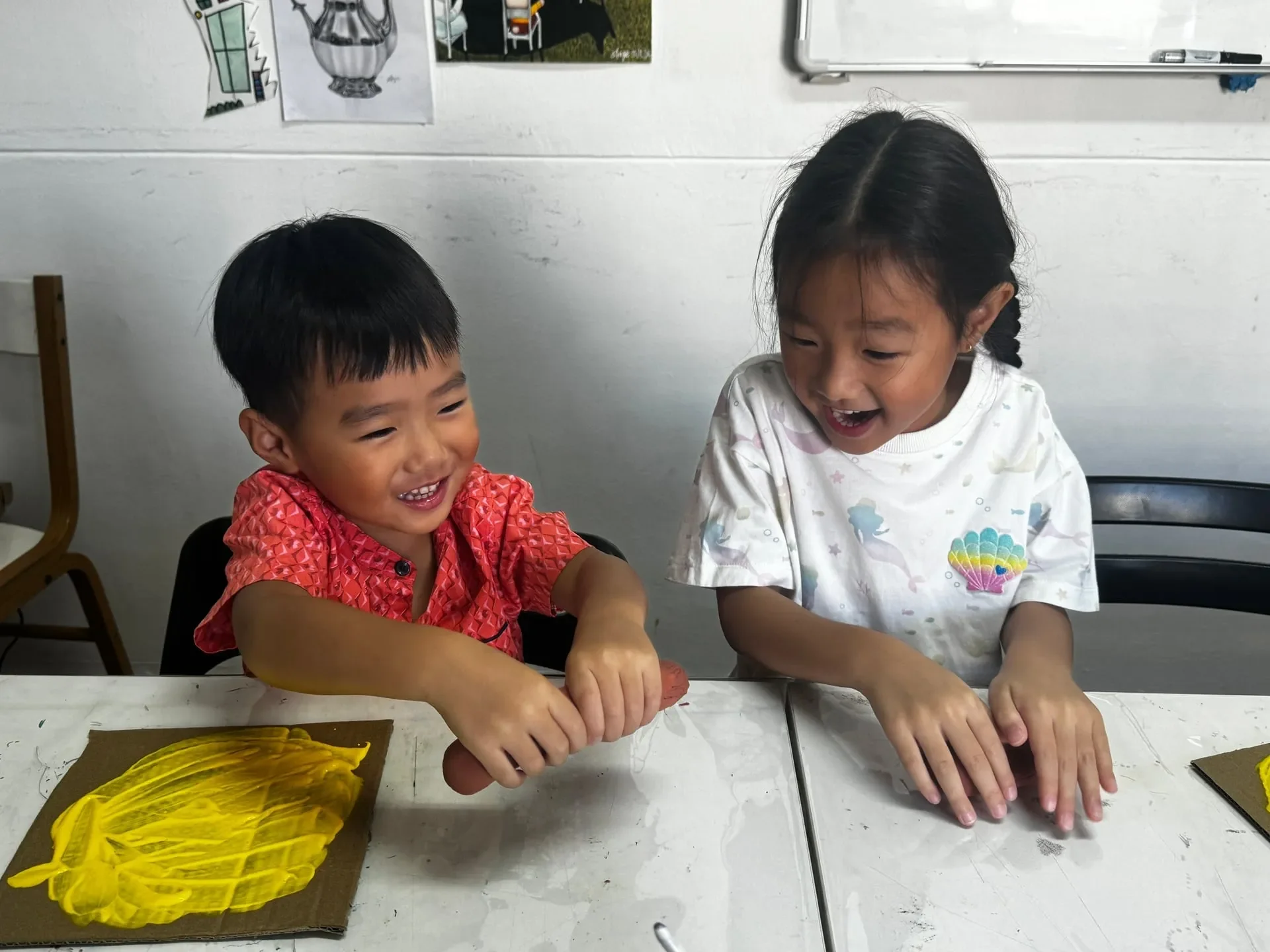
Art enrichment for preschoolers ages 3-5 develops fine motor skills, creativity, colour recognition, and school readiness through guided creative play — and Art by Ancourage's Crafty Corner programme at Bishan and Woodlands delivers this in small groups of 3-6 with all materials included and qualified instructors.
As an art educator with qualifications from LASALLE College of the Arts and Goldsmiths, University of London, I have worked with preschool-age children across every age band and watched them grow from hesitant mark-makers into confident young artists. Art enrichment at this age is not about producing beautiful artwork — it is about building the physical, cognitive, and emotional foundations that prepare children for formal schooling and lifelong creative expression.
Why Art Enrichment Matters for Preschoolers
Structured art activities in early childhood support developmental readiness, emotional regulation, and school preparedness across multiple domains. The MOE Nurturing Early Learners (NEL) framework identifies aesthetics and creative expression as one of the essential learning areas for children aged 4-6, placing art alongside language, numeracy, and social-emotional development.
When a three-year-old squeezes clay, tears paper for a collage, or holds a thick paintbrush to make deliberate strokes, they are developing the physical and cognitive skills that support writing, problem-solving, and spatial reasoning. That is why MOE treats aesthetics and creative expression as a learning area in its own right rather than as an add-on, and why the arts-education research the National Art Education Association indexes keeps returning to the same early-childhood outcomes: language development and social competence — benefits that extend well beyond the art table.
At Art by Ancourage, preschool art enrichment is designed around these developmental principles. Every Crafty Corner lesson balances sensory exploration with structured learning objectives, so children are having fun while genuinely developing skills they will carry into Primary 1 and beyond.
Developmental Milestones Through Art
Art enrichment for preschoolers systematically builds four categories of developmental skills — fine motor skills, hand-eye coordination, colour recognition and vocabulary, and pre-writing skills — that transfer directly to school readiness and daily life.
- Fine motor skills: Cutting with scissors, gripping pencils and crayons, tearing paper, rolling clay, and threading beads all strengthen the small muscles in hands and fingers. These are the same muscles children need for handwriting, buttoning shirts, and using utensils — skills that teachers expect by Primary 1
- Hand-eye coordination: Guided drawing, stamp printing, and painting within outlines train the connection between what a child sees and what their hands do. This coordination is essential for writing, catching a ball, and using tools
- Colour recognition and vocabulary: Learning to name colours, mix primary colours to create secondary ones, and describe their choices builds both visual literacy and language skills. A child who can say "I mixed red and yellow to make orange" is practising sequencing, cause-and-effect reasoning, and descriptive language simultaneously
- Pre-writing skills: Drawing circles, lines, zigzags, and shapes in art class directly prepares children for letter and number formation. Teaching experience suggests that children who regularly engage in structured drawing activities develop smoother, more controlled handwriting — a pattern consistent with the broader research on art education benefits
Beyond physical skills, preschool art enrichment builds emotional resilience. Children learn to accept that their painting looks different from their friend's, that mistakes can become happy accidents, and that persistence through frustration leads to improvement. These are foundational life skills that art education develops naturally.
Book a trial class (from $18) at Bishan or Woodlands to see how your preschooler responds to a structured art enrichment session — all materials included.
Art Enrichment vs Free Play
Both structured art enrichment and unstructured free play have distinct developmental roles, and the most effective approach combines both — but they are not interchangeable.
Free play — giving a child crayons and paper and letting them draw whatever they wish — is valuable for self-expression, imagination, and intrinsic motivation. However, free play alone does not teach a child how to hold a pencil correctly, how to mix colours intentionally, or how to follow multi-step creative instructions. These are learned skills that require demonstration, practice, and gentle correction from a qualified instructor.
| Aspect | Structured Art Enrichment | Free Play |
|---|---|---|
| Skill progression | Systematic, building from simple to complex | Incidental, based on child's exploration |
| Materials exposure | Guided introduction to diverse media | Limited to what is available at home |
| Instructor feedback | Real-time guidance and encouragement | None unless a parent intervenes |
| Social learning | Working alongside peers, sharing materials | Depends on context |
| Motor skill development | Targeted exercises (cutting, gripping, shaping) | Unintentional, variable |
The best outcome is a child who has structured enrichment weekly and free creative play at home between sessions. The enrichment provides new techniques and skills; the free play gives the child space to apply and experiment with what they have learned. This is the model Art by Ancourage encourages for all Crafty Corner students.
What Preschoolers Do in Art Enrichment Classes
A typical Crafty Corner session at Art by Ancourage introduces preschoolers to a specific medium or technique through a guided project, with room for individual creative choices within the structure.
Activities vary each week but commonly include:
- Finger painting: Using fingers, palms, and hands to create textures and patterns. Develops sensory awareness and helps children who are reluctant to get messy build comfort with tactile experiences
- Clay modelling: Pinching, rolling, pressing, and shaping air-dry clay into simple forms — animals, fruits, bowls. Strengthens hand muscles and introduces three-dimensional thinking
- Collage making: Tearing and cutting paper, fabric, and textured materials to create layered compositions. Practises scissors control, spatial planning, and colour combination
- Stamp printing: Using sponge stamps, vegetable cross-sections, and custom stamps to create repeated patterns. Introduces the concept of pattern-making and symmetry
- Guided drawing: Following step-by-step instructions to draw recognisable forms — houses, trees, animals, people. Builds confidence ("I can draw a cat!") and teaches observation skills
- Mixed-media projects: Combining paint, paper, stickers, fabric, and natural materials in a single artwork. Encourages creative decision-making and introduces layering concepts
Every session includes a brief introduction where the instructor shows the technique, a guided practice period with individual attention, and a sharing moment where children show their work to the group. This structure mirrors what children will experience in kindergarten and primary school classroom settings, making art enrichment a gentle bridge to formal education.
When to Start Art Enrichment
Most children are ready for structured art enrichment at age 3, though readiness depends more on the individual child's development and temperament than on a specific birthday.
Signs that your preschooler may be ready for art enrichment classes:
- Interest in drawing or colouring: If your child spontaneously picks up crayons, asks to paint, or enjoys sticker activities, they are showing readiness for guided creative instruction
- Ability to sit for 15-20 minutes: Art enrichment classes for preschoolers are shorter than older children's classes, but they still require some attention span. A child who can sit through a picture book or a simple activity is generally ready
- Comfort with separation: At Art by Ancourage, parents are welcome to stay for the first few sessions, but the goal is for children to participate independently. If your child is still adjusting to separation from parents, a trial class helps gauge readiness
- Curiosity about materials: Children who enjoy touching different textures, asking "what is this?", and experimenting with how things work tend to thrive in art enrichment settings
If your child is not quite ready at 3, there is no rush. Some children benefit from starting at 3.5 or 4 after more time in playgroup or nursery settings. The trial class at Bishan or trial class at Woodlands (from $18) is the best way to assess readiness without committing to a full term.
Choosing Art Enrichment in Singapore
When choosing preschool art enrichment in Singapore, compare five things — class size (6 or fewer), instructors' formal art training, non-toxic child-safe materials, a progressive term-by-term curriculum, and a clear next step once the child outgrows the programme — because quality varies enormously, from structured programmes with qualified instructors to glorified babysitting with crayons. Here is what to evaluate when choosing:
- Class size: Look for groups of 6 or fewer for preschool-age children. In larger groups, instructors cannot provide the individual attention that three- to five-year-olds need. At Art by Ancourage, class sizes are capped at 3-6 students
- Instructor qualifications: Ask whether instructors have formal art education qualifications, not just a love of crafts. Professional training matters because it means the instructor understands child development, pedagogy, and how to sequence skills appropriately
- Material safety: Preschoolers put things in their mouths, rub their eyes, and have sensitive skin. Ensure the centre uses non-toxic, child-safe materials — water-based paints, food-grade clays, and age-appropriate tools
- Progressive curriculum: A good art enrichment programme builds skills week by week, not just repeating the same craft activities. Ask to see a term outline or curriculum overview
- Clear progression pathway: What happens when your child outgrows the preschool programme? Centres with clear next steps — like Art by Ancourage's progression from Crafty Corner to Mini Masters — ensure continuity of learning
For an overview of pricing across different providers, the art classes cost guide for Singapore compares typical rates. The art jamming vs art classes comparison also helps parents understand why structured enrichment delivers better developmental outcomes than one-off sessions.
Art by Ancourage Crafty Corner Programme
Art by Ancourage's Crafty Corner is a weekly art enrichment programme designed specifically for children aged 3-5, running at both the Bishan and Woodlands studios in small groups of 3-6 students with all materials provided.
Programme highlights:
- Age range: 3-5 years old
- Class size: Maximum 6 students per session, typically 3 to 6
- Frequency: Weekly sessions
- Materials: All art supplies included — paints, clay, paper, craft materials, aprons
- Instructors: Qualified art educators with early childhood experience
- Locations: Bishan (152 Bishan St 11, near Bishan MRT) and Woodlands (Vista Point, 548 Woodlands Drive 44, near Woodlands South MRT)
- Weekly reports: Parents receive updates on what their child learned and how they engaged with the activity
The Crafty Corner curriculum follows a term-based structure where each term focuses on different media and skills. A typical term might cover clay sculpting, watercolour exploration, collage and mixed media, and guided observational drawing — ensuring children experience a range of artistic approaches over the year.
When children turn 6 or show readiness for more structured instruction, they transition into the Mini Masters programme (ages 6-8), which introduces formal drawing techniques, colour theory, and composition. This seamless progression means children do not need to change studios or adjust to a new teaching approach — they simply move to the next level within Art by Ancourage.
For families who want to explore other programmes, Primary School Art is available for children aged 7-12 who want MOE-aligned art enrichment, and holiday art programmes run during every school break for young children who want an intensive creative camp outside term time.
To see if Crafty Corner is the right fit for your child, book a trial class at Bishan (from $18) or Woodlands (from $18). The trial gives your child a full session experience and you a personalised recommendation from the instructor on programme suitability and readiness. See the pricing page for full programme details.
Common Questions About Preschool Art Enrichment in Singapore
What age can children start art enrichment classes?
Most children are ready for structured art enrichment from age 3. At Art by Ancourage, the Crafty Corner programme accepts children from 3 years old. Readiness depends on individual development — a trial class (from $18) helps assess whether your child is comfortable in the group setting and can engage with guided activities.
Is art enrichment worth it for preschoolers who already do art at childcare?
Yes. Childcare art is typically one activity among many, with large group sizes and limited individual attention. Dedicated art enrichment in groups of 3-6 provides focused skill development, exposure to diverse media, and personalised feedback from qualified instructors — building skills that childcare art activities cannot match at that ratio.
What materials are safe for 3-year-olds in art classes?
Reputable art enrichment centres use non-toxic, water-based paints, food-grade or certified child-safe clays, rounded scissors, and large-grip crayons and brushes. At Art by Ancourage, all materials are child-safe and age-appropriate. Children wear aprons, and instructors supervise material handling throughout every session.
How does preschool art enrichment prepare children for Primary 1?
Art enrichment builds pencil grip, scissors control, hand-eye coordination, colour recognition, ability to follow multi-step instructions, and comfort sitting in a structured class — all skills that Primary 1 teachers expect. Children who attend regular art enrichment are often better prepared for the classroom routine, as they have already practised sustained focus and structured group activity.
Do parents need to stay during the class?
Parents are welcome to stay for the first one or two sessions while their child settles in. The goal is for children to participate independently, which builds confidence and social skills. Most children adapt within two to three sessions. Art by Ancourage instructors communicate with parents via weekly reports and WhatsApp updates on their child's progress and engagement.
What is the difference between Crafty Corner and Mini Masters?
Crafty Corner (ages 3-5) focuses on sensory exploration, fine motor development, and creative play through guided projects. Mini Masters (ages 6-8) introduces formal drawing techniques, colour theory, and composition with more structured instruction. Children naturally transition from Crafty Corner to Mini Masters as they develop readiness for technical skills.
Related: Art Classes in Bishan · Art Enrichment Woodlands · Benefits of Art Education · Budgeting for art classes · Choosing art jamming or lessons · Holiday Art Programmes · Art Workshops Guide · Kids' art birthday parties · Art Enrichment vs Art Therapy explained · Art Open Studio guide · Holiday Programmes in Bishan guide