
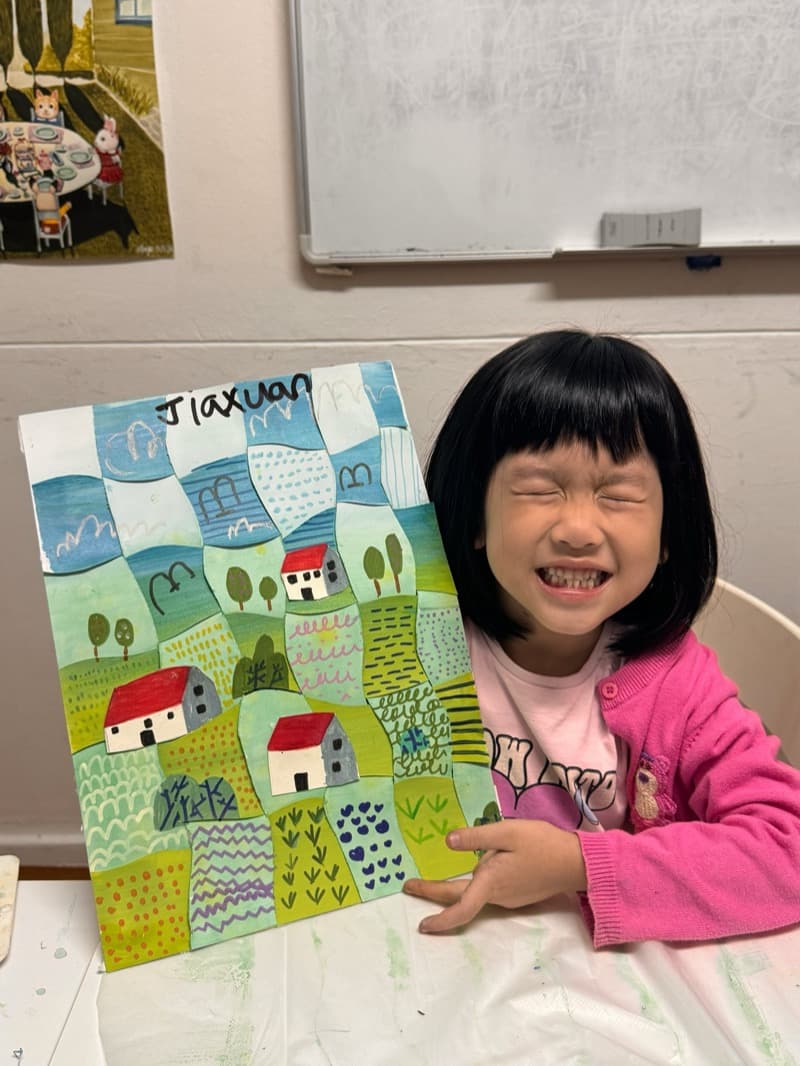
The best time to start art classes depends on your child's age and goals. Ages 3–5 develop fine motor skills and sensory exploration. Ages 6–8 build observation skills and visual-spatial reasoning. Ages 9–12 develop technique and open the window for DSA portfolio preparation. Ages 13–18 refine artistic identity and prepare for examinations or tertiary pathways. At Art by Ancourage, the studio offers age-appropriate programmes at every stage — from first mark-making to O-Level / SEC Art coursework — at the Bishan and Woodlands studios.
As the founder of Art by Ancourage and a graduate of LASALLE College of the Arts and Goldsmiths, University of London, I have guided hundreds of children from their earliest art experiences through to DSA success, O-Level Art, and tertiary portfolio admission. This guide draws on that experience and on developmental research to help you decide when and how to start your child's art education. Book a trial class (from $18) at Bishan or Woodlands to see which programme suits your child.
Ages 3–5: Fine Motor Skills and Creative Play
Children aged 3–5 are at a natural stage for fine motor development, sensory exploration, and building creative confidence. At this stage, art is not about producing finished pieces — it is about the process of exploring materials, developing hand strength, and building the neural pathways that support later learning.
Research supports early art exposure. The World Health Organization Health Evidence Network report (2019) reviewed over 900 publications and found that arts engagement from early childhood improves cognitive function, reduces anxiety, and supports social development. For children aged 3–5, the developmental benefits are particularly pronounced:
- Grip development: Holding crayons, paintbrushes, and scissors builds the pencil grip and hand strength children need for writing
- Colour recognition: Mixing primary colours and observing results teaches cause-and-effect reasoning alongside colour vocabulary
- Sensory processing: Working with paint, clay, textured papers, and fabric develops sensory integration skills
- Sustained attention: Completing a short art project builds the ability to focus on a task — a foundation for classroom learning
- Creative confidence: Children who are encouraged to make marks without fear of mistakes develop a positive relationship with creative expression that persists into later years
The Art by Ancourage Crafty Corner programme is designed specifically for this developmental stage. Activities include playful mark-making, collage, simple painting, and sensory exploration in small groups of 3–6. For a deeper look at art enrichment for young children, read the Art Enrichment for Preschoolers guide.
Ages 6–8: Observation Skills and Guided Projects
Between ages 6 and 8, children transition from free creative play to structured learning — and art education should reflect that shift. This is when children begin drawing from observation rather than imagination alone, learning to look carefully at a subject and translate what they see onto paper.
Visual-spatial reasoning develops rapidly during this period, and structured art instruction gives children sustained practice at observing, comparing and representing what they see. Key developmental focuses at this stage include:
- Observation drawing: Looking at real objects and translating three-dimensional form onto a flat surface — the foundation of all visual art
- Basic composition: Learning to place elements on a page with intention, understanding foreground and background
- Colour mixing: Moving beyond primary colours to mix secondary and tertiary hues, understanding warm and cool colour relationships
- Project completion: Working through a guided project from start to finish builds planning and persistence skills
- Experimentation: Trying different materials — watercolour, acrylic, pastel, collage — to discover preferences and strengths
The Art by Ancourage Mini Masters programme is built for this developmental stage. Children work on guided projects that teach real skills while maintaining creative joy. Each session builds on the last, creating a progressive learning pathway rather than a series of disconnected activities.
Ages 9–12: Technique Building and Medium Exploration
Ages 9–12 represent a critical window for art skill development — and the point at which children can begin building a genuine artistic foundation. This is when technique becomes meaningful. Children have the motor control, cognitive maturity, and attention span to learn structured drawing, painting, and mixed-media methods.
A large-scale randomised study (Bowen & Kisida, Journal of Policy Analysis and Management, 2023) found that increased arts education led to improvements in writing achievement, school engagement, and reductions in disciplinary infractions among elementary-age students. For upper primary children, structured art provides both creative development and measurable academic benefits.
At this stage, two programmes become appropriate:
- Professional Fine Art: Structured technical training in realism, portraiture, perspective, still life, and advanced painting methods. Ideal for children who want to develop serious skills
- Explorative Art: Creative discovery across drawing, painting, and mixed media. Ideal for children who want to explore different art forms without competitive pressure
This is also the stage at which DSA preparation becomes relevant. Students targeting DSA Visual Arts for Secondary 1 entry should begin structured art classes by Primary 4 at the latest to build a competitive portfolio by Primary 6. The Art by Ancourage DSA Portfolio programme guides students through skill development, portfolio curation, and interview preparation.
Ages 13–15: Portfolio Development and Artistic Identity
The secondary school years are when young artists develop a personal artistic voice — moving from technical exercises to work that expresses genuine ideas and perspectives. This is also when formal art education pathways open up, including school art programmes, Art Elective Programmes (AEP), and Enhanced Art Programmes (EAP).
Key focuses at this stage:
- Artistic identity: Developing a recognisable style and thematic interests that distinguish a student's work
- Medium specialisation: Deepening skill in preferred media while maintaining versatility across drawing, painting, and mixed media
- Portfolio building: Creating a body of work that demonstrates range, growth, and personal vision — critical for DSA-JC, AEP, and tertiary applications
- Critical thinking: Analysing art, articulating creative intentions, and responding to feedback — skills needed for O-Level / SEC Art coursework and beyond
For teens beginning art classes at this age, the Professional Fine Art programme provides accelerated skill-building. Students who started earlier can focus on developing their portfolio and artistic direction. For a side-by-side comparison of AEP, EAP, SOTA, and DSA pathways, see the art pathways comparison guide. For a comprehensive guide to art classes for teenagers, read the Art Classes for Teens guide.
Ages 16–18: Exam Preparation and Tertiary Readiness
For students in upper secondary and junior college, art education becomes directly tied to examination outcomes and tertiary admission. O-Level / SEC Art (K347 from 2027), H2 Art at A-Level, and portfolio preparation for institutions such as LASALLE, NAFA, and NTU ADM all require sustained, structured art practice.
At this stage, students at Art by Ancourage work on:
- O-Level / SEC Art coursework: Developing a cohesive coursework portfolio that meets SEAB assessment criteria
- H2 Art Discourse (Paper 1): Critical art analysis, essay writing, and response to unseen visual stimuli
- Tertiary portfolio preparation: Curating and presenting work for admission to LASALLE, NAFA, NTU ADM, and overseas art institutions
- Personal creative practice: Sustaining artistic growth alongside academic demands
For detailed guidance on specific pathways, read the O-Level Art coursework guide, H2 Art guide, and NAFA & LASALLE portfolio admission guide.
The DSA Art Timeline: When Preparation Matters Most
The DSA-Sec Art preparation sequence runs: begin structured art classes in Primary 4, build portfolio pieces in Primary 5, finalise and curate the work in Primary 6 January-March, then apply and attend selection trials and interviews from May. SOTA runs its own Talent Academy calendar, separate from the MOE DSA-Sec portal. Based on Art by Ancourage's experience guiding students through successful DSA applications, here is the recommended timeline:
| Stage | When | Focus |
|---|---|---|
| Begin structured art classes | Primary 4 (age 10) | Build foundational drawing and painting skills, explore different media |
| Build portfolio pieces | Primary 5 (age 11) | Create works that demonstrate range, technical skill, and personal voice |
| Finalise portfolio | Primary 6, Jan–Mar | Select and curate best works, practise interview questions and on-the-spot drawing |
| DSA applications | Primary 6, May–Aug | Submit applications, attend selection trials and interviews |
Students who begin at Primary 4 have two full years to develop skills and build a competitive portfolio. Starting at Primary 5 is possible but leaves significantly less time for skill development. Starting at Primary 6 is too late for most students unless they already have strong existing skills.
For a complete breakdown of MOE DSA requirements, schools, and strategies, read the DSA Art Portfolio Guide and the DSA Art Schools list.
Signs Your Child Is Ready for Art Classes
Readiness shows in behaviour, not age: at 3-5, enjoying drawing or painting at home, sitting with an activity for 10-15 minutes, curiosity about colours, shapes and textures, and comfort in a small group; from 6-8, drawing recognisable objects and figures, and later asking to learn technique and seeking feedback rather than casual practice. Here are observable indicators that your child may be ready, organised by age group:
Ages 3–5 readiness signs:
- Enjoys drawing, colouring, or painting at home — even simple scribbles and mark-making
- Can sit and focus on an activity for 10–15 minutes
- Shows curiosity about colours, shapes, and textures
- Is comfortable being in a small group with other children
Ages 6–8 readiness signs:
- Draws recognisable objects and figures (not just abstract marks)
- Shows interest in "how to draw" — asks questions, copies from books or screens
- Can follow multi-step instructions
- Wants to improve and is open to guidance
Ages 9–12 readiness signs:
- Expresses frustration that drawings "don't look right" — a sign of developing critical awareness
- Shows sustained interest in art, filling sketchbooks or watching art tutorials
- Desires to learn specific skills (shading, perspective, portraiture)
- May be interested in DSA or school art programmes
Ages 13–18 readiness signs:
- Has a clear desire to develop artistic skill for personal, academic, or career reasons
- Wants to build a portfolio for DSA-JC, AEP, or tertiary admission
- Seeks structured feedback and mentorship rather than casual practice
If your child shows even one or two of these signs, they are likely ready for a structured art programme. A trial class (from $18) at Art by Ancourage is the most practical way to assess readiness — the instructor will observe your child and recommend the most suitable programme.
Choosing the Right Programme for Your Child's Age
At Art by Ancourage the age-to-programme map is Crafty Corner at 3-5, Mini Masters at 6-8, Professional Fine Art or Explorative Art at 9-12, the DSA Portfolio programme at 10-12 for Visual Arts applicants, and Professional Fine Art or Secondary Art from 13-18 — matching the programme matters more than simply enrolling in art classes. A programme that is too advanced leads to frustration; one that is too basic leads to boredom. The table below maps age ranges to the most suitable Art by Ancourage programmes:
| Age | Programme | Focus |
|---|---|---|
| 3–5 | Crafty Corner | Sensory play, fine motor skills, creative confidence |
| 6–8 | Mini Masters | Observation drawing, guided projects, colour mixing |
| 9–12 | Professional Fine Art / Explorative Art | Technique building, medium exploration, artistic foundations |
| 10–12 | DSA Portfolio | Portfolio building for DSA Visual Arts from Primary 4 |
| 13–18 | Professional Fine Art / Secondary Art | Advanced skills, portfolio, exam preparation |
All programmes at Art by Ancourage run in small groups of 3–6 students at both the Bishan and Woodlands studios. This ensures every child receives individual attention and feedback from the instructor — something that larger class sizes cannot provide.
Not sure which programme is right? Book a trial class (from $18) and the instructor will assess your child's current level and recommend the best fit. You can also WhatsApp Art by Ancourage to discuss your child's needs before booking.
If Direct School Admission is the goal, timing the start of art classes is only the first step — browse our DSA timeline and guides hub for the full application timeline, school list, and portfolio strategy.
Common Questions About Starting Art Classes
Is 3 years old too young for art classes?
No — age 3 is an excellent time to begin art classes, provided the programme is designed for this developmental stage. Children aged 3–5 benefit enormously from sensory exploration, fine motor development, and creative play. The key is choosing a programme like the Crafty Corner at Art by Ancourage that emphasises process over product. Activities should be open-ended and sensory-rich, not focused on producing realistic artworks. At this age, the goal is building creative confidence and developing the physical skills that support later learning.
My child is 10 and has never had art classes — is it too late for DSA?
It is not too late, but you need to start now. Students who begin structured art classes at Primary 4 (age 10) have two full years to build skills and create portfolio pieces before DSA applications in Primary 6. This is a realistic timeline for most children, especially those who show natural interest and practise between lessons. The Art by Ancourage DSA Portfolio programme is designed for exactly this scenario — structured skill building with portfolio development built into every session. Starting at Primary 5 is still possible but significantly more compressed.
Should I choose explorative or professional art classes?
Explorative Art emphasises creative discovery and experimentation across different media — ideal for children who want to enjoy art broadly without competitive pressure. Professional Fine Art provides structured technical training in realism, composition, and specific techniques — suited for children who want to develop measurable skills, prepare for DSA, or pursue art seriously. If you are unsure, a trial class (from $18) lets the instructor assess your child and recommend the better fit. Many students start with Explorative and transition to Professional as their interest deepens.
How often should my child attend art classes?
For most children, one session per week is sufficient to build skills progressively. Students preparing for DSA or examinations benefit from two sessions per week, especially in the 12–18 months before deadlines. Consistency matters more than frequency — a child who attends one class every week for a year develops far more than a child who attends two classes per week for three months. At Art by Ancourage, regular weekly attendance in small groups of 3–6 allows the instructor to build on previous lessons and track each student's development.
Can art classes help if my child is not naturally talented?
Artistic talent is not a fixed trait — it is the result of practice, instruction, and encouragement. The WHO Regional Office for Europe's 2019 evidence review (Fancourt and Finn) links arts engagement to benefits in cognition, emotional regulation and social connection across the life course — with no artistic talent required to take part. At Art by Ancourage, the instructors have taught hundreds of children who started believing they "can't draw" and developed into confident, skilled artists. Every child can benefit from art education — the developmental gains in focus, creativity, and emotional expression apply to all children, not only those who may pursue art professionally.
Ready to find the right programme for your child? Book a trial class (from $18) at Art by Ancourage's Bishan or Woodlands studio, or WhatsApp Art by Ancourage to discuss your child's needs.
Related: Art Enrichment for Preschoolers · DSA art portfolio preparation · Art Education Benefits · Why Art Education Matters · How to Draw Faces guide