P5 Science Tuition
Ancourage Academy · Primary · P5
Content reviewed: Sep 2026
P5 Science tuition at Ancourage Academy in Bishan and Woodlands, Singapore. Primary 5 is where many students first struggle with Science — electrical circuits, plant and human reproduction, the water cycle, and cells are all more abstract and interconnected than P3-P4 topics. In our small classes of 3-6 students, P5 children build the structured answering skills that PSLE Science demands. MOE-aligned weekly 1.5-hour lessons.
In person at our Bishan and Woodlands centres.
What Makes Us Different
Our proven teaching methodology combines evidence-based approaches for maximum learning effectiveness

Ebbinghaus Memory Theory
Spaced retrieval practice across Physics, Chemistry, and Biology topics — weekly concept checks, monthly cross-topic quizzes, and term revision papers — timed to reinforce scientific vocabulary and process skills before they weaken.
Socratic Questioning
Questions that link experimental evidence to theory — 'What does your data suggest about this hypothesis?' and 'How would you redesign this experiment to improve reliability?' — training students to think like scientists, not just recall facts.
Bruner's Scaffolding
From fully guided practical reports to template-supported analysis to independent evaluation — tutors reduce scaffolding step by step, ensuring students can plan experiments, interpret data, and draw conclusions on their own.
Key Learning Outcomes
Master Key Concepts
Deep understanding of core topics aligned with MOE syllabus
Critical Thinking
Develop analytical and problem-solving skills
Exam Confidence
Strategic exam techniques and time management
Consistent Results
Improved grades and academic performance
Progress looks like:
- Improved ability to analyse and explain experimental results
- Stronger application of scientific concepts in varied contexts
- Greater independence in handling open-ended questions
Course Structure
Duration
1.5 hours per lesson
Full coverage with interactive learning time
Class Size
3-6 students per class
Close guidance, timely feedback, and ample practice
Materials
All materials provided
No material fees — all worksheets and resources included
Curriculum Overview
- ✓Scientific process skills: Hypothesising, predicting, experimenting, and analysing results.
- ✓Cycles: Reproduction in plants and animals — including that a cell is the basic unit of life — the water cycle, and states of matter.
- ✓Systems: Study of circulatory, respiratory, and plant transport systems, including their interactions.
- ✓Electrical system: Exploring circuits, conductors, insulators, and practical applications of electricity.
- ✓Experimentation and application: Hands-on experiments and problem-solving to prepare for upper primary assessments.
Why Do Students Start Struggling With Science in P5?
- 1
Reproduction and cells — grasping that a cell is the basic unit of life and how flowering plants reproduce
- 2
Systems integration — connecting how body and plant systems work together
- 3
PSLE-style application — tackling open-ended questions that demand reasoning beyond textbook examples
- 4
Experimental reasoning — explaining why results occur and what they mean
- 5
Multi-step answers — structuring detailed explanations that address all parts of higher-order questions
Learning Progression
Builds On
P4 Science with the digestive system, plant parts and their functions, matter, light and heat foundations
Prepares For
P6 Science with Energy, Interactions (forces), and intensive PSLE preparation
Key Transition
Application overtakes memorisation in upper primary P5 Science — students learn to transfer conceptual understanding to unfamiliar contexts, reflecting PSLE's emphasis on deep comprehension.
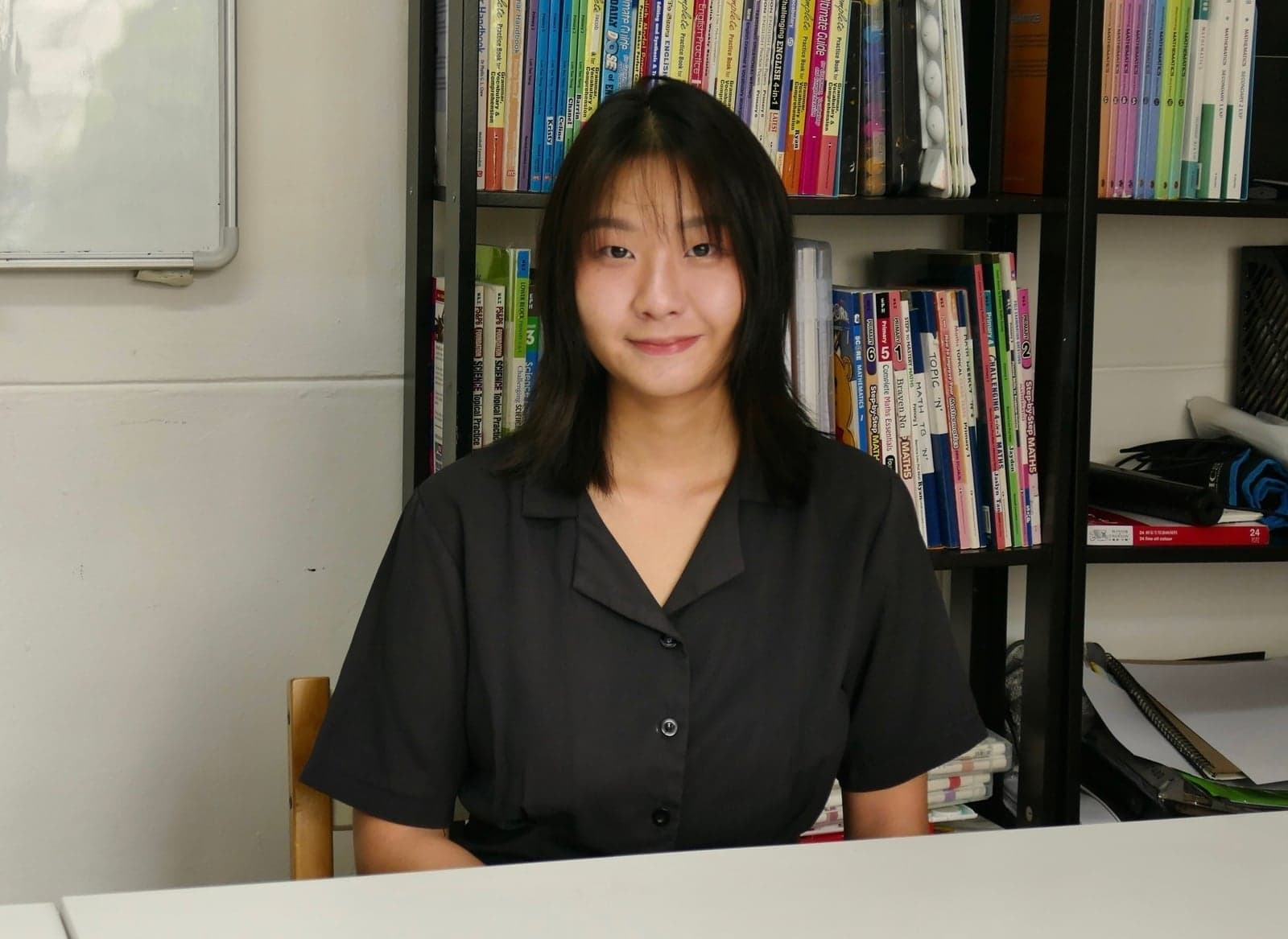
“P5 and P6 Science preparation requires more than content knowledge — students must master process skills like analysing data tables, constructing explanations, and applying concepts to unfamiliar scenarios. We train students to think systematically so they can tackle any PSLE question with confidence.”
Early Childhood & Primary Education Specialist
Related Courses
Explore other courses that complement your learning journey
P5 Maths
Develop logical reasoning with percentage and rate
P5 English
Build comprehension and composition skills for PSLE
P6 Science
Final PSLE Science preparation with intensive practice
P4 Science
Review P4 foundations for stronger continuity.
P3 Science
Same subject family: P3.
P5 Chinese
Recommends this course as a related programme.
Frequently Asked Questions
P5 focuses on application — using scientific concepts in new and unfamiliar contexts. We teach students to analyse scenarios, apply relevant concepts, and explain their reasoning clearly. These skills are essential for PSLE Science, which rewards understanding over memorisation. Read our primary science tips.
We use varied scenarios and practice questions to help students transfer knowledge to new contexts. Through guided practice, students learn to identify which concepts apply, structure their explanations, and provide complete answers that earn full marks.
Key P5 Science topics include reproduction in plants and animals (including the idea that a cell is a basic unit of life), the water cycle, the plant transport system, the human respiratory and circulatory systems, and the electrical system. Students should understand not just what happens, but why and how — being able to explain processes and connections between concepts. Read our primary Science tips.
Yes — our Bishan centre is a 10-minute walk from Bishan MRT (Circle and North-South Lines). Primary 5 students from Ai Tong School, Marymount Convent School, Kuo Chuan Presbyterian Primary and surrounding schools attend our Science classes. We also have a Woodlands centre for families in the North. Book a trial class at Bishan.
Our small-group classes are capped at 6 students and typically run 3 to 6, so every learner receives close guidance, timely feedback, and ample practice.
Each lesson is 1.5 hours, providing ample time for thorough coverage of topics and interactive learning.
Yes. All lesson materials and worksheets are provided and included in the fees. Students should bring regular stationery and, where applicable, school textbooks/workbooks for reference.
Yes. Our materials and pacing align with the MOE syllabus. External syllabuses (e.g. IGCSE, IB) are available upon request.
Helpful Resources for Parents
In-depth guides on preparation strategies and learning tips
Primary Science Tuition in Bishan: P3-P6 Guide for Parents
P3-P6 Science tuition in Bishan — process skills, open-ended answering techniques, and PSLE preparation for Kuo Chuan, Ai Tong, and Catholic High students.
Read more →PSLE Science Preparation for Bishan Primary Schools
PSLE Science strategies for Bishan — Kuo Chuan Presbyterian, Ai Tong, and Catholic High. Concept mastery, process skills, and exam techniques.
Read more →PSLE Science Preparation for Woodlands Primary Schools
Targeted PSLE Science strategies for Woodlands students from Riverside, Greenwood, Si Ling, and Fuchun primary schools. Master concepts and process skills.
Read more →Primary Science Tips in Singapore: Answering Techniques
PSLE Science strategies — answer structured questions clearly, avoid concept errors, and apply process skills using examiner-friendly methods.
Read more →PSLE Science: Answering Techniques That Score
PSLE Science answering techniques that target how examiners mark — structured responses, process skills, and common mistakes to avoid for Booklet A and B.
Read more →How to Score Well in PSLE: Subject-by-Subject Strategies
Score well in PSLE with subject-specific strategies for English, Maths, Science, and Chinese — target AL band boundaries where small mark gains shift achievement levels.
Read more →P5-P6 Science Tuition in Bishan: Upper Primary Guide
P5-P6 Science tuition guide for Bishan parents. Covers PSLE answering techniques, process skills, and exam strategies for Kuo Chuan, Ai Tong, and Catholic High.
Read more →P5-P6 Science Tuition in Woodlands: Upper Primary Guide
PSLE Science tuition at Vista Point Woodlands — CER answering for Booklet B, hands-on process skills, and cross-topic reasoning for P5 and P6 students.
Read more →PSLE Revision: A Complete Study Guide for All 4 Subjects
Effective PSLE revision requires subject-specific strategies, consistent practice, and targeted review of weak areas across all four subjects in Singapore.
Read more →Deepen Your Learning
Comprehensive topic guides covering everything in this subject area.
PSLE
Everything parents and students need to know about the Primary School Leaving Examination — from subject-specific strategies to scoring, stress management, and school selection.
Browse guide →Science
Your guide to Science education in Singapore — from Primary school foundations to Secondary combined and pure sciences, including Biology, Chemistry, and Physics.
Browse guide →Study Tips & Exam Prep
Practical study tips and exam preparation strategies that work — from effective revision techniques and time management to past year paper strategies and exam day tips for Singapore students.
Browse guide →
Ready to Get Started?
Enquire now and experience our proven teaching methodology
💬 Have questions? WhatsApp us anytime — we typically respond within 2 hours
Also from Ancourage: Art classes for kids, teens & adults →