
The oral examination (口试) is the single highest-value component of PSLE Chinese per minute of exam time — 50 marks, a quarter of the whole grade — yet it is the part most families leave to chance, because it feels harder to practise than written work. In reality, both halves of the oral reward specific, trainable technique. This guide is from Ancourage Academy, whose primary Chinese tuition (小学华文补习课程) builds oral technique through structured practice in small groups of 3–6.
This is a single-component deep-dive on the oral. For the whole-subject overview, see our PSLE Chinese tips guide; for the written paper, see our PSLE Chinese comprehension guide and composition guide. This article covers only the oral.
If your child freezes in Chinese oral or speaks fluently at home but stumbles in the exam, Ancourage Academy's P6 Chinese programme rehearses both oral components weekly — book a trial class (usually $18) for a diagnostic assessment.
What Is in the PSLE Chinese Oral (口试)?
The PSLE Chinese oral is worth 50 marks (25% of the subject) and has two parts — Reading Aloud (朗读) and Video Conversation (看视频说话) — taken as a computer-based (e-oral) examination after a short preparation time.
| Component | What it tests | Marks |
|---|---|---|
| 朗读 (Reading Aloud) | Pronunciation, tones, fluency, and expression when reading a passage on screen | 20 |
| 看视频说话 (Video Conversation) | Watching a short video, then responding to and discussing questions with the examiner | 30 |
Students get 10 minutes of preparation time before the examination to read the passage silently and watch the video, then a short live session with the examiner. Because the oral is conducted live, marks reward delivery — clear pronunciation, natural pace, and structured spoken responses — not memorised written answers. The format is set out on the SEAB PSLE Chinese syllabus (0005).
What Is Marked in PSLE Chinese Reading Aloud (朗读)?
Reading Aloud is worth 20 marks, and its marking criteria (评分标准) reward accurate pronunciation (发音), correct tones (声调), smooth fluency (流利度), and natural expression (语气) — and the most common marks lost are on tones and on reading mechanically.
- Tones (声调): the four tones — and especially the distinction between the second (rising) and third (dipping) tones — change meaning, and tone slips are among the most common reading errors.
- Pace and pausing: read at a steady, natural pace with pauses at punctuation. Reading too fast to "get it over with" causes slips and flat delivery.
- Expression (语气): let the meaning shape the delivery — a question rises, an exclamation lifts. Flat, monotone reading signals that the student is decoding rather than understanding.
- Skim first: use the preparation time to read the passage silently, noting unfamiliar characters and where the sentences break.
What Are 多音字 (Polyphonic Characters) in Reading Aloud?
Many Chinese characters have more than one pronunciation depending on context (多音字), and reading them with the wrong sound is a frequent, avoidable Reading Aloud error. A character like 行 is read xíng in 行走 (to walk) but háng in 银行 (bank); 长 is cháng (long) or zhǎng (to grow); 着 shifts between zhe, zháo, and zhuó.
The fix is exposure: students who read aloud regularly internalise which reading fits which context. During preparation, a student who spots a known 多音字 in the passage should consciously decide the correct reading before they begin, rather than guessing mid-sentence.
How Do You Structure a Video Conversation (看视频说话) Answer?
To structure a PSLE Chinese Video Conversation answer, state your view, give a reason, add an example or personal experience, then conclude or extend — Video Conversation is worth 30 marks, the larger half of the 50-mark oral, and it rewards a developed opinion over a one-line reply.
A structured response scores far better than a scattered one. A reliable shape is: state your view, give a reason, add an example or personal experience, then conclude or extend. For instance, "I think recycling is important — because it reduces waste; at home my family separates plastic and paper; if everyone did this, our environment would be cleaner." The examiner will then ask follow-up questions, and the marks reward developed, on-topic answers over short or memorised ones.
- Answer the actual question: listen to what is asked and respond to it directly — drifting onto a rehearsed topic loses relevance marks.
- Develop each point: a reason plus an example turns a one-line answer into a scoring one.
- Use your own experience: personal examples are easier to speak about fluently than abstract arguments.
- Keep speaking: short silences cost fluency marks; if unsure, restate the point in different words.
What Themes Come Up in the Video Conversation?
Recurring Video Conversation themes are family and home (家庭), school and friends (学校与朋友), healthy living and food (健康饮食), the environment (环保), technology and screen time (科技), community and helping others (社区), and hobbies and festivals (兴趣与节日) — these are practice themes drawn from everyday primary-school life, not predicted exam topics.
Themes that come up frequently include family and home (家庭), school and friends (学校与朋友), healthy living and food (健康饮食), the environment (环保), technology and screen time (科技), community and helping others (社区), and hobbies and festivals (兴趣与节日). For each theme, a student who has a few ready reasons, examples, and topic-specific words can speak fluently rather than searching for vocabulary under pressure.
How Should You Use the Oral Preparation Time?
PSLE Chinese oral gives you one 10-minute preparation period before the examination that covers both tasks — you read the passage silently and watch the video clip in that window, and you may re-read and re-watch as often as the 10 minutes allow — so plan how to split it before you sit down.
- For Reading Aloud: read the passage silently, locate 多音字 and unfamiliar words, and note where to pause.
- For Video Conversation: identify the topic and jot a quick mental outline — your view, one or two reasons, and an example — so you are not constructing the answer while speaking.
- Settle the nerves: a slow breath before speaking steadies the pace, which directly helps both pronunciation and fluency.
What Are the Most Common PSLE Chinese Oral Mistakes?
Most PSLE Chinese oral mistakes come from tone slips, weak use of preparation time, or one-line answers that do not develop a point.
| Mistake | Why It Costs Marks | The Fix |
|---|---|---|
| Tone slips in Reading Aloud | A wrong tone changes the word, and pronunciation is part of what Reading Aloud tests | Slow down; consciously distinguish second and third tones |
| Misreading a 多音字 | Wrong pronunciation for the context | Spot known polyphonic characters in prep and fix the reading first |
| One-line conversation answers | Undeveloped responses score low on content | Add a reason and a personal example to every point |
| Drifting off the question | Loses relevance marks | Answer what is actually asked before extending |
| Reading or speaking too fast | Causes slips and flat delivery | Steady, natural pace with pauses at punctuation |
| Long silences in conversation | Costs fluency marks | Keep going — restate the idea in other words if stuck |
How to Practise Chinese Oral
Oral improves fastest with short, frequent, spoken practice — a few minutes most days beats a long session once a week, because pronunciation and fluency are physical habits.
- Read aloud daily: a short passage or news article each day builds pronunciation, tones, and 多音字 familiarity.
- Practise with video stimuli: watch a short clip, then speak a structured response aloud — view, reason, example, conclusion.
- Record and review: recording a response reveals tone slips, rushing, and silences that are hard to notice while speaking.
- Use a chatbot for volume, not for format: MOE’s LangBuddy supplies speaking practice at the student’s own pace; format-specific rehearsal and feedback still has to come from elsewhere.
- Build theme banks: for each common theme, prepare a few reasons, examples, and useful words.
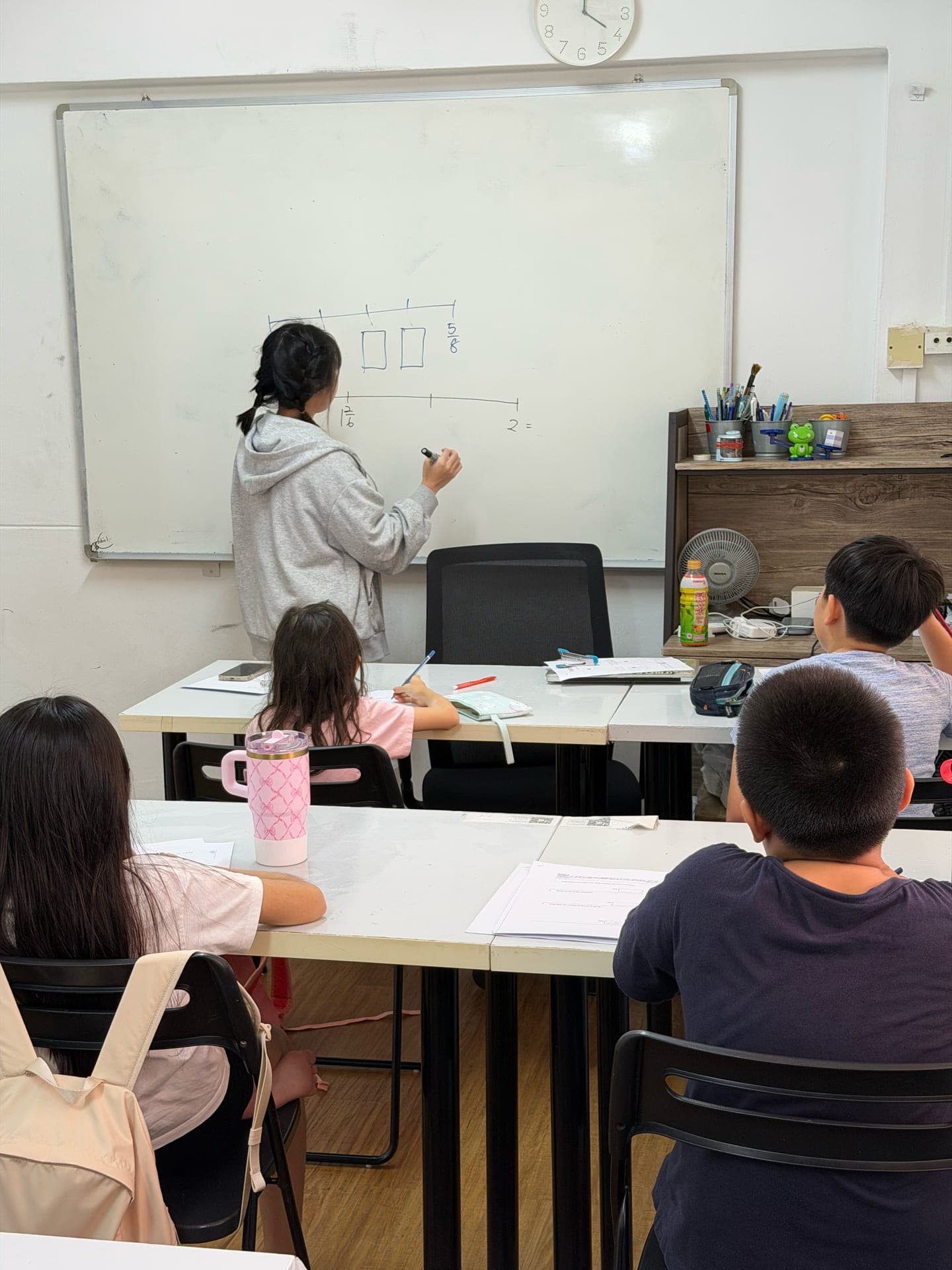
At Ancourage Academy, our P5 and P6 Chinese classes rehearse both oral components in small groups of 3–6 at Bishan and Woodlands — the discussion-based setting is ideal for building spoken confidence. Families weighing standard versus Higher Chinese can read our Higher Chinese decision guide. Book a trial class (usually $18) for a diagnostic, or WhatsApp us with any questions.
The oral changes shape again in secondary school; for the format and marks your child will meet next, see our O-Level / SEC Chinese oral and listening strategies.
Common Questions About PSLE Chinese Oral
How many marks is the PSLE Chinese oral worth?
The oral is worth 50 marks, or 25% of the PSLE Chinese grade — the highest-value component per minute of exam time. It has two parts: Reading Aloud (朗读), worth 20 marks, and Video Conversation (看视频说话), worth 30 marks. Because it carries a quarter of the subject and rewards trainable technique, oral practice is one of the highest-return uses of preparation time, yet it is often the most neglected.
How can my child improve Chinese Reading Aloud?
Focus on tones, pace, and expression. Tone accuracy — especially distinguishing the rising second tone from the dipping third tone — needs deliberate practice, and reading at a steady pace rather than rushing helps prevent slips. Reading aloud a short passage daily builds pronunciation and familiarity with polyphonic characters (多音字), whose pronunciation changes with context. Using the preparation time to skim the passage and note pauses and tricky words also lifts the score.
How do you structure a Video Conversation answer?
Use a simple, repeatable shape: state your view, give a reason, add a personal example, then conclude or extend. This turns a one-line answer into a developed, scoring response. Answer the actual question asked rather than drifting onto a rehearsed topic, develop each point with an example, and keep speaking to maintain fluency. Preparing ideas and vocabulary for common themes — family, school, healthy living, the environment, technology — means the student can speak fluently instead of searching for words.
My child speaks Chinese at home but does poorly in oral. Why?
Conversational fluency at home and exam oral performance are different skills. The exam rewards clear standard pronunciation, accurate tones, and structured, developed responses to set questions — not casual chat. Many home-fluent students rush, use casual register, or give short answers. Targeted practice on Reading Aloud technique and on structuring Video Conversation responses closes the gap, which is why even fluent speakers benefit from deliberate oral preparation.
Related: PSLE Chinese Tips · PSLE Chinese Comprehension Guide · PSLE Chinese Composition Guide · Primary Chinese exam techniques · Higher vs Standard Chinese · a guide to P5-P6 Chinese Tuition in Woodlands