
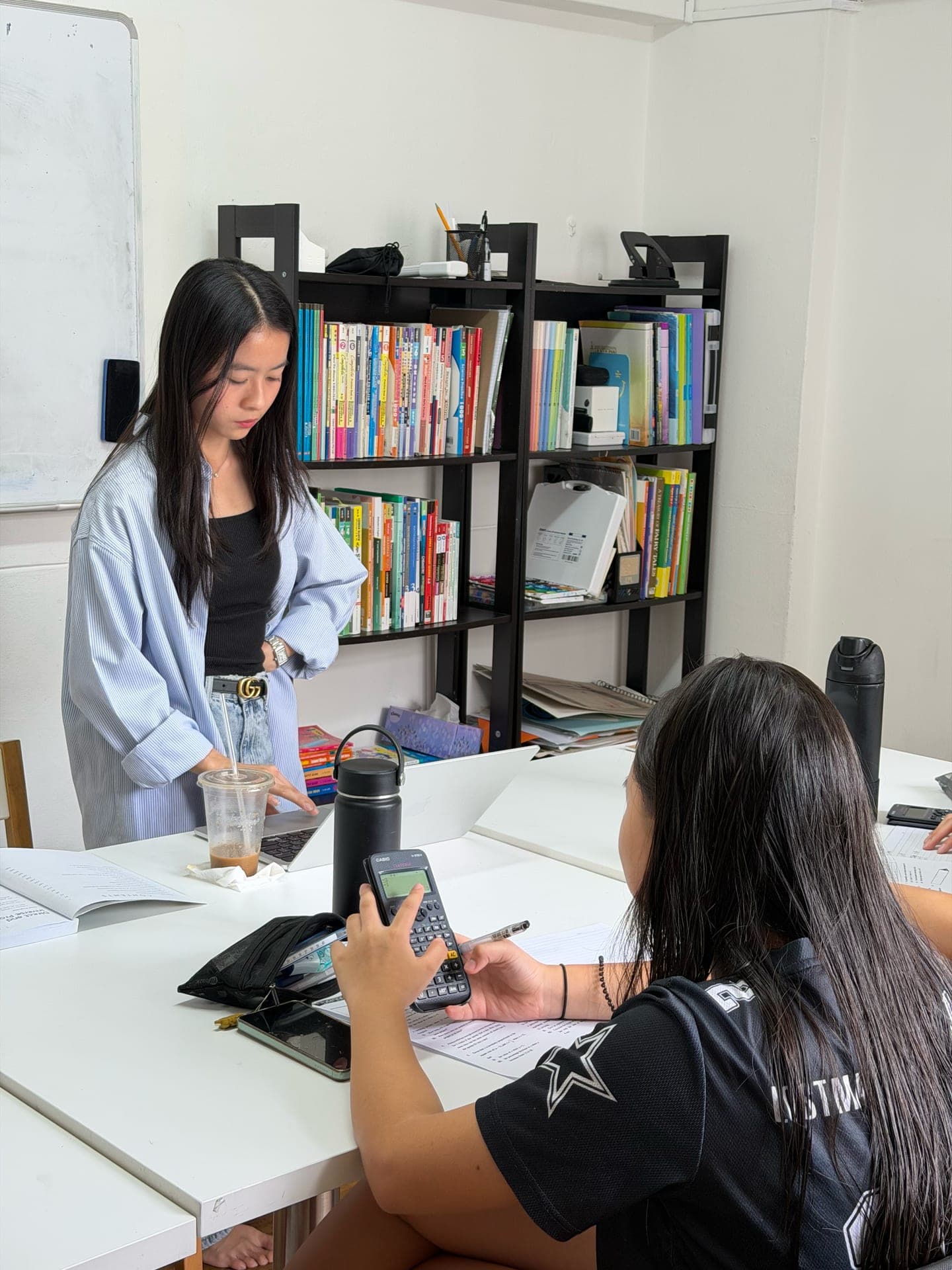
Section B of the O-Level / SEC Social Studies paper is two compulsory structured-response questions (SRQ) worth 15 marks: a 7-mark question that asks for a reasoned, multi-causal explanation set in Singapore, and an 8-mark question that asks for two factors or perspectives followed by a judgement. Ancourage Academy coaches this section alongside the elective in its Secondary Humanities programme. This guide sets out what the Singapore Examinations and Assessment Board (SEAB) syllabus says about Section B, what each question type needs, and three annotated worked answers. For the skills overview of the whole subject, start with our O-Level / SEC Humanities guide; for Section A, see our SBCS worked answers.
Ancourage Academy's Sec 3 Elective History classes run in small groups of 3 to 6; book a trial class (usually $18) to start with a diagnostic of where your child stands.
What Is Section B of the O-Level / SEC Social Studies Paper?
Social Studies is Paper 1 of Combined Humanities: one paper of 1 hour 45 minutes worth 50 marks, of which Section A carries 35 marks and Section B carries 15.
The SEAB syllabus for the first SEC sitting, G3 Humanities (Social Studies, Geography) K335, describes Section B in one line: "Two structured-response questions testing Assessment Objectives 1 and 3." Both are compulsory. The History (K336) and Literature (K337) pairings and the 2026 O-Level syllabus 2260 use the same wording, so Section B does not change when the O-Level becomes the SEC in 2027.
Two rules in the syllabus shape how students should prepare:
- Any Issue can appear. The syllabus says the questions "will be set on any of the three Issues in the syllabus": Exploring Citizenship and Governance, Living in a Diverse Society, and Being Part of a Globalised World.
- It will not be the case-study Issue. The same paragraph adds: "However, in an examination, the question set will not be on the same Issue as the source-based case study."
The two assessment objectives being tested are AO1, "Knowledge with Understanding" ("demonstrate an understanding of societal issues"), and AO3, "Constructing Explanations", which asks candidates to "analyse societal issues through different perspectives" and "construct reasoned arguments and make informed judgement and recommendations." In the syllabus's assessment grid, AO1 plus AO3 carries 15% of the subject, which is exactly Section B.
How Are the 7-Mark and 8-Mark Questions Different?
Question 6 (7 marks) asks for several causes or strategies explained in a Singapore context; Question 7 (8 marks) asks for two factors or perspectives and then a judgement or balanced conclusion.
The K335 syllabus gives the two questions in a table. Question 6 tests "Constructing explanation by giving reasoned argument and/or making recommendation on an issue (multiple strategies/multi-causal)" and "will require candidates to consider the issue in the context of Singapore". Question 7 tests "Constructing explanation of two factors / perspectives on an issue and making judgement on the relative importance of factors or giving balanced conclusion on the issue". The G2 syllabus (K229) keeps the marks but asks for less.
| Feature | G3 (O-Level 2260-2265 / SEC K335-K340) | G2 (SEC K229-K231) |
|---|---|---|
| Question 6 marks | 7 | 7 |
| Question 6 skill | Reasoned argument and/or recommendation, "multiple strategies/multi-causal" | Reasoned argument and/or recommendation, "single strategy / mono-causal" |
| Question 6 context | Must consider the issue in the context of Singapore | Must consider the issue in the context of Singapore |
| Question 7 marks | 8 | 8 |
| Question 7 skill | Two factors or perspectives, plus a judgement on relative importance or a balanced conclusion | Two factors or perspectives on an issue |
| Marking | Levels of Response Marking Scheme (LORMS) | Levels of Response Marking Scheme (LORMS) |
At G3, one well-developed cause is not enough for Question 6, and two factors without a judgement is not enough for Question 7. Our guide to SEC G2 Combined Humanities covers the G2 papers in full.
What Do SRQ Question Phrasings Ask For?
The syllabus publishes skills, not a list of command words: a question asking to explain why or how calls for developed causes or strategies, and a question asking how far or whether something is the main factor calls for developed factors plus a judgement — so read every SRQ by asking which of those two skill descriptions it matches, then write to it.
The right-hand column is what the syllabus wording implies a complete answer contains; it is not a published mark scheme.
| Question phrasing | Skill it maps to | What a complete answer contains |
|---|---|---|
| "Explain why..." (7 marks) | Q6: reasoned argument, multi-causal | Two or more distinct causes, each explained and supported by a Singapore example, each linked back to the question |
| "Explain how..." or "In what ways can..." (7 marks) | Q6: recommendation, multiple strategies | Two or more strategies, each showing how it addresses the issue in Singapore, with an example |
| "How far do you agree...?" (8 marks) | Q7: two factors, judgement on relative importance | The stated factor explained, a second factor explained, then a reasoned judgement on which matters more and why |
| "Which is more important, X or Y?" (8 marks) | Q7: two factors, judgement on relative importance | Both factors explained with examples, then a comparison using a stated criterion |
| "Do you agree...? Explain your answer." (8 marks) | Q7: two perspectives, balanced conclusion | A developed view on each side, then a conclusion that weighs them rather than restating them |
What Makes an SRQ Paragraph Earn Marks?
A mark-earning SRQ paragraph does three things in order: it states a point that answers the question, explains it with a specific example, and links it back to the exact wording of the question.
SEAB states that LORMS is used for both questions, but the Social Studies section of the syllabus does not print level descriptors for Section B. What it does say, in the Ministry of Education (MOE) 2023 upper secondary Social Studies syllabus, is that Section B tests "knowledge beyond factual recall" and "the ability to construct reasoned arguments, make informed judgement on and recommendations for societal issues". It also separates "core content" from "examples" that "amplify and deepen" it, which is the structure the worked answers follow.
- Point. One sentence that answers the question directly, using the question's key term.
- Explanation. Why or how the point is true, stated as a chain of cause and effect rather than a description.
- Example. A specific case, ideally from Singapore for Question 6, that makes the explanation concrete.
- Link. One sentence that returns to the question.
- Judgement (Question 7 only). A final paragraph that compares the factors using a criterion, and gives a reason for the verdict.
The same discipline carries into the elective papers: the History structured essay question and the Geography 9-mark levels question reward the same explained, linked paragraph.
Worked Answer 1: An "Explain Why" Question on Citizenship and Governance
A 7-mark "explain why" answer needs at least two separate causes, each tied to Singapore, rather than one cause described at length.
Illustrative question (7 marks, Issue 1): Explain why it can be challenging to decide what is good for society in Singapore. This is an original practice question written by Ancourage Academy, not a past-paper question.
Sample answer. Deciding what is good for society in Singapore is challenging because different groups have differing needs and interests. For example, when a new eldercare centre is planned inside an existing housing estate, families with elderly parents may welcome care close to home, while residents living beside the site may be concerned about noise and the loss of a green space. Both concerns are reasonable, so a decision that meets one group's need will not satisfy the other, which makes it hard to say what is good for society as a whole.
Sample answer, continued. A second challenge is the unequal sharing of costs. A new rail line benefits commuters across the island once it opens, but the residents and shop owners beside the construction sites bear the disruption for years. The benefit is spread widely while the cost falls on a few, so the government has to manage a trade-off rather than find an option with no losers. This is why deciding what is good for society in Singapore involves weighing groups against each other, not simply choosing the most popular option.
- Two causes, both from the syllabus. "Differing needs and interests" and "unequal sharing of costs" are both named in the K335 content for Issue 1, so each paragraph is anchored to core content.
- Examples are concrete and local. Each cause is illustrated with a Singapore setting, satisfying the "context of Singapore" requirement.
- Each paragraph ends on the question. The closing sentences repeat "what is good for society", so the examiner never has to infer relevance.
Worked Answer 2: How Far Do You Agree? A Judgement on Globalisation
An 8-mark "how far" answer earns its top marks in the last paragraph: both factors must be explained, and the judgement must give a reason, not just a preference.
Illustrative question (8 marks, Issue 3): "Government support is more important than individuals acquiring new knowledge and skills in responding to the economic impacts of globalisation." How far do you agree? Explain your answer. Original practice question, not from a past paper.
Sample answer. Government support is important because globalisation can create economic vulnerability that individuals cannot manage alone. When a multinational company moves its operations to a lower-cost country, workers can lose their jobs through no fault of their own. Government support, such as funding for retraining and help with finding new work, gives these workers a way back into employment.
Sample answer, continued. However, individuals acquiring new knowledge and skills is also important, because globalisation keeps changing which jobs are available. A worker who upgrades their skills can move into growing industries instead of waiting for support after losing a job. In Singapore, SkillsFuture Credit "helps Singaporeans offset course fees for eligible courses that support skills development and lifelong learning", but it only has an effect if individuals choose to use it.
Sample answer, judgement. I agree to a limited extent. Government support matters most in the short term, when workers are suddenly displaced. In the long term, however, individuals acquiring skills is more important, because it lets people keep pace with change rather than recover from it. The two also depend on each other: the SkillsFuture example shows that government support creates the opportunity, but the individual's effort turns it into employability. On the criterion of lasting impact, individual learning is the more important response.
- Both syllabus responses. "Government support" and "acquisition of knowledge and skills by individuals" are the two responses named in K335 for economic impacts, so both factors are explained, not just the one in the quotation.
- A stated criterion. "Short term" versus "lasting impact" gives the judgement a reason that can be checked.
- Interaction, not just ranking. Showing how the factors depend on each other is a mark of balance; it answers "how far", not just "yes or no".
Worked Answer 3: A Recommendation Question on Living in a Diverse Society
A 7-mark recommendation question on Issue 2 still needs multiple strategies: at G3 the syllabus asks for "multiple strategies", so one strategy, however well explained, answers only half the question.
Illustrative question (7 marks, Issue 2): Explain how citizens and the government in Singapore can respond to socio-cultural diversity to achieve harmony. Original practice question, not from a past paper.
Sample answer. The government can respond through an integration policy that brings different groups into shared spaces. For example, HDB's Ethnic Integration Policy sets limits on the ethnic mix of flats at block and neighbourhood level, so that residents of different races live side by side rather than in separate enclaves. Daily contact in shared corridors and void decks helps reduce stereotypes and builds harmony.
Sample answer, continued. Citizens can also respond, as individuals and through community groups. A residents' network that organises a neighbourhood festival where families share food and customs from different cultures turns proximity into real interaction. Because harmony depends on how people treat one another, not only on where they live, these citizen-led efforts complement the government's policy. Together, the two responses show that harmony in Singapore is achieved when government and citizens both play a part.
- Two actors, two strategies. The K335 content for Issue 2 names both "responses of citizens as individuals and community groups" and "responses of government", and the answer develops one of each.
- The policy is named, not guessed. The answer describes what the policy does without quoting a quota or a date, because an unverifiable number costs credibility.
- The link uses the Issue's inquiry focus. Issue 2 asks "Is harmony achievable?", and the answer returns to harmony in every paragraph.
How Should Students Revise and Time Section B?
Section B carries 15 of the paper's 50 marks, so it deserves roughly 30% of the 1 hour 45 minutes: about half an hour for two answers.
- Revise all three Issues. Because Section B is never on the case-study Issue, any Issue can appear in either section.
- Build an example bank per Issue. Two or three Singapore examples for each syllabus content point, as one-line summaries.
- Plan before writing. A two-line plan (causes or factors, then the judgement criterion) prevents the most common loss: a Question 7 answer with no verdict.
- Practise the judgement paragraph on its own. It is the skill that separates G3 from G2.
For the whole Humanities paper, see our O-Level / SEC Humanities guide, and for preparing when the SEC has no past papers of its own yet, our SEC 2027 subject preparation guide.
Where Does the SRQ Fit in the Wider Humanities Choice?
Every G3 Combined Humanities student sits the same Social Studies paper, whichever elective they take, so SRQ technique is shared across the History, Geography and Literature pairings.
The elective choice changes Paper 2, not Paper 1. Families still deciding can compare routes in our guides to choosing a humanities elective at Sec 3 and Combined versus pure humanities at O-Level / SEC. The wider exam change is covered in our SEC 2027 guide, and the step from here to JC argument in our SBQ to A-Level guide.
Ancourage Academy's Sec 4 Elective History and Sec 4 Elective Geography classes prepare both Combined Humanities papers, and families can book a trial class (usually $18) at Bishan or Woodlands.
Common Questions About Social Studies SRQ
How many marks is Social Studies Section B?
Section B is worth 15 marks out of the 50-mark Social Studies paper. It has two compulsory structured-response questions: Question 6 is worth 7 marks and Question 7 is worth 8 marks. The paper lasts 1 hour 45 minutes, and the format is the same in the 2026 O-Level syllabus and the 2027 SEC G3 syllabuses.
Can the SRQ be on the same Issue as the source-based case study?
No. The SEAB syllabus states that the structured-response questions can be set on any of the three Issues, but "the question set will not be on the same Issue as the source-based case study." Students therefore need all three Issues revised, because either section could draw on any of them.
What is the difference between the 7-mark and 8-mark SRQ?
The 7-mark question asks for a reasoned explanation or recommendation using multiple causes or strategies, set in the context of Singapore. The 8-mark question asks for an explanation of two factors or perspectives, followed by a judgement on their relative importance or a balanced conclusion. At G3, the 8-mark answer is incomplete without that final judgement.
Do SRQ answers need Singapore examples?
For Question 6, yes: the syllabus says it "will require candidates to consider the issue in the context of Singapore". Question 7 carries no such requirement, so examples from other countries can work there, but Singapore examples are usually the most specific and easiest to explain.
Is the SEC Social Studies SRQ different from the O-Level one?
Not in format. The 2026 O-Level syllabus 2260 and the 2027 SEC G3 syllabus K335 describe Section B in the same words, with the same 7- and 8-mark split and the same skills. What changes is the certificate name. At G2 the questions ask for less: a single strategy or cause at Question 6, and no judgement at Question 7.
How long should my child spend on Section B?
Section B is 15 of the paper's 50 marks, so a proportional share of the 1 hour 45 minutes is about 30 minutes for both questions. Running over on the case study usually costs the 8-mark judgement paragraph.