
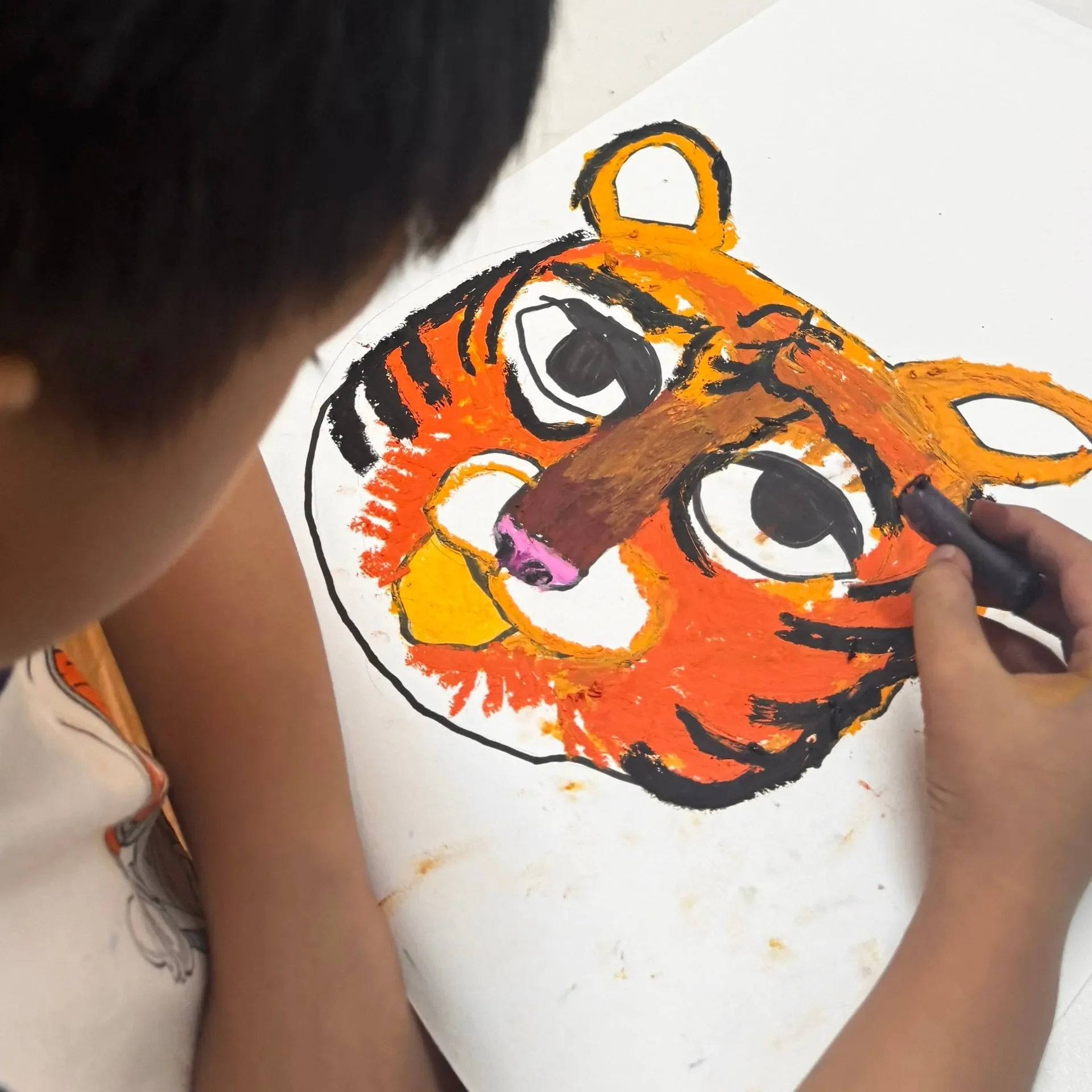
At least fourteen Singapore secondary schools run a Visual Arts DSA (Direct School Admission) talent area for the 2026 cycle, and another ten offer an MOE art programme — AEP or EAP — entered by a school selection exercise rather than DSA. Each has different programme types, portfolio requirements, and selection formats. This directory covers both, so families can identify which schools match their child's artistic strengths and choose their 3 DSA-Sec choices wisely. Art by Ancourage prepares students for DSA art across these schools; this list is maintained as MOE updates programme offerings.
"DSA-Sec provides a pathway for students to gain admission to secondary schools based on their interests, aptitude and potential, beyond their performance at the PSLE."
— Ministry of Education, Singapore, Direct School Admission (DSA-Sec)
Art by Ancourage students have been accepted to 6 Singapore secondary schools via DSA art — SOTA, HCI (AEP), NJC (AEP), Victoria School, Nan Chiau High and SJI — and to Dunman High School through its Direct School Admission exercise. We have maintained a 100% acceptance rate to date for students who have spent 1+ year in our DSA programme. A portfolio backed by a strong art-competition track record strengthens a DSA application. As an art educator who has prepared portfolios for schools across all programme types — SOTA, AEP, EAP, and general DSA Visual Arts — I share what each pathway requires.
Art by Ancourage's DSA Art Portfolio programme tailors preparation to each target school's specific requirements. Book a trial class (from $18) at Bishan or Woodlands to discuss which schools suit your child.
Understanding the Programme Types
Singapore's DSA art landscape has four programme types — the specialised arts school SOTA (6-year IB pathway), the 4-year Art Elective Programme at 7 secondary schools, the 2-year upper-secondary Enhanced Art Programme at 9 schools, and general DSA Visual Arts places in mainstream schools' art CCAs or enrichment programmes — and understanding the differences is the first step to choosing the right school for your child.
| Programme | Duration | Focus | Schools |
|---|---|---|---|
| Specialised Arts School | 6 years (Sec 1–6) | Full arts immersion with IB pathway | SOTA only |
| Art Elective Programme (AEP) | 4 years (Sec 1–4) | Art as core subject alongside full academic curriculum | 7 secondary schools |
| Enhanced Art Programme (EAP) | 2 years (Sec 3–4) | Deeper art exposure in upper secondary | 9 secondary schools |
| DSA Visual Arts (General) | Varies | Art CCA or enrichment within mainstream school | Various schools |
Specialised Arts School: SOTA
School of the Arts (SOTA) is Singapore's only pre-tertiary specialised arts school — highly selective, and Visual Arts applicants are selected through a Shortlisting Activity followed by a portfolio presentation and interview, not an audition (SOTA reserves auditions for its performing-arts forms). The Straits Times reported that SOTA received up to 1,000 applications a year and admitted about 200 students in each intake — roughly 20% of applicants (Amelia Teng, The Straits Times, 31 July 2018). That ratio covers all six art forms combined rather than Visual Arts alone, and SOTA has not published an updated figure since, so treat it as a 2018 indicator of scale rather than a current Visual Arts acceptance rate.
- Programme: 6-year Integrated Arts Programme leading to IB Diploma or IB Career-related Programme
- Portfolio: nothing is uploaded at application — every applicant attends the mass in-person Shortlisting Activity, and only shortlisted applicants then present five (5) original artworks at the Portfolio Interview, emphasising authenticity with no teacher-guided work accepted (check SOTA's preparation checklist for current requirements)
- Selection: Mass shortlisting drawing day (introduced in the 2025 cycle and repeated on 16 May 2026), followed by portfolio review, further drawing tests, and interview
- Application: Through SOTA Talent Academy portal (separate from MOE DSA-Sec — does NOT count toward the 3 MOE application choices, but SOTA does count as one of 3 at the October preference ranking stage)
- Timeline: Applications typically March–May, earlier than MOE DSA-Sec
- Academic results: More than one in two of SOTA's 2024 IBDP students scored 38 points or above out of 45 (SOTA, 2024)
For detailed SOTA preparation guidance, see Art by Ancourage's SOTA Portfolio Preparation Guide.
AEP Schools (Art Elective Programme)
AEP is a 4-year MOE programme where artistically inclined students study art as a core subject alongside the full academic curriculum — offered at 7 secondary schools.
| School | Programme Notes | Selection Format |
|---|---|---|
| National Junior College (NJC) | First JC to offer AEP (since 1985). IP school with a three-level Art Block (ceramics and glass kilns, 3D modelling and prototyping, photography studio and darkroom). Also serves as the AEP Centre, with centralised weekly lessons only for students not enrolled in AEP or EAP schools. Continues to JC AEP (H2 Art) | Digital portfolio, aptitude test, interview |
| Hwa Chong Institution (HCI) | AEP school; art talent area new to its DSA-Sec exercise for the 2026 Sec 1 intake. IP school combining rigorous academics with art specialisation | Portfolio submission, practical assessment, interview |
| Victoria School | Established AEP with strong exhibition programme | Portfolio review, on-the-spot drawing, interview |
| CHIJ Secondary (Toa Payoh) | AEP with emphasis on creative expression and community engagement | AEP Selection Exercise at Sec 1 (no Visual Arts DSA talent area) |
| Zhonghua Secondary School | AEP with Chinese cultural arts integration | AEP Selection Exercise at Sec 1 (no Visual Arts DSA talent area) |
| Bukit Panjang Govt. High School | AEP with strong community art partnerships and exhibition opportunities | AEP Selection Exercise at Sec 1 (no Visual Arts DSA talent area) |
| Nanyang Girls' High School | One of the original AEP schools (since 1984). SAP school with strong arts tradition alongside academic excellence | AEP Selection Exercise at Sec 1 (no Visual Arts DSA talent area) |
Not every AEP school runs an art talent area under DSA-Sec. National Junior College, Hwa Chong Institution and Victoria School do; the other four admit to AEP only after Secondary 1 posting, through the school's own AEP Selection Exercise. For detailed guidance on the AEP pathway, see Art by Ancourage's AEP Art Elective Programme Guide.
EAP Schools (Enhanced Art Programme)
EAP is a 2-year upper secondary programme for artistically inclined students — a more accessible entry point than AEP with emphasis on exposure to diverse art forms and industry practices. There is no DSA route into EAP itself: MOE states that students must attend and pass the selection exercise conducted by the school at Secondary 2. Some EAP schools do run a separate Visual Arts DSA talent area for Secondary 1 entry — that admits a student to the school, not to the EAP.
| School | Programme Notes |
|---|---|
| Nan Chiau High School | SAP school with Chinese ink painting tradition. EAP school with DSA for Visual Arts available |
| CHIJ Katong Convent | EAP school with strong visual arts programme |
| Jurong West Secondary School | EAP school with applied learning in the arts |
| Meridian Secondary School | EAP school with art enrichment programme |
| Naval Base Secondary School | EAP school with arts-focused applied learning programme |
| New Town Secondary School | One of the 9 secondary schools offering EAP |
| Ngee Ann Secondary School | EAP school with visual arts enrichment |
| Orchid Park Secondary School | EAP school with DSA Visual Arts and community art projects |
| St. Andrew's School (Secondary) | EAP school with visual arts DSA talent area |
Other Secondary Schools with a DSA Visual Arts Talent Area
Schools outside the AEP and EAP lists also run a Visual Arts DSA talent area — among them St. Joseph's Institution (Josephian Arts Programme), Raffles Girls' School, Raffles Institution, Deyi, Hillgrove, St. Margaret's (Secondary), Tampines and Westwood — offering art development within a mainstream school setting.
| School | DSA Talent Area | Notes |
|---|---|---|
| St. Joseph's Institution (SJI) | Josephian Arts Programme | 4-year visual arts programme emphasising technical skills, research-practice connections, and personal expression |
| Raffles Girls' School (RGS) | Visual Arts | IP school with Special Art Programme for artistically talented students |
| Raffles Institution (RI) | Visual Arts | IP school with drawing and creativity assessment tasks |
Dunman High School is often assumed to run a Visual Arts DSA route. It does not: MOE's SchoolFinder lists its DSA-Sec talent areas across six groupings (Bilingualism, Music Elective Programme, Performing Arts, Sports, Leadership and STEAM). It is an Integrated Programme school with a strong aesthetics curriculum and an Art Club CCA, and it does admit students through Direct School Admission — just not on a Visual Arts talent area. Confirm current talent areas on the school's DSA page.
For the most current and complete list, check the MOE SchoolFinder tool — schools update their DSA talent areas annually.
How to Choose Your 3 DSA Choices
DSA applicants can select a maximum of 3 school-talent area choices through the MOE DSA-Sec Portal (maximum 2 from the same school) — Art by Ancourage recommends one aspirational, one realistic and one best-fit choice, with SOTA applied for separately on top.
- 1 aspirational: A competitive school where your child would love to attend (e.g., SOTA — which is separate and does not count, or an AEP school)
- 1 realistic: A school matching your child's current art level and interests
- 1 best-fit: A school whose programme fits your child best and whose portfolio requirement matches the work your child already produces, so the application rests on demonstrated ability rather than a guess about competition
SOTA applications go through a separate portal and do not count toward the 3 MOE application choices — so your child can apply to up to 4 schools. However, at the October School Preference Exercise, students can rank a maximum of 3 schools including SOTA. For guidance after receiving offers, see Art by Ancourage's post-offer ranking guide.
For guidance on whether DSA art is the right path for your child, see Is DSA Art Worth It?
What Each School Looks For
SOTA, NJC and Victoria School weight technical proficiency across media; SOTA and SJI weight authenticity and originality; the IP schools (HCI, NJC, RGS, RI) want art talent inside a strong academic profile; SOTA, NJC, RI and SJI test creative thinking under pressure with on-the-spot drawing; and every school looks for sustained passion and commitment — knowing these differences helps families tailor their portfolio strategy.
| Priority | Schools That Emphasise This |
|---|---|
| Technical proficiency across media | SOTA, NJC, Victoria School — want to see confident handling of drawing, painting, and mixed media |
| Authenticity and originality | SOTA (explicitly requires no teacher-guided work), SJI (portfolio presentation) |
| Academic-arts balance | HCI, NJC, RGS, RI — IP schools want art talent within a strong academic profile |
| Creative thinking under pressure | Schools with on-the-spot drawing tests: SOTA, NJC (1h 45min test), RI, SJI |
| Passion and commitment | All schools — demonstrated through sustained practice, competition participation (SYF), and genuine engagement during interview |
How Art by Ancourage Tailors Preparation
Art by Ancourage's DSA Art Portfolio programme is tailored to each student's target schools — portfolio strategy, interview preparation, and drawing test practice are all customised.
- School-specific portfolio curation: SOTA Year 1 DSA-Sec (5 authentic pieces, presented in person only after shortlisting) requires a different approach from NJC (10–15 works showing range, submitted as a digital portfolio)
- Drawing test preparation: Mock tests simulating SOTA mass shortlisting, NJC aptitude format, and general on-the-spot drawing tasks
- Interview coaching: Tailored to each school's interview format and expected questions
- Foundation building: Students who need foundational work start with Professional Fine Art Classes before DSA-focused preparation
- Small groups of 3–6: Personalised attention at Bishan and Woodlands
Book a trial class (from $18) to discuss which schools match your child's artistic strengths and develop a targeted preparation plan.
Related: DSA art portfolio preparation | DSA Singapore Guide · Enhanced Art Programme (upper secondary) · Photographing your art portfolio · Art Pathways Compared · How to Write an Artist Statement guide · a guide to Polytechnic Art & Design Diplomas
Frequently Asked Questions
How many schools can my child apply to for DSA Visual Arts?
Maximum 3 school-talent area choices through the MOE DSA-Sec Portal (maximum 2 from the same school). SOTA applications go through a separate Talent Academy portal and do not count toward these 3 application choices — so your child can apply to SOTA plus 3 other schools. At the October preference ranking stage, however, students can rank a maximum of 3 schools including SOTA.
Which schools are easiest to get into via DSA art?
Competition varies by school and year, but no school publishes its DSA application or acceptance volumes by talent area, so any claim that one route is "easier" than another is guesswork rather than data. Art by Ancourage recommends choosing schools based on fit rather than perceived ease of entry — your child will attend this school for 4–6 years.
Do all schools require a drawing test?
Most schools include some form of live drawing or practical assessment, but formats vary. SOTA has a mass shortlisting drawing day. NJC runs a 1 hour 45 minute aptitude test. Some schools include a brief on-the-spot drawing task during the interview. See Art by Ancourage's drawing test guide for details.
Can my child apply for both Visual Arts and another talent area at the same school?
Yes — up to 2 talent areas at the same school, counting toward the 3 total choices. However, Art by Ancourage recommends focusing on Visual Arts if that is your child's primary strength rather than spreading effort across multiple talent areas.
Are the school lists updated annually?
Yes. Schools may add or remove DSA talent areas each year. Always check the MOE SchoolFinder tool for the most current list when the DSA application window opens in May. For the current DSA-Sec timeline, see our Singapore education key dates.