
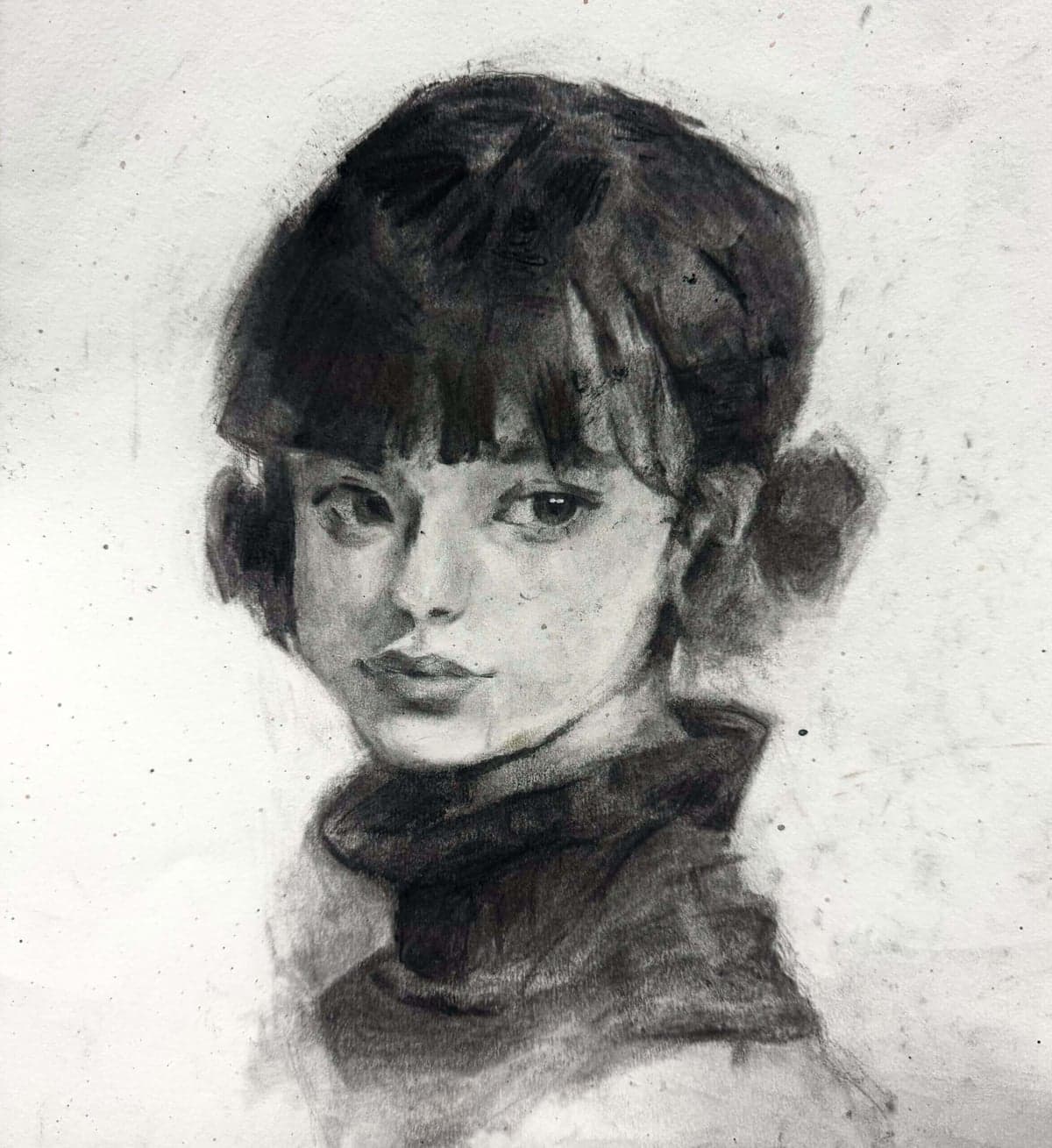
LASALLE sets its diploma portfolio by programme — 10–15 pieces of original work for Fine Arts, 10 individually produced images for its three design diplomas, and an audition or workshop instead of a portfolio for the performance ones — NTU ADM asks for a 15–20-page portfolio PDF as one part of a wider submission, and NAFA's Faculty of Art & Design lets diploma applicants choose between a portfolio and an admission test — the specific requirements, formats, and assessment criteria differ significantly between institutions, and between diploma and degree entry at the same institution. Unlike O-Level or A-Level pathways where the route is well-documented, applying to LASALLE, NAFA, or NTU ADM involves portfolio preparation, admissions workshops, and selection criteria that vary significantly between institutions. As a LASALLE graduate who now guides students through this exact transition at Art by Ancourage, I have seen firsthand what these institutions look for and how students can prepare effectively. The Professional Fine Art Classes at Art by Ancourage are specifically designed to build the technical range and conceptual depth that tertiary art programmes require.
Art by Ancourage students have been accepted to LASALLE, NAFA, RISD, and CalArts, all of them prepared through our DSA Art Portfolio programme. Those acceptances sit alongside our 100% DSA and art school acceptance rate to date, which is scoped to students with at least one year in our DSA programme. This guide covers what each institution requires, what selection panels assess, and how to build a portfolio that demonstrates genuine artistic readiness.
Tertiary Art Education Pathways in Singapore
Singapore has four pathways into tertiary art education — a NAFA or LASALLE diploma or degree under the University of the Arts Singapore, an autonomous-university degree such as NTU School of Art, Design and Media (ADM), a polytechnic design diploma, and an overseas art school — each with different entry requirements, programme structures, and career outcomes. Understanding these options early — ideally by Secondary 3 or 4 — helps families make informed decisions about which pathway suits their child's artistic goals and academic profile.
The main tertiary art pathways are:
- LASALLE College of the Arts: Now part of the University of the Arts Singapore (UAS), LASALLE offers Diplomas, Bachelor's, and Master's programmes across Fine Art, Design, Film, Fashion, Music, Theatre, and more. Known for contemporary arts practice and international faculty
- NAFA (Nanyang Academy of Fine Arts): Also part of UAS, NAFA offers Diplomas and Bachelor's programmes in Fine Art, Design, 3D Design, Fashion, and Music. NAFA has particular strengths in Chinese ink painting and traditional fine art alongside contemporary practice
- NTU School of Art, Design and Media (ADM): A university-level programme within Nanyang Technological University offering a Bachelor of Fine Arts (BFA). Highly competitive with both academic and portfolio requirements
- Polytechnic design programmes: All five polytechnics — Temasek, Ngee Ann, Singapore, Nanyang and Republic — offer design-focused diplomas in areas such as visual communication, user experience and interaction design, product design, digital content creation, and digital film
- Overseas art schools: Institutions such as RISD (Rhode Island School of Design), CalArts, Parsons School of Design, and Central Saint Martins accept Singapore applicants through portfolio-based admission
A significant development is the formation of the University of the Arts Singapore (UAS), which brings LASALLE and NAFA under one university umbrella. UAS was established to strengthen Singapore's arts education ecosystem, and while LASALLE and NAFA continue to operate their own campuses and programmes, UAS provides a unified degree-granting framework. Students applying to LASALLE or NAFA diploma programmes follow each institution's individual admissions process. The switch to UAS-conferred degrees is not uniform across both colleges: at LASALLE, students who commence from the August 2024 intake onwards graduate with a UAS-conferred degree, while NAFA now describes both its BA (Hons) Design Practice and its BA (Hons) Fine Art as conferred by UAS. One carve-out remains: students entering Year 1 in the August 2027 intake graduate with a UAS-conferred degree, while those granted direct entry into Year 2 of that intake graduate with a degree conferred by the University of the Arts London. NAFA states that the awarding university depends on your year of enrolment and asks applicants to confirm it with its admissions office before applying. Earlier LASALLE cohorts graduate under Goldsmiths, University of London; the four-year Bachelor of Music (Honours) taught at NAFA is jointly conferred by the Royal College of Music, London and the University of the Arts Singapore.
Art by Ancourage's Professional Fine Art Classes develop the technical skills and portfolio quality needed for tertiary art applications — book a trial class (from $18) at Bishan or Woodlands to discuss your child's art school pathway.
LASALLE Entry Requirements and Portfolio
LASALLE's diploma admissions set portfolio requirements by programme: its Diploma in Fine Arts requires 10–15 pieces of original work from at least two categories — paintings, drawings, collages, sculptures, digital images, photographs, or video clips. The portfolio must demonstrate both technical ability and creative thinking.
"Your portfolio should contain 10–15 pieces of original work from at least two of the following categories: paintings, drawings, collages, posters, sculptures, digital images (Photoshop, Illustrator, etc), photographs, and/or video clips."
— LASALLE College of the Arts, Diploma Admissions
Diploma Admission Requirements
- Portfolio (Fine Arts): 10–15 pieces of original work across at least 2 categories; the Graphic Design and Experiences, Creative Direction for Fashion and Spatial Design diplomas ask for 10 individually produced images instead (e.g., drawing and painting, or sculpture and photography)
- Admissions workshop (Diploma in Theatre Production and Management): Technical tasks, collaborative challenges, and mindset assessment — designed to evaluate how applicants think, create, and work with others under guided conditions. Visual-art diploma applicants do not sit a workshop; LASALLE states it will arrange a discussion only if it wishes to know more about the portfolio you submitted
- Academic requirements: A GCE O-Level pass in English (Grade C6 or better) plus an aggregate of 25 points or better in 4 other O-Level subjects, or equivalent qualifications. ITE graduates with a Higher Nitec/Nitec may also qualify
- AI policy (varies by diploma): The Graphic Design and Experiences, Creative Direction for Fashion and Spatial Design diplomas state LASALLE prefers work that "has not been assisted with AI tools", and separately require the pieces you submit to be "created solely by you" and not assisted with AI tools. The Fine Arts portfolio spec sets no AI rule. Across all of them the outright rejection clause is aimed at copied work — portfolios containing work copied from other sources will be rejected. Either way, the work you submit must be your own original creation — see how to reference a photograph honestly for what counts as acknowledgement rather than copying
Programme-Specific Considerations
LASALLE offers different diploma programmes across faculties, and portfolio expectations vary accordingly:
- Fine Art: Emphasis on drawing, painting, sculpture, and process documentation. Selection panels look for conceptual thinking and willingness to experiment
- Design Communication: Visual communication, typography, layout, and digital design skills. Portfolio should include design projects alongside observational work
- Fashion: Sketches, fashion illustrations, fabric experiments, and garment documentation. Evidence of understanding silhouette, proportion, and material
- Film: Storyboards, short films or video work, photography, and visual narratives. Technical quality of filmmaking is assessed alongside creative vision
- Music and Performing Arts: Separate audition-based process — portfolio requirements differ significantly from visual arts tracks
BA (Hons) Direct Admission
Students with strong portfolios and a diploma qualification (or equivalent) may apply directly to LASALLE's Bachelor of Arts (Honours) programmes. LASALLE lists A-Levels, a local polytechnic diploma and the IB Diploma as equal common entry qualifications — an A-Level route is not a fallback, and the diploma need not be in a related discipline. What is conditional is the interview: LASALLE asks applicants to submit a portfolio and then attend an online interview upon meeting the portfolio requirements.
NAFA Entry Requirements: Portfolio and Admission Test
NAFA Faculty of Art & Design admissions require a portfolio or an admission test — you choose one, not both — with requirements varying by programme. There is no admission test in the EAE route.
Faculty of Art & Design Programmes
- Fine Art: Drawing, painting, sculpture, printmaking, and Chinese ink painting. NAFA's Chinese ink painting programme is one of the most established in Southeast Asia
- Design: Visual communication, illustration, advertising design, and interactive media
- 3D Design: Product design, furniture design, spatial design, and interior architecture
- Fashion: Fashion design, textile design, and fashion media
Admission Process
- Portfolio: Submit original artworks demonstrating skill, creativity, and range across media. The number of pieces expected varies by programme but is typically 10–15 works
- Statement of intent (portfolio route): Applicants submitting a Faculty of Art & Design portfolio are also expected to write a statement of about 100 words giving their reasons for pursuing art and design study, together with their goals, interests, and aspirations. Each portfolio work must be labelled with its title, medium, month/year created, and a description
- Admission test (alternative to the portfolio): A 2.5-hour practical assessment in three sections — Written Ability (expressing and rationalising in writing), Drawing from Observation, and Creative Visualisation. Applicants pick either the portfolio or the test; there is no admission test in the EAE route
- Interview: NAFA may arrange a discussion of your portfolio, artistic interests, and motivation for the chosen programme. Outcomes are emailed 4-6 weeks after portfolio submission, admission test, audition or interview
- Academic requirements: A GCE O-Level pass in English (Grade C6 or better) plus an aggregate of 25 points or better in 4 other O-Level subjects, or equivalent. ITE graduates may qualify through a separate pathway
NAFA Foundation Programme (NFP)
The NAFA Foundation Programme (NFP) is a one-year N(A)-Level route into the diplomas — not a general fallback for applicants who miss a diploma cut-off. NAFA describes it as a through-train pathway that lets Secondary 4 Normal (Academic) students enter an arts institution in lieu of GCE O-Level, and it is aimed at students with creative aspirations who have had limited opportunity to develop their artistic potential.
- Academic bar: an ELMAB3 aggregate of 15 points or better, excluding CCA bonus points. N(A) students who also sat a few subjects at O-Level may combine both sets of results, converting O-Level grades A1–B3 = 1 point, B4–C6 = 2, D7 = 3, E8 = 4 (F9 — printed as grade 9 by SEAB — does not count)
- English: a minimum of Grade 3 in N(A)-Level English. A Grade 4 or 5 is still eligible, but the applicant must attend an interview and is assessed case by case
- From the 2028 intake: the same 15-point bar, computed on SEC G2 subjects
Express and O-Level candidates are not covered by any NFP qualification route. If you miss the diploma aggregate, the options are to appeal to NAFA directly with a portfolio, references and transcripts, or to build a qualification through ITE and re-apply — see our guide to post-O-Level art pathways.
NTU ADM Admission Requirements
The NTU School of Art, Design and Media (ADM) Bachelor of Fine Arts (BFA) is highly competitive, and admission needs two separate submissions on top of strong academic results: a portfolio of 15–20 pages in a single PDF, and the ADM assignments — an introduction video, creative assignments and an observational drawing.
Portfolio Requirements
- Portfolio format: Two- and three-dimensional work goes in as 15–20 pages combined into one PDF, and no more than 20. Each page may contain multiple works, but clarity and professional presentation are essential. Audio, multimedia and video work is submitted as media files instead, with its description on a separate PDF page
- Content: Original artworks across drawing, painting, photography, digital media, sculpture, video, or other visual media. The portfolio should demonstrate both technical proficiency and conceptual thinking
- Work descriptions: Every audio/visual submission must be accompanied by a short one-sentence description on a single A4 PDF page; narrative film and animation may use a log line or short synopsis instead. ADM does not ask for an artist statement, personal statement, or essay
ADM Assignments
In addition to the portfolio, ADM applicants complete a set of assignments as part of the admissions process:
- Introduction video: A short self-introduction video in which applicants discuss their artistic practice, motivations, and what they hope to gain from the BFA programme
- Creative assignments: Tasks designed to assess creative problem-solving, conceptual thinking, and the ability to work with visual prompts under guided conditions
- Observational drawing: A drawing of a space of your choice, made from direct observation in non-digital materials. ADM sets no time limit and leaves the level of finish to you, but drawing from photographs or references is prohibited
Academic and Other Requirements
- A-Level applicants: Competitive A-Level results expected. H2 Art is advantageous but not strictly required — ADM considers the overall profile
- Polytechnic applicants: Strong GPA in a relevant diploma (design, media, fine art) is expected
- AI policy: No AI-assisted or AI-generated work is accepted in the portfolio or assignments
- Competitiveness: ADM is a university-level programme with limited places — applicants need both academic strength and portfolio quality. Strong H2 Art results, AEP experience, or an extensive independent portfolio significantly strengthen the application
What Art Schools Look For in Portfolios
Despite differences in specific requirements, all three institutions assess portfolios against similar core criteria — technical proficiency, creative thinking, and evidence of a developing artistic voice.
| Criterion | LASALLE | NAFA | NTU ADM |
|---|---|---|---|
| Number of pieces | 10–15 works (Fine Arts); 10 images (design diplomas) | 10–15 works (varies by programme) | Max 20-page PDF |
| Format | Physical or digital portfolio | Physical or digital portfolio | Single PDF document |
| Additional requirements | Admissions workshop (Theatre Production and Management only) | Admission test as an alternative to the portfolio; the portfolio route additionally asks for a ~100-word statement of intent | Video introduction + creative assignments + observational drawing |
| Key assessment criteria | Originality, technical skill, collaborative mindset | Technical proficiency, creativity, potential for growth | Conceptual depth, technical maturity, academic strength |
| AI-generated work | Varies by diploma — the three design diplomas both discourage AI ("we prefer to see work that has not been assisted with AI tools") and exclude AI-assisted work from the pieces they require; the Fine Arts spec is silent on AI | Not accepted | Not accepted |
Common Elements All Institutions Value
- Technical proficiency: Confident handling of chosen media — drawing accuracy, colour mixing, material control. Selection panels assess whether the applicant has the foundational skills to succeed in a rigorous programme
- Creative thinking and originality: Artworks that go beyond copying or reproduction. Panels want to see the applicant's own ideas, perspectives, and creative problem-solving
- Range of media: Portfolios that demonstrate experience across multiple media — drawing, painting, mixed media, sculpture, digital, photography — are stronger than portfolios restricted to a single medium
- Process documentation: Sketchbooks, studies, developmental notes, and working drawings that show how ideas evolve from concept to finished piece. Process work is as important as the final product
- Personal artistic voice: Evidence of a developing style, recurring themes, or consistent areas of interest that suggest the applicant is beginning to find their own direction as an artist
- Original work, not AI-generated: All three institutions require that portfolio work is the applicant's own creation, and work copied from other sources is rejected outright. On AI specifically the wording differs, and at LASALLE it differs by diploma — its three design diplomas both discourage AI-assisted work and exclude it from the pieces they require, while its Fine Arts spec says nothing about AI — so check the exact programme you are applying to rather than assuming a single rule
Building a Strong Tertiary Art Portfolio
A portfolio that meets the standards of LASALLE, NAFA, or NTU ADM is not assembled in a few weeks — it requires 1–2 years of structured preparation, ideally beginning in Secondary 3 or 4. Art by Ancourage's Professional Fine Art Classes programme is designed to build exactly the type of portfolio tertiary art programmes expect.
Step-by-Step Preparation
- Start 1–2 years before application: Begin building a body of work in Secondary 3 or early Secondary 4 (for post-O-Level applications) or JC1 (for post-A-Level applications). Last-minute portfolios lack the depth and progression that selection panels look for
- Develop range across media: Work consistently across drawing, painting, mixed media, and digital art. Each medium develops different skills — charcoal teaches tonal control, watercolour teaches colour sensitivity, digital work teaches precision and iteration. A strong portfolio demonstrates comfort across at least 3–4 media
- Include process work and sketchbooks: Tertiary art programmes value process as much as product. Maintain a visual journal (sketchbook practice guide) documenting thumbnail sketches, colour studies, compositional experiments, and written reflections on each project. LASALLE, NAFA, and NTU ADM all assess whether applicants can think through their creative process
- Write artist statements: Practise articulating what your work is about — the themes you explore, the media you choose and why, the artists who influence you. NAFA asks Art & Design portfolio applicants for a written statement of intent of about 100 words plus a description for each labelled work; LASALLE asks only that each work be labelled with its title, medium and month/year, and arranges a discussion if it wishes to know more about your portfolio; and NTU ADM's 60–120-second introduction video asks you to talk about what you want to create and why
- Document work professionally (portfolio photography guide): Good artwork poorly photographed undermines the portfolio. Photograph each piece in even, natural lighting against a clean, neutral background. Ensure accurate colour representation. For a two- or three-dimensional NTU ADM portfolio, the pages must be combined into one PDF — layout, image quality, and presentation all contribute to the overall impression; time-based work goes in as video or audio files rather than inside that PDF
- Seek feedback from experienced educators: Portfolio preparation benefits enormously from guidance by someone who understands what selection panels assess. At Art by Ancourage, instructors with direct experience in tertiary art admissions review student work and identify gaps in technical range, conceptual depth, or presentation quality
The Professional Fine Art Classes at Bishan and Woodlands cover all these preparation areas in a structured programme. Book an Art trial class (from $18) to discuss your child's tertiary art pathway and assess current portfolio readiness.
Application Timeline
Application windows for Singapore's tertiary art programmes vary by institution, but most programmes have their main intake in August each year. Applicants should check each institution's website for the most current deadlines, as windows shift annually.
| Institution | Application Opens | Deadline | Intake Month |
|---|---|---|---|
| LASALLE | EAE (aptitude-based) 1-22 May 2026 for the August 2027 intake; later direct-application rounds follow | Multiple rounds — check LASALLE admissions | August |
| NAFA | EAE 15-30 June 2026 for the August 2027 intake; regular applications open from October each year | Multiple rounds — check NAFA admissions | August |
| NTU ADM | 1–21 February for polytechnic diploma holders (extended to 1 March), or from the day A-Level results are released for A-Level applicants | 1 March (poly) or 19 March (A-Level) — check NTU ADM admissions | August |
LASALLE and NAFA both operate multiple admissions rounds, and the aptitude-based Early Admissions Exercise (EAE) runs first — LASALLE in May and NAFA in June of the year before the August intake. Later rounds become progressively more competitive. Students should aim to have their portfolio ready by around April of the year before intended enrolment, about a month before LASALLE's EAE window opens.
Early Admissions Exercise (EAE)
Both LASALLE and NAFA participate in the Diploma Early Admissions Exercise (EAE), an aptitude-based pathway for graduating O-Level, ITE (Nitec/Higher Nitec), and Integrated Programme (IP) or IB Year 4 students. EAE allows applicants to receive conditional offers before their final examination results are released. LASALLE and NAFA run separate EAE cycles, so check each institution's own dates. LASALLE's Diploma EAE application window ran 1–22 May 2026, with workshops and auditions 3–8 June 2026 and outcomes released by July 2026. NAFA's Diploma EAE ran 15-30 June 2026 for the August 2027 intake, and design and visual-art applicants to the Faculty of Art & Design must have submitted a portfolio by 20 July 2026 (that cycle has closed — check NAFA's site for the next intake's dates); the personal-statement requirement applies to the Diploma in Arts Management, not to Art & Design. NAFA's late-July audition dates apply to its performing-arts diplomas, not to the Art & Design portfolio route. NAFA releases EAE offers in August 2026 — its dedicated EAE page states 10-20 August 2026. EAE applicants are assessed primarily on aptitude and interest rather than academic grades — making it an important pathway for art students whose portfolio strength exceeds their predicted academic scores.
Government Funding and Financial Support
Singapore Citizens and Permanent Residents studying MOE-subsidised diploma programmes at LASALLE and NAFA are eligible for significant tuition fee subsidies through the MOE Tuition Grant Scheme. The Tuition Grant substantially reduces out-of-pocket costs — eligible students receive one of three tiers of subsidy (Tier A, B, or C), with the amount varying by citizenship status and course of study. Check the subsidised fees published by the institution itself for your specific programme. Beyond the Tuition Grant, students can apply for the Higher Education Student Loan (HESL), which from July 2026 supersedes three schemes — the Tuition Fee Loan, the Study Loan and the Overseas Student Programme Loan — for new applicants to MOE-subsidised diploma, undergraduate and postgraduate programmes — MOE states that students already receiving a Tuition Fee Loan or Study Loan are not required to apply for it. Applications are made through MOE's StudentLoanSG portal — check LASALLE's or NAFA's own financial aid page for institution-specific deadlines. Both LASALLE and NAFA also offer institution-specific bursaries, grants, and scholarships — check their financial aid pages for current options.
From DSA to Tertiary Art: The Complete Pathway
For students with a serious interest in art, there is a clear developmental pathway that runs from primary school through to tertiary education — and each stage builds on the previous one.
The typical progression looks like this:
- DSA art admission to secondary school: Entry to SOTA, AEP schools, or schools with strong art programmes through portfolio-based DSA at Primary 6
- AEP or EAP at secondary level: Enhanced art education at secondary school, developing technical range and conceptual thinking through G3 Higher Art or structured art enrichment
- O-Level Art / H2 Art at JC: Formal qualification in art at national examination level. Strong O-Level Art results or H2 Art at JC significantly strengthen tertiary art applications
- LASALLE / NAFA / NTU ADM: Tertiary art education leading to professional practice, further study, or art-related careers
Not every student follows this exact sequence — some discover their artistic direction later, and others develop strong portfolios through independent practice rather than formal school programmes. What matters for tertiary admission is the quality of the portfolio, not the specific pathway that produced it.
Art by Ancourage bridges the gap between secondary-level art education and tertiary readiness. Students in the Professional Fine Art Classes programme develop portfolio pieces across multiple media, build conceptual depth through guided projects, and receive direct feedback from instructors who understand what LASALLE, NAFA, and NTU ADM selection panels assess. The DSA Art Portfolio programme provides foundation-level preparation that feeds naturally into tertiary portfolio development. For the full range of post-secondary options, see our guide to studying art after secondary school and how to fund it with art scholarships and financial aid.
Overseas Art School Applications
Singapore students with strong portfolios also have the option of applying to prestigious international art schools — and the portfolio preparation process overlaps significantly with local tertiary requirements. See our dedicated guide to studying art overseas for destinations, the UCAS process and indicative costs.
Major International Art Schools
- RISD (Rhode Island School of Design): Requires a portfolio of 12–20 works alongside the Common Application, a college essay, recommendations and transcripts
- CalArts (California Institute of the Arts): Known for animation, character animation, and experimental art. Portfolio requirements vary by programme but emphasise creative vision and technical foundation
- Parsons School of Design: Strong in fashion, design, and fine art. Requires a portfolio of 8–12 images plus the Common App essay
- Central Saint Martins (UAL London): Requires a portfolio demonstrating conceptual development and experimentation, plus a personal statement and interview
General International Portfolio Requirements
- Portfolio size: Typically 12–20 works, though this varies by school and programme
- Home test or challenge assignments: Many international schools include practical assignments that applicants must complete within a set timeframe — these assess creative process, not just finished work
- Written statement or personal essay: Most overseas programmes ask for one — RISD requires the Common Application personal essay (up to 650 words), and UK schools such as Central Saint Martins require a UCAS personal statement (4,000 characters). A separate artist statement is less universal, so check each programme. Either way, the ability to articulate artistic intent in written English matters
- Standardised test scores: US schools may require SAT scores. UK schools typically require academic qualifications plus the portfolio
Art by Ancourage students have been accepted to RISD and CalArts — both highly selective institutions. The structured portfolio development and conceptual depth built through the Professional Fine Art Classes programme translates directly to international applications. For more on art schools, portfolios, and creative pathways, browse our Art Education hub.
Common Questions About Tertiary Art Admission
Do I need O-Level or A-Level Art to apply to art school?
Not always required, but strongly recommended. LASALLE and NAFA primarily assess portfolio quality — it is possible to gain admission without formal art qualifications if the portfolio demonstrates strong technical and creative ability. However, O-Level Art or H2 Art provides structured training that builds the skills portfolios need. NTU ADM considers both academic results and portfolio, so A-Level applicants with H2 Art have a distinct advantage. For students who did not take formal Art at O-Level or A-Level, building a strong independent portfolio through programmes like Art by Ancourage's Professional Fine Art Classes can compensate.
Can I apply to art school without formal training?
Yes — portfolio quality matters more than where you trained. LASALLE, NAFA, and NTU ADM assess the work itself, not the institution that taught you. However, structured preparation builds the technical range, conceptual depth, and media diversity that strong portfolios require. Self-taught applicants can and do gain admission, but they need to demonstrate the same level of skill and creative thinking as formally trained applicants. A structured programme accelerates this development and helps identify gaps that self-directed learners often miss.
Is LASALLE or NAFA better?
They have different strengths, and the better choice depends on the student's artistic interests and career goals. LASALLE is known for contemporary arts practice, international faculty, and a strong emphasis on conceptual and experimental approaches. NAFA has particular strengths in Chinese ink painting, traditional fine art, and design, with deep roots in Southeast Asian artistic traditions. Both institutions are now part of the University of the Arts Singapore (UAS) and offer degree-level qualifications. Students should visit both campuses, attend open houses, and compare programme-specific curricula before deciding.
How competitive is NTU ADM admission?
Highly competitive. ADM is a university-level programme within NTU, which means applicants need both strong academic results (competitive A-Level scores or a high polytechnic GPA) and a portfolio that demonstrates genuine artistic maturity. The programme accepts a limited number of students each year, and the combination of academic and portfolio requirements makes it significantly more selective than LASALLE or NAFA diploma admissions. Strong H2 Art experience, AEP background, or an extensive independent portfolio — built through structured programmes like Professional Fine Art Classes — is expected for competitive applicants.
Related: Building a DSA art portfolio · DSA-JC Art Portfolio · The Art Elective Programme · Art Classes for Teens · a guide to Art Galleries & Museums in Singapore for Families · Perspective Drawing guide · Polytechnic Art & Design Diplomas