
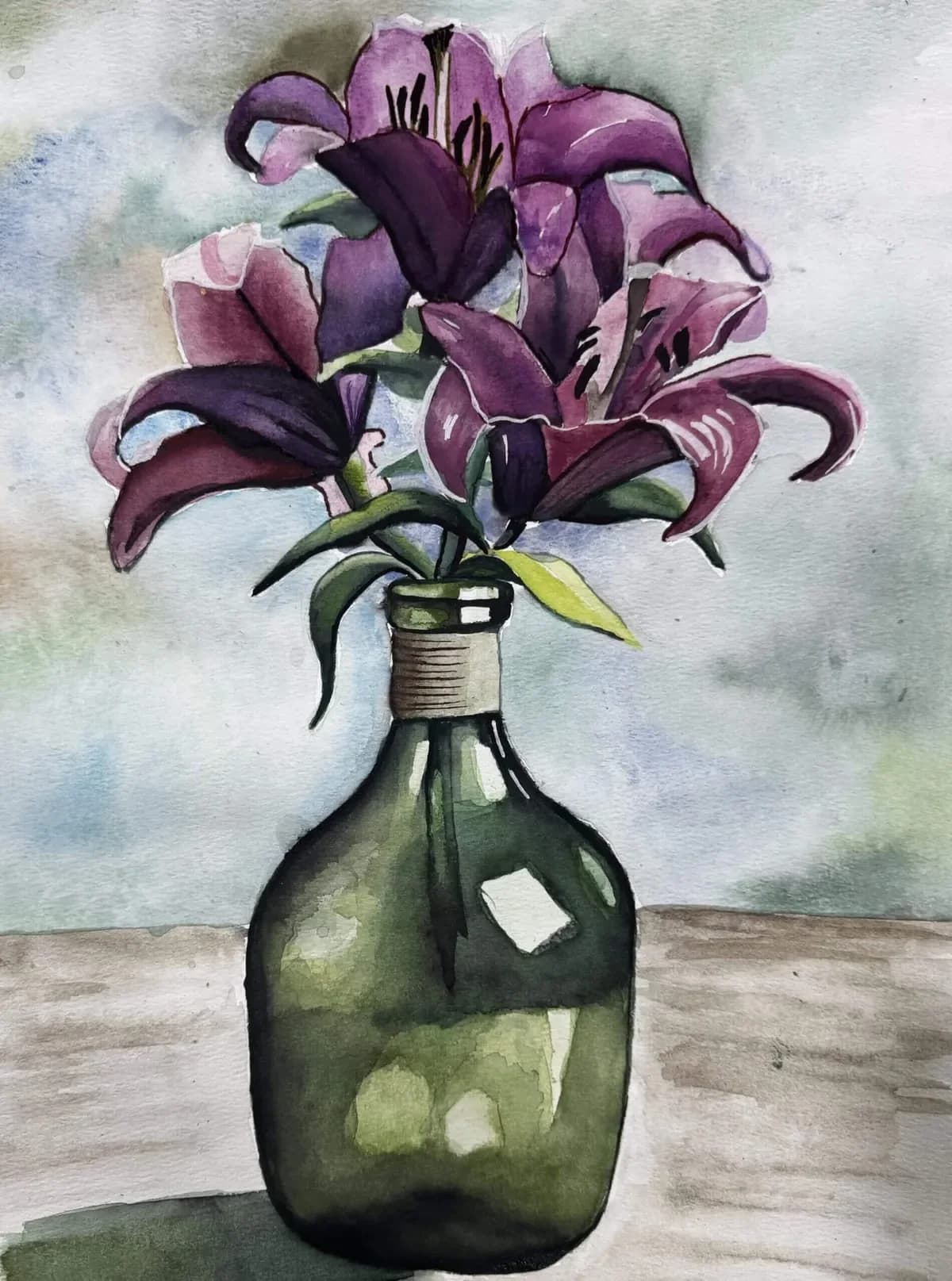
Direct School Admission (DSA) through Visual Arts requires a compelling portfolio that demonstrates both technical skill and creative vision. Art by Ancourage provides structured portfolio preparation at both the Bishan and Woodlands locations, helping students present their best work for DSA applications.
As educators who have guided students through successful DSA applications, Art by Ancourage shares what admissions committees look for and how to prepare effectively. To date, we have maintained a 100% DSA and art school acceptance rate for students with 1+ year in our DSA programme — every one of them has been accepted, with places across SOTA, HCI AEP, SJI, NJC, Victoria School, Nan Chiau High, LASALLE, NAFA, RISD and CalArts, and at Dunman High School through its Direct School Admission exercise.
Understanding DSA Visual Arts
DSA Visual Arts is the Direct School Admission talent area through which a Primary 6 student is selected on artistic ability — usually a portfolio, a drawing task and an interview — rather than PSLE score alone; building a competitive portfolio takes structured guidance over 12–18 months, which Art by Ancourage's DSA Portfolio programme provides at Bishan and Woodlands — book an Art trial class (from $18) to discuss your child's portfolio timeline.
DSA allows students to gain admission based on artistic talent rather than PSLE scores alone. The MOE DSA-Sec exercise typically opens in May each year, with Visual Arts as one of the recognised talent areas across many secondary schools.
Common DSA Visual Arts Pathways
- School of the Arts (SOTA): Specialised arts education from Secondary 1
- Secondary schools with Art ALP: Visual Arts as Applied Learning Programme
- IP schools: Some offer Visual Arts talent areas
What Schools Look For
- Technical skill appropriate to age
- Creative thinking and originality
- Passion and commitment to art
- Potential for growth
- Ability to articulate artistic ideas
Building a Strong Portfolio
A DSA art portfolio should demonstrate range, skill, and personal voice.
Portfolio Components
- Observational work: Drawings from life showing accuracy and detail
- Creative work: Original compositions showing imagination
- Technical range: Multiple media (pencil, paint, mixed media)
- Sketchbook pages: Process work showing development
- Personal project: Extended work on a chosen theme
Quality Over Quantity
Portfolio size varies by school — SOTA collects no portfolio at application and asks shortlisted DSA-Sec applicants for five (5) pieces, cut from ten for the 2025 cycle and unchanged for 2026, and other DSA-Visual Arts schools and AEP pathways set their own expectations that are updated annually. Quality beats quantity across all pathways. Each work should demonstrate something specific about your abilities.
The number of portfolio pieces varies by school and is updated annually — check each school's specific requirements before curating. Across all pathways, include range across different media — drawing, painting, 3D work, and for some schools, digital art. Include both observational work (drawing from life, still life studies) and imaginative or creative compositions that demonstrate personal expression. Admissions committees want to see that a student can observe the world accurately AND interpret it with their own creative voice. Each piece should demonstrate both technical skill — such as control of tone, colour mixing, or composition — and a sense of the student's individual perspective or artistic interests.
The DSA Timeline
Start preparation 12-18 months before application.
Primary 4: Explore and Build Foundations
Develop core skills in drawing, painting, and composition. Experiment with different media to discover what resonates. Build a broad body of work to select from later. This is the stage to try new things — charcoal, watercolour, ink, collage — without pressure to produce portfolio-ready pieces.
Primary 5: Develop Personal Style and Stronger Pieces
Create more intentional work that shows growing technical skill. Begin to develop a personal artistic voice — recurring themes, preferred media, or a distinctive approach. Start assembling potential portfolio pieces and maintaining a sketchbook that documents your creative process and ideas.
Primary 6 (by March): Finalise Portfolio
Curate your strongest pieces to match each school's portfolio requirements. Write brief descriptions for each piece explaining the concept, techniques used, and what you learned. Prepare for DSA interviews, which typically run from June to August. The DSA application window usually opens in May, so the portfolio should be complete and photographed or scanned by March at the latest to allow time for refinement.
Interview Preparation
Most DSA Visual Arts pathways include an interview, and often an on-the-spot drawing or practical task.
What to Expect
- Discussion of your portfolio pieces
- Questions about artistic influences and interests
- Sometimes a practical task or sketch
- Questions about commitment to art
How to Prepare
- Practise explaining your work — why you made specific choices
- Research the school's art programme
- Be prepared to discuss artists you admire
- Show genuine enthusiasm for art
Students are often asked to discuss their favourite portfolio piece in detail — why they chose the subject matter, what techniques they used, and what they would do differently if they could redo it. Interviewers want to see reflective thinking, not just technical ability. Some schools also include a live drawing or sketching component, so students should be comfortable drawing under mild time pressure. Practising 10-15 minute timed sketches at home builds this confidence. Finally, students should be able to name and discuss at least one or two artists who inspire them, explaining what specifically about that artist's work they find compelling — whether it is the use of colour, composition, subject matter, or emotional impact.
Common Portfolio Mistakes to Avoid
After reviewing hundreds of DSA art portfolios, Art by Ancourage sees the same mistakes repeatedly — addressing these early significantly improves your child's chances.
- All copied work: Portfolios filled with drawings copied from anime, YouTube tutorials, or photographs show execution ability but not creative thinking. Admissions committees want original compositions that demonstrate the student's own ideas and observations
- No observational drawing: At least 3-4 pieces should be drawn from real life — still life setups, outdoor sketches, or figure studies. Observational drawing demonstrates the core skill that all art schools value most: the ability to see accurately
- Single medium only: A portfolio of 12 pencil drawings shows narrow range. Include at least 3 different media — pencil, paint (watercolour or acrylic), and one additional medium like charcoal, ink, or mixed media
- Poor presentation: Photographing artwork in dim lighting, including crumpled or stained pieces, or submitting without labels. Every piece should be photographed on a clean, well-lit background with a brief title and date
- No process documentation: Sketchbook pages showing development — thumbnail sketches, colour studies, composition experiments — demonstrate genuine artistic thinking. Schools value seeing how a student arrives at their final piece, not just the result
- Starting too late: Portfolios assembled in 2-3 months lack the progression and depth that 12-18 months of genuine development shows. Admissions committees can tell the difference
How Art by Ancourage Helps
Art by Ancourage's DSA programme at Bishan and Woodlands gives each student a portfolio review with gap identification, targeted skill development for portfolio pieces, personal project guidance, interview coaching and advice on each school's requirements.
- Portfolio review: Assessment of current work and gap identification
- Skill development: Targeted teaching for portfolio pieces
- Project guidance: Support for personal project development
- Interview coaching: Practise articulating artistic ideas
- Application advice: Understanding different schools' requirements
Bishan Centre
152 Bishan St.11, 10-minute walk from Bishan MRT. Serving Central Singapore families.
Woodlands Centre
Vista Point, 548 Woodlands Drive 44, near Woodlands South MRT. Serving North Singapore families.
Why Start DSA Preparation Early
Admissions committees can tell the difference between years of genuine development and last-minute cramming. Students who begin building their portfolios in Primary 4 or 5 develop a body of work with real depth — they have explored themes over time, experimented with different media, and refined their personal voice. Students who start in Primary 6 typically produce portfolios that feel rushed and lack that progression.
The Art by Ancourage Explorative Art Classes and Professional Fine Art Classes programmes provide the ongoing skill development that feeds naturally into DSA preparation. Students in these tracks build technical range and creative confidence before transitioning into focused portfolio work. For foundational skill-building at earlier ages, the Mini Masters programme (ages 6-8) starts the process well. Read more in the article on why art education matters for a broader view of what structured art develops in children.
Fees, Trial Classes, and Getting Started
The best way to assess whether the Art by Ancourage DSA programme suits your child is to book a trial class (from $18) and have a conversation with the instructors. Trial sessions are available at both Bishan and Woodlands, where teachers can review your child's current work and recommend an appropriate starting point. Current programme fees are available on the pricing page. You can also WhatsApp Art by Ancourage with any questions.
The School of the Arts (SOTA) is one of the most sought-after DSA destinations for Visual Arts students. Their admissions requirements are detailed and competitive. Art by Ancourage helps students understand not just what to create, but how to present it — including how to document sketchbook process, how to label each artwork with the short description SOTA asks for, and how to approach the SOTA Portfolio Interview. For a complete overview of the DSA process across all talent areas, see the DSA guide for Singapore parents.
Common Questions About DSA Art
Is my child talented enough for DSA?
DSA looks for potential, not finished artists. Schools want students who show passion, commitment, and willingness to learn. If your child loves art and practises regularly, they may be suitable candidates.
What if DSA is unsuccessful?
DSA is competitive. Unsuccessful applicants can still pursue art through regular admission to schools with strong art programmes, or continue developing skills for future opportunities.
How early should preparation start?
Serious DSA preparation should begin 12-18 months before application. However, building foundational skills from young creates stronger portfolios. The Art by Ancourage Mini Masters and intermediate programmes develop skills progressively.
Can students from Woodlands apply to SOTA even though it is in the city?
Yes — SOTA accepts students from anywhere in Singapore. The campus at 1 Zubir Said Drive is next to Dhoby Ghaut MRT, on the North–South Line that runs directly from Woodlands and Bishan. Woodlands students in the Art by Ancourage DSA programme have successfully applied to SOTA and other Visual Arts DSA schools. Art by Ancourage also helps families at the Woodlands centre understand the logistics of attending arts-focused secondary schools.
Related: The Art Elective Programme · DSA Guide Singapore · Complete DSA Art Portfolio Guide · Art Classes in Bishan · Art Enrichment in Woodlands · Art Competitions for Students guide · EAP Enhanced Art Programme guide