
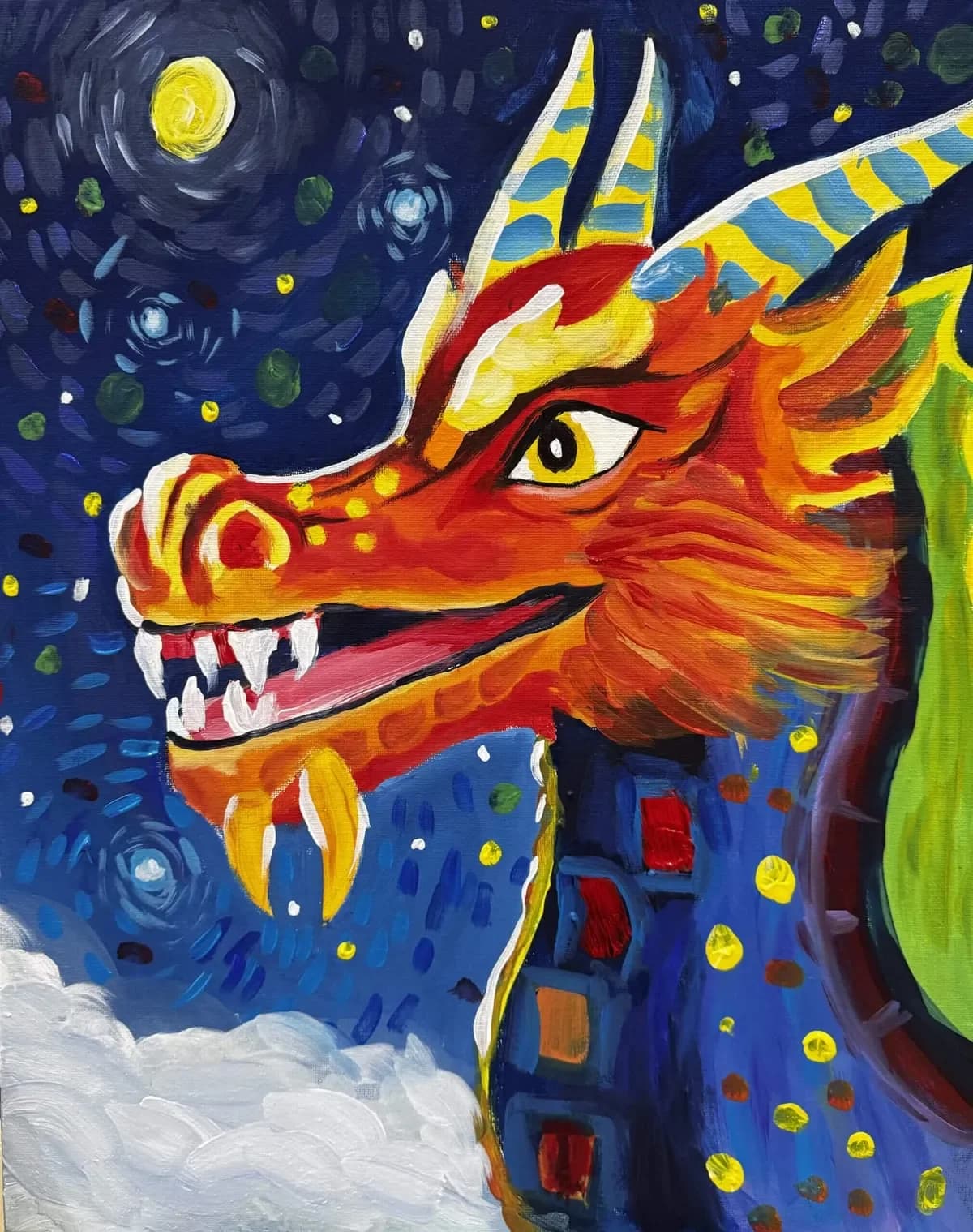
A structured school art programme develops drawing, painting, and creative thinking skills progressively from kindergarten through secondary school, building technical proficiency alongside imagination and self-expression at every stage. In Singapore, where academic achievement dominates conversations about education, a well-designed art programme gives children something equally important: the ability to observe, experiment, communicate visually, and approach problems from multiple angles. Art by Ancourage offers school art programmes in small groups of 3 to 6 students at both the Bishan and Woodlands centres, with curricula aligned to each developmental stage from K1 through Secondary.
Why School Art Matters
Art education develops cognitive, motor, and socio-emotional skills that complement and enhance academic learning. Research published by the OECD finds that specific forms of arts education improve particular skills, while cautioning that research on creativity, persistence and motivation is still too limited for strong conclusions. In Singapore's context, the MOE 21st Century Competencies framework explicitly identifies creative and inventive thinking as a core competency every student should develop.
A school art programme delivers these benefits progressively:
- Fine motor control and hand-eye coordination from age 5 onwards
- Observation skills that transfer to science and mathematics
- Confidence through creating original work
- Focus and sustained attention during extended art-making sessions
- Emotional expression and self-regulation through creative outlets
Parents often notice the effects before they connect them to art. A child who struggled to sit still for homework may concentrate deeply on a painting for an hour. A quiet child may begin articulating ideas more clearly after practising visual storytelling. These are not coincidences — and the evidence for several of these outcomes is growing. Read the research-backed guide to art education benefits for a deeper look at the studies behind these observations.
Art by Ancourage offers structured school art programmes from K1 through Secondary in small groups of 3–6 at Bishan and Woodlands — book a trial class (from $18) to see how your child's creativity develops with qualified art instruction.
K1 Art Programme (Age 5)
At K1, art is about exploration and sensory discovery rather than technique. Children at this age are developing grip strength, colour awareness, and the confidence to make marks on paper. A good K1 art programme provides age-appropriate materials and guided activities that encourage experimentation without the pressure of producing a "correct" outcome.
The Art by Ancourage K1 School Art Programme introduces:
- Drawing with crayons, oil pastels, and markers to build grip and control
- Painting with tempera and watercolour to explore colour mixing
- Collage and paper tearing to develop fine motor skills
- Simple printmaking and stamping techniques
- Storytelling through pictures, connecting visual and verbal expression
Classes are kept small at 3 to 6 students so each child receives individual guidance. At this age, the instructor's role is to encourage rather than correct. Children who feel safe to experiment develop stronger creative foundations than those told what to draw.
K2 Art Programme (Age 6)
K2 builds on K1 foundations by introducing more structured art-making while preserving creative freedom. Children at this age can handle slightly more complex techniques and begin to plan their compositions before starting. The K2 School Art Programme bridges the gap between free exploration and the more structured primary-level curriculum.
Key developments at K2 include:
- Drawing from observation as well as imagination
- Understanding basic colour theory: primary colours, secondary colours, warm and cool palettes
- Introduction to simple perspective and spatial arrangement
- Working with clay and 3D materials for sculptural awareness
- Developing patience through multi-step projects that span two or more sessions
Children transitioning from the Crafty Corner programme (ages 3 to 5) into the K2 school art track find the progression natural. Both programmes share the same philosophy: build skills through guided discovery, not rigid instruction.
Primary School Art Programme (Ages 7-12)
Primary-level art introduces formal techniques in drawing, painting, and mixed media while developing each child's personal artistic voice. The Primary School Art Programme is where students begin learning the fundamentals that underpin all visual art: proportion, composition, shading, colour theory, and perspective.
The primary curriculum covers:
- Pencil drawing: line quality, shading, hatching, and cross-hatching
- Painting techniques in watercolour and acrylic
- Mixed media exploration combining different materials
- Observational drawing from still life and nature
- Introduction to art history and visual analysis
- Creative projects encouraging original composition and storytelling
Students who have been through the kindergarten programme arrive with stronger foundations, but the primary programme also welcomes children starting art for the first time. For younger primary students (ages 6 to 8), the Mini Masters programme offers an alternative entry point focused on art fundamentals with a playful approach.
From Primary 4 onwards, students interested in the DSA Visual Arts pathway can begin building their portfolios alongside the school art programme.
Secondary School Art Programme (Ages 13-17)
At secondary level, art becomes more analytical and technically demanding, preparing students for O-Level / SEC Art, portfolio development, and potential specialisation. The Secondary School Art Programme focuses on developing a mature artistic practice that balances technical skill with conceptual thinking.
Secondary-level students work on:
- Advanced drawing: anatomy, architecture, complex still life
- Painting in multiple media with emphasis on personal style
- Composition and design principles for deliberate visual communication
- Research skills: studying artists, movements, and techniques
- Coursework development for school art assessments
- Portfolio building for those pursuing art at higher levels
Students in the Art Elective Programme (AEP) or Enhanced Art Programme (EAP) at school benefit from supplementary instruction that deepens techniques beyond what school art lessons cover. The small class size of 3 to 6 students allows focused, personalised feedback that larger school classes cannot provide.
The DSA Art Pathway
Direct School Admission (DSA) through Visual Arts allows Primary 6 students to secure secondary school places based on artistic talent before PSLE results. Schools including SOTA, NJC, and AEP schools accept portfolios demonstrating technical skill, creative thinking, and artistic growth over time.
The Art by Ancourage DSA Art Portfolio programme prepares students from Primary 4 onwards. A strong portfolio typically requires 2 to 3 years of development and includes:
- Observational drawings demonstrating technical accuracy
- Creative compositions showing original thinking
- Work across multiple media: drawing, painting, mixed media, sculpture
- Process documentation including sketchbook pages and developmental studies
- The ability to talk through the creative journey — the schools that publish their requirements ask for artwork labels and a short description rather than a written artist statement, so check what each school asks for
Students in the school art programme who develop a genuine passion for art are well positioned to pursue DSA. The structured skill progression from kindergarten through primary gives them a head start that last-minute preparation cannot replicate. Read the DSA Art Portfolio Guide for detailed advice on the application process.
How School Art Complements the MOE Curriculum
A dedicated school art programme reinforces the skills MOE identifies as essential for 21st-century learners. The MOE curriculum includes art as a subject at primary and secondary levels, but school art lessons are typically limited in frequency and class sizes are large. An external programme supplements this with deeper instruction and individual attention.
What the MOE Art Syllabus Covers
Singapore's national art curriculum is built around a structured progression of learning domains at each stage, and a strong external programme mirrors that progression rather than teaching disconnected weekly projects.
- Primary (P1–P6): The MOE Primary Art syllabus is organised around three learning domains — See, Express, and Appreciate — developing the key competencies of observe-wonder-inquire, create-innovate-present, and reflect-connect-respond.
- Lower Secondary: The syllabus shifts to Perceive, Communicate, and Appreciate, building the visual literacy and cultural awareness students need to learn and communicate visually.
- Upper Secondary / O-Level / SEC Art (SEC K347, formerly O-Level 6114): Students work through a Process–Product–Discourse (PPD) cycle of inquiry, carrying coursework from exploration to resolved outcomes with critical reflection.
Because Art by Ancourage instructors teach against these same domains, the skills students build in our small-group classes transfer directly to school art assessments and, for those who pursue it, to DSA Visual Arts and O-Level Art coursework.
Specific areas where external art complements school learning:
- Creative thinking: Art tasks require generating and evaluating multiple solutions, a skill MOE's competency framework emphasises across all subjects
- Communication: Visual literacy developed through art supports comprehension and expression in English and Mother Tongue
- Collaboration: Group art projects develop teamwork and the ability to incorporate feedback
- Self-management: Multi-session art projects teach planning, time management, and perseverance
Students with strong art foundations consistently demonstrate the kind of flexible, cross-disciplinary thinking that performs well under Singapore's evolving education framework.
Progression Pathway: K1 to Secondary and Beyond
A structured art programme builds cumulatively: sensory exploration and mark-making at K1, guided discovery and basic techniques at K2, formal techniques and personal expression across primary, and advanced skills and conceptual thinking in secondary — with a separate DSA preparation track at ages 10 to 12 for portfolio and interview readiness.
| Stage | Age | Focus | Key Outcomes |
|---|---|---|---|
| K1 | 5 | Sensory exploration, mark-making | Motor control, colour awareness, creative confidence |
| K2 | 6 | Guided discovery, basic techniques | Observation skills, colour theory, spatial thinking |
| Primary | 7-12 | Formal techniques, personal expression | Drawing and painting proficiency, artistic voice |
| Secondary | 13-17 | Advanced skills, conceptual thinking | Portfolio readiness, analytical visual literacy |
| DSA Prep | 10-12 | Portfolio development, interview preparation | DSA application readiness, school placement |
Students can enter the programme at any stage. Those who begin at K1 or K2 accumulate years of practice that produce noticeably stronger portfolios by secondary level compared to students who start later.
Choosing the Right Programme
The right art programme balances skill development with creative freedom, teaches technique without suppressing individuality, and provides genuine progress visible over time.
When evaluating a school art programme, consider:
- Class size: Smaller groups (3 to 6 students) allow personalised instruction and meaningful feedback
- Curriculum structure: Look for a clear progression pathway, not random weekly activities
- Student work diversity: If every student's work looks identical, the programme values copying over creativity
- Instructor qualifications: Trained art educators produce better outcomes than general enrichment facilitators
- Trial availability: A trial class reveals more than any brochure
At Art by Ancourage, trial classes are from $18 at both the Bishan and Woodlands centres. Each trial is a real 60-minute lesson, not a demonstration, giving parents and children a genuine experience of the programme before committing.
Locations
Art by Ancourage operates from two centres — Bishan (152 Bishan Street 11, #01-215, a 10-minute walk from Bishan MRT) and Woodlands (Vista Point, 548 Woodlands Drive 44, #02-16, near Woodlands South MRT, TE3).
- Bishan centre: Near Bishan MRT (NS17/CC15), serving families from Bishan, Ang Mo Kio, Toa Payoh, Thomson, and Marymount
- Woodlands centre: Near Woodlands South MRT (TE3), serving families from Woodlands, Admiralty, Marsiling, Sembawang, and Yishun
Both centres offer the full range of school art programmes from K1 through Secondary, as well as DSA portfolio preparation, Crafty Corner for younger children, Mini Masters for ages 6 to 8, and periodic art workshops for all ages.
Book a trial class (from $18) to experience a 60-minute trial lesson at either location, or WhatsApp Art by Ancourage to discuss which programme suits your child.
Common Questions About School Art Programmes
How is a school art programme different from regular enrichment art classes?
A school art programme follows a curriculum aligned with MOE art outcomes, building skills progressively across the academic year. Regular enrichment classes often focus on standalone projects without structured skill progression. Art by Ancourage designs each term to build on previous learning, ensuring measurable improvement in technique, observation, and creative thinking.
Will this help my child's school art grades?
Yes. Students in the programme practise the same skills assessed in school art — observational drawing, colour application, composition, and creative expression. The additional practice time and individualised feedback from qualified instructors help students produce higher-quality work in school assignments. Many parents report noticeable grade improvement within one to two terms.
At what age should my child start?
Art by Ancourage offers the School Art Programme from K1 (age 5) onwards. Earlier enrolment allows more time for skill development and creative confidence building. Students can join at any level — the programme includes catch-up support for older students starting later. For children aged 3 to 5, the Crafty Corner programme provides an ideal introduction through art play.
Can this lead to DSA Visual Arts applications?
The School Art Programme provides excellent preparation for DSA. Students who complete the Primary level develop the technical skills and portfolio foundation needed for the DSA Portfolio track. Art by Ancourage recommends starting dedicated DSA preparation from Primary 4, with the School Art Programme building foundational skills beforehand. Read the full DSA Art Portfolio Guide for detailed advice.
What materials does my child need to bring?
All materials are provided by Art by Ancourage, including paints, brushes, paper, canvas, clay, and specialist media. Students should wear clothes they do not mind getting paint on. For advanced Secondary students working on portfolio pieces, Art by Ancourage may recommend specific materials for home practice.
What does the MOE art syllabus cover?
Singapore's MOE art curriculum builds progressively by stage. Primary art centres on three learning domains — See, Express, and Appreciate — developing observation, art-making, and art appreciation. Lower secondary moves to Perceive, Communicate, and Appreciate, strengthening visual literacy and cultural awareness. Upper secondary / O-Level / SEC Art (SEC K347, formerly O-Level 6114) works through a Process–Product–Discourse cycle of inquiry. Our school art programme is structured around these same domains, so classwork reinforces exactly what students cover in school.
Explore more about art education at Art by Ancourage: AEP Guide · Holiday Art Programmes · Art Classes in Bishan · Art Enrichment in Woodlands · Why Art Education Matters