
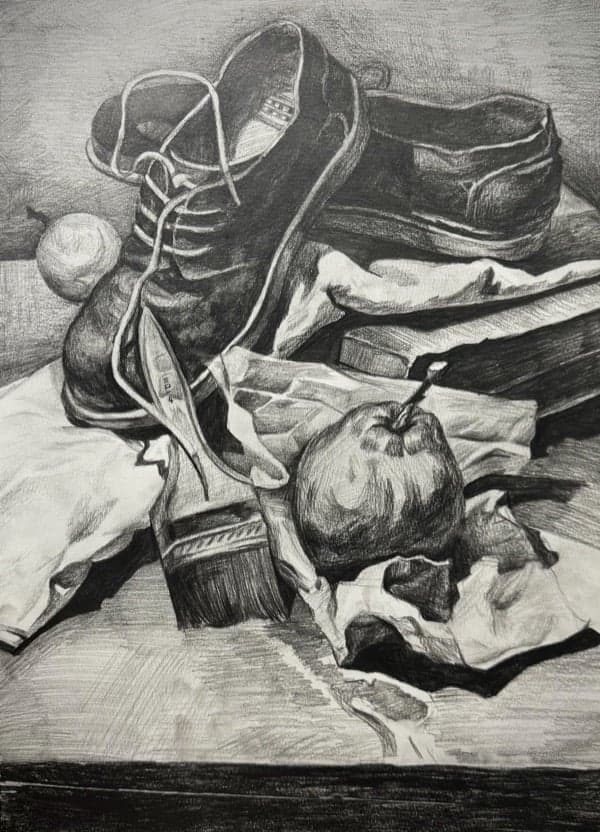
A sketchbook is more than a drawing pad — it documents artistic thinking, experimentation, and growth over time, and is expected in SOTA's Year 5 IB application and H2 Art portfolios (SEAB 9357 lists art journal spreads among the visual materials a portfolio may include), and valued highly in DSA Visual Arts interviews. Schools and assessors look for evidence of sustained creative practice, and a well-maintained visual journal provides exactly that. Art by Ancourage integrates sketchbook review into Professional Fine Art classes, helping students build the habit of daily visual documentation that strengthens every art application.
As the founder of Art by Ancourage and a graduate of LASALLE College of the Arts and Goldsmiths, University of London, I maintained sketchbooks throughout my own art education and now guide students to do the same. The difference between students who keep a sketchbook and those who do not shows clearly in portfolio quality, interview confidence, and long-term artistic development.
Professional Fine Art classes at Art by Ancourage include sketchbook review and visual journal development in every session — book an Art trial class (from $18) to see how structured sketchbook practice accelerates your child's artistic growth.
Why Sketchbooks Matter for Art Students
A sketchbook provides three things that no amount of finished artwork can: process documentation, evidence of creative development, and proof of sustained artistic practice.
For students in Singapore's art education pathways, sketchbooks serve specific and important purposes:
- SOTA's sketchbook requirement depends on the route: Year 5 IB applicants to the School of the Arts upload 5–8 selected sketchbook pages alongside 10 final artworks and a 500-word art proposal. The Year 1 DSA-Sec route collects no portfolio or sketchbook at application at all — the optional sketchbook was dropped for the 2026 cycle. Either way, assessors look for work that reflects the student's own ideas, not teacher-directed content
- H2 Art Paper 2 requires process work: The H2 Art syllabus (9357) portfolio component demands documented exploration across media, and the sketchbook is where that exploration lives
- DSA interviewers ask about creative process: When students present their DSA art portfolio, interviewers want to see how ideas developed — a sketchbook answers that question visually
- AEP students maintain visual journals: The Art Elective Programme integrates ongoing visual journaling into its curriculum as a continuous assessment component
Beyond formal requirements, daily sketchbook practice builds the observation skills, experimentation habits, and creative confidence that separate casual drawers from developing artists. See our summary of the research on art education benefits for the broader cognitive advantages of sustained creative practice. A sketchbook is also where you drill the core art techniques — value, perspective and proportion — one small study at a time.
What Goes in an Art Sketchbook
A strong sketchbook holds seven content types — observational drawings, colour studies, composition thumbnails, material and technique experiments, written reflections, a reference collection and artist studies — not just a collection of polished drawings.
Here is what art educators and assessors expect to see:
- Observational drawings: Still life, architecture, nature, and figure studies drawn from direct observation — not copied from photographs or the internet
- Colour studies and mixing experiments: Swatches, colour wheels, temperature studies, and mixing notes that show the student understands colour theory in practice
- Composition thumbnails and planning sketches: Small, quick studies for larger works — showing that the student plans before committing to a final piece
- Material and technique experiments: Tests of new media, mark-making explorations, texture studies, and process notes on what worked and what did not
- Written reflections: Notes on artwork seen at galleries, museum visits, and personal responses to other artists' work. The National Gallery Singapore and local exhibitions provide excellent material
- Reference collection: Photographs, texture samples, printed images, and collected materials that inspire or inform artwork
- Artist studies: Analysis of other artists' techniques, compositions, and use of media — with the student's own interpretation and response, not just copying
The key principle: a sketchbook shows thinking, not just drawing. Assessors want to see how a student's mind works, how they respond to the world visually, and how ideas evolve from rough concept to resolved artwork.
Sketchbook Requirements by Programme
Different art programmes in Singapore use sketchbooks differently: SOTA Year 1 (DSA-Sec) collects none at application, SOTA Year 5 (IB) uploads 5–8 pages with 10 artworks, H2 Art uses it inside the 30-hour Paper 2 Portfolio, and AEP, DSA Visual Arts and O-Level / SEC Art treat it as ongoing, interview or coursework evidence — so prepare the right kind of visual journal for your goal.
| Programme | Sketchbook Role | Key Requirements |
|---|---|---|
| SOTA Year 1 (DSA-Sec) | Not collected at application | No portfolio or sketchbook is uploaded; shortlisted applicants present 5 original artworks in person |
| SOTA Year 5 (IB) | Uploaded with the application | 5–8 selected sketchbook pages alongside 10 final artworks and a 500-word art proposal |
| H2 Art Portfolio | Part of Paper 2 (30 hours) | Process documentation across 3+ media with critical reflection |
| AEP (Art Elective Programme) | Ongoing assessment | Visual journal integrated into curriculum, reviewed termly |
| DSA Visual Arts | Shown at interview | Evidence of sustained practice, exploration, and artistic growth |
| O-Level / SEC Art | Coursework evidence | Process work supporting final pieces with documented development |
For a detailed breakdown of DSA portfolio requirements, see the DSA Art Portfolio guide. For SOTA specifically, the SOTA preparation guide covers the full application process including sketchbook expectations.
Building a Daily Sketchbook Routine
Consistency matters more than perfection — students who sketch for 10–15 minutes daily develop faster than those who spend three hours once a week.
Practical strategies for building a sustainable sketchbook habit:
- Start with 10–15 minutes daily: Short sessions build the habit without feeling burdensome. Set a recurring time — after school, before bed, or during weekend mornings
- Carry a small sketchbook everywhere: A pocket-sized sketchbook (A6 or A5) removes the barrier of not having materials available. Waiting rooms, MRT rides, and hawker centres all offer drawing subjects
- Date every entry: Dating pages creates a visual timeline of progress that is motivating for the student and valuable for portfolio review
- Mix quick sketches with longer studies: Five-minute gesture drawings alongside thirty-minute observational studies provide variety and develop different skills
- Don't aim for perfection — aim for consistency: Ugly pages are valuable. Crossed-out experiments are valuable. The worst sketchbook habit is only drawing when you feel inspired
- Review and reflect weekly: Spend ten minutes each week looking back through recent pages. Note what improved, what to try again, and what new directions emerged
At Art by Ancourage Professional Fine Art classes, instructors review students' sketchbooks each session, providing feedback on both technical development and creative exploration. This regular accountability helps students maintain their practice between lessons.
Sketchbook Techniques for Different Age Groups
What goes into a sketchbook should evolve as the student's skills and cognitive development progress — a 10-year-old's visual journal looks very different from a 17-year-old's, and that is exactly right.
Ages 9–12 (Upper Primary)
Focus on building the habit of observation and recording. At this stage, the sketchbook is a visual diary:
- Simple observation drawings of everyday objects — their school bag, lunch, pets, favourite toys
- Basic colour studies using coloured pencils or watercolour pencils
- Drawing from nature: plants, insects, leaves, clouds
- Recording things they find interesting — a pattern on a building, a texture on a wall
- Short written notes alongside drawings: "I noticed…" or "This reminded me of…"
Art by Ancourage's Explorative Art classes introduce sketchbook habits through guided warm-up activities at the start of each session, making the practice feel natural rather than forced.
Ages 13–15 (Secondary)
Add analytical and experimental dimensions to the visual journal:
- Artist studies with written analysis — not just copying, but examining why a technique works
- Material experiments: testing charcoal, ink, collage, mixed media combinations
- Theme exploration: developing a series of sketches around a single idea or concept
- Responding to gallery visits and art events with sketches and written reflections
- Composition planning for larger works
Ages 16–18 (JC / Pre-University)
The sketchbook becomes a space for developing a personal artistic voice:
- Critical reflections connecting personal work to art history and contemporary practice
- Developing recurring themes and a consistent visual language
- Cross-media experimentation documented with process notes
- Written artist statements and project proposals drafted in the journal
- Evidence of independent research and self-directed creative enquiry
For students preparing H2 Art portfolios, the sketchbook is not a supplement — it is the backbone of the Paper 2 portfolio submission and should demonstrate sustained investigation across the full 30-hour coursework period.
How SOTA Assessors Evaluate Sketchbooks
In Art by Ancourage's experience, the SOTA-bound sketchbooks that succeed show authenticity above all — the student's genuine creative thinking, not a parent-guided or teacher-directed sketchbook.
SOTA does not publish its selection criteria — its DSA page says the school "maintains strict confidentiality about the audition procedures and criteria for the Talent Academy" — so what follows is drawn from Art by Ancourage's experience preparing admitted students. Note that a sketchbook is only submitted on SOTA's Year 5 route (5–8 pages); Year 1 (DSA-Sec) applicants upload nothing and present five artworks in person. Here is what, in our experience, assessors value:
- Authentic voice: Work that clearly comes from the student's own interests, observations, and ideas — not assignments completed to a brief
- Creative thinking: Evidence of experimentation, risk-taking, and willingness to explore beyond comfortable techniques
- Curiosity and exploration: Wide-ranging interests shown through diverse subject matter and media experiments
- Growth over time: Visible progression in skill, confidence, and complexity when comparing earlier pages to later ones
- Personal interests: Subjects and themes that reveal who the student is — their passions, questions, and way of seeing the world
Common mistakes that weaken sketchbooks:
- Over-polished presentations: Sketchbooks that look like finished art books raise suspicion that the work was adult-guided. Assessors prefer honest, messy exploration
- Copied images: Pages filled with drawings copied from anime, Pinterest, or other artists without original interpretation signal a lack of independent thinking
- Teacher-directed content only: If every page looks like a class exercise, the sketchbook does not demonstrate self-motivation or personal creative drive
- Empty or sparse journals: A half-filled sketchbook suggests inconsistent practice — regular entries over months matter more than a few impressive pages
Parents should encourage but not direct their child's sketchbook practice. Providing materials, suggesting outings to galleries, and expressing genuine interest in what they draw is helpful. Telling them what to draw or correcting their work is counterproductive.
Digital vs Physical Sketchbooks
Physical sketchbooks remain the standard for most art applications in Singapore, but digital sketchbooks have a growing role — especially for students interested in digital illustration and design.
Where a sketchbook is seen in person — DSA school interviews and H2 Art coursework review; SOTA's Year 1 route collects no sketchbook at all, and its Year 5 IB route takes scanned pages — physical sketchbooks are strongly preferred because they demonstrate hands-on material engagement that cannot be replicated digitally. The tactile qualities — charcoal smudges, paint tests, collaged elements, and layered corrections — communicate a physical relationship with art-making that assessors value.
Digital tools like Procreate, Photoshop, or Clip Studio Paint are appropriate for:
- Students pursuing digital art as a specific skill area
- Digital components within a broader portfolio
- Colour studies and quick digital sketching to supplement physical work
- Recording time-lapse process videos of digital artworks
If presenting digital work alongside a physical sketchbook, print key digital pieces and include them in the physical journal with notes on the tools and process used. This shows assessors that digital work is intentional and documented, not a shortcut. When photographing sketchbook pages for digital submission, proper lighting and camera angle matter — see the portfolio photography guide for techniques that apply to sketchbook documentation as well.
For students exploring digital art alongside traditional drawing, Art by Ancourage's digital art programme teaches Procreate and digital illustration techniques that complement physical sketchbook practice.
How Art by Ancourage Integrates Sketchbook Practice
At Art by Ancourage, sketchbook practice is not an afterthought — it is woven into every Professional Fine Art session through structured review, guided exercises, and ongoing feedback from instructors.
Here is how the programme works:
- Sketchbook review each session: Instructors look through students' sketchbooks at the start of class, providing feedback on recent entries and suggesting areas to explore
- Visual journal as DSA preparation: Students in the DSA preparation programme maintain visual journals as a core component of their portfolio development, building the documentation that assessors want to see
- Regular feedback in small groups: With class sizes of 3–6 students, instructors give individual attention to each student's sketchbook — something larger classes cannot offer
- Guided warm-up exercises: Each class begins with a short observational or experimental drawing task that feeds directly into the student's sketchbook
- Term-end sketchbook review: Students and instructors review progress across the term, identifying growth areas and setting goals for the next period
Art by Ancourage studios at Bishan and Woodlands provide still life setups, reference materials, and a focused creative environment that encourages quality sketchbook entries beyond what students typically produce at home.
Book an Art trial class (from $18) at Bishan or Woodlands — bring your child's sketchbook for personalised feedback from Art by Ancourage's instructors on what to develop next.
A well-kept sketchbook is one part of a competitive Direct School Admission application — for portfolio, interview, and school-selection strategy, browse our DSA portfolio-preparation hub.
A sketchbook is also where reference sources belong, so that a marker can tell which marks on the page are the student's own — see our guide to reference photos and originality in student art.
Common Questions About Sketchbook Practice
How many pages should a sketchbook have before submitting for DSA?
There is no fixed page count, but a well-used sketchbook with 40–60 pages of varied content over 6–12 months demonstrates the sustained practice that assessors look for. Quality and consistency matter more than volume — 50 pages of genuine exploration are more valuable than 100 pages of repetitive copying. Start early enough that the sketchbook reflects organic growth rather than last-minute cramming.
Should my child use a specific brand or size of sketchbook?
Any quality sketchbook with thick enough paper for mixed media works well. A5 size is practical for carrying daily, while A4 gives more space for detailed studies. Hardbound sketchbooks hold up better than spiral-bound for portfolio submissions. Brands like Daler-Rowney, Canson, and Moleskine are readily available in Singapore at art supply shops like Art Friend and Overjoyed. The most important thing is that your child actually uses it — the best sketchbook is the one they carry with them.
Is a sketchbook the same as a portfolio?
No. A portfolio is a curated selection of finished or near-finished artworks that showcase the student's best abilities. A sketchbook is a working document that shows the creative process behind those finished pieces — the thinking, experimenting, planning, and development. Both are important and serve different purposes. For DSA applications, students typically submit a portfolio of finished works alongside a sketchbook showing their process. SOTA differs by route: the Year 1 DSA-Sec route collects neither at application, while the Year 5 IB route has applicants upload 5–8 selected sketchbook pages with their 10 final artworks.
What if my child says they have nothing to draw?
This is common and usually means the child feels pressure to produce impressive results. Reframe the sketchbook as a private space where anything goes — doodles, notes, colour swatches, pasted ticket stubs, or even drawings of what they ate for lunch. Suggest specific, low-pressure prompts: draw your hand in three positions, sketch everything on your desk, or record three colours you saw today. The goal is breaking the mental block, not producing gallery-worthy pages. Art by Ancourage instructors are experienced at helping reluctant sketchers find their way into regular practice.
Does Art by Ancourage provide sketchbooks?
Art by Ancourage provides all materials needed during class sessions, including sketchbooks for in-class use. For daily practice outside of class, Art by Ancourage recommends students maintain their own personal sketchbook — instructors can advise on the best type and size for your child's age, goals, and preferred media during a trial class (from $18). Check the FAQ on art materials for more details on what is provided and what to bring.
Related: Preparing an art portfolio for DSA · SOTA Preparation Guide · H2 Art Guide · Where to learn drawing · Perspective drawing guide · Composition in Art · How to Draw Faces · How to Draw a Still Life