
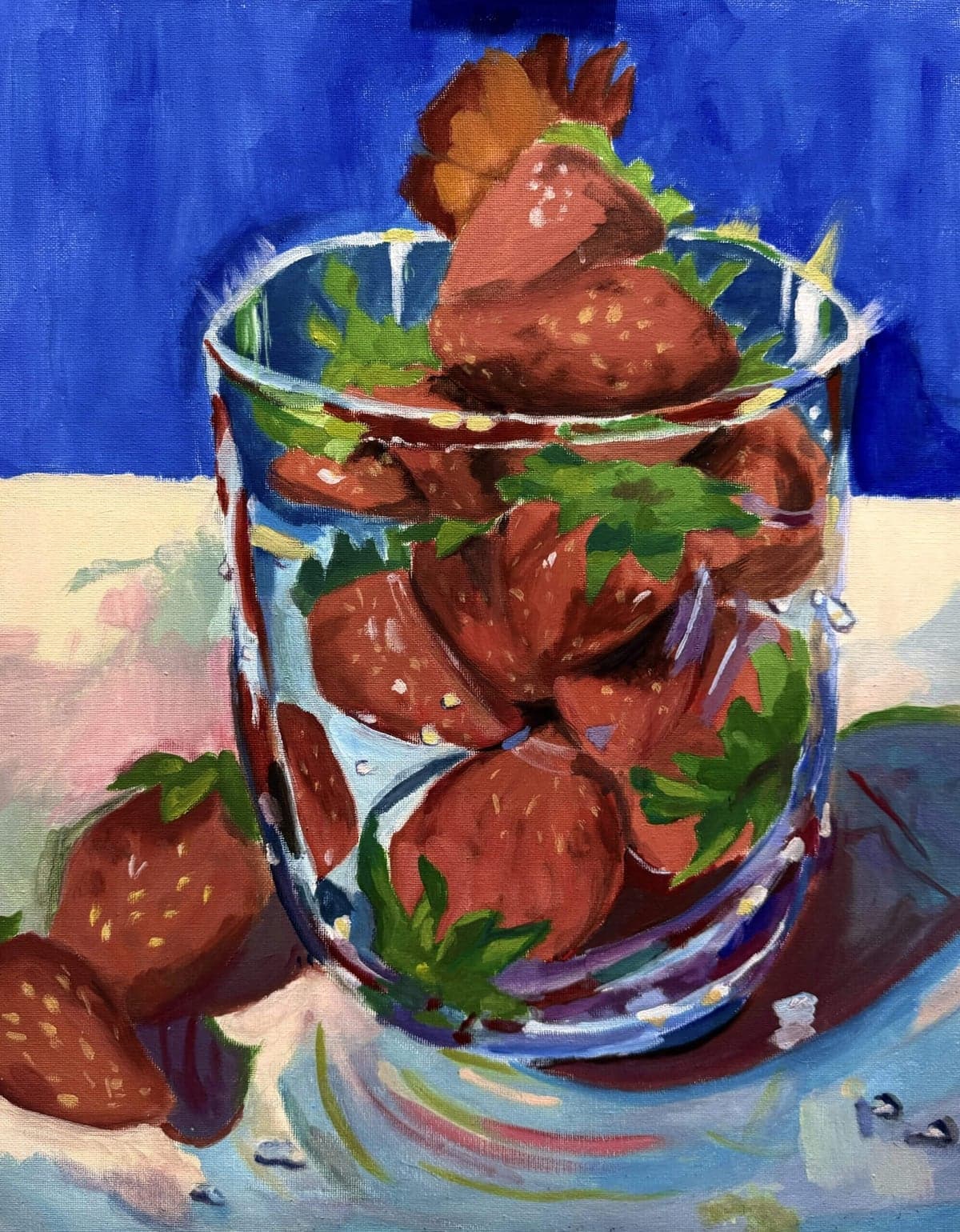
Mixed media art combines drawing, painting, collage, and found materials within a single artwork, producing layered compositions that no single medium can achieve alone. At Art by Ancourage, mixed media classes teach students to blend techniques confidently, building creative problem-solving skills alongside technical proficiency. Classes run weekly at Bishan and Woodlands studios in small groups of 3–6, with all materials provided.
As the founder of Art by Ancourage and a graduate of LASALLE College of the Arts and Goldsmiths, University of London, I have taught mixed media across age groups for over a decade. Mixed media is where students discover their personal artistic voice — because there are no rigid rules about what materials can go together, learners develop the confidence to experiment and make creative decisions independently.
What Is Mixed Media Art?
Mixed media art is any artwork that incorporates more than one medium or material in its creation. Rather than working exclusively with pencil, paint, or collage, a mixed media artist combines these elements — and often adds unconventional materials like fabric, wire, sand, or newspaper — into a single unified piece.
Examples of mixed media art include:
- Collage with painted backgrounds: Layering cut paper, photographs, or printed text over acrylic or watercolour washes
- Textured assemblage: Attaching three-dimensional objects — buttons, string, shells, leaves — to a canvas surface
- Transfer and print techniques: Combining image transfers with hand-drawn elements and paint
- Layered compositions: Building depth through alternating layers of different materials, such as tissue paper, ink, and pastel
The approach has deep roots in art history. Artists from Georges Braque's papier collé to Robert Rauschenberg's combines demonstrated that mixing materials opens creative possibilities that traditional single-medium work cannot. Today, mixed media is a core component of contemporary art education worldwide, and the National Arts Council of Singapore recognises the value of multi-disciplinary art practice in developing well-rounded creative thinkers.
Book a trial class (from $18) at Bishan or Woodlands to try a hands-on mixed media session with all materials provided and personalised instructor feedback.
Mixed Media Techniques Taught in Singapore
Mixed media classes at Art by Ancourage teach six core methods — collage, assemblage, layering and glazing, texture creation, image transfer and mark-making — which students learn to combine with increasing sophistication over time. At Art by Ancourage mixed media classes, students progress through these core methods:
- Collage: Selecting, cutting, tearing, and arranging paper, fabric, and printed imagery to create compositions. Students learn about visual balance, colour harmony, and the relationship between text and image
- Assemblage: Incorporating three-dimensional found objects — bottle caps, fabric scraps, natural materials — onto a flat or relief surface. This technique develops spatial awareness and teaches students to think beyond two dimensions
- Layering and glazing: Building transparent and opaque layers of paint, ink, and paper to create visual depth. Students learn which materials interact well and how drying times affect results
- Texture creation: Using modelling paste, gesso, sand, and gel mediums to build tactile surfaces before applying colour. This teaches material properties and encourages hands-on experimentation
- Image transfer: Moving printed images onto canvas or paper using gel medium or solvent techniques. Students learn to integrate photographic and digital elements with hand-made marks
- Mark-making: Using unconventional tools — sponges, palette knives, sticks, combs — alongside traditional brushes and pens to create varied textures and patterns
Each technique is introduced progressively, with students first mastering it in isolation before combining it with other methods in more complex artworks.
Mixed Media vs Single-Medium Art Classes
Mixed media classes develop creative flexibility that single-medium classes do not emphasise to the same degree. Both approaches have value, and many students benefit from studying both.
| Feature | Mixed Media Classes | Single-Medium Classes |
|---|---|---|
| Materials used | Multiple: paint, paper, found objects, textiles, ink | One primary medium (e.g. watercolour, charcoal) |
| Creative approach | Experimental, layered, open-ended | Focused, technique-driven |
| Skill development | Breadth across materials and problem-solving | Depth in one specific medium |
| Best for | Experimenters, portfolio diversity, creative confidence | Mastering a specific technique |
| Typical output | Layered, textured, multi-material artworks | Works showcasing mastery of one medium |
Students interested in drawing or painting as standalone disciplines can take dedicated classes for depth, while mixed media classes broaden their creative toolkit. Many students at Art by Ancourage combine both — developing core drawing and painting skills in drawing classes or painting classes while exploring mixed media for creative expression.
Who Mixed Media Classes Are For
Mixed media art suits a wide range of learners because the open-ended nature of the medium allows personalisation at every skill level.
- Complete beginners: The "anything goes" approach reduces the intimidation many beginners feel. There is no single right way to use the materials, which encourages experimentation from the first session
- Children (ages 3–8): Young learners in Crafty Corner and Mini Masters naturally gravitate toward mixed media because they enjoy touching, tearing, gluing, and combining — the tactile engagement builds fine motor skills while keeping them creatively absorbed
- Teens building portfolios: DSA Visual Arts applicants benefit from including mixed media pieces in their portfolios to demonstrate versatility and creative thinking. Schools like SOTA value students who can work across materials
- Adults seeking creative outlets: Adult learners who have not made art since school often find mixed media liberating — the emphasis on exploration over perfection removes performance anxiety
- Experienced artists: Students with strong drawing or painting foundations use mixed media to push creative boundaries and develop a distinctive personal style
Mixed media classes at Art by Ancourage are open to all ages and skill levels — book a trial class (from $18) at Bishan or Woodlands to experience a hands-on session with personalised instructor guidance.
Materials Used in Mixed Media Art
Mixed media sessions at Art by Ancourage draw on seven material families — papers, paints, drawing materials, adhesives and mediums, found objects, textiles and tools. At Art by Ancourage, all materials are provided, so students can experiment freely without worrying about cost or sourcing supplies.
Materials commonly used in mixed media classes include:
- Papers: Watercolour paper, tissue paper, newspaper, cardstock, patterned paper, tracing paper
- Paints: Acrylic (versatile and fast-drying), watercolour (for transparent washes), gouache (for opaque layering)
- Drawing materials: Graphite, charcoal, oil pastels, chalk pastels, coloured pencils, ink
- Adhesives and mediums: PVA glue, gel medium (doubles as adhesive and varnish), modelling paste, gesso
- Found objects: Buttons, fabric scraps, string, yarn, beads, dried leaves, shells, wire
- Textiles: Felt, lace, burlap, ribbon, cotton fabric
- Tools: Palette knives, brayers, sponges, stencils, stamps, scissors, craft knives
Part of the learning process is understanding which materials work well together and which combinations create problems — for example, learning that oil pastel resists watercolour (a useful technique) or that heavy objects need stronger adhesive than paper. These practical discoveries build genuine material knowledge that transfers across all art disciplines.
Benefits of Mixed Media Art Education
Mixed media art develops a combination of cognitive, creative, and motor skills that complement other forms of learning. The National Art Education Association maintains a public index of arts-education studies and findings for parents who want to read the underlying evidence. In our own classes, the skills that mixed media builds fastest are the ones below.
- Creative problem-solving: When combining different materials, students constantly make decisions about what works. There is no formula — each choice affects the next, developing iterative thinking
- Material literacy: Working with diverse materials builds understanding of physical properties — weight, texture, opacity, flexibility — knowledge that applies to design, craft, and even science
- Fine motor development: Cutting, tearing, gluing, layering, and manipulating small objects develop hand-eye coordination and dexterity, particularly valuable for younger children
- Self-expression and confidence: The open-ended nature of mixed media means every student's work is genuinely unique. There is no "wrong" result, which builds creative confidence
- Visual composition: Arranging disparate elements into a cohesive artwork teaches design principles — balance, contrast, rhythm, unity — in a hands-on, intuitive way
- Resilience and adaptability: Mixed media often involves happy accidents. A spilled wash or unexpected texture becomes part of the artwork, teaching students to adapt rather than restart
These benefits make mixed media particularly valuable in holistic education. For parents comparing enrichment options, the art classes cost guide provides a detailed breakdown of what structured art education costs in Singapore.
Art by Ancourage Mixed Media Programme
The mixed media programme at Art by Ancourage is structured to meet students at their current level and progress them through increasingly sophisticated techniques and projects.
Programme Pathway
- Crafty Corner (ages 3–5): Introduction to mixed media through sensory exploration — tearing, pasting, stamping, and simple collage. Young children discover materials through guided play
- Mini Masters (ages 6–8): More structured mixed media projects combining drawing, painting, and collage. Students begin learning about composition and colour relationships
- Explorative Art (ages 9–99+): Creative discovery across drawing, painting, and mixed media. Students experiment with new materials each term while developing personal creative direction
- Professional Fine Art (ages 9–99+): Technical mixed media training with emphasis on composition, material mastery, and portfolio-quality work. Students develop a cohesive body of work
- DSA Portfolio (Primary 4–6): Strategic mixed media work designed to demonstrate versatility and creative thinking for DSA Visual Arts applications
Class Structure
Each weekly session runs for 2 hours in groups of 3–6 students. The small class size ensures every student receives individual feedback on technique, composition, and creative choices. Sessions follow a structured format:
- Introduction: The instructor demonstrates the session's technique or introduces a new material, showing examples and explaining key principles
- Guided practice: Students work on their projects with real-time feedback. The instructor moves between students, offering personalised guidance
- Review and reflection: Students discuss their work, share discoveries, and plan next steps. The instructor provides written progress notes for parents
Locations
Mixed media classes run at both Bishan (152 Bishan St 11, near Bishan MRT) and Woodlands (Vista Point, near Woodlands South MRT). The same curriculum and teaching quality apply at both studios. See the pricing page for packages, inclusions and class times.
Compared to casual creative activities like art jamming, structured mixed media classes build transferable skills through progressive instruction. For a focused creative experience without ongoing commitment, art workshops are also available as standalone sessions.
Common Questions About Mixed Media Art Classes in Singapore
Do I need drawing or painting skills before starting mixed media?
No prior drawing or painting skills are required. Mixed media classes at Art by Ancourage are designed for all levels, and the LASALLE-trained instructor adjusts guidance to match each student's experience. Beginners learn foundational techniques alongside mixed media methods, building skills progressively within each session in small groups of 3-6.
What age groups can join mixed media classes at Art by Ancourage?
Mixed media art classes are available from age 3 through adults and seniors. Young children aged 3-5 start in Crafty Corner with sensory-focused projects, children aged 6-8 progress through Mini Masters, and older students and adults work on more technically demanding compositions in the Explorative or Professional Fine Art programmes at Bishan and Woodlands.
Are all materials provided or do students need to bring their own?
All materials are included at Art by Ancourage — students do not need to purchase or bring any supplies. The studio provides paints, papers, found objects, adhesives, drawing materials, gel mediums, and all specialised tools for every mixed media session. This allows students to experiment freely with diverse materials without worrying about cost.
How does mixed media help with DSA art portfolio preparation?
DSA Visual Arts portfolios benefit from demonstrating versatility across mediums. Mixed media pieces show admissions panels that a student can think creatively, combine materials with intention, and work beyond a single technique — qualities that schools like SOTA actively look for.
Can adults with no art background take mixed media classes?
Absolutely. Many adult students at Art by Ancourage have not made art since school. Mixed media is particularly welcoming for returning learners because the experimental approach reduces pressure to produce "perfect" technical results. The focus is on creative exploration and personal expression.
How is mixed media different from art workshops?
Mixed media classes run weekly and follow a progressive curriculum where skills build over time. Art workshops are standalone two-hour sessions covering a specific technique or project. Both include all materials, but regular classes provide deeper skill development through continuity and personalised feedback.
Related: Where to learn drawing · Where to learn painting · Oil Painting Guide · Watercolour Classes Guide · Art jamming versus structured classes · DSA Portfolio Guide · Creative art workshops · a guide to How to Plan an Art Birthday Party · Art Classes for Seniors guide