
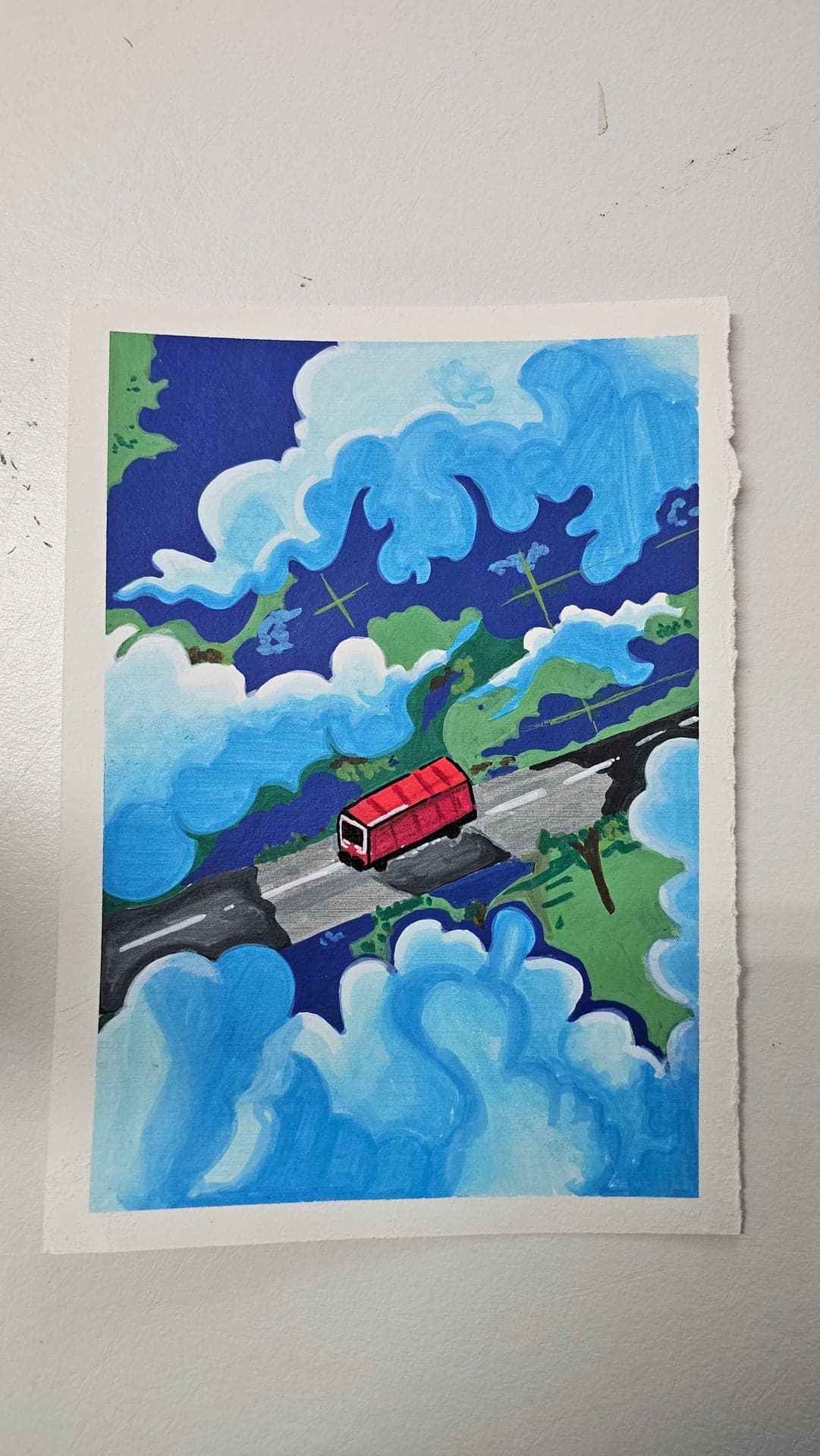
Acrylic is the medium Art by Ancourage starts beginners on: it dries in minutes, cleans up with water, works on any surface, and lets you paint over mistakes — which is what makes it a workable starting point for learning colour mixing, layering, blending, and impasto techniques. At Art by Ancourage's acrylic painting classes in Bishan and Woodlands, beginners through advanced painters learn these techniques in structured sessions. Whether you want to paint your first canvas or develop a portfolio of exhibition-ready work, acrylic provides a forgiving and flexible foundation for learning.
As a LASALLE College of the Arts and Goldsmiths, University of London trained instructor at Art by Ancourage, I recommend acrylic as the ideal starting medium for most painting students. Its quick drying time means you can build up layers, correct mistakes, and complete a satisfying piece within a single session — something that keeps beginners motivated from day one. Research from the World Health Organization confirms that regular arts participation reduces stress and improves emotional regulation, and acrylic painting is one of the most accessible ways to experience these benefits. Singapore's emphasis on creative thinking — students ranked first globally in the OECD PISA 2022 assessment — reflects a cultural recognition that creative pursuits have value beyond the purely aesthetic.
Why Acrylic Is the Best Medium for Beginners
Acrylic paint is the most forgiving painting medium available, making it the recommended starting point for anyone new to painting.
First sold to artists in 1947 as a solvent-based paint, and in the water-based form used today from the mid-1950s, acrylic paint spread rapidly through art education. That was not accidental. Acrylic offers practical advantages that remove many frustrations beginners face with other painting mediums:
- Fast drying time: Acrylic dries in minutes, allowing you to build multiple layers in a single session. You see progress quickly, which keeps motivation high
- Water-based cleanup: Brushes, palettes, and hands wash clean with water alone — no solvents, no chemical fumes, no mess
- Works on any surface: Canvas, paper, wood, fabric, cardboard — acrylic adheres to almost anything, giving you creative freedom from the start
- Easy error correction: Made a mistake? Wait a few minutes for the layer to dry, then paint directly over it. Unlike watercolour, you can always go back and fix what does not work
- Versatile texture: Acrylic can be thinned with water for transparent washes (like watercolour) or applied thickly for textured impasto (like oil). One medium, many effects
- Colour stability: Acrylic colours shift only slightly when drying, unlike oil paints that take days to cure and watercolours that lighten dramatically as they dry
These qualities mean that beginners spend their class time learning to paint — not wrestling with materials. For a detailed comparison of all painting mediums, read the painting classes guide for adults.
Acrylic vs Watercolour vs Oil: Choosing Your Medium
Each painting medium has distinct strengths, but acrylic offers the best combination of versatility, forgiveness, and accessibility for new painters. This comparison helps you decide which medium aligns with your goals.
| Factor | Acrylic | Watercolour | Oil |
|---|---|---|---|
| Drying time | Minutes | Minutes | Hours workable; days to weeks between layers |
| Beginner-friendliness | High — most forgiving | Moderate — hard to correct | Moderate — needs technique |
| Error correction | Easy — paint over when dry | Limited — light to dark only | Easy while wet; scrape and repaint |
| Cleanup | Water only | Water only | Solvents or brush soap |
| Colour vibrancy | Bold, opaque | Translucent, luminous | Richest depth |
| Texture range | Thin washes to thick impasto | Transparent washes only | Smooth glazes to heavy impasto |
| Surface options | Almost anything | Paper only | Canvas or board |
| Best for | Beginners, bold work, mixed media | Landscapes, botanicals | Portraits, realism, fine art |
| Material cost | Affordable | Moderate | Higher |
If you are unsure which medium suits you best, Art by Ancourage's Explorative Art Classes let you experiment across all three mediums before committing to one. Many students begin with acrylic, then branch into watercolour or oil painting once they have built foundational confidence.
Acrylic Painting Techniques Taught
Acrylic painting instruction at Art by Ancourage follows a progressive curriculum — colour mixing, brushwork and mark-making, layering, blending, impasto, wash techniques, composition and design, and palette-knife work — where each technique builds on the last, ensuring students develop strong fundamentals before advancing.
- Colour mixing: Understanding the colour wheel, warm vs cool tones, and mixing accurate hues from a limited palette. Acrylic mixes cleanly and teaches colour theory faster than any other medium because you see results immediately
- Brushwork and mark-making: Learning to control different brush shapes — flat, round, filbert, fan — for distinct effects. Proper brush technique separates structured learning from guesswork
- Layering and building up: Using acrylic's fast drying time to build opaque or semi-transparent layers that create depth, dimension, and visual interest in a painting
- Blending: Working wet-on-wet for smooth transitions or dry-brushing for textured gradients. Students learn both approaches and when to apply each
- Impasto: Applying thick paint with a brush or palette knife to create visible, three-dimensional texture on the canvas surface. Impasto work adds energy and physical presence to a painting
- Wash techniques: Thinning acrylic with water to create transparent, watercolour-like effects for backgrounds, skies, and atmospheric layers
- Composition and design: Planning a painting before picking up the brush — focal point placement, colour harmony, tonal contrast, and visual balance
- Palette knife work: Using a palette knife instead of (or alongside) brushes for bold, textured applications that produce striking abstract and landscape effects
Students in the Professional Fine Art programme cover these techniques systematically with increasing complexity. Those in Explorative Art Classes learn acrylic techniques as part of a broader creative curriculum that spans multiple mediums.
What to Expect in an Acrylic Painting Class
A typical acrylic painting session at Art by Ancourage runs 2 hours for students aged 9 and above (Crafty Corner sessions are 1 hour and Mini Masters 1.5 hours) and balances instructor-led demonstration with hands-on practice and personalised critique.
- Set-up and materials (10-15 min): Easels, palettes, water pots and canvases are laid out, and the instructor checks that each student has the colours and brushes the session's exercise needs
- Technique demonstration (15-20 min): The instructor demonstrates the session's focus — perhaps colour mixing for landscape skies, blending techniques for portraits, or impasto application — explaining the principles behind each step
- Guided practice (60-75 min): Students work on their own painting or exercise while the instructor circulates between easels, correcting technique in real time, suggesting improvements, and helping each student apply the demonstrated skills
- Review and feedback (10-15 min): Each student's work is discussed: what succeeds, what to develop next, and what the following session will build upon. This structured feedback loop is what separates classes from self-guided practice
- Clean-up and pack-down (10-15 min): Acrylic has to come off brushes and palettes before it cures, so students wash and rack their own tools and store work to dry — part of the studio discipline the classes teach
The stages flex with the exercise: a colour-mixing week gives more time to the demonstration, a long canvas week gives it to guided practice. The five stages fill the 2-hour session for students aged 9 and above; Crafty Corner (1 hour) and Mini Masters (1.5 hours) run the same shape on a shorter clock.
Classes run in small groups of 3-6 students, ensuring every painter receives meaningful individual attention. Both Bishan and Woodlands studios are fully equipped with easels, acrylic paints, brushes, palettes, canvases, and aprons — you bring nothing but yourself.
Who Acrylic Painting Classes Are For
Acrylic painting classes at Art by Ancourage welcome students of all ages and experience levels, from children building their first creative skills to adults picking up a brush for the first time.
- Complete beginners: No prior painting or drawing experience is needed. Beginners start with foundational exercises — colour mixing, simple still life, basic composition — and progress at their own pace with instructor guidance
- Children and teens (ages 3-18): Acrylic is the primary painting medium in Crafty Corner (ages 3-5), Mini Masters (ages 6-8), and the broader explorative and professional programmes. The children's programmes use AP-certified non-toxic student acrylics, which are water-based and easy for young hands to work with
- Working adults seeking stress relief: A 2019 WHO scoping review of 900+ publications found that arts participation reduces mental distress, depression and anxiety, and a 2016 study of 39 adults found 45 minutes of art-making lowered cortisol in 75% of participants. Weekly painting classes offer a structured, screen-free creative outlet
- Hobbyists building a new skill: Adults who want to move beyond casual art jamming into real technique development. Acrylic's quick feedback loop — paint, assess, adjust — accelerates learning
- Portfolio builders: Students preparing DSA art portfolios or applying to art institutions. Acrylic painting demonstrates colour competence and compositional skill, both essential for strong portfolios
- Seniors and retirees: Acrylic's simplicity makes it especially popular among older adults. The medium requires no solvents, produces no fumes, and delivers satisfying results from the very first session
For a broader overview of adult programme options, see the adult art classes beginner guide.
Benefits of Learning Acrylic Painting
Regular acrylic painting practice delivers measurable cognitive, emotional, and creative benefits backed by research.
- Stress reduction: The WHO's 2019 report on arts and health, reviewing over 900 publications, found that art-making reduces mental distress, depression and anxiety; separate research on 39 adults measured a fall in cortisol after 45 minutes of art-making. The focused, hands-on nature of painting induces a flow state that interrupts ruminative thinking
- Improved focus and concentration: Painting demands sustained attention — observing a subject, mixing colours accurately, controlling brush movements. These are trainable skills that transfer to work and study
- Creative problem-solving: Every painting presents decisions — what colour goes where, how to create depth, when to stop. Making these choices builds the same creative thinking that Singapore's education system now prioritises in the national curriculum
- Fine motor development: Brush control, palette knife handling, and detail work strengthen hand-eye coordination and fine motor precision, especially valuable for children and older adults
- Self-expression and confidence: Completing a painting you are proud of builds genuine creative confidence. Students who started saying "I can't draw" regularly produce work that surprises them within their first month
- Cognitive health in older adults: A Mayo Clinic study published in the journal Neurology found that engaging in artistic activities in midlife and beyond was associated with a 73 percent lower risk of developing mild cognitive impairment
These benefits compound over time with consistent practice. Weekly classes at Art by Ancourage provide the structure and accountability that make the difference between occasional dabbling and genuine progress.
Materials and Supplies
Art by Ancourage provides all acrylic painting materials — paints, brushes, canvases, palettes, palette knives, and aprons — so you focus entirely on learning without purchasing supplies.
- Paints: Artist-grade acrylic paints for teen and adult students, and AP-certified non-toxic student acrylics for the children's programmes. Students start with a limited palette (titanium white, a warm yellow and a warm red — cadmium hues in the children's sets — ultramarine blue, burnt umber, carbon black) that teaches effective colour mixing before introducing additional hues
- Brushes: A full selection of flat, round, filbert, and fan brushes in various sizes, plus palette knives for texture and mixing work
- Surfaces: Pre-stretched canvases and canvas boards in various sizes suited to each project stage. Paper pads are available for wash exercises and quick studies
- Mediums: Acrylic mediums including gloss and matte medium, retarder (to slow drying for extended blending), and texture paste for impasto effects
- Studio equipment: Adjustable easels, water containers, palette trays, mixing surfaces, and drying areas for storing work between sessions
For students who want to practise at home between classes, the instructor recommends a starter kit tailored to your current level and budget. A basic home acrylic painting setup starts from around $40-60 for student-grade materials — significantly more affordable than oil painting supplies. See how much art classes cost for a full pricing overview.
Art by Ancourage Acrylic Painting Programmes
Acrylic painting is taught across multiple programmes at Art by Ancourage — each designed for different age groups and goals — all running at Bishan and Woodlands in small groups of 3-6.
- Explorative Art (ages 9-99+): A broad creative programme where acrylic is the primary painting medium. Students explore acrylic alongside drawing, mixed media, and other forms. Ideal for beginners who want creative discovery
- Professional Fine Art (ages 9-99+): A structured curriculum where acrylic painting is a core component. Students develop technical proficiency through still life, portraiture, landscape, and abstract work. Suitable for serious learners and portfolio preparation
- Acrylic Painting Classes: Focused acrylic instruction for students who want to specialise in this medium. Progressive curriculum from colour mixing basics through to advanced layering and compositional techniques
- Mini Masters (ages 6-8): Young learners explore acrylic painting through playful, age-appropriate projects that build foundational colour understanding and brush skills
- Crafty Corner (ages 3-5): The youngest artists experiment with acrylic alongside other materials in a sensory-rich, guided creative environment
- Art Workshops: Standalone acrylic painting workshops for those who want to try a single session before committing to a regular programme
Art by Ancourage is led by Angie, who holds a BA (Fine Arts) studied at LASALLE College of the Arts and awarded by Goldsmiths, University of London. Sessions run weekly at both locations — view studio details and directions at Bishan and Woodlands. For full programme pricing, visit the pricing page.
Acrylic Painting Projects and Subjects
Students at Art by Ancourage work on real painting projects — still life, landscapes, portraiture, abstract and expressive work, and floral or botanical subjects, not paint-by-number exercises — developing a portfolio of original work matched to each student's interests and stage.
- Still life: The classic starting point. Painting arranged objects teaches observation, colour mixing, light and shadow, and spatial relationships. Students progress from simple forms (fruit, bottles) to complex arrangements with varied textures and reflections
- Landscapes: Urban Singapore scenes, garden settings, and imagined vistas. Landscape painting develops skills in atmospheric perspective, colour temperature, and composing depth on a flat surface
- Portraiture: Capturing likeness and expression in acrylic. Students learn facial proportion, skin tone mixing, and how to render light on form. Portrait work develops observation skills unlike any other subject
- Abstract and expressive work: Not every painting needs to represent something. Abstract projects teach colour relationships, composition, rhythm, and mark-making — skills that strengthen all other painting work
- Floral and botanical: A perennially popular subject in Singapore. Painting flowers develops sensitivity to colour gradation, organic form, and detailed observation
The instructor tailors project selection to each student's interests and developmental stage. Students keep every finished painting they create in class.
Getting Started with Acrylic Painting
The best way to start acrylic painting is with a guided trial session where you experience the medium firsthand and discuss your goals with a qualified instructor.
Many adults hesitate to try painting because they believe they need natural talent or prior drawing ability. Neither is true. Acrylic painting is a learnable skill, and the medium's forgiving nature means you can experiment freely without fear of ruining your work. Students regularly tell us they are surprised by what they produce in their very first session — not because of hidden talent, but because structured guidance and good materials make an immediate difference.
Art by Ancourage offers Art trial classes from $18 per session at both Bishan and Woodlands. All materials are provided. The trial gives you a full class experience — technique demonstration, guided practice, and personalised feedback — so you can decide with confidence whether to continue. Book a trial class (from $18) to begin your acrylic painting journey. For more painting and technique guides, explore our Art learning hub.
Common Questions About Acrylic Painting Classes
Do I need any experience before taking acrylic painting classes?
No prior painting or drawing experience is required. Acrylic is the recommended starting medium for complete beginners precisely because it is the most forgiving. The instructor assesses your current level in the first session and tailors guidance to your needs, building technique progressively from the foundations. Many of our students had never held a paintbrush before their first class.
How long does it take to see real improvement?
Most students notice meaningful improvement within four to six sessions of weekly classes. Acrylic's fast drying time allows you to work through more exercises per session than oil or watercolour, which accelerates learning. Within three months of consistent attendance, students typically develop confident colour mixing, basic composition skills, and the ability to complete a painting independently. Progress depends on practice and engagement, but the small class sizes (3-6 students) at Art by Ancourage ensure you receive enough personalised feedback to improve steadily.
What is the difference between acrylic painting classes and art jamming?
Art jamming provides a canvas, paints, and freedom to paint without instruction — it is a recreational activity. Acrylic painting classes at Art by Ancourage provide structured technique instruction, a progressive curriculum, and personalised feedback from a LASALLE-trained instructor. You learn transferable skills that improve with each session. Read the full comparison in the art jamming vs art classes guide.
How much do acrylic painting classes cost?
Acrylic painting class pricing at Art by Ancourage includes all materials — paints, canvases, brushes, mediums, and aprons. Art trial classes are from $18 per session, at both Bishan and Woodlands studios. For full programme pricing details, visit the pricing page or read the complete art classes cost guide.
Can I switch to oil painting or watercolour later?
Absolutely. Many students begin with acrylic to build core painting skills — colour mixing, brush control, composition — and later branch into oil painting or watercolour once they have a solid foundation. The skills you develop with acrylic transfer directly to other mediums, making the transition smoother. Art by Ancourage's Explorative Art Classes also let you experiment across mediums within the same programme.
Are acrylic painting classes suitable for children?
Yes. The children's programmes use AP-certified non-toxic, water-based student acrylics that are easy for young hands to work with. Children as young as three use acrylic in Crafty Corner, while ages 6-8 develop painting skills in Mini Masters. Older children and teens join the explorative or professional programmes alongside adult students, benefiting from the same small group sizes and personalised instruction. For more on children's art education, see the FAQ on Art trial classes.
Related: Painting Classes Guide · Adult Art Classes Guide · Oil Painting Classes Guide · Drawing Classes Guide · Art Jamming vs Art Classes · Art Classes Cost Guide · Planning a Couples Painting Date Night guide