
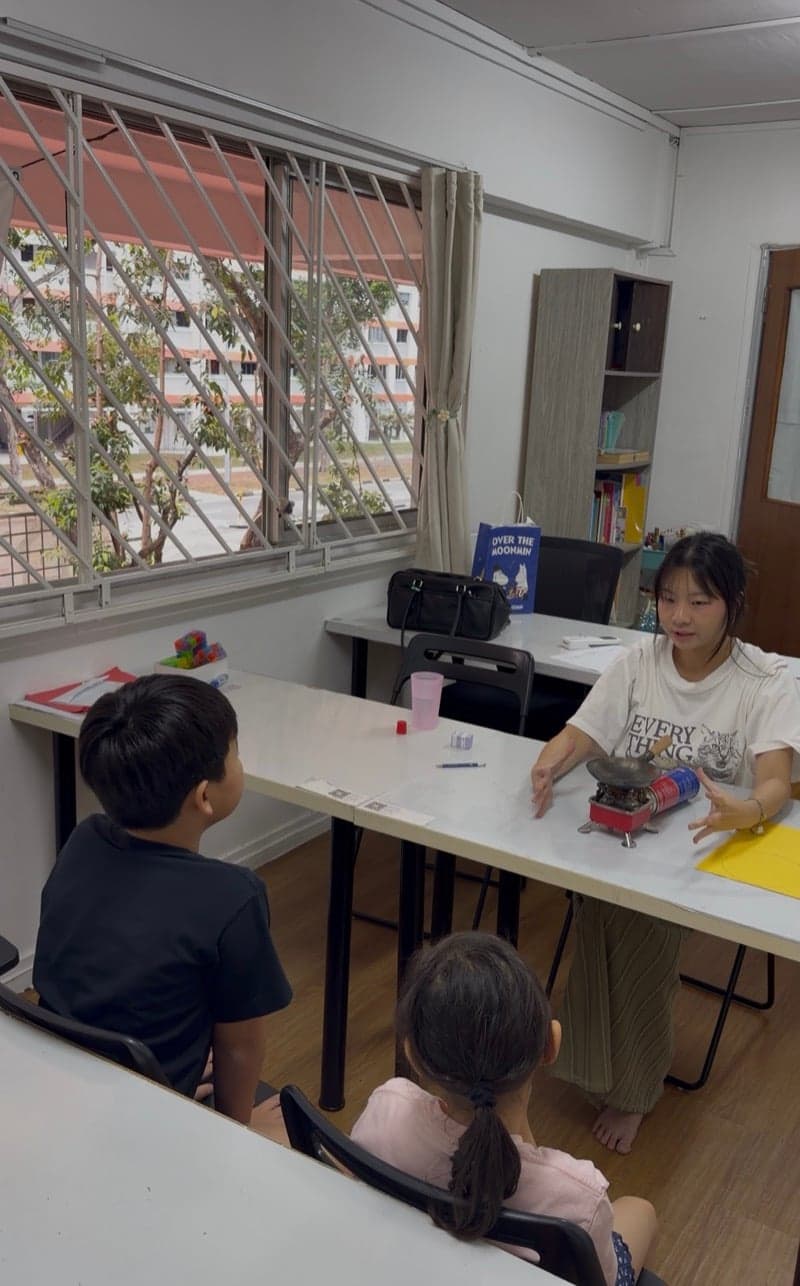
The leap from PSLE mathematics to Secondary 1 mathematics catches many Singapore families off guard — not because the content is impossibly difficult, but because the way students are expected to think changes fundamentally. PSLE rewards students who can follow procedures accurately: apply the right heuristic, draw the right model, calculate the right answer. Sec 1 rewards students who understand why those procedures work and can adapt them to unfamiliar situations. This guide from Ancourage Academy breaks down every major change so parents know exactly what to expect and how to support the transition.
As Founder and Academic Director at Ancourage Academy, Min Hui has helped hundreds of P6 graduates navigate this transition over 11 years of teaching. If your child is about to enter or has just started Secondary 1, this article covers the full syllabus landscape, the Full SBB G-level structure, the biggest adjustment areas, and practical strategies for a confident start.
How Sec 1 Maths Differs from PSLE Maths
PSLE already assesses reasoning and strategy selection, but most primary questions can be solved by applying a taught method to a recognisable problem type. Sec 1 removes that scaffolding: students must construct the solution themselves and work with symbols instead of bars, and that shift from model drawing to algebra is the defining challenge of this transition.
In primary school, a student who memorises the steps for "before and after" problems, ratio tables, and bar models can score well without deeply understanding the underlying relationships. That approach breaks down in secondary school because the problems are no longer templated. Sec 1 questions require students to translate word problems into algebraic expressions, manipulate symbols they have never encountered, and justify answers with logical reasoning rather than diagrams.
Consider a simple comparison. At PSLE, a ratio problem might ask: "Tom and Jerry share $120 in the ratio 3 : 5. How much does Jerry receive?" The trained primary student draws two bars, labels them 3 units and 5 units, divides 120 by 8, and multiplies by 5. At Sec 1, the same concept appears as: "Given that x : y = 3 : 5 and x + y = 120, find y." The logic is identical, but the language is abstract, the working requires algebraic manipulation, and the student must construct the equation from scratch. For a deeper look at this specific bridge, see the model drawing to algebra guide.
Three structural differences define the PSLE-to-Sec-1 gap:
- Concrete to abstract: Numbers and diagrams give way to letters, variables, and symbolic expressions
- Procedural to conceptual: Students must understand principles, not just follow steps
- Single-method to multi-method: Problems often have several valid approaches, and students must choose the most efficient one
Ancourage Academy's Sec 1 Mathematics programme is designed specifically for this transition — book a trial class (usually $18) at Bishan or Woodlands for a diagnostic assessment in small groups of 3-6.
Complete Sec 1 Maths Topic Overview
The Sec 1 mathematics syllabus spans five major topic areas (across MOE's three content strands), each building on a PSLE foundation but extending it in ways that require new reasoning skills. The table below maps every Sec 1 topic to what students already know from primary school and what is genuinely new.
| Topic area | Key Sec 1 Topics | PSLE Foundation | What Is New |
|---|---|---|---|
| Numbers and Algebra | Integers, rational numbers, algebraic expressions, linear equations | Whole numbers, fractions, decimals, model drawing | Negative numbers, use of variables, equation solving, simplifying expressions |
| Ratio and Proportion | Ratios of rational numbers, simplest form, ratio word problems (direct and inverse proportion arrive in Sec 2) | Ratio, equivalent ratios, proportion word problems | Algebraic representation of proportional relationships, unitary method extended to formulae |
| Rate and Speed | Rate, speed, average speed | None — Speed was removed from PSLE in 2026 and is first taught at Sec 1 | Speed, distance and time from first principles, conversion between units in algebraic contexts, multi-leg journeys, interpretation of distance-time graphs |
| Geometry and Measurement | Angles, triangles, quadrilaterals, polygons, perimeter, area, volume | Properties of shapes, area and perimeter formulae, volume of cuboids | Angle proofs with reasoning, properties of parallel lines, construction with compasses, volume of prisms |
| Statistics | Data collection, tables, bar graphs, pictograms, line graphs, pie charts | Bar graphs, pie charts, average | Interpreting statistical diagrams and spotting how they can mislead; mean, median and mode, dot diagrams and stem-and-leaf diagrams arrive in Sec 2 |
The algebra strand is the largest and most consequential because it underpins almost every other strand. Proportion problems are expressed algebraically. Speed problems require setting up and solving equations. Even geometry introduces algebraic reasoning through angle relationships (e.g., "angles on a straight line sum to 180°, find x"). Students who struggle with algebra in Term 1 often find that difficulty radiating into every other topic by mid-year. Ancourage Academy's secondary mathematics tuition across Sec 1 to Sec 4 and its secondary maths strategies guide cover study approaches for each strand.
G1, G2, and G3 Mathematics in Sec 1
Under Full Subject-Based Banding (Full SBB), Sec 1 students take mathematics at G1, G2, or G3 level — and each level covers different depths of content, not just the same content at different speeds.
Here is how the three levels compare for mathematics specifically:
| Aspect | G1 Mathematics | G2 Mathematics | G3 Mathematics |
|---|---|---|---|
| Content depth | Practical numeracy, basic algebra, real-world applications | Full algebra foundations, moderate geometry, data handling | Complete syllabus including proofs, constructions, and extended problem solving |
| PSLE AL placement | Typically AL 7–8 for Mathematics | Typically AL 6 for Mathematics (an AL 5 student may choose G2 or G3) | AL 5 or better for Mathematics — and all subjects at G3 for students posted via Posting Group 3 |
| Leads to (upper sec) | G1 SEC Mathematics | G2 SEC Mathematics (with possible G3 progression) | G3 SEC E-Maths, eligibility for A-Maths |
| A-Maths eligibility | Not available | Available at G2 from Sec 3 as G2 Additional Mathematics (SEC syllabus K232), where the school offers it | Available from Sec 3 |
Students admitted through Posting Group 3 take most subjects at G3 from the start of Secondary 1, while a Posting Group 2 student who scored AL 5 or better in PSLE Mathematics is eligible to offer Mathematics at G3. Movement runs both ways — a student who struggles at G3 may offer Mathematics at a less demanding level, based on their performance and the school's holistic assessment. Subject-level flexibility is a core feature of Full SBB. For a full explanation of how levels work, see the Full SBB parent guide, and for a detailed G2 vs G3 comparison, read the G2 vs G3 subject levels guide.
Ancourage Academy offers Sec 1 Mathematics at both G3 and G2 levels in small groups of 3–6 — book a trial class (usually $18) for a diagnostic assessment that determines which level best matches your child's current ability.
Algebra: The Biggest Adjustment
Algebra is not just another maths topic — it is an entirely new language for expressing mathematical ideas, and it is the single area where the largest number of Sec 1 students stumble. The difficulty is not that algebra is inherently harder than primary maths; it is that algebra requires a type of thinking that six years of primary school did not develop.
Three specific hurdles trip students up in the first term:
- "What does x mean?" In primary school, every quantity is a specific number. In algebra, x represents an unknown value or a variable — a concept that feels slippery and abstract to students used to concrete calculations. The question "If 2x + 3 = 11, what is x?" asks students to work backwards from a result, a reversal of the "compute forward" approach they have practised for years.
- Setting up equations from word problems: Translating "John is 4 years older than Mary. Their combined age is 28" into j = m + 4 and j + m = 28 requires identifying the unknowns, naming them, and expressing relationships as equations. Many students can solve the equation once it is given but cannot construct it themselves. This translation skill is what the model-to-algebra bridge is designed to build.
- Simplifying and manipulating expressions: Collecting like terms (3x + 2x = 5x), expanding brackets (2(x + 3) = 2x + 6), and factorising are procedural skills that require comfort with symbolic manipulation. Students who rush through these basics without genuine understanding find themselves lost when equations become multi-step.
The good news is that algebra follows clear, learnable rules. Unlike PSLE heuristics, which sometimes feel like tricks, algebraic methods are systematic. Once a student grasps the principles — variables represent unknowns, equations balance, and operations apply to both sides — the entire framework clicks into place. The first six weeks of Sec 1 determine whether that click happens smoothly or becomes a prolonged struggle.
What PSLE Does (and Does Not) Prepare Students For
PSLE builds a genuine mathematical foundation — arithmetic fluency, number sense, spatial awareness — but it does not develop the abstract and logical reasoning that secondary mathematics demands. Parents who assume a strong PSLE score guarantees a smooth Sec 1 experience are often surprised when their child stumbles.
What transfers well from PSLE to Sec 1:
- Number sense: Comfort with fractions, decimals, and percentages carries directly into Sec 1 arithmetic with integers and rational numbers
- Word problem analysis: The habit of reading carefully, identifying what is given and what is asked, transfers to algebraic problem solving
- Spatial reasoning: Familiarity with shapes, symmetry, and measurement supports Sec 1 geometry
- Data reading: Experience with bar graphs and pie charts provides a foundation for Sec 1 statistics
What does not transfer:
- Model drawing → algebraic setup: Bar models are visual; algebra is symbolic. The translation must be taught explicitly — it does not happen automatically. See the bridging guide for exercises parents can use at home.
- Arithmetic fluency → algebraic manipulation: Knowing that 12 × 8 = 96 does not help when the question asks to simplify 3a(2a + 4b). The operations look similar but the reasoning is different.
- Concrete geometry → geometric proof: Primary students can identify that a triangle has three sides. Sec 1 students must prove that two angles are equal by citing properties of parallel lines. The shift from identification to justification is significant.
- Following procedures → constructing solutions: PSLE rewards students who recognise problem types and apply the matching method. Sec 1 rewards students who can analyse an unfamiliar problem and build a solution path from principles.
The primary-to-secondary transition guide covers these shifts across all subjects, not just mathematics.
Early Warning Signs in Term 1
Most parents discover their child is struggling with Sec 1 maths only when the first Weighted Assessment results arrive — but the warning signs appear much earlier, often within the first three weeks. Catching them early makes the difference between a quick course correction and a compounding problem that affects the entire year.
Watch for these signals:
- Homework takes more than one hour per session: Sec 1 maths homework should take 30–45 minutes for most students. If your child consistently needs more than an hour, the concepts are not clicking in class. The issue is usually comprehension, not speed.
- Avoiding maths or leaving it for last: Students who once enjoyed primary maths but now procrastinate or rush through maths homework are signalling discomfort. Avoidance is a coping mechanism for confusion, not laziness.
- Scores below 50% on early tests or quizzes: A score below 50% in the first class test usually indicates a foundational gap, not a bad day. In Sec 1 maths, early topics build on each other — integers feed into algebra, algebra feeds into equations, equations feed into word problems. Falling behind in week 3 means falling further behind by week 8.
- "I don't know where to start": This phrase, said about word problems or multi-step questions, reveals that the student cannot translate problem statements into mathematical setups. It is the hallmark of the model-to-algebra gap.
- Correct answers with no working: A student who gets answers right through mental arithmetic or guessing but cannot show algebraic working will struggle as problems become more complex. Sec 1 exams award method marks, and the habit of writing structured working must be established early.
If your child shows two or more of these signs, consider a diagnostic assessment sooner rather than later. Early intervention in the first term prevents the cascading effect that makes Sec 2 and Sec 3 progressively harder. The lower secondary tuition guide explains what to look for in effective academic support.
How Parents Can Support the Sec 1 Transition
The most helpful thing a parent can do during the PSLE-to-Sec-1 transition is shift from drilling content to building mathematical understanding — and know when professional support is worth the investment.
Practical strategies that work:
- Do not over-drill worksheets: Repetitive practice of the same problem type builds speed but not understanding. If your child can solve 3x + 5 = 20 but cannot explain what they are doing or why, more worksheets will not help. Instead, ask them to explain their reasoning aloud — "teach me how you solved this" is one of the most powerful learning exercises.
- Focus on understanding, not just answers: When reviewing homework, ask "why did you do that step?" rather than just checking whether the answer is correct. Students who can articulate their reasoning retain concepts far longer than those who memorise procedures.
- Normalise the difficulty: Many students feel isolated when they struggle with Sec 1 maths, assuming everyone else finds it easy. Reassure your child that the PSLE-to-Sec-1 shift is objectively challenging — it is a known transition point, not a personal failing.
- Create a consistent maths routine: Short daily practice (20–30 minutes) is more effective than long weekend sessions. Consistency builds familiarity with algebraic notation, which reduces the cognitive load over time.
- Know when to seek tuition: If early warning signs persist beyond the first three to four weeks, professional support can prevent the gap from widening. Effective Sec 1 maths tuition is not about more drilling — it is about diagnosing the specific conceptual gaps and addressing them in an environment where the student can ask questions without peer pressure. Ancourage Academy's Sec 1 programme at Bishan and Woodlands provides exactly this in groups of 3–6.
What to avoid:
- Comparing with PSLE scores: "You scored AL 2 for PSLE — why are you struggling now?" This comparison is unhelpful because PSLE and Sec 1 test different skills. A strong PSLE score reflects primary-level mastery, not secondary-level readiness.
- Teaching your own methods: Parents who learned maths decades ago may use approaches that conflict with what the school teaches. This creates confusion rather than clarity. If you want to help at home, follow the school's textbook methods.
- Waiting until mid-year to act: By mid-year, a struggling student has accumulated half a year of gaps that must be remediated before new content can stick. Early action — ideally within the first month — is far more effective and less stressful.
Getting the right support early makes the PSLE-to-Sec-1 maths jump far smoother — for guides spanning every primary and secondary level, explore our full Mathematics guides hub.
Common Questions About Sec 1 Maths
What topics are covered in Secondary 1 maths?
MOE organises the Sec 1 maths syllabus into three content strands — Number and Algebra, Geometry and Measurement, and Statistics and Probability — which this guide breaks into five topic areas: numbers and algebra (integers, rational numbers, algebraic expressions, linear equations), ratio and proportion, rate and speed, geometry and measurement (angles, triangles, polygons, perimeter, area, volume of prisms), and statistics (data handling and simple data representations — mean, median and mode arrive in Sec 2). Algebra is the largest and most consequential strand because it underpins problem solving across every other topic area. The full topic breakdown is mapped in the Sec 1 Mathematics course page.
Why does Secondary 1 maths feel so difficult?
Sec 1 maths feels harder than PSLE not because the content is dramatically more complex, but because the type of thinking required changes. PSLE mathematics is largely procedural — students learn specific methods for specific problem types. Sec 1 mathematics is conceptual and abstract — students must understand principles, work with variables, and construct solutions rather than following templates. The shift from bar models to algebra is the most visible example of this change. Students who scored well at PSLE through careful memorisation of heuristics often struggle more than those who developed deeper understanding, because the memorisation approach does not transfer to algebraic reasoning.
What actually helps after failing Sec 1 maths exams?
The most effective response to a failed Sec 1 maths exam is a targeted diagnostic — not more worksheets. Identify which specific topics or skills are weak (algebraic setup, integer operations, geometric reasoning) and address those gaps directly. Generic revision that covers everything equally wastes time because the student re-practises what they already know while skimming over what they do not. Small-group tuition with a tutor who can watch the student's working in real time and intervene at the point of confusion is more effective than self-study or large-class tuition for students who have already fallen behind. Book a trial class (usually $18) for a diagnostic that pinpoints exactly where the gaps are.
Is the Sec 1 maths syllabus much harder than PSLE?
The Sec 1 syllabus is structurally different rather than simply harder. PSLE rewards applying learned procedures to familiar problem types, while Sec 1 requires understanding abstract concepts and applying them to unfamiliar contexts. Some students who found PSLE maths straightforward struggle at Sec 1, while others who found PSLE challenging thrive when algebraic methods replace model drawing. The difficulty depends heavily on how well the student adapts to abstract reasoning, not just their raw mathematical ability. Parents can support this adaptation with the strategies outlined in the primary-to-secondary transition guide.
Does Ancourage Academy offer Sec 1 maths tuition?
Yes. Ancourage Academy offers Sec 1 Mathematics at G3 and G2 levels at both Bishan and Woodlands centres. Classes are kept to 3–6 students so tutors can monitor each student's working and address conceptual gaps in real time. The programme focuses on building algebraic understanding rather than rote drilling, with a diagnostic assessment at entry to identify each student's starting point. Book a trial class (usually $18) to see if the approach suits your child.
Related: Model Drawing to Algebra Bridge · P6 to Sec 1 Transition Guide · Lower Secondary Tuition Guide · Secondary maths study methods · G2 vs G3 Subject Levels · P6 Maths 2026