
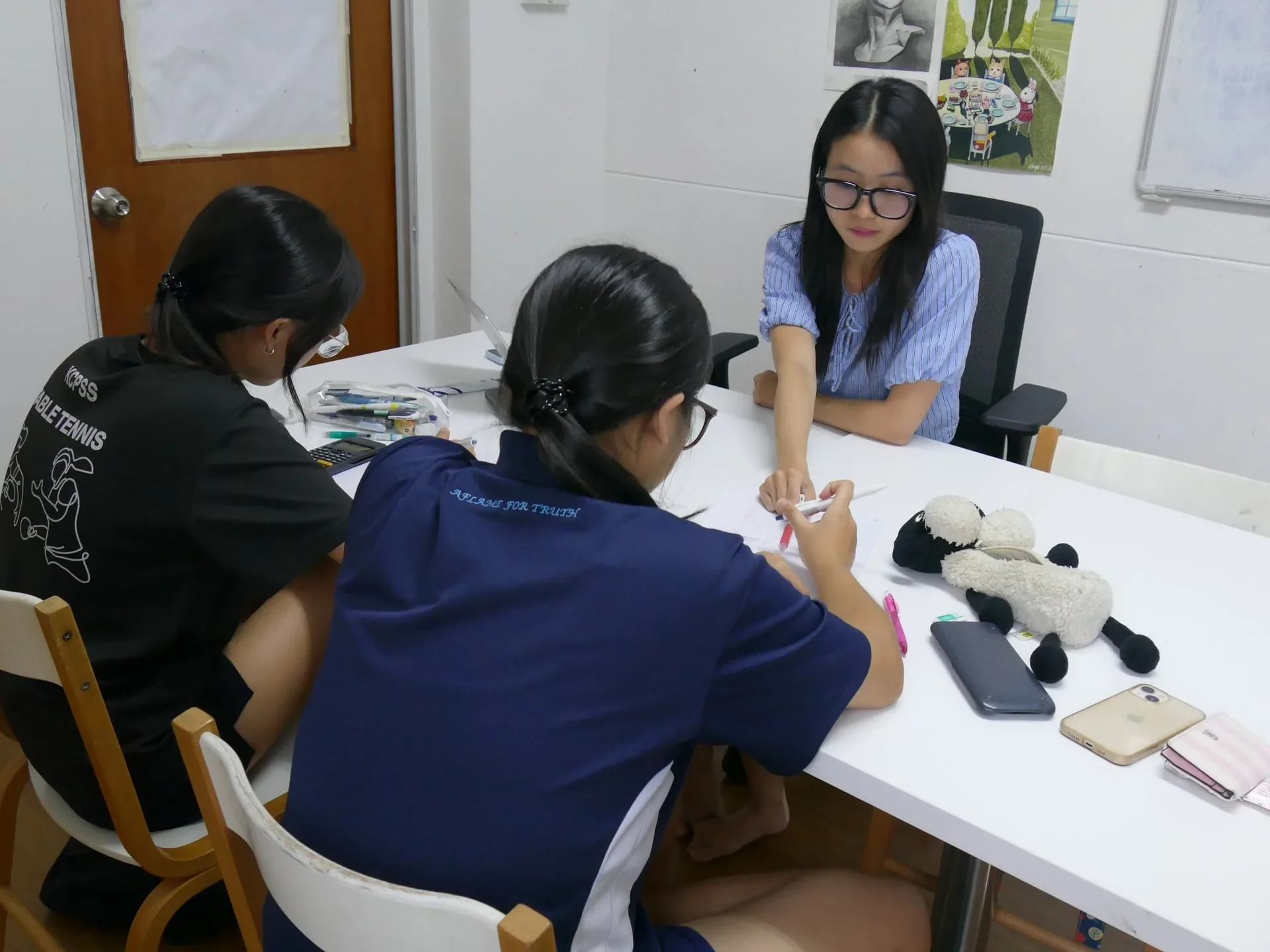
Mathematics and Science typically provide the highest return on tuition investment because they build cumulatively and benefit most from expert guidance, while subjects like English require consistent long-term development that tuition alone cannot shortcut. Understanding which subjects benefit from tuition — something Ancourage Academy helps parents assess through diagnostic trials — enables strategic decisions about where to invest time and money.
With over a decade of teaching experience and after speaking with hundreds of families at Ancourage Academy, I have observed clear patterns in which subjects respond best to tuition intervention. With Singapore families spending over S$1.8 billion on private tuition annually (2023 data, MOE parliamentary reply), making strategic choices about which subjects to invest in matters more than ever. This guide shares those insights to help you invest wisely. For the cost side of that decision, our breakdown of 2026 tuition rates shows what parents typically pay by subject and level.
Why Enrol in Tuition for Some Subjects and Not Others?
Different subjects have different learning curves and respond differently to tuition intervention — investing in the wrong subject at the wrong time wastes resources.
Factors affecting tuition effectiveness:
- Cumulative vs. exposure-based: Math builds on previous knowledge; English depends on years of exposure
- Technique-teachable: Some subjects have clear methods that can be taught; others require intuition
- Gap identification: Specific gaps are easier to target than general weakness
- Practice responsiveness: Some subjects improve rapidly with practice; others require time
Ancourage Academy offers tuition in the highest-ROI subjects — Primary and Secondary Mathematics, English, Science, and Chinese — in small groups of 3–6. Book a trial class (usually $18) for a diagnostic assessment of your child's specific gaps.
Tier 1: High ROI Subjects
Mathematics at every level, and Secondary Science, are the Tier 1 subjects where tuition pays back fastest, because both are cumulative and technique-driven so gaps can be pinpointed and closed.
Mathematics (All Levels)
Mathematics consistently delivers the highest tuition ROI because it is cumulative, technique-driven, and gaps can be precisely identified and addressed.
- Why high ROI: Each topic builds on previous ones; fixing one gap unlocks multiple improvements
- Response time: Improvement often visible within 1-2 months with targeted work
- Ideal for tuition when: Specific topics cause consistent problems; foundation gaps exist
- Tuition approach: Diagnostic assessment → targeted gap-filling → systematic practice
Our Primary and Secondary Mathematics programmes use diagnostic approaches to identify and address specific gaps. View our full Sec 1-4 Mathematics tuition offering for details. For secondary students deciding between E-Maths and A-Maths, targeted tuition can clarify which pathway suits them best.
One critical inflection point parents should note is the introduction of Additional Mathematics in Secondary 3. A-Maths covers entirely new territory — calculus, trigonometric identities, and proofs — that students have never encountered before. Many students who coasted comfortably through lower secondary maths find themselves suddenly struggling because A-Maths demands a different kind of mathematical thinking. Starting tuition at or before the beginning of Sec 3, rather than waiting until results slip, gives students time to build fluency with these unfamiliar concepts. Read our E-Maths vs A-Maths guide for a detailed comparison of what each syllabus covers and how to prepare.
Science (Secondary Level)
Secondary Science responds well to tuition because it combines conceptual understanding with exam techniques that can be systematically taught.
- Why high ROI: Scientific concepts have clear explanations; exam formats have learnable patterns
- Response time: 2-3 months for noticeable improvement
- Ideal for tuition when: Concepts are misunderstood; exam technique is weak
- Tuition approach: Concept clarification → worked examples → exam practice with feedback
A major decision that affects tuition needs is the choice between Combined Science and Pure Science at the end of Secondary 2. Students taking Pure Physics, Pure Chemistry, or Pure Biology face deeper content and more demanding papers — these subjects benefit significantly from tuition because the jump in rigour from lower secondary is substantial. Combined Science students cover less content per discipline, but still need strong conceptual grounding to score well. If your child is deciding between these pathways, consider that Pure Science tuition is a longer and more intensive commitment. Our Combined vs Pure Science comparison explains the syllabus differences and what each pathway demands. Explore all our secondary Science tuition options to see how we support both pathways.
Tier 2: Moderate ROI Subjects
Chinese/Mother Tongue and A-Level H2 subjects are the Tier 2 subjects: tuition lifts exam technique, writing structure and specific concepts, but the underlying language ability or independent study effort still has to come from the student and the home.
Chinese/Mother Tongue
Chinese tuition provides moderate ROI — it helps with exam techniques and writing structure, but fundamental language ability requires long-term exposure that tuition cannot replace.
- Why moderate ROI: Language proficiency develops over years; tuition can refine but not replace exposure
- Response time: 3-6 months for technique improvement; longer for genuine proficiency
- Ideal for tuition when: Composition structure is weak; oral skills need coaching
- Tuition approach: Targeted skill work (composition, comprehension) + home language exposure
For families considering Higher Chinese, tuition can help bridge the gap between standard and advanced curriculum requirements. This is particularly relevant for students at SAP schools, where Higher Chinese is a core part of the curriculum and expectations are high. These students often come from bilingual homes but still find the Higher Chinese composition and comprehension papers challenging because the vocabulary and expression demands go well beyond everyday conversational fluency. Targeted tuition that focuses on essay structure, idiomatic usage, and exam-specific techniques can make a meaningful difference for students who are committed to scoring well in HCL. Our Higher Chinese guide covers what the syllabus involves and how to prepare effectively.
A-Level H2 Subjects
H2 subject tuition provides value when students need expert guidance beyond school resources, but effectiveness depends heavily on student effort.
- Why moderate ROI: Content is deep; tuition supplements school but cannot replace independent learning
- Response time: Variable; depends on student foundation and effort
- Ideal for tuition when: Falling behind despite school attendance; specific topic confusion
- Tuition approach: Targeted concept clarification + exam technique coaching
Our JC programmes focus on H2 Mathematics and other demanding subjects where expert guidance makes the most difference.
Tier 3: Lower ROI Subjects (Context-Dependent)
English and the Humanities are the Tier 3 subjects with the lowest immediate tuition ROI: English proficiency is built by years of reading and exposure, and Humanities content can largely be self-studied — tuition can teach composition, comprehension and essay technique, not shortcut that.
English
English tuition has lower immediate ROI because language ability develops through years of reading and exposure — tuition can teach techniques but not quickly build underlying proficiency.
- Why lower ROI: Vocabulary, expression, and comprehension skills take years to develop
- Response time: 6-12 months for meaningful improvement; exam techniques faster
- Ideal for tuition when: Specific components (oral, composition structure) need coaching
- Better investment: Extensive reading + targeted tuition for specific weaknesses
Humanities (Social Studies, History, Geography)
Humanities tuition helps with essay technique and content organisation, but the subjects are largely teachable through self-study with quality resources.
- Why context-dependent: Content can be self-studied; technique coaching is the main value-add
- Response time: 2-3 months for technique improvement
- Ideal for tuition when: Essay structure and argument development are weak
- Alternative: Self-study with quality notes + occasional consultation
When NOT to Invest in Tuition
Tuition is not always the answer — sometimes the issue is effort, time management, or over-scheduling rather than subject understanding.
Skip tuition when:
- Child is already excelling: No need to "maintain" good grades with tuition
- Problem is effort, not understanding: More tuition will not fix motivation issues
- Schedule is already packed: Adding tuition may cause burnout
- Peer pressure driven: "Everyone else has tuition" is not a valid reason
- No specific goal: General tuition without targeted objectives wastes resources
Strategic Tuition Investment by Level
By level, the priority subject for tuition is Mathematics at Primary (Chinese if the home is English-speaking), Mathematics — E-Math and A-Math from Sec 3 — plus Science for pure-science students at Secondary, and H2 Mathematics or any content subject where the student is falling behind at JC.
Primary School
- Priority: Mathematics (if struggling with problem sums or foundations)
- Consider: Chinese (if from English-speaking home)
- Lower priority: English (invest in reading instead); Science (manageable with school + home support)
Secondary School
- Priority: Mathematics (E-Math and A-Math from the SEAB O-Level syllabus, transitioning to the SEC examination from 2027); Science (if pursuing pure sciences)
- Consider: Chinese (for HCL students); English (if composition is consistently weak)
- Lower priority: Humanities (manageable through self-study)
Junior College
- Priority: H2 Mathematics (if foundations weak); Content subjects where falling behind
- Consider: GP (if essay skills are weak)
- Lower priority: H1 subjects (usually manageable with school resources)
A practical question parents often ask is when to start tuition at each level. Based on patterns we have seen, P3 is often a sensible starting point for Science tuition because that is when the subject is formally introduced and early misconceptions can be caught before they compound. For PSLE preparation, P5 is typically when families begin a more focused push — starting earlier than P6 avoids the stress of last-minute cramming. At secondary level, Sec 3 is the critical year because O-Level / SEC subject combinations are locked in, A-Maths begins, and the content difficulty jumps significantly. Waiting until Sec 4 often means playing catch-up under exam pressure. Our guide on when to start tuition provides detailed advice for each stage.
Maximising Tuition ROI
Getting the most from tuition investment requires clear goals, active participation, and home support — tuition alone is not a magic solution.
- Set specific goals: "Improve Mathematics" is vague; "Master ratio and percentage" is actionable
- Communicate with tutor: Share school feedback and specific struggles
- Ensure homework completion: Tuition without practice is wasted money
- Review progress regularly: If no improvement in 3 months, reassess the approach
- Avoid over-tuition: One or two subjects maximum; quality over quantity
Common Questions About Tuition Subject Selection
Should I enrol my child in tuition for all subjects?
No. Over-tuition leads to burnout without proportional improvement. Focus on 1-2 subjects where your child genuinely struggles and tuition can make a targeted difference. Use saved time and money for rest or other development.
My child is weak in English. Will tuition help?
Tuition can help with specific components like composition structure and comprehension techniques. However, underlying English ability comes from extensive reading and language exposure over years. Combine targeted tuition with a strong home reading programme for best results.
Is Primary Science tuition worth it?
For most children, Primary Science is manageable with school teaching and home support. Tuition may help if your child struggles with application questions or needs guidance for PSLE-specific techniques. Assess actual need rather than preemptively enrolling.
How do I know if tuition is working?
Look for: improved confidence in the subject, better understanding (not just grades), ability to do homework more independently, and gradual grade improvement over 2-3 months. If none of these occur, the tuition approach may need adjustment.
Book a trial class (usually $18) to assess your child's needs, or visit our pricing page for programme details. You can also WhatsApp us if you have any questions.
Related: Is Tuition Worth It? · Primary Maths Mistakes · Managing Exam Stress