P5 Maths Tuition
Ancourage Academy · Primary · P5
Content reviewed: Sep 2026
P5 Maths tuition at Ancourage Academy in Bishan and Woodlands, Singapore. Primary 5 introduces percentage, rate, and advanced problem-solving heuristics — the building blocks of PSLE Mathematics, while ratio and average follow at P6. In our small classes of 3-6 students, children develop fluency in fractions, decimals, and multi-step word problems through MOE-aligned weekly 1.5-hour lessons. Strong P5 foundations make the difference in the P6 PSLE year.
In person at our Bishan and Woodlands centres.
What Makes Us Different
Our proven teaching methodology combines evidence-based approaches for maximum learning effectiveness
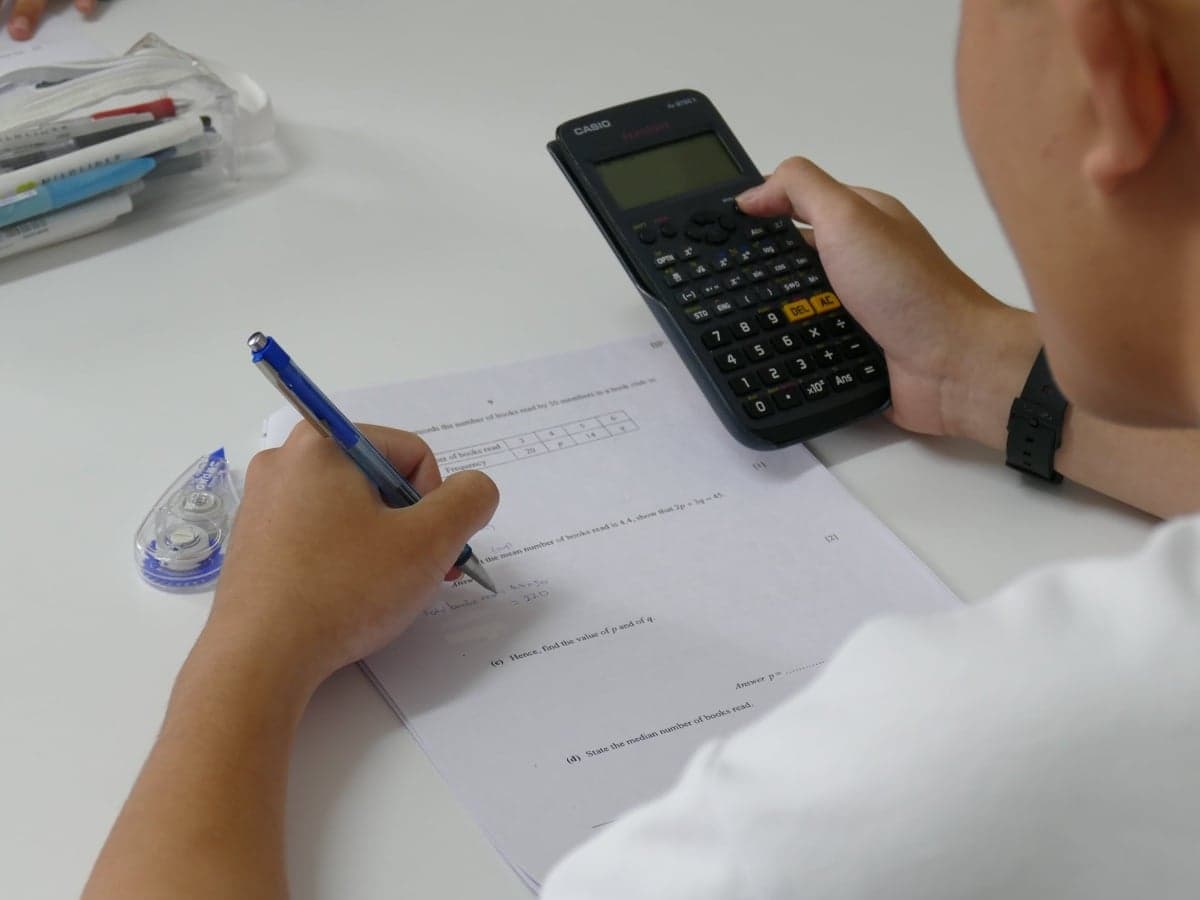
Ebbinghaus Memory Theory
Planned retrieval of problem-solving heuristics and formulae at expanding intervals — weekly topical practices, monthly mixed-topic papers, and term revision cycles — keeping methods accessible so exam performance matches classroom understanding.
Socratic Questioning
Questions that probe mathematical reasoning — 'Why did you choose this heuristic?' and 'What changes if the ratio doubles?' — exposing gaps between procedural fluency and conceptual understanding before they compound.
Bruner's Scaffolding
From fully worked examples to guided practice with prompts to independent problem-solving — tutors systematically fade hints so students develop their own approach to unfamiliar question types.
Key Learning Outcomes
Master Key Concepts
Deep understanding of core topics aligned with MOE syllabus
Critical Thinking
Develop analytical and problem-solving skills
Exam Confidence
Strategic exam techniques and time management
Consistent Results
Improved grades and academic performance
Changes you will likely notice:
- Greater fluency in handling fractions, percentages, and decimals
- Increased accuracy and speed in multi-step calculations
- Stronger confidence in solving higher-order and non-routine problems
Course Structure
Duration
1.5 hours per lesson
Full coverage with interactive learning time
Class Size
3-6 students per class
Close guidance, timely feedback, and ample practice
Materials
All materials provided
No material fees — all worksheets and resources included
Curriculum Overview
- ✓Whole numbers, fractions and decimals: Mastery of operations with large numbers, fractions, and decimals in complex contexts.
- ✓Rate: Understanding rate and applying it to real-life and examination-style problems.
- ✓Percentage applications: Expressing a part of a whole as a percentage, finding a percentage part of a whole, and solving discount, GST and annual-interest problems; percentage increase/decrease follows at P6.
- ✓Geometry: Understanding angles in triangles and quadrilaterals.
- ✓Measurement: Application of area, perimeter, volume, and conversion in challenging problem-solving.
- ✓Data revision: Consolidating P4 data-handling skills — reading tables, line graphs, and pie charts — ready for PSLE application questions.
- ✓Problem-solving heuristics: Model drawing, guess and check, make a supposition, working backwards, before-and-after concept, draw a table, look for pattern, and logical reasoning for non-routine word problems.
Why Is P5 Maths Harder Than P4?
- 1
Rate — relating quantities such as cost, quantity and time, and applying rate to word problems
- 2
Percentage applications — calculating discounts, GST and annual interest in real-world contexts
- 3
Multi-step heuristics — choosing and combining strategies for complex problems
- 4
Speed and accuracy — completing calculations correctly under time pressure
- 5
Explaining working — showing clear, logical steps for full marks
Learning Progression
Builds On
P4 Mathematics with fractions, decimals, and foundational problem-solving
Prepares For
P6 Mathematics with intensive PSLE preparation and advanced heuristics
Key Transition
Percentage and rate dominate P5 mathematics, while ratio and average follow at P6 — mastering these interconnected upper-primary concepts proves essential for PSLE problem-solving.
“Teacher Charmaine is Caleb's favourite teacher. He looks forward to attending her classes every week. When it comes to upper primary, he needs more guidance in solving problem sums — hopefully he can eradicate careless mistakes.”
Parent of Caleb (Upper Primary Mathematics)
“The key to PSLE success isn't last-minute cramming—it's building strong foundations in Primary 4 and 5. Students who master fundamentals early have the confidence to tackle challenging problem sums without panic.”
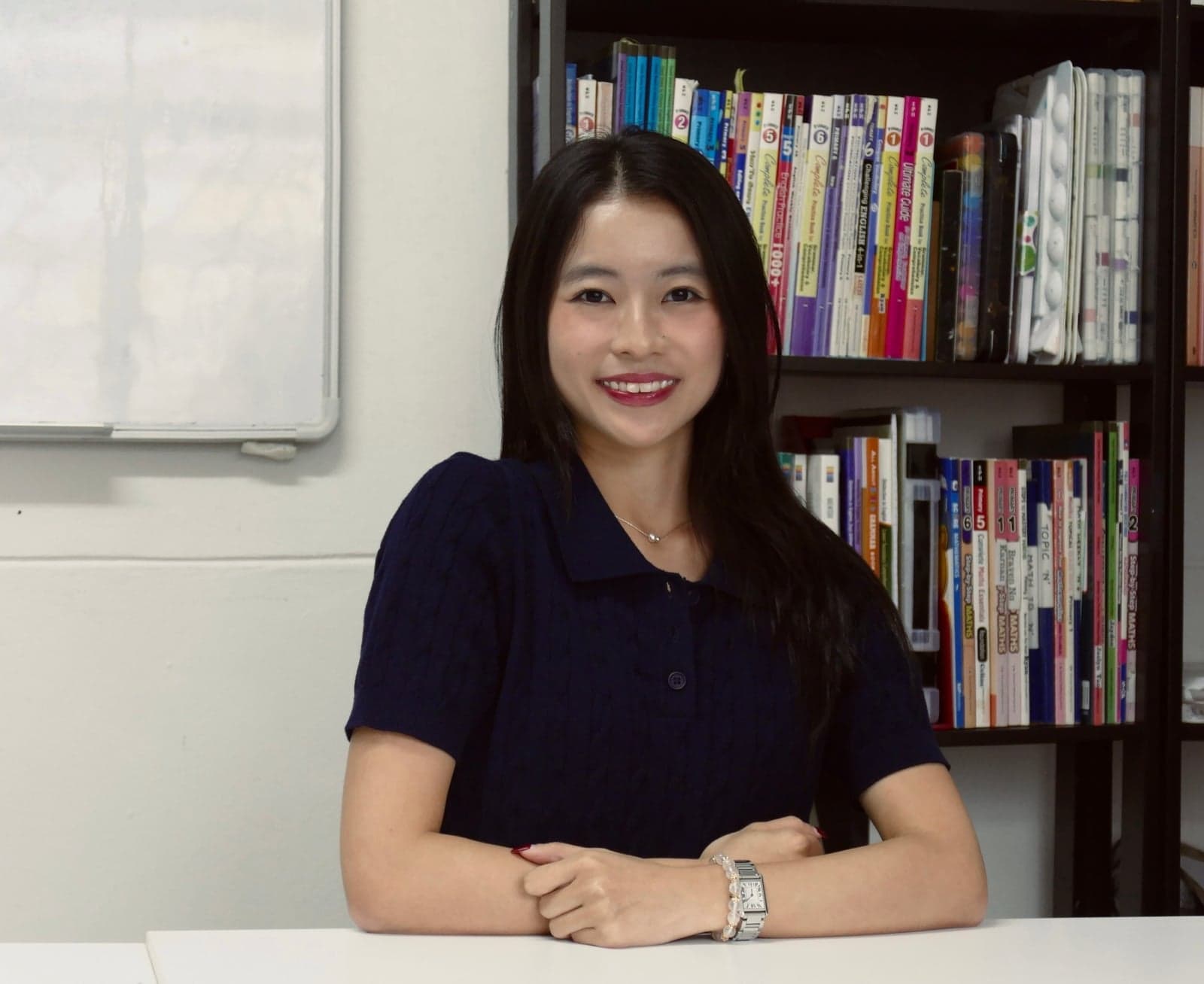
Founder & Academic Director
Related Courses
Explore other courses that complement your learning journey
P5 English
Develop advanced composition and comprehension for PSLE
P5 Science
Build scientific reasoning and application skills
P6 Maths
Final PSLE preparation with intensive heuristics practice
P4 Mathematics
Review P4 foundations for stronger continuity.
P1 Maths
Same subject family: P1.
P2 Maths
Same subject family: P2.
P3 Maths
Same subject family: P3.
P5 Chinese
Recommends this course as a related programme.
Frequently Asked Questions
P5 introduces percentage and rate — concepts that appear in most PSLE word problems; ratio and average then follow at P6. We focus on building strong foundations in these areas while developing advanced heuristics and multi-step problem-solving skills needed for the national examination. Read about common PSLE Maths mistakes.
We teach the connections between percentage, rate, fractions, and decimals, showing students how they represent the same relationships differently. Through systematic practice and real-world applications, students develop intuition for when and how to use each concept.
Key P5 skills include percentage applications (discount, GST, annual interest), rate, advanced geometry, and multi-step problem-solving — with ratio and average introduced the following year in P6. Mastering these prepares students well for the intensive P6 PSLE preparation year. Students taking PSLE Standard Mathematics should aim for strong AL scores, while those on the Foundation Mathematics pathway focus on building solid competency at their level. Read our PSLE Maths tips.
Our Primary 5 Mathematics tuition is available at our Bishan centre (10 min from Bishan MRT, Circle and North-South Lines) and Woodlands centre (5 min from Woodlands South MRT, Thomson-East Coast Line). Students from Ai Tong School, Marymount Convent School, Kuo Chuan Presbyterian Primary in Bishan, and Greenwood Primary, Innova Primary, Woodgrove Primary, Si Ling Primary in Woodlands, attend our classes.
Our small-group classes are capped at 6 students and typically run 3 to 6, so every learner receives close guidance, timely feedback, and ample practice.
Each lesson is 1.5 hours, providing ample time for thorough coverage of topics and interactive learning.
Yes. All lesson materials and worksheets are provided and included in the fees. Students should bring regular stationery and, where applicable, school textbooks/workbooks for reference.
Yes. Our materials and pacing align with the MOE syllabus. External syllabuses (e.g. IGCSE, IB) are available upon request.
Helpful Resources for Parents
In-depth guides on preparation strategies and learning tips
P5-P6 Maths Tuition in Bishan: Upper Primary Guide
P5 and P6 Maths tuition guide for Bishan parents. Covers ratio, percentage, PSLE heuristics, and strategies for Kuo Chuan, Ai Tong, and Catholic High.
Read more →P5-P6 Maths Tuition in Woodlands: Upper Primary Guide
P5-P6 Maths tuition guide for Woodlands — ratio, percentage, PSLE heuristics, and strategies for Riverside, Admiralty, and Woodlands Primary students.
Read more →PSLE Maths Preparation for Bishan Primary Schools
PSLE Mathematics strategies for Bishan students from Kuo Chuan Presbyterian, Ai Tong, and Catholic High. School-specific approaches that work.
Read more →PSLE Math Preparation for Woodlands Primary Schools
Five must-know PSLE maths heuristics — model drawing, guess-and-check, work backwards — plus school-specific patterns for Woodlands P5-P6 students.
Read more →PSLE Maths: Strategies That Help Students Score
PSLE Maths tests application, not memorisation. Technique and time management matter more than content knowledge for most students preparing for the exam.
Read more →PSLE Maths Heuristics: 12 Problem-Solving Methods
MOE's primary Mathematics syllabus prescribes no fixed number of heuristics. Ancourage Academy teaches 12 methods for PSLE problem solving, with worked examples.
Read more →How to Score Well in PSLE: Subject-by-Subject Strategies
Score well in PSLE with subject-specific strategies for English, Maths, Science, and Chinese — target AL band boundaries where small mark gains shift achievement levels.
Read more →PSLE Revision: A Complete Study Guide for All 4 Subjects
Effective PSLE revision requires subject-specific strategies, consistent practice, and targeted review of weak areas across all four subjects in Singapore.
Read more →P6 Maths 2026: Algebra, Ratio & Singapore Syllabus Changes
The 2026 P6 maths syllabus broadens P6 algebra equation-solving beyond the old "simple context" limit, consolidates ratio at P6, moves average from P5, and removes speed from primary entirely.
Read more →Deepen Your Learning
Comprehensive topic guides covering everything in this subject area.
PSLE
Everything parents and students need to know about the Primary School Leaving Examination — from subject-specific strategies to scoring, stress management, and school selection.
Browse guide →Mathematics
Your complete guide to Mathematics education in Singapore — from Primary school foundations through Secondary E-Maths and A-Maths to JC H2 Mathematics and beyond.
Browse guide →Study Tips & Exam Prep
Practical study tips and exam preparation strategies that work — from effective revision techniques and time management to past year paper strategies and exam day tips for Singapore students.
Browse guide →
Ready to Get Started?
Enquire now and experience our proven teaching methodology
💬 Have questions? WhatsApp us anytime — we typically respond within 2 hours
Also from Ancourage: Art classes for kids, teens & adults →