
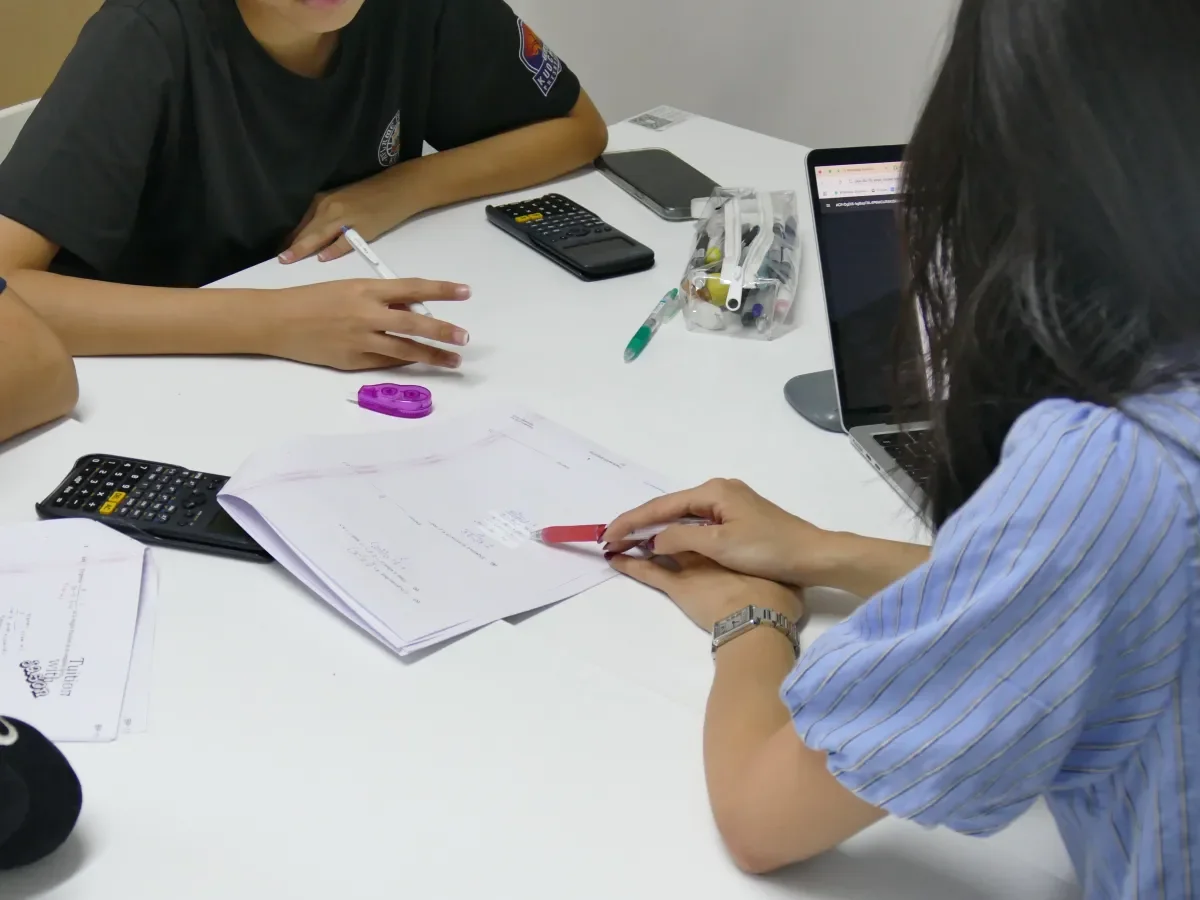
Ancourage Academy in Woodlands provides Primary 1 to Primary 6 (P1-P6) Chinese (Mother Tongue Language) tuition in small groups of 3 to 6 students. For Woodlands families where English is the primary home language, Ancourage Academy builds Chinese proficiency through a structured, confidence-first approach that transforms Chinese from a source of anxiety into a subject children can enjoy.
As a multilingual educator with experience across four languages, Angie has worked with English-speaking families to help their children build Chinese language confidence.
Unlike Bishan, where SAP schools such as Ai Tong and Catholic High create an immersive Chinese environment from Primary 1, most Woodlands primary schools are mainstream schools where Chinese exposure is limited to Mother Tongue Language (MTL) lessons. For children who speak primarily English at home -- a common concern addressed in Ancourage Academy's FAQ on Chinese for English-speaking families -- our P1-P6 Chinese tuition programme plays an especially important role in building the daily exposure needed for genuine proficiency. Without a Chinese-rich school environment to lean on, Woodlands families must be more intentional about creating language practice opportunities outside the classroom.
The English-Speaking Family Challenge
Children from English-speaking homes face a specific disadvantage in Chinese: they receive roughly 5 to 7 hours of Chinese instruction per week at school. Bilingual vocabulary research ties how much of a language a child hears to how well that child uses it. In a study of 5-year-old simultaneous bilinguals in Montreal, roughly 40 to 60% of cumulative language exposure was associated with receptive vocabulary on par with monolingual peers, while greater exposure was required to match them in productive vocabulary (Thordardottir, 2011). That study compared French and English — two closely related languages of equal standing locally — so treat it as an indication rather than a target for Chinese in Singapore. It does show how far school-only input sits below the levels associated with confident, active use. The remaining waking hours are spent in English — at home, with friends, on screens, and in every other subject. This creates a cycle where Chinese feels foreign rather than natural, and each year the gap between school expectations and actual ability widens.
Ancourage Academy's Primary Chinese programme helps English-speaking families build their child's Chinese confidence in small groups of 3–6 at our Woodlands centre — book a trial class (usually $18) for a diagnostic assessment.
In Bishan, SAP schools partially bridge this gap through daily Chinese assemblies, cultural programmes, and peer conversations in Mandarin. Woodlands has no SAP primary schools. While Si Ling Primary School provides structured Chinese language support, it operates as a mainstream English-medium school — its Applied Learning Programme focuses on Environmental Science rather than Chinese immersion. For most Woodlands children, Chinese is something that happens during specific lessons, not a language they hear and use throughout the school day.
This does not mean Woodlands children cannot excel in Chinese. It means they need a different support strategy — one built around consistent, structured exposure rather than relying on environmental immersion that simply does not exist locally.
P1-P2 Chinese: Hanyu Pinyin and Character Foundations
The P1-P2 years establish the phonetic and character foundations that every subsequent level depends on, and gaps formed here compound rapidly by Primary 3. According to the MOE Primary Chinese syllabus, lower primary Chinese covers hanyu pinyin, basic character recognition, stroke order, simple sentence writing, and ting xie (dictation).
Hanyu pinyin is taught intensively in P1 Term 1. Schools move fast — within weeks, students are expected to read pinyin independently and use it as a tool for learning new characters. For children from English-speaking homes, this rapid pace creates an early stumbling block. Common challenges include:
- Confusing similar pinyin sounds: The distinction between u and u with umlaut, or zh/ch/sh and z/c/s, trips up students whose ears are tuned to English phonetics
- Tone accuracy: Mandarin's four tones feel arbitrary to English speakers. Students who cannot hear tonal differences produce flat, monotone pronunciation that loses marks in oral assessments
- Character recognition versus writing: The MOE syllabus distinguishes between characters students must recognise (识字) and those they must write (写字). Many parents focus only on writing, neglecting the larger recognition vocabulary needed for reading comprehension
- Ting xie anxiety: Weekly dictation tests become a source of stress when children lack the daily character exposure that reinforces memory
Ancourage Academy's P1 Chinese programme prioritises pinyin accuracy and character confidence. The P2 Chinese programme builds on this with sentence writing, reading fluency, and structured dictation practice. In small groups of 3 to 6, tutors can identify each student's specific pinyin blind spots and address them before they become entrenched habits.
P3-P4 Chinese: Composition and Comprehension
Primary 3 marks a significant jump in difficulty: students move from writing sentences to writing paragraphs and short compositions, and comprehension shifts from simple recall to inference-based questions. This is the level where many English-speaking children begin to fall behind visibly, because the jump requires active Chinese vocabulary that passive classroom exposure alone does not build.
Key areas that challenge English-dominant students at P3-P4:
- Paragraph writing: Students must organise ideas with a beginning, middle, and end. Children who think in English often produce direct translations that sound unnatural in Chinese
- Reading comprehension: Passages become longer and questions require students to infer meaning, not just locate answers. Limited Chinese reading experience makes these passages feel overwhelming
- Idioms and phrases (cheng yu): Four-character idioms appear in both comprehension and composition. Students without regular Chinese reading exposure have never encountered most of these expressions
- Oral skills development: Questions become more open-ended, requiring students to express opinions in Chinese rather than recite memorised answers
- Dictation complexity: Words become multi-character compounds with more complex stroke patterns, and the pace of new vocabulary introduction accelerates
Ancourage Academy's P3 Chinese programme introduces paragraph writing and idiom usage systematically, while the P4 Chinese programme bridges lower and upper primary demands. Both programmes teach students to think in Chinese rather than translate from English — a critical distinction that separates competent writers from struggling ones.
P5-P6 Chinese: PSLE Preparation
PSLE Chinese carries 200 marks across four components, and understanding the exact weighting of each allows students to prioritise their preparation strategically. The examination format is:
- Paper 1 — Composition Writing (40 marks): Choose one of two composition options — topic-based (命题作文) or picture-based (看图作文)
- Paper 2 — Comprehension and Language Use (90 marks): Vocabulary MCQ, grammar cloze, comprehension passages with open-ended questions
- Oral Communication (50 marks): Reading aloud (20 marks) and video conversation (30 marks)
- Listening Comprehension (20 marks): Audio-based questions testing comprehension of spoken Chinese
For English-speaking families, the most common pattern is strong listening comprehension (because passive understanding develops faster than active production) but weak composition and oral scores. Targeted preparation should focus on building active Chinese output — the ability to write and speak Chinese fluently under timed exam conditions.
Ancourage Academy's P5 Chinese programme builds PSLE-specific skills including composition structure, comprehension answering techniques, and oral confidence. The P6 Chinese programme provides intensive exam preparation with timed practice, composition marking, and oral simulation in small groups where every student speaks during every session.
Oral Communication Skills: The Most Overlooked Component
The oral examination is worth 50 marks (25% of the total PSLE Chinese score), yet most families underinvest in oral preparation — and this is precisely where English-speaking children lose the most marks relative to their potential. Oral is also the component where targeted practice yields the fastest improvement, because speaking confidence builds visibly within weeks of regular practice.
The PSLE oral examination includes two parts:
- Reading aloud (20 marks): Students read a Chinese passage with accurate pronunciation, appropriate pacing, and natural expression. Marks are lost for mispronounced characters, robotic pacing, and incorrect tones
- Video conversation (30 marks): Students watch a short video clip and discuss it with the examiner. This component tests the ability to describe observations, express opinions, provide reasons, and respond to follow-up questions — all in fluent, spontaneous Chinese
The video conversation is where English-speaking children struggle most. Students who lack regular Chinese conversation experience tend to give short, generic answers: "I think it is good" or "I feel happy." Examiners reward specific, detailed responses supported by personal experiences and reasoning. A student who says "I think recycling is important because my family separates recyclables every week and I have seen how much plastic we waste" scores significantly higher than one who says "Recycling is good because it helps the environment."
Building oral confidence requires regular, low-pressure speaking practice — not last-minute cramming. Ancourage Academy's small group format ensures every student speaks multiple times per session, with immediate feedback on pronunciation, fluency, and content depth.
Higher Chinese: Is It Worth Pursuing from Woodlands?
Higher Chinese Language (HCL) offers a meaningful admission advantage to SAP secondary schools, and Woodlands children can take Higher Chinese even without attending a SAP school — they simply need to meet the school's qualifying criteria, typically scoring above 75 in standard Chinese assessments.
Under the current PSLE Achievement Level scoring system, HCL does not provide bonus points that reduce the PSLE Score. Instead, a Distinction, Merit, or Pass in HCL — with a PSLE score of 14 or better — gives a posting advantage to SAP secondary schools when students have the same PSLE Score as other applicants. This tiebreaker mechanism can make a decisive difference when applying to competitive SAP schools like Catholic High Secondary, Nanyang Girls' High, or CHIJ St Nicholas Girls'.
Beyond the posting advantage, taking HCL at PSLE sets up the pathway to O-Level / SEC Higher Chinese at secondary level. Students who achieve D7 or better in O-Level / SEC Higher Chinese are exempted from H1 Mother Tongue at JC, and those with A1-C6 in both English and HCL earn 2 bonus points for Junior College admission.
For Woodlands families considering HCL, the key question is whether the child has genuinely strong Chinese foundations. See Ancourage Academy's FAQ on Higher Chinese for more detail. Taking HCL with weak foundations produces stress without benefit. A student consistently scoring above 80 in standard Chinese with comfortable oral fluency is a good HCL candidate. A student scoring 60-70 should focus on strengthening standard Chinese first. Read the full analysis in the Higher Chinese Singapore guide.
School-Specific Chinese Strategies in Woodlands
Each Woodlands primary school develops different Chinese language strengths through its distinctive programmes, and effective tuition should build on what the school provides rather than duplicate it.
Si Ling Primary School
Si Ling Primary's Applied Learning Programme focuses on Environmental Science (STEM-Sustainability), developing observational and analytical skills through hands-on environmental projects. As a mainstream English-medium school, Si Ling provides standard Mother Tongue Language instruction without the additional Chinese immersion that SAP schools offer.
Strengths: Structured academic environment with strong discipline; students develop good study habits that support Chinese learning; the school's emphasis on environmental science builds analytical thinking that transfers to comprehension tasks.
Gaps to address: Like other mainstream Woodlands schools, Si Ling students from English-speaking homes receive limited Chinese exposure beyond MTL lessons. Students aiming for Higher Chinese should supplement school programmes with structured composition and comprehension training, as the standard MTL allocation alone may not build the active fluency required.
Greenwood Primary School
Greenwood Primary's Applied Learning Programme (ALP) is BLISS — Bilingual Literature Appreciation Student Series — which encourages effective bilingualism through literature. The school also runs the DARE reading programme to promote reading habits across both languages.
Strengths: Literature appreciation develops reading habits and passive vocabulary in both English and Chinese. Students exposed to bilingual literature tend to have broader vocabulary and better comprehension instincts than peers who read only in English.
Gaps to address: Literature appreciation builds passive vocabulary effectively, but students may need more active production practice. The ability to understand a Chinese story does not automatically translate into the ability to write a Chinese composition or speak fluently in an oral exam. Dedicated composition practice and oral training should complement what the school provides.
Fuchun Primary School
Fuchun Primary's ALP is the Future-ready Communicators Programme (FCP), which develops communication skills in both English and Mother Tongue Languages. At P1-P2, the programme includes speech and drama activities that build oral confidence through performance and role-play.
Strengths: Drama-based language learning builds oral confidence naturally — students who perform in Chinese develop pronunciation, expression, and speaking fluency faster than peers who only practise through reading. The integrated approach covering both English and Chinese helps students see connections between their two languages.
Gaps to address: While drama builds oral skills effectively, written composition in Chinese requires dedicated practice beyond what the ALP provides. Students strong in oral but weak in writing need structured composition training that teaches Chinese-specific writing conventions, narrative structure, and formal register (shu mian yu).
Building Chinese Confidence at Home
Parents who do not speak fluent Chinese can still make a significant difference by creating an environment where Chinese feels present and normal rather than limited to homework and tests. The goal is not to teach Chinese directly but to increase the total hours of Chinese exposure each week, closing the gap between what English-speaking children experience and what language development requires.
Practical strategies for English-speaking families:
- Chinese-language television with subtitles: Start with shows the child already enjoys in English, but switch to the Chinese dubbed or subtitled version. Cartoons, cooking shows, and nature documentaries all work. The key is regular exposure, not forced viewing
- Bilingual books: Choose books with Chinese text on one page and English on the facing page. This allows children to check understanding without frustration, building reading confidence gradually
- Daily 10-minute reading practice: Short daily sessions are more effective than long weekend marathons. Keep a stack of age-appropriate Chinese books by the bed for nightly reading
- Chinese for specific activities: Designate certain daily activities as Chinese-only moments — grocery shopping (reading labels), cooking (following Chinese recipes), or board games (describing moves in Chinese)
- Vocabulary apps for drilling: Apps with spaced repetition help with character recognition and recall. Use them as supplements alongside reading, not replacements for genuine language use
- Chinese music and podcasts: Playing Chinese songs or age-appropriate podcasts during car rides or mealtimes creates passive exposure that familiarises children with natural speech patterns and pronunciation
"The families who see the biggest improvement are the ones who make Chinese part of daily life, even just switching cartoons to Mandarin or reading a bilingual book at bedtime," notes Angie, founder of Art by Ancourage and a multilingual educator at Ancourage Academy. "Small daily habits close the exposure gap faster than extra worksheets."
Consistency matters more than intensity. A family that builds in 20 minutes of Chinese exposure daily accumulates over 120 additional hours per year — roughly half a school year's worth of Chinese lessons at the 5 to 7 hours a week that schools timetable.
When to Consider Chinese Tuition
For English-speaking families in Woodlands, Chinese tuition is most effective when started early enough to prevent gaps from compounding — ideally by P2 or P3, not P6 when options become limited.
Warning signs specific to English-speaking families:
- Ting xie scores dropping: Weekly dictation grades declining despite studying suggests the child is memorising characters short-term without building lasting recognition
- Avoiding Chinese homework: If a child completes English and Maths homework willingly but resists Chinese, the issue is usually frustration rather than laziness
- Oral exam anxiety: A child who speaks English confidently but freezes when asked to speak Chinese needs structured oral practice, not just exam tips
- Composition scores below 20/40: This indicates fundamental gaps in vocabulary and sentence structure that home practice alone cannot address efficiently
- Reading avoidance: A child who refuses to read Chinese books lacks the vocabulary foundation that reading builds, creating a downward spiral
Ancourage Academy's trial class (usually $18) at Woodlands includes a diagnostic assessment that identifies specific gaps in your child's Chinese ability. The centre is located at Vista Point, 548 Woodlands Drive 44, a 5-minute walk from Woodlands South MRT (TE3). Parents receive an honest assessment after the trial — including whether tuition is necessary or whether home practice adjustments would be sufficient. You can also WhatsApp us if you have any questions.
Common Questions About Chinese Tuition in Woodlands
Is it too late to start Chinese tuition in P3 or P4?
P3-P4 is the most common and effective starting point for English-speaking families. By P3, the gap between school expectations and actual ability becomes visible. Students who start in P3-P4 have two to three years to build strong foundations before PSLE. Starting in P6 limits improvement because language proficiency develops gradually.
My child speaks no Chinese at home — can tuition still help?
Yes. Ancourage Academy's small group classes provide 1.5 to 2 hours of focused Chinese practice per week that English-only homes do not get elsewhere. Tutors adjust language complexity to the child's level, gradually increasing as confidence grows. Combining tuition with daily home exposure (Chinese shows, bilingual books) compensates effectively.
Should my child try Higher Chinese?
Higher Chinese is worth considering if the child consistently scores above 80 in standard Chinese and speaks comfortably. The SAP school posting advantage (a Pass, Merit or Distinction in HCL together with a PSLE Score of 14 or better) and the pathway to JC Mother Tongue exemption via O-Level / SEC Higher Chinese are meaningful benefits. If basic reading is still a struggle, focus on strengthening standard Chinese first before adding Higher Chinese.
How does Ancourage Academy make Chinese engaging for reluctant learners?
Ancourage Academy rebuilds confidence through achievable wins. Tutors start with materials slightly below the student's level to create early success. Oral practice uses topics children care about, and composition classes teach structure through story frameworks. In groups of 3 to 6, students hear classmates speak Chinese, reducing the isolation English-speaking children often feel.
Where is the Woodlands Chinese tuition centre, and is it easy to get to?
Ancourage Academy's Woodlands centre is at Vista Point, 548 Woodlands Drive 44, a 5-minute walk from Woodlands South MRT (TE3) — convenient for families across the Woodlands area. P1-P6 Chinese runs in small groups of 3 to 6, so every child gets focused speaking and writing practice each session. If you are weighing the trip against schedules and nearby schools, see our guide on Woodlands schools and tuition logistics for the full picture. When you are ready, book a trial class (usually $18), which includes a diagnostic assessment of your child's Chinese, so you can decide on the spot whether the location and small-group format fit your family.
Related: Chinese Tuition in Woodlands · Improving Primary Chinese · PSLE Chinese for Woodlands · Woodlands schools & tuition logistics · Higher Chinese explained · Pricing · Primary 1 Chinese Readiness guide · a guide to PSLE Chinese Oral