
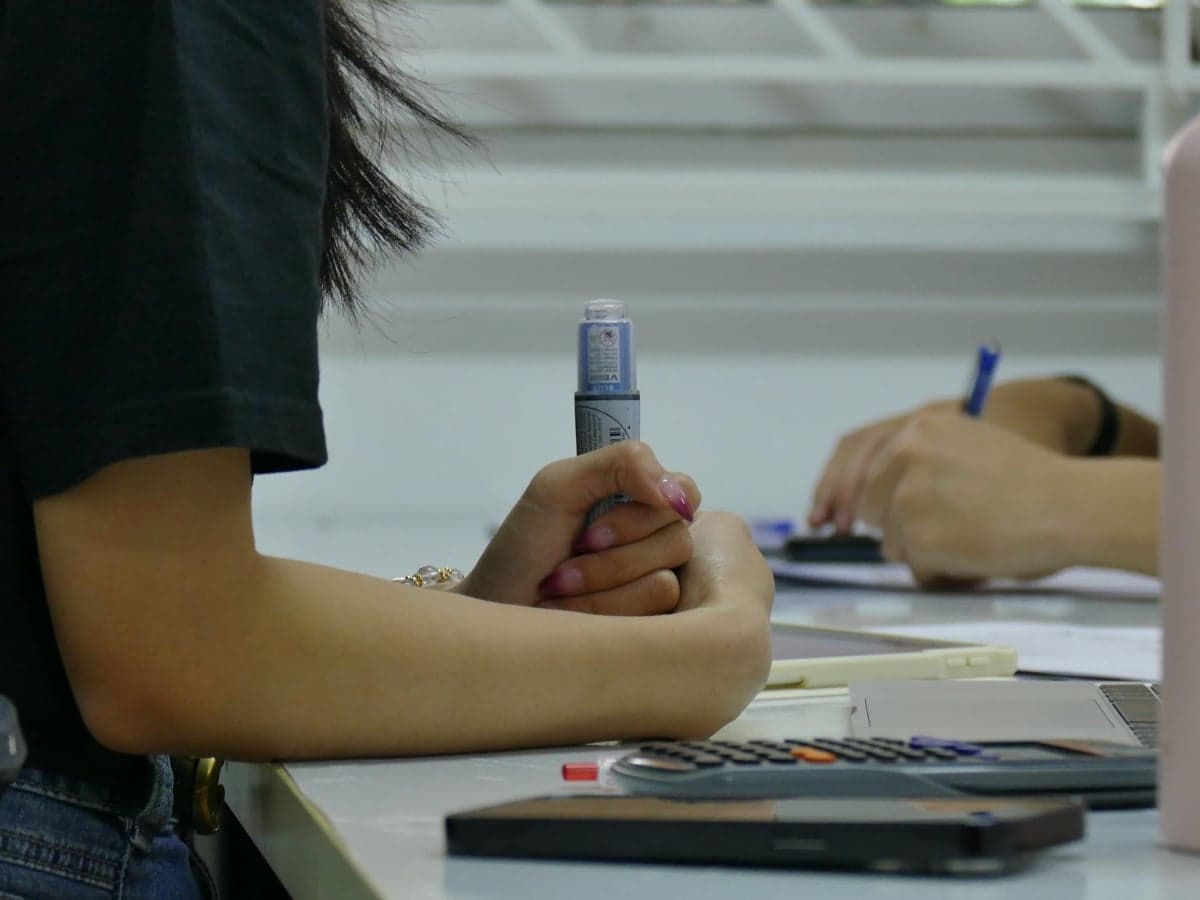
P3 is when Science enters the Singapore curriculum — the only time a completely new examinable subject appears during primary school — a transition Ancourage Academy’s Science programme addresses from P3 onward. For many children, this is their first experience with structured scientific thinking, process skills, and a subject that requires both content knowledge and reasoning rather than memorisation alone. Unlike Mathematics and English, which build on skills children have practised since kindergarten, Science arrives with no prior foundation to lean on — and that transition catches many families off guard.
With 8 years of experience in early childhood and primary education, Charmaine has guided hundreds of P3 students at Ancourage Academy through their first encounter with formal Science — helping them build the habits and thinking skills that carry through to PSLE and beyond.
Why P3 Science Is a Big Transition
P3 Science is uniquely challenging because it is not an extension of anything children have done before — it is an entirely new discipline with its own vocabulary, reasoning style, and assessment format. Mathematics in P3 builds on counting and number sense developed since K1. English in P3 builds on reading and writing practised for years. Science has no such runway.
Science is first examined as a standalone subject at P3, when students are around eight or nine years old — the only time a completely new examinable subject enters the MOE primary curriculum. This early start means children must simultaneously learn new content (what are the characteristics of living things?), new skills (how to observe, compare, and classify), and a new way of communicating (explaining "why" using scientific language rather than everyday words). This triple demand is why some children who excel in Mathematics and English initially struggle with Science — not because the content is hard, but because the entire approach to learning is different.
Book a trial class (usually $18) at Ancourage Academy's Bishan centre to see how Ancourage Academy builds Science foundations in small groups of 3–6.
Parents who recognise this transition early can provide the right support. The key insight is that P3 Science is not about memorising facts — it is about learning to think scientifically. Children who develop this mindset in P3 find P4, P5, and PSLE Science significantly more manageable because the thinking framework is already in place.
What the P3 Science Syllabus Covers
The MOE Primary Science syllabus is built around five overarching themes — Diversity, Cycles, Systems, Interactions, and Energy — that spiral from P3 through P6 and PSLE. Under the 2023 syllabus, each theme is assigned to specific levels rather than shared across a block. At P3, the themes that feature are Diversity, Cycles, and Interactions. Systems and Energy topics begin at P4 (plant systems, digestive system, light, and heat) and deepen significantly through P5 and P6. Understanding this structure helps parents see how P3 topics connect to what comes later.
What makes the P3 syllabus distinctive is how these themes weave together into a coherent picture of the natural world, rather than presenting Science as a collection of isolated facts. A child learning about Diversity (classifying living and non-living things) is also building the observation and comparison skills that later topics like food chains (P6) and habitats (P6) will require. Parents who understand this interconnected structure can help their child see connections between topics rather than treating each chapter as a separate block to memorise. The three themes that feature most prominently at P3 and what they cover are outlined below.
- Diversity: Classifying living things (plants, animals, fungi, bacteria) and non-living things; understanding that materials have different properties (flexibility, strength, ability to float or sink)
- Cycles: Life cycles of plants (seed → plant → flower → fruit/seed) and animals (3-stage and 4-stage life cycles) — understanding that living things go through stages of growth and reproduction
- Interactions: Magnets — magnetic and non-magnetic materials, poles, attraction and repulsion, and making magnets. This is the P3 introduction to how objects interact with one another through non-contact forces
The Systems theme (e.g., plant parts and their functions, the digestive system) and Energy theme (e.g., light, heat) begin at P4 under the 2023 syllabus. All five themes spiral upward in complexity through P6 and PSLE, so topics like food chains (P6), the water cycle (P5), and states of matter (P4) build on the observation and classification skills that P3 establishes.
Each theme spirals upward in complexity from P3 to P6. For example, the Diversity theme in P3 introduces basic classification of living and non-living things; those same classification skills return in far greater depth when P5 covers reproduction and the cell as a basic unit of life (under Cycles) and P6 covers adaptations (under Interactions within the environment). The Cycles theme in P3 focuses on life cycles, before expanding to the water cycle (P5) and states of matter (P4). Getting the P3 foundations right means children are not playing catch-up when concepts become more demanding in P4 and P5 — Ancourage Academy's primary Science tuition across P3 to P6 follows this same spiral.
Process Skills: The Hidden Half of Science
Process skills — observing, comparing, classifying, inferring, predicting, and analysing — are tested in every PSLE Science paper alongside content knowledge (SEAB's second Assessment Objective is 'Application of Knowledge and Scientific Inquiry'), yet most parents focus exclusively on topics and neglect these thinking skills entirely.
The MOE Science syllabus explicitly lists process skills as a core learning outcome. These are not extras bolted onto content — they are the foundation of scientific thinking that every exam question tests, whether directly or indirectly. A P3 student who knows that magnets attract iron objects but cannot infer why a particular object was not attracted (because it is made of plastic, not metal) will lose marks despite knowing the content.
Six process skills your child will start using in P3:
- Observing: Using the senses to gather information about objects and events — noticing details, not just the obvious features
- Comparing: Identifying similarities and differences between objects, organisms, or events — this skill underpins classification
- Classifying: Grouping objects or organisms based on common characteristics — the basis of the Diversity theme
- Inferring: Using observations and prior knowledge to suggest explanations — this is where many P3 students struggle because it requires reasoning beyond what is directly visible
- Predicting: Making educated guesses about future outcomes based on patterns — different from random guessing because it must be grounded in evidence
- Analysing: Examining data and information to identify patterns, trends, and relationships — interpreting tables, charts, and experimental results
Ancourage Academy's P3 Science programme explicitly teaches these process skills alongside content, so students learn not just what to know but how to think. This dual approach is what separates children who understand Science from those who merely memorise it.
How P3 Science Is Different From Maths and English
Mathematics rewards correct computation and English rewards clear expression, but Science rewards something children have rarely been asked to do before — observe carefully, reason logically, and explain their thinking in structured sentences.
In Mathematics, most questions have a single correct answer and a clear method to reach it. In English, there are frameworks for comprehension and composition that children learn to follow. Science, however, often presents scenarios where children must interpret information and construct their own explanations. There is usually a right answer, but getting to it requires a different kind of thinking.
Consider the difference:
- Maths question: "What is 24 + 38?" — one correct answer, clear method
- English question: "Write a sentence using the word 'because'" — structured, practised skill
- Science question: "Ahmad placed a metal spoon and a plastic spoon in hot water. After 5 minutes, the metal spoon felt warm but the plastic spoon did not. Explain why." — requires observation, inference, and scientific vocabulary to answer
That Science question demands something new: the child must connect the observation (metal spoon is warm, plastic spoon is not) to the concept (metals are good conductors of heat, plastics are poor conductors) and express this in a complete, logical sentence. This "explain why" skill does not develop naturally from Maths or English work — it needs explicit teaching and practice.
The table below highlights how the three primary subjects compare across key dimensions — helping parents see exactly why Science feels so different from what their child is used to.
| Aspect | Maths | English | P3 Science |
|---|---|---|---|
| When it starts | P1 | P1 | P3 (new) |
| Question types | Calculation, problem sums | Comprehension, composition | Observation, explanation, process skills |
| What it tests | Accuracy and method | Language and expression | Reasoning and understanding of concepts |
| How answers are marked | Right or wrong (with method marks) | Language quality and content | Scientific accuracy and clear cause-and-effect reasoning |
| Study approach | Practice problems repeatedly | Read widely and write regularly | Observe, question, and explain why |
Common P3 Science Struggles
The most common P3 Science struggles are not about content gaps — they are about the shift from recalling information to explaining reasoning, a skill that many children have never been explicitly taught.
One P3 student at Ancourage Academy could list which materials are magnetic and which are not, but when asked "Why did the paperclip move toward the magnet but the plastic button did not?", she wrote "because magnets attract things." Technically not wrong, but missing the scientific reasoning that earns marks. She knew the facts but had never been asked to explain a mechanism. After several weeks of guided practice — asking "why" and "how" rather than "what" — she began writing answers like "The paperclip is made of iron, which is a magnetic material, so the magnet attracts it. The plastic button is a non-magnetic material, so the magnet does not attract it." That shift from recall to reasoning is the core challenge of P3 Science.
- Difficulty explaining "why" rather than "what": Children can state that "magnets attract iron objects" but cannot explain why a specific object was not attracted — "The plastic ruler is made of a non-magnetic material, so the magnet does not attract it." Moving from fact recall to causal reasoning is the biggest hurdle
- Unfamiliarity with process-skill questions: Questions that ask children to observe, compare, or infer from given data feel foreign after years of Maths problems with clear operations and English exercises with fixed formats
- Confusing similar concepts: Living versus non-living things (Is fire alive? It grows and needs oxygen, but it does not reproduce), plants versus animals (both are living, but how are they different?), 3-stage versus 4-stage life cycles (which animals undergo which type)
- Answering in everyday language instead of scientific terms: Writing "the ice turns into water" instead of "the ice melts when it gains heat energy from the surroundings, changing from a solid to a liquid"
- Struggling with open-ended questions: After years of multiple-choice or fill-in-the-blank tasks, writing a full sentence explanation feels overwhelming
These struggles are completely normal and expected. Ancourage Academy's P3 Science classes address them systematically by teaching children how to structure their answers, use scientific vocabulary precisely, and practise the "observe → reason → explain" pattern until it becomes second nature. For more strategies, see the Primary Science answering techniques article.
Building Good Science Habits Early
Curiosity is a superpower in Science — children who ask questions about everyday things, notice patterns in the natural world, and wonder "why does that happen?" are building the exact mindset that the MOE Science syllabus rewards.
Good Science habits look different from good study habits for other subjects. Rote memorisation — effective for spelling lists and multiplication tables — actively works against deep Science understanding. The reason is straightforward: Science exam questions almost never ask students to reproduce a definition verbatim. Instead, they present an unfamiliar scenario and ask the child to apply a concept. A child who has memorised "photosynthesis is the process by which plants make food using sunlight" may still fail a question that asks why a plant placed in a dark room wilted — because the memorised sentence does not equip the child to reason through cause and effect. Habits that build reasoning, observation, and genuine curiosity do far more for P3 Science performance than hours of rote revision. The most effective habits parents can encourage are listed below.
- Asking questions about everyday things: "Why does the mirror fog up after a hot shower?" "Why do some leaves fall off the tree but others stay?" These questions build observational thinking naturally
- Keeping a "wonder journal": A simple notebook where children write or draw things they noticed or questions they had during the day. This habit trains the observing and questioning skills that Science exams test
- Visiting nature reserves and parks: Singapore's green spaces — Bukit Timah Nature Reserve, MacRitchie Reservoir, Sungei Buloh Wetland Reserve — offer real-world encounters with plants, animals, habitats, and food chains that bring P3 Science topics to life
- Conducting simple home experiments: Freezing water to observe states of matter, testing which household objects are attracted to magnets, growing bean sprouts to observe a plant's life cycle — hands-on experiences build understanding that textbooks alone cannot provide
- Reading for interest, not just for school: Science books, nature magazines, and age-appropriate encyclopedias expand vocabulary and conceptual understanding far beyond what the syllabus covers
Children who arrive at Ancourage Academy with a habit of asking "why" and "how" consistently learn faster than peers who only engage with Science during homework time. The goal is not to teach P3 Science content at home — it is to build the curious, questioning mindset that makes formal Science learning click.
How Parents Can Support at Home
Parents do not need a Science background to help their child with P3 Science — the most effective home support involves asking questions, providing experiences, and modelling curiosity rather than drilling content.
Research on science education consistently shows that children learn scientific reasoning most effectively through conversation and hands-on experience, not through worksheets or textbook drills. When a parent asks "Why do you think that happened?" during a cooking experiment or a walk through the park, they are modelling the exact questioning process that Science exams reward. The goal is not to teach your child P3 content at home — their school and any tuition support will handle that — but to create an environment where scientific thinking becomes a natural part of daily life. Even five minutes of curious conversation about an everyday observation does more for long-term Science performance than thirty minutes of rote revision. The strategies below are practical ways to create that environment without requiring any specialist knowledge.
- Watch nature documentaries together: Programmes like BBC Earth and National Geographic introduce ecosystems, animal behaviour, and life cycles visually. Pause to ask, "Why do you think the penguin is doing that?" or "How is this animal different from the one we saw earlier?"
- Visit Science Centre Singapore: The hands-on exhibits cover many P3 topics — magnets, living things, materials, and life cycles. Let your child explore at their own pace rather than rushing through every exhibit
- Discuss "why does this happen?" moments: When cooking, ask why water boils. When it rains, ask where the water comes from. These conversations build the causal reasoning that Science exams require, without any pressure
- Read Science books together: Library books about animals, plants, the human body, or weather give children vocabulary and context that makes classroom learning more meaningful. Even 10 minutes of Science reading a few times a week makes a noticeable difference
- Avoid over-correcting or lecturing: When your child gives a wrong answer, ask "What makes you think that?" instead of immediately correcting them. The reasoning process matters more than getting the right answer every time — and children who fear being wrong stop asking questions
The Ancourage Academy primary programmes complement home support with structured process-skill training. Parents provide the curiosity-rich environment; Ancourage Academy provides the exam technique and scientific language precision. Together, these create a strong foundation. You can also visit the Bishan centre or Woodlands centre to learn more about how Ancourage Academy structures its P3 Science classes.
When Tuition Support Makes Sense
Not every P3 student needs Science tuition, but certain signs indicate that structured support early can prevent compounding gaps that become much harder to close at P5 and P6.
Consider Science tuition if your child:
- Consistently scores below expectations on P3 Science assessments despite revising the content
- Can recall facts but cannot explain "why" or "how" in written answers
- Shows frustration or anxiety specifically around Science (not other subjects)
- Struggles to understand questions that ask for observation, inference, or prediction
- Finds it difficult to express ideas in complete, logical sentences using scientific vocabulary
- Has a parent or home environment where Science support is limited (e.g., parents who studied in a different curriculum)
Early intervention at P3 is far more effective — and less stressful — than crisis tuition at P5 or P6. A child who builds solid process skills and scientific language in P3 enters P4 with confidence, while one who develops gaps in P3 often finds those gaps widening as topics become more complex. The PSLE Science tips article illustrates how P3 foundations directly affect upper primary performance.
Ancourage Academy's P3 Science classes run in small groups of 3–6 students, which allows tutors to identify each child's specific process-skill gaps and address them individually. This is particularly effective for Science because the subject demands active thinking and discussion — large class sizes make it easy for uncertain students to stay quiet and fall behind. Book a trial class (usually $18) at Bishan or a trial class (usually $18) at Woodlands to experience how Ancourage Academy teaches P3 Science differently. For more primary and PSLE Science guides, browse our Science hub.
Common Questions About P3 Science
Is P3 Science difficult compared to Maths and English?
P3 Science content is not inherently harder than Maths or English, but it feels more challenging because children have no prior foundation to build on. Maths and English extend skills practised since kindergarten, while Science introduces entirely new concepts, vocabulary, and thinking methods simultaneously. The difficulty lies in the transition, not the content itself.
What are the most important P3 Science topics to focus on?
Classification of living and non-living things, properties of materials, and the life cycles of plants and animals form the backbone of P3 Science. These topics reappear in greater depth at every subsequent level through P6 and PSLE. Getting the fundamentals right in P3 prevents compounding gaps later. Process skills — especially observing, comparing, and inferring — are equally important and should not be neglected in favour of content alone.
How can I tell if my child is struggling with P3 Science?
Look for signs beyond test scores. A child who can recite facts but cannot explain "why" something happens is developing a memorisation habit that will fail at higher levels. Other indicators include avoiding Science homework, giving one-word answers to Science questions, or expressing frustration that "Science does not make sense." If your child consistently understands content verbally but loses marks on written answers, the gap is usually in scientific language and answer structure, not knowledge.
Should I start Science tuition from P3 or wait until closer to PSLE?
This depends on your child's needs. If your child is adjusting well to P3 Science — asking questions, explaining concepts in their own words, and scoring consistently — tuition is not necessary. If you notice early signs of struggle (difficulty explaining "why," frustration with open-ended questions, or declining interest), starting structured support at P3 is more effective and less stressful than waiting until P5 or P6. Building process skills early creates a foundation that makes upper primary Science significantly easier.
What resources help with P3 Science at home?
The MOE Primary Science syllabus document outlines exactly what is covered at each level. Science Centre Singapore offers hands-on exhibits aligned with the curriculum. Nature reserves like Bukit Timah and Sungei Buloh bring Diversity and Interactions topics to life. For structured practice, Ancourage Academy's P3 Science programme develops both content knowledge and process skills in small groups.
Related: Primary Science Answering Techniques · PSLE Science Tips · P3 Science · P4 Science · P5 Science · Primary Programmes · Trial — Bishan · Trial — Woodlands · Pricing