
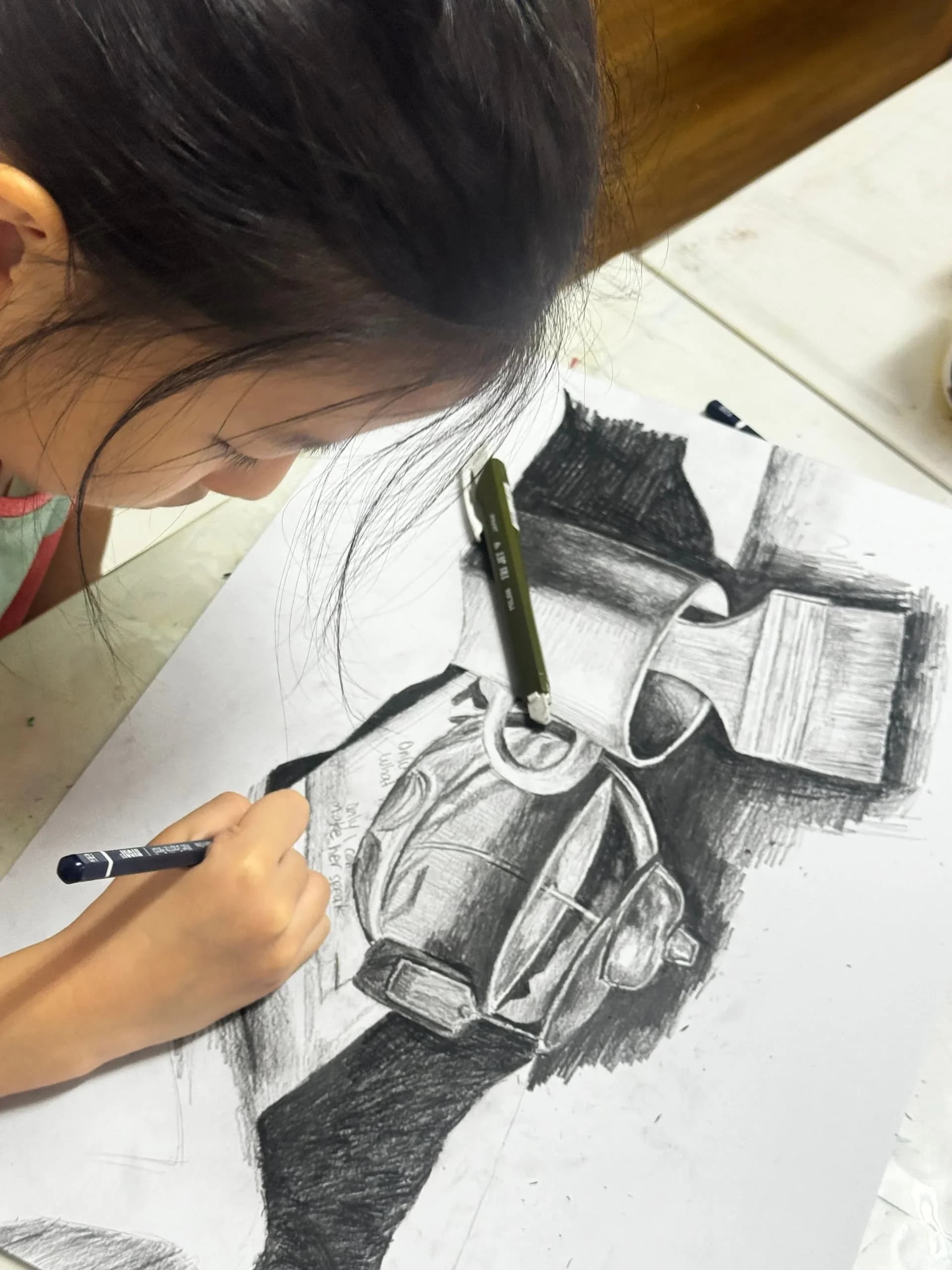
DSA art is worth it when your child has genuine artistic talent, sustained interest in visual arts, and would thrive in an art-focused school environment — but it is not a shortcut to bypass PSLE or secure a "better" school through a side door. This is the honest assessment Art by Ancourage shares with every family at the start of a DSA Art Portfolio programme consultation.
As an art educator, I have guided Art by Ancourage's DSA students through the application process, and I have also advised families against pursuing DSA art when it was not the right fit. For students with 1+ year in our DSA programme, our acceptance rate to date is 100%. That honesty is part of why: the programme is selective about readiness, not just accepting anyone who signs up.
Book a trial class (from $18) at Bishan or Woodlands for an honest readiness assessment before committing to DSA preparation.
When DSA Art Makes Sense
DSA art makes sense when your child genuinely loves creating art, has been practising consistently for at least one year, and would benefit from a school environment that values artistic development.
Signs that DSA art is the right path:
- Sustained interest: Your child draws, paints, or creates art voluntarily — not just during art class. They seek out art experiences, visit museums, and are curious about techniques
- Visible growth: Their work has improved noticeably over time, showing developing skill and personal voice
- School fit: They would thrive at a school like SOTA (full arts immersion) or an AEP school (art alongside strong academics)
- Emotional readiness: They can handle the commitment — DSA students must remain in the talent area throughout secondary school
- Family support: The family supports an arts-focused education genuinely, not as a strategy to avoid PSLE pressure
When DSA Art Does Not Make Sense
DSA art does not make sense when the primary motivation is avoiding PSLE stress, securing a "prestigious" school placement, or following what other parents are doing.
Red flags Art by Ancourage watches for:
- "Insurance policy" mindset: Treating DSA as a backup plan if PSLE scores are not high enough. DSA is a commitment, not a hedge
- Parent-driven interest: The parent wants DSA art more than the child does. Schools assess the student's passion, and manufactured enthusiasm is visible
- Last-minute rush: Starting serious art only in Primary 6 to "build a portfolio." While late starts are possible and still worth doing properly, a rushed portfolio rarely competes against students with years of genuine development. We therefore recommend at least one year of preparation, which is also the eligibility window for our published acceptance rate
- No sustained practice: The child has taken a few holiday workshops but does not create art regularly or independently
- School mismatch: Choosing a school for prestige rather than programme fit. A child who is not passionate about art will struggle in an AEP environment where art is a core subject
The Real Costs of DSA Art Preparation
DSA art preparation typically involves 1–2 years of structured art classes, portfolio development, and interview coaching — families should understand the full investment before committing.
| Cost Component | Typical Range | Notes |
|---|---|---|
| Weekly art classes (1–2 years) | $100–$300/month | Group size, frequency, and studio quality vary. Art by Ancourage's pricing is transparent. Small groups of 3–6 provide personalised attention |
| Art materials | $200–$500 total | Quality paper, paints, pencils, sketchbooks. Accumulates over 1–2 years of practice |
| Portfolio photography | $0–$200 | Many studios help with this. Art by Ancourage includes portfolio documentation support |
| Time commitment | 2–4 hours/week | Weekly classes plus independent practice. Must be balanced with school and other activities |
For a broader comparison of art class pricing in Singapore, see Art by Ancourage's art class cost guide.
Does PSLE Score Matter for DSA Art?
PSLE scores do not determine DSA selection — but they are not irrelevant. DSA students must still meet the minimum PSLE Achievement Level (AL) score for the school's posting group to be successfully allocated.
What this means in practice:
- Selection: DSA selections happen before PSLE. Schools assess portfolios, drawing tests, and interviews — PSLE scores play no role at this stage
- Allocation: After PSLE results are released in November, DSA students must obtain a PSLE result qualifying them for a Posting Group the school admits from. If they do not, the DSA offer is void
- Practical impact: Most schools accepting DSA art admit from Posting Groups attainable by students with reasonable academic foundations. IP schools like HCI and NJC admit through Posting Group 3
- SOTA: SOTA runs its own Talent Academy selection, but the PSLE condition works the same way as mainstream DSA — a Confirmed Offer only holds if the student is eligible for Posting Group 3 (SOTA says a student with a "Posting Group 2 or 3 Option" result may be automatically assigned to PG3 and posted to SOTA). Miss it and the offer does not survive
Approximately 4,400 students (11% of the P6 cohort) were admitted via DSA in 2023, up from 9% in 2019 (MOE, 2024).
How Competitive Is DSA Art in Singapore?
DSA art competitiveness varies dramatically by school — SOTA admitted about 200 students per intake from up to 1,000 applicants, roughly 20% (The Straits Times, 31 July 2018; figure covers all six art forms combined), while no school publishes DSA application or acceptance volumes by talent area, so the other routes cannot be ranked by difficulty from public data.
- SOTA: Admitted about 200 students per intake from up to 1,000 applicants — roughly 20% (Amelia Teng, The Straits Times, 31 July 2018; the figure covers all six art forms, and SOTA has not published an update since). Visual Arts applicants go through a Shortlisting Activity, then a portfolio presentation and interview — not an audition. Highly competitive, with structured mass shortlisting from 2025
- AEP schools with an art talent area under DSA-Sec (NJC, Hwa Chong Institution, Victoria School): Academically selective as well as art-selective. Portfolio quality and interview performance are decisive. The other four AEP schools — Zhonghua, CHIJ Secondary (Toa Payoh), Bukit Panjang Govt. High and Nanyang Girls' High — admit to AEP only after Secondary 1 posting, through the school's own AEP Selection Exercise
- EAP schools (Nan Chiau High, Orchid Park, Naval Base, etc.): A two-year upper-secondary art programme rather than a four-year one, so the art demands at entry are pitched differently from AEP. Volumes are not published, so relative competitiveness is not knowable from public data
- Newer DSA routes (HCI's AEP talent area from 2026): HCI lists AEP among its DSA talent areas for the first time in 2026. The programme itself is long established — only the DSA route is new, and because schools do not publish application volumes by talent area, treat any claim that a new route is an easier one as speculation
Art by Ancourage's 100% acceptance rate covers students with 1+ year in our DSA programme. It reflects selective intake — we assess readiness at the trial class from $18 — and personalised preparation over 1–2 years.
The 3-School Choice Strategy
DSA applicants can apply to a maximum of 3 school-talent area choices through the MOE DSA-Sec Portal (maximum 2 from the same school) — choosing wisely is as important as preparing well.
Art by Ancourage recommends:
- 1 aspirational choice: A school where your child would love to attend but admission is competitive (e.g., SOTA)
- 1 realistic choice: A school that matches your child's current level and artistic interests (e.g., an AEP school)
- 1 safety choice: A school with lower competition where your child has a strong chance (e.g., an EAP school or newer programme)
Note: SOTA applications go through a separate portal (Talent Academy) and do not count toward the 3 MOE DSA-Sec application choices — so students can apply to SOTA plus 3 other schools. At the October preference ranking stage, however, students can rank a maximum of 3 schools including SOTA.
For guidance after receiving offers, see Art by Ancourage's guide on ranking DSA art preferences.
What Happens If DSA Art Does Not Work Out
If DSA Art does not work out, your child is posted through the normal S1 Posting Exercise on their PSLE score — and the preparation is not wasted: the portfolio carries forward to SYF and DSA-JC, school art grades improve, life skills develop, and alternative pathways into art remain open.
- Portfolio carries forward: The portfolio carries forward to SYF submissions, and future DSA-JC applications
- School art grades improve: Many DSA students see significant improvement in their school art marks even if the DSA application is unsuccessful
- Life skills develop: Discipline, self-expression, critical thinking, and presentation confidence built through art preparation transfer to academics and beyond
- Alternative pathways exist: Students can still enter art programmes through S1 Posting after PSLE, or pursue art at JC level via DSA-JC or JAE
For broader perspective on art education benefits, see Art by Ancourage's article on why art education matters.
Art by Ancourage's Honest Approach
Art by Ancourage does not accept every student into the DSA programme — readiness is assessed during the trial class from $18, and students who need more foundational work are directed to Professional Fine Art Classes first.
This selective approach is why Art by Ancourage has maintained a 100% DSA acceptance rate for students with 1+ year in our DSA programme:
- Honest assessment: If a student is not ready for DSA, Art by Ancourage says so — and recommends a development path instead
- Personalised timeline: Most students begin in Primary 4, giving 2 years of genuine development. Motivated late starters can begin in Primary 5 with focused preparation
- School-specific strategy: Portfolio and interview preparation is tailored to each target school's specific requirements
- Small groups of 3–6: Every student receives personalised guidance at Bishan or Woodlands
Related: The DSA art portfolio | DSA Art Schools Complete List
Frequently Asked Questions
Is DSA art a good strategy if my child's PSLE score might be low?
No. DSA art should not be used as an academic backup plan. Schools assess genuine artistic talent and commitment — not academic need. Additionally, DSA students must still obtain a PSLE result qualifying them for a Posting Group their allocated school admits from. If PSLE performance is the primary concern, focus on academic preparation instead.
How early should we decide about DSA art?
Art by Ancourage recommends making the decision by Primary 4 at the latest. This gives 2 years of structured preparation before the Primary 6 application window. However, the decision should follow sustained artistic interest — not be forced by a timeline. If your child has not shown genuine interest in art by Primary 4, DSA art is likely not the right path.
Can my child pursue DSA art without attending art classes?
In theory yes, but in practice it is extremely difficult. Schools expect portfolios demonstrating technical proficiency across multiple media, compositional skill, and artistic growth. Self-taught students rarely develop the breadth and quality needed without structured guidance. Art by Ancourage's DSA programme provides this structure.
What if my child is talented but does not want to commit to an art school?
Consider AEP or EAP schools instead of SOTA. AEP schools offer strong art programmes within mainstream secondary schools — your child gets art enrichment without committing to a fully arts-centric environment. SOTA requires full commitment to an arts-integrated curriculum, which may not suit every talented student.
Is the financial investment in DSA art preparation justified?
That depends on your family's goals. If your child is genuinely art-inclined and would thrive in an art programme, the 1–2 years of structured preparation (typically $100–$300/month) is a meaningful investment in their development. If the motivation is primarily about school placement rather than art development, the investment is unlikely to pay off emotionally or practically.