
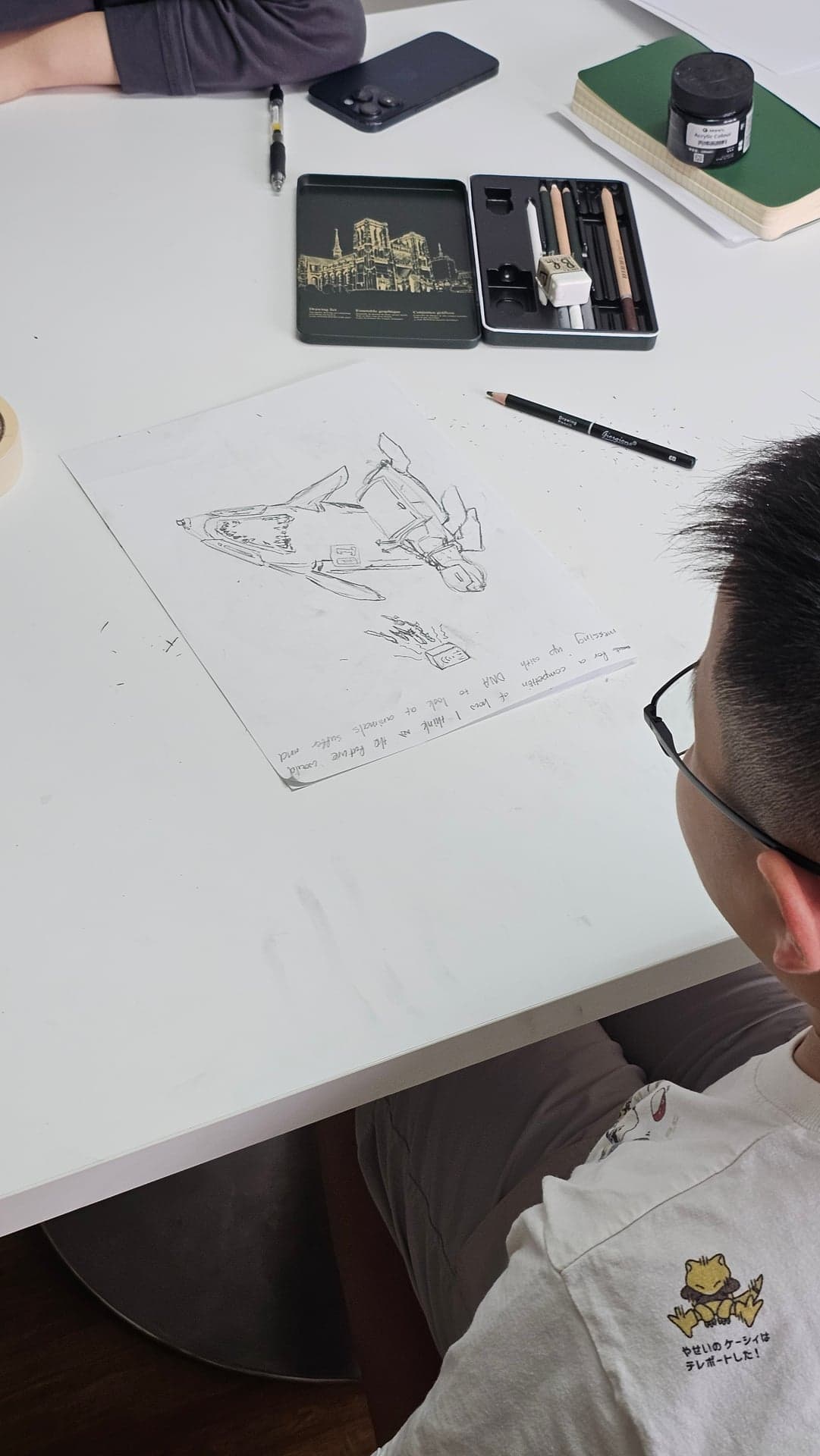
Manga drawing techniques — character design, expressive facial anatomy, dynamic posing, inking, and sequential storytelling — develop the same foundational art skills as classical drawing, through subject matter students are genuinely excited about. Whether your child is sketching characters in the margins of their school exercise book, your teenager dreams of creating their own manga series, or you are an adult who has always loved anime aesthetics, understanding these techniques reveals how manga art builds real artistic ability. Manga and anime classes at Art by Ancourage in Bishan and Woodlands teach these techniques through structured instruction for ages 9 and above.
As a LASALLE College of the Arts graduate and instructor at Art by Ancourage, I have seen first-hand how manga and anime art ignites passion in students who might otherwise never pick up a pencil. The visual language of manga — expressive faces, dynamic poses, dramatic composition — is one of the most accessible entry points into art. And once students start learning the technical foundations behind their favourite style, they often discover a lifelong creative practice. According to a 2022 YouGov study, 52% of Singapore adults have watched anime at least once — making manga and anime art one of the most culturally relevant art forms for learners in Singapore today.
Why Manga and Anime Art Is More Than a Hobby
Manga and anime art develops the same foundational skills as classical drawing — proportion, anatomy, perspective, composition, and tonal rendering — through subject matter that students are genuinely excited about.
Parents sometimes worry that manga art is purely recreational. In reality, creating original manga characters and sequential art requires sophisticated artistic thinking:
- Figure anatomy: Drawing manga characters means understanding skeletal structure, muscle groups, and body proportion ratios — the same knowledge taught in classical figure drawing, adapted to stylised form
- Facial expression: Manga's exaggerated expressions require precise control of eye shape, mouth positioning, and facial proportion. Students learn to communicate emotion through visual shorthand
- Dynamic posing: Action scenes demand understanding of weight, balance, foreshortening, and movement — advanced drawing concepts that many adult artists struggle with
- Sequential storytelling: Panel layout, pacing, and visual narrative are compositional skills directly applicable to graphic design, storyboarding, animation, and film
- Inking and rendering: Clean line work with pen and marker develops the decisive, confident mark-making that transfers to every drawing medium
Manga is one of the most powerful vehicles for engaging teenagers in visual art. In Singapore, Anime Festival Asia (AFA) draws over 100,000 attendees annually, and institutions like NAFA offer animation and illustration programmes — clear signs of strong interest in these creative skills.
Book a trial class (from $18) at Art by Ancourage to experience a manga-focused session with personalised instructor feedback — all traditional materials included.
What You Learn in Manga and Anime Art Classes
Manga and anime classes at Art by Ancourage develop twelve manga and anime techniques — head and face construction, body proportion, expressions, line quality, dynamic posing, character design, inking, toning and shading, sequential art, background design, digital illustration and portfolio development — at each student's own pace.
At Art by Ancourage manga and anime classes, instruction follows a clear progression:
Foundation Skills (Months 1-3)
- Head and face construction: Learning the grid system for manga faces — eye placement, hair construction, and the distinct proportional differences between shonen, shoujo, chibi, and realistic anime styles
- Body proportion: The standard 7-head and 8-head figure systems used in manga, adapted from classical anatomy but stylised for the medium
- Basic expressions: The core set of manga facial expressions — joy, anger, surprise, sadness, determination — and how subtle adjustments to eye shape and mouth curvature completely transform a character's mood
- Line quality: Developing confident, clean strokes with pencil and fineliner — the technical backbone of all manga illustration
Intermediate Skills (Months 3-6)
- Dynamic posing: Gesture drawing adapted for manga — capturing movement, energy, and dramatic impact through exaggerated anatomy and action lines
- Character design: Creating original characters with distinct silhouettes, costumes, personality traits, and visual identities
- Inking techniques: Using brush pens, fineliners, and dip pens to create varied line weights that add depth and visual interest to finished artwork
- Toning and shading: Screen-tone application (traditional and digital), hatching, and marker rendering for professional-quality illustration
Advanced Skills (Months 6+)
- Sequential art: Panel layout, page composition, pacing, and visual storytelling — the skills that turn individual illustrations into compelling manga pages
- Background and environment design: Perspective drawing applied to manga settings — cityscapes, interiors, natural environments, and fantastical worlds
- Digital illustration: iPad and Procreate workflows for students who want to explore digital manga creation, including layers, brushes, and colour techniques
- Portfolio development: Curating a body of work suitable for DSA art portfolio submission, art school applications, or personal exhibition
Who Should Take Manga and Anime Art Classes
Manga and anime classes suit anyone from age 9 upwards who wants to develop real artistic skill through subject matter they love.
- Children (9-12): Young learners who are already filling sketchbooks with characters benefit enormously from structured guidance. Instead of copying existing characters, they learn the underlying principles that allow them to create their own. The Explorative Art programme provides a supportive environment for this age group
- Teenagers (13-18): Teens are often the most passionate manga artists, and structured classes channel that passion into real technical growth. For teens considering art pathways, manga illustration is a legitimate and increasingly respected portfolio component. Read more in the teen art classes and portfolio guide
- Adults: Many adults grew up watching anime and want to finally learn to create the art they love. Manga classes offer a focused, engaging creative practice — and adult beginners often progress faster than they expect with structured instruction
- Digital artists: Students already comfortable with tablets and software benefit from learning traditional drawing foundations — pen-and-paper skills strengthen digital work significantly
- DSA and portfolio candidates: Original manga and illustration work can be a compelling portfolio component for Visual Arts DSA applications and SOTA admission
Manga Art Techniques: Character Design Deep Dive
Character design is the heart of manga art — a well-designed character communicates personality, backstory, and emotional tone before a single word of dialogue appears.
At Art by Ancourage, character design instruction covers:
- Silhouette test: A strong character should be recognisable from silhouette alone. Students learn to design distinctive shapes that stand out even at small sizes
- Personality through proportion: Heroic characters use broader shoulders and taller proportions; cute characters use larger heads and shorter bodies. Understanding these conventions — and when to break them — is essential for original character creation
- Costume and accessory design: Clothing, hairstyles, and accessories tell the viewer who this character is before they speak. Students learn to design functional, visually interesting outfits that reflect character personality and setting
- Expression sheets: Professional manga artists create model sheets showing a character from multiple angles and in multiple emotional states. This exercise develops consistency and deepens the student's understanding of three-dimensional form
- Colour theory for characters: Choosing a colour palette that communicates mood, allegiance, and personality — warm tones for energetic characters, cool tones for mysterious ones, complementary colours for visual impact
Students create original characters rather than copying existing intellectual property. This builds genuine creative authorship and produces portfolio-worthy work that demonstrates real artistic ability.
Inking: The Skill That Defines Manga
Clean, confident inking separates professional-quality manga illustration from amateur sketches — and it is one of the most satisfying skills to master.
Manga inking is fundamentally different from Western comic inking. The Japanese tradition emphasises:
- Line weight variation: Thicker lines on the outer contour, thinner lines for interior details. This creates visual hierarchy and depth without relying on shading
- Confident single strokes: Manga inking rewards decisive, fluid lines drawn in one motion — not sketchy, built-up marks. This takes practice but produces clean, professional results
- Pen selection: Different tools create different effects. Fine-tipped technical pens (0.1mm–0.5mm) for detail work, brush pens for expressive thick-thin variation, dip pens for traditional manga production
- Hatching and cross-hatching: Creating tone and shadow through parallel line patterns rather than solid fills — a technique that appears simple but requires precise control
- Speed lines and effects: The visual shorthand of manga — motion lines, impact bursts, emotion symbols — that communicate movement and feeling within static images
At Art by Ancourage, inking instruction progresses from basic line exercises through to finished manga page inking. Students practise on dedicated inking paper with professional-grade pens and markers — all materials provided. For students interested in expanding their drawing repertoire beyond manga, the drawing classes guide covers foundational techniques that complement manga skills.
Traditional vs Digital Manga Art
Professional manga artists today work in both traditional and digital mediums — and the strongest artists are fluent in both.
| Factor | Traditional (Pen, Ink, Marker) | Digital (iPad, Procreate) |
|---|---|---|
| Line quality | Organic, tactile — pen pressure creates natural variation | Customisable — digital brushes simulate any tool |
| Error correction | Limited — requires planning and confidence | Unlimited undo — encourages experimentation |
| Toning | Physical screen-tone sheets or marker rendering | Instant digital tones, easy adjustment |
| Colour | Markers (Copic, alcohol-based), watercolour | Unlimited palette, layers, blending modes |
| Skill transfer | Develops hand-eye coordination and decisiveness | Teaches digital workflow and industry tools |
| Portfolio value | Demonstrates foundational hand skill | Shows industry-relevant technical competency |
| Best for learning | Beginners — builds discipline and confidence | After fundamentals — accelerates production |
Art by Ancourage starts all manga students with traditional materials because pen-and-paper work forces students to develop confident mark-making without relying on undo buttons. Once foundations are solid, students can explore digital art classes using iPad and Procreate. Both approaches are available within the same programme.
Manga Classes vs Self-Teaching from YouTube
Free manga tutorials are everywhere online, but structured classes with a qualified instructor deliver faster, deeper, and more reliable skill development.
The limitations of self-teaching manga art are specific and significant:
- Copying vs creating: Most YouTube tutorials teach you to copy a specific character step-by-step. You end up with a nice-looking reproduction but no understanding of why it works — and no ability to create original characters
- Reinforced mistakes: Without feedback, bad habits (inconsistent proportions, stiff poses, shaky line work) become embedded through repetition. An instructor identifies and corrects these early
- No progression structure: Self-teaching is random — you follow whatever tutorial looks interesting. Structured classes build skills in logical sequence, ensuring each new technique has proper foundations
- Missing fundamentals: Tutorials skip the "boring" basics (proportion grids, anatomy, perspective) in favour of flashy results. Without these foundations, students hit a skill ceiling they cannot break through
- Isolation: Drawing alone offers no community, no peer feedback, and no accountability. Small group classes (3-6 students) provide social learning alongside individual instruction
Students who switch from self-teaching to structured classes at Art by Ancourage tell us the difference is the real-time, personalised feedback from a trained eye — the thing a tutorial cannot supply. The difference is real-time, personalised feedback from a trained eye.
How Manga Skills Connect to Other Art Forms
Manga art is not an isolated style — the skills learned through manga illustration transfer directly to other creative disciplines and strengthen overall artistic ability.
- Animation and motion graphics: Character design, expression sheets, and sequential storytelling are directly applicable to 2D and 3D animation careers
- Graphic design: Composition, typography integration, and visual hierarchy learned through manga page layout apply to design work across industries
- Game art: Character design, environment concept art, and UI illustration for games use the same skills taught in manga classes
- Fine art: The observational drawing, anatomy, and composition skills underpinning manga translate to professional fine art practice
- Storyboarding: Film, advertising, and television production all rely on storyboard artists who can communicate narrative through sequential images — a core manga skill
For students considering creative careers, manga art provides an engaging entry point that builds broadly applicable skills. Our summary of the research on art education benefits for children sets out the evidence that sustained creative practice supports critical thinking, spatial reasoning, and emotional intelligence alongside technical ability.
What to Expect in Your First Manga Class
A first manga session at Art by Ancourage begins with understanding your current skill level and creative goals, then jumps straight into guided drawing.
- Conversation (5-10 min): Your instructor asks about your experience, favourite manga and anime styles, and what you hope to learn. This shapes the session to your interests
- Warm-up drawing (10-15 min): A quick character sketch that reveals your current strengths — proportional accuracy, line confidence, understanding of facial features
- Guided instruction (60-70 min): The instructor demonstrates a specific technique (for example, manga face construction using the grid method) and guides you through applying it. You draw alongside the demonstration with real-time feedback on proportion, line quality, and stylistic choices
- Review and next steps (10-15 min): Your work is reviewed with specific, constructive feedback. The instructor explains what you will focus on in subsequent sessions based on your goals and current ability
Classes run in small groups of 3-6 students at both Bishan and Woodlands. All traditional materials — pencils, fineliners, brush pens, markers, and inking paper — are provided. Students exploring digital manga bring their own iPad. Trial classes are from $18.
Locations and Schedule
Art by Ancourage offers manga and anime art classes at two Singapore locations — Bishan (152 Bishan Street 11) and Woodlands (Vista Point, 548 Woodlands Drive 44) — with weekday and weekend availability.
- Bishan: 152 Bishan Street 11, 10-minute walk from Bishan MRT (NS17/CC15). Convenient for residents of Bishan, Ang Mo Kio, Marymount, and Toa Payoh
- Woodlands: Vista Point, 548 Woodlands Drive 44, near Woodlands South MRT (TE3). Convenient for residents of Woodlands, Sembawang, Admiralty, and Marsiling
Both studios offer the same manga art curriculum and maintain the same small group sizes of 3-6 students. Weekday afternoon, evening, and weekend slots are available. The same instructor standards apply at both locations. Browse our Art Education hub for more drawing, illustration, and art-technique guides.
Common Questions About Manga and Anime Classes
What age is best to start manga art classes?
Children from age 9 can begin manga art classes at Art by Ancourage. At this age, students have sufficient fine motor control and cognitive maturity to learn character construction and enjoy the creative process. Teenagers often make the fastest progress because they combine passion for the medium with the cognitive maturity to absorb technical instruction. Adults start at any age — several students began in their 30s, 40s, and 50s with no prior drawing experience and developed genuine manga illustration skills within months.
Do students need drawing experience before starting?
No prior experience is required. Manga art classes at Art by Ancourage start from absolute basics — pencil grip, line exercises, and simple shape construction — before progressing to character design and illustration. Students who already draw will advance to intermediate and advanced techniques more quickly, but beginners are welcome and well-supported. The structured curriculum ensures everyone builds skills at an appropriate pace.
Will my child only learn to copy anime characters?
No. While students study the visual conventions of manga and anime, the emphasis is on creating original characters and developing a personal artistic voice. Copying existing characters is a useful warm-up exercise, but Art by Ancourage instruction focuses on teaching the principles behind manga art — proportion, expression, line quality, composition — so students can create their own work rather than reproduce someone else's. This approach builds genuine artistic skill and produces portfolio-worthy original pieces.
Can manga art count towards a DSA portfolio?
Yes. Original manga and illustration work can be a compelling component of a DSA Visual Arts portfolio. Schools offering Visual Arts as a DSA talent area assess creative thinking, technical skill, and artistic growth — all of which manga art demonstrates. The key is showing original work that reflects personal creative vision rather than copies of existing characters. Art by Ancourage instructors can advise on portfolio strategy and help students develop pieces specifically suited for DSA submission.
What materials are provided in class?
Art by Ancourage provides all traditional materials — graphite pencils, fineliners (0.1mm to 0.5mm), brush pens, alcohol-based markers, inking paper, and sketchbooks. Students who wish to explore digital manga illustration bring their own iPad with Procreate installed. The instructor can recommend specific digital tools and settings for manga work.
How is Art by Ancourage different from manga workshops at community centres?
Art by Ancourage manga classes are led by a LASALLE-trained instructor in small groups of 3-6, with a structured progressive curriculum rather than one-off activity sessions. Community centre workshops typically accommodate 15-20 participants with limited individual feedback. Art by Ancourage instruction is ongoing — students build skills week after week through a connected curriculum, with personalised feedback and portfolio development guidance.
Related: Beginner drawing lessons · Teen Art Classes & Portfolio Guide · Art Education Benefits Research · How to Draw Faces · a guide to Composition in Art · Learning Procreate and Digital Art