
PSLE Science requires mastery of both content knowledge and process skills, with different Bishan schools developing different strengths in each area. Ancourage Academy Bishan has identified the specific patterns that help District 20 students achieve AL 1-3 in Science through targeted preparation.
Drawing on experience teaching hundreds of Bishan students, Ancourage Academy tutors share the school-specific insights that make the difference between good and excellent PSLE Science results.
Understanding PSLE Science Structure
PSLE Science tests five themes — Diversity, Cycles, Systems, Interactions, and Energy — through Booklet A (30 MCQ, 60 marks) and Booklet B (approximately 10-11 open-ended questions, 40 marks). The open-ended component makes precise scientific language and structured explanation critical skills. For detailed answering techniques, keyword strategies, and topic-by-topic preparation, see the Primary Science answering techniques guide. Understanding how the 2026 syllabus changes affect Science is essential for effective preparation.
Ancourage Academy's PSLE Science programme at our Bishan centre focuses on these exact exam demands — open-ended questions, process skills, and precise scientific language. Book a trial class (usually $18) for a diagnostic assessment.
Kuo Chuan Presbyterian Primary School (KCPPS)
KCPPS has a dedicated Science laboratory and encourages inquiry-based learning, developing strong hands-on science skills from P3 onwards.
Common Strengths
- Good at practical applications and experiments
- Strong inquiry skills and scientific curiosity
- Comfortable with STEM-style question presentation
Areas Ancourage Academy Supports
- Naming the mechanism: hands-on learners often describe what they saw rather than what caused it, and it is the missing step — not the informal wording — that costs the mark
- Structured answers: Open-ended responses need clear, sequential explanations
- Concept linkage: Connecting experiments to underlying principles
One KCPPS student loved experiments but could not explain WHY things happened in her written answers. Ancourage Academy tutors focused on building her scientific keywords vocabulary and teaching the concept-process-application explanation structure. After two terms of targeted practice, she improved from 68 to 85 and achieved AL 2 — demonstrating that the gap was never understanding, but articulation.
Ai Tong School
Ai Tong's disciplined academic environment builds strong content memorisation skills that form a solid foundation for Science success.
Common Strengths
- Strong content recall and factual knowledge
- Disciplined study habits for systematic revision
- Good at multiple-choice questions
Areas Ancourage Academy Supports
- Application questions: Moving beyond memorisation to apply concepts in new contexts
- Data interpretation: Analysing graphs and tables requires different skills than recall
- Open-ended explanations: Expressing understanding in own words
Ai Tong students often score well on MCQ but lose marks on open-ended questions. Ancourage Academy's approach builds the explanation skills that convert content knowledge into full marks.
Catholic High School (Primary)
Catholic High's rigorous curriculum develops systematic thinkers who excel at structured problem-solving when given the right frameworks.
Common Strengths
- Strong logical reasoning abilities
- Good at following systematic approaches
- High work ethic for revision
Areas Ancourage Academy Supports
- Creative application: Novel question contexts may throw systematic learners
- Speed optimisation: Thorough answers need trimming for time constraints
- Flexible thinking: Some questions require multiple valid approaches
Science ALPs and Lab Facilities in Bishan Schools
Bishan primary schools invest significantly in Science education infrastructure, and understanding each school's approach helps Ancourage Academy tutors build on existing strengths rather than duplicating classroom instruction.
Kuo Chuan Presbyterian Primary has a dedicated Science laboratory where students conduct hands-on investigations. The E-Cube (Engage, Excite, Express) Applied Learning Programme — which MOE registers under Languages — has Primary 3 to 5 pupils present their perspectives on social issues through choral reading and skits they co-write with their teachers, producing students who are comfortable asking "why" — a genuine advantage when tackling Booklet B open-ended questions. The gap to address: translating intuitive experimental observations into the structured written answers, with the mechanism named, that Booklet B rewards.
Ai Tong School's SAP environment creates disciplined learners with strong study habits, but the Higher Chinese workload can limit independent Science exploration time. Ai Tong students often have excellent content recall for Booklet A MCQ questions but need targeted practice converting memorised facts into applied explanations for Booklet B. The school's systematic revision approach is an asset — Ancourage Academy builds on this by adding application-focused exercises that go beyond recall.
Catholic High School (Primary) develops strong logical reasoners through its rigorous academic culture. The all-boys competitive environment motivates high performance, but can also create anxiety when students encounter unfamiliar question contexts. Catholic High students benefit from exposure to novel question formats in a lower-pressure small-group setting, building the flexible thinking that allows them to apply known concepts to new scenarios confidently. For the corresponding Woodlands analysis, see the PSLE Science guide for Woodlands primary schools.
PSLE Science Topics by Difficulty
Electrical systems, plant systems, and heat transfer are consistently the most challenging PSLE topics, requiring both deep conceptual understanding and precise scientific vocabulary. Common misconceptions — heat vs temperature, adaptation vs characteristics, force vs energy — are addressed in detail in the Primary Science answering techniques guide.
Effective PSLE Science Strategies
Five strategies drive the biggest improvement in PSLE Science scores: building precise scientific language, using structured explanation frameworks (concept → process → application), analysing past paper patterns, building diagram skills, and practising open-ended question technique. Each strategy is covered in detail with examples and practice exercises in the Primary Science answering techniques guide. For Bishan students, the most impactful focus is typically explanation precision — converting informal hands-on understanding into explanations that name the cause clearly; the accurate scientific word is usually the shortest route there.
When to Seek Science Tuition
Science gaps often become apparent in P5 when content complexity increases significantly — and the competitive Bishan school environment can mask these gaps until exam results arrive.
For a comprehensive look at P5-P6 Science tuition at our Bishan centre, see our upper primary Science tuition guide for Bishan. Consider PSLE Science tuition at Ancourage Academy's Bishan centre if your child:
- Scores well on MCQ but poorly on open-ended questions — a pattern that suggests strong recall but weak explanation skills
- Can memorise facts but struggles to explain concepts in structured, keyword-rich answers
- Has gaps in P3-P4 foundations (particularly plant systems, life cycles, and states of matter) affecting P5-P6 topics
- Shows anxiety about Science despite consistent effort — common in competitive school environments where peer benchmarking creates pressure
- Spends significant time on Science homework but cannot reproduce explanations accurately in test conditions
For Bishan students at SAP schools like Ai Tong and Catholic High, the Higher Chinese workload can inadvertently reduce Science study time. Parents should monitor whether Science preparation is receiving adequate attention alongside the demanding bilingual curriculum. A student who scores AL 3-4 in Science but AL 1-2 in Chinese may benefit from rebalancing study time rather than adding more content.
How Ancourage Academy Bishan Supports PSLE Science
Ancourage Academy's ESB (Ebbinghaus, Socratic, Bruner) methodology is particularly effective for Science because it mirrors the scientific process itself — observation, guided inquiry, and independent application.
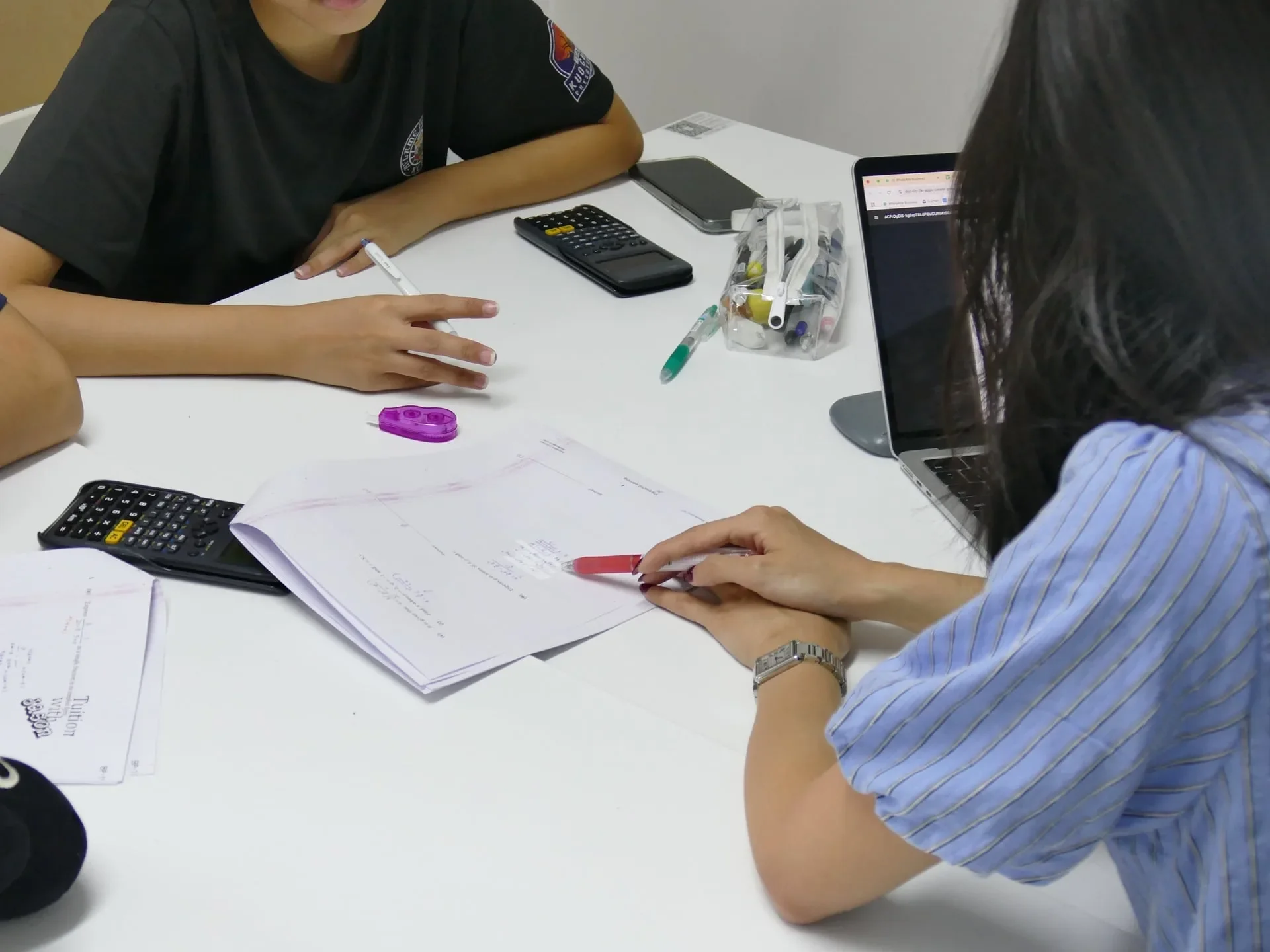
In small classes of 3-6 students, tutors can hear exactly how each student explains a concept and correct imprecise language immediately. A student who says "the water goes up the plant" is guided to say "water is absorbed by the roots and transported upwards through the stem" — practising complete, precise explanations in real time rather than through written feedback days later.
The Bishan centre at 152 Bishan St 11 is approximately 10 minutes' walk from Bishan MRT (NS17/CC15), making after-school Science tuition practical for students from KCPPS, Ai Tong, and Catholic High. Book a trial class (usually $18) for a diagnostic assessment of your child's current Science level, or WhatsApp us if you have any questions.
Common Questions About PSLE Science in Bishan
Is PSLE Science harder than other subjects?
PSLE Science has a substantial open-ended component (Booklet B, 40 marks), making it challenging for students who rely on memorisation. However, with proper process skill training, many students find Science becomes their strongest subject.
When should PSLE Science preparation start?
Science foundations begin in P3, but intensive PSLE preparation should start in P5 Term 3. The P5 syllabus introduces complex topics (electrical systems, reproductive systems) that require solid P3-P4 foundations. Ancourage Academy's P3 Science programme builds inquiry skills from day one, and the P4 Science develops systems thinking that underpins upper primary topics. See our P3-P6 Science tuition page for the full programme overview.
How do keywords affect Science scores?
Clear scientific explanation earns marks on explanation questions. Asked why water disappears from an open dish, "Water evaporates" only names the process, while "Water gains heat energy and evaporates into water vapour" supplies the cause an explanation question is marked on. Ancourage Academy's P6 Science programme specifically trains keyword precision.
Which PSLE Science topics are the hardest?
Energy conversion, electrical circuits, and human body systems tend to have the most challenging application questions. Energy conversion requires students to trace energy changes across multiple stages (for example, chemical energy in food to kinetic energy to heat energy), which involves understanding several concepts at once. Electrical circuits are difficult because students must predict what happens when components are added, removed, or rearranged in series and parallel configurations. Human body systems — particularly the digestive, circulatory, and respiratory systems — require students to explain how different organs work together, which demands both detailed factual knowledge and the ability to describe interconnected processes clearly.
How does Science performance affect the overall PSLE Score?
Science contributes one of four Achievement Levels to the PSLE Score. A strong Science result can offset a weaker performance in another subject. Many Bishan students find that with proper process skill training, Science becomes their strongest subject and provides a valuable buffer in their overall score. See the Primary Science answering techniques guide for detailed strategies.
How can I support my child's PSLE Science at home without adding pressure?
The most reassuring thing a parent can do is shift from quizzing facts to inviting explanation. Instead of asking "Is this answer right?", try "Can you tell me why that happens?" — this gently builds the structured, keyword-rich explanation that PSLE Booklet B rewards, without the tension of a test. Keep these moments short and curious rather than corrective, so Science stays something you explore together rather than another source of worry. If you would like a clearer sense of where your child stands, a calm diagnostic trial class (usually $18) at Ancourage Academy can show exactly which gaps are real and which are simply nerves. For a fuller picture of P5-P6 support, our upper primary Science tuition guide for Bishan walks through what to expect.
Related: PSLE Science Woodlands · Scoring in Primary Science · Science Tuition Bishan · tuition options near Bishan · PSLE Maths Preparation Bishan · PSLE English Preparation Bishan · Find Us in Bishan · Pricing · P4 to P5 Science · a guide to PSLE Science Misconceptions That Cost Marks