
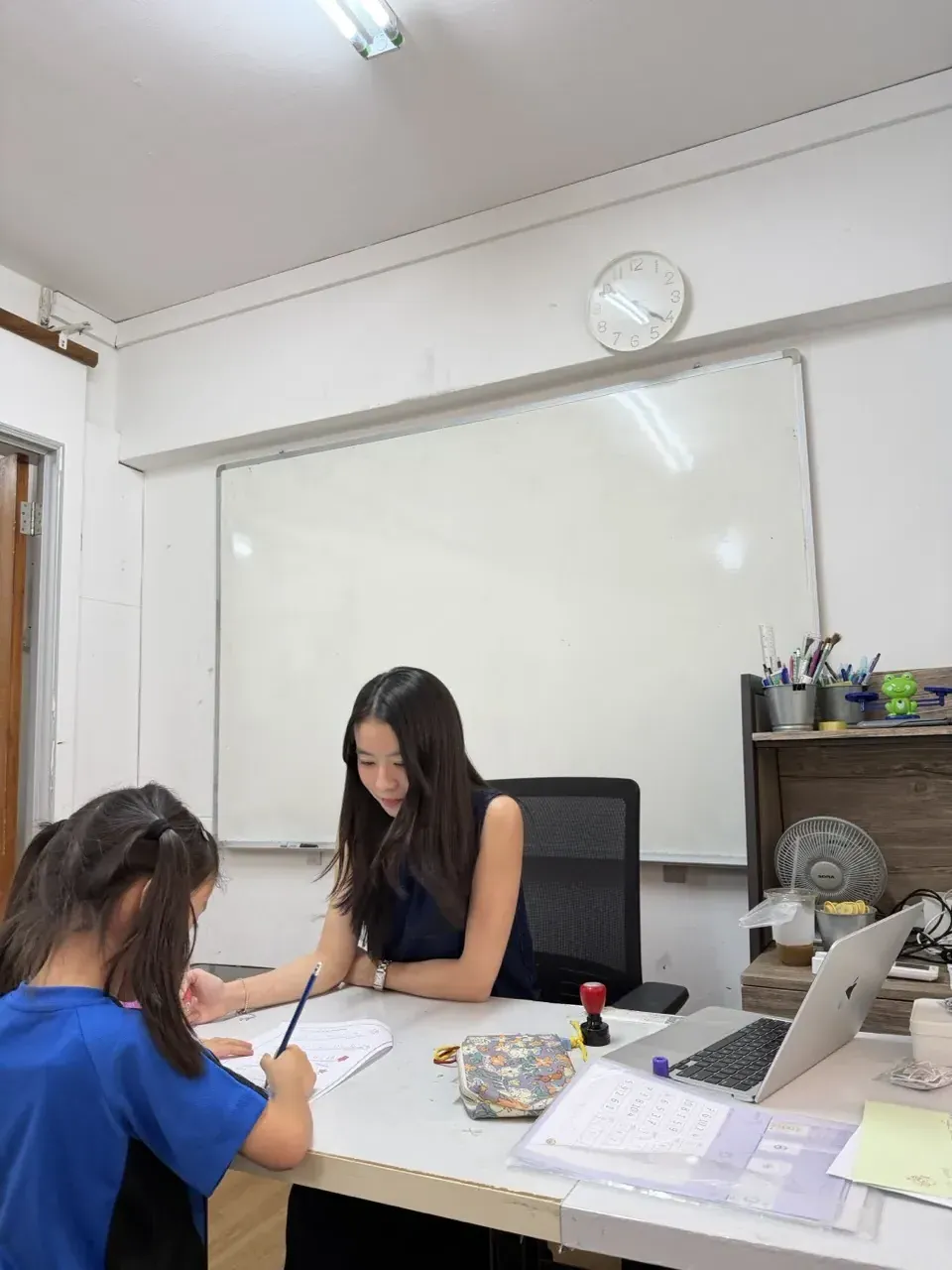
When your child hates Chinese tuition in Singapore, the problem is rarely laziness — it is almost always a mismatch between how your child learns and how Chinese is being taught. This guide explains why resistance happens, when to push through versus change approach, and what actually works for Chinese-resistant learners. Ancourage Academy's Chinese teachers see this every term; this guide is what we tell parents who ask.
When "I Don't Want to Go" Becomes Every Week
Many Singapore families report that Mother Tongue homework causes more household conflict than any other subject, and Chinese tuition resistance is the most common reason families change or drop tuition entirely. If your child dreads Chinese tuition every single week, you are not imagining the problem — and you are not alone.
The pattern is familiar: it starts with sighing and foot-dragging. Then come the excuses — stomach aches, "too much school homework," sudden tiredness every Tuesday at 4pm. Eventually the excuses stop and the refusal becomes direct. Sunday night arguments about Monday tuition become a fixture. The child shuts down during class, refuses to do Chinese homework, and grades continue to drop despite the hours and money spent. If your child has reached this point, Ancourage Academy offers a trial class (usually $18) with a diagnostic assessment to identify whether the problem is the method, the subject, or both. For a broader framework on re-engaging a child who has switched off from learning, see Ancourage Academy's guide to motivating reluctant learners.
Why Children Resist Chinese Tuition Specifically
When a child resists Chinese tuition but tolerates Chinese at school, the tuition method is almost certainly the problem — and the most common tuition methods for Chinese are exactly the ones most likely to trigger resistance in children who already find the subject difficult.
The background matters: most Singapore children grow up in English-dominant households where Chinese feels more like a second language than a Mother Tongue. This creates a real proficiency gap — MOE's primary Chinese curriculum standard (《小学华文课程标准》) sets an end-of-P6 target of recognising 1,600-1,700 characters in standard Chinese, and the PSLE Chinese examination (0005) is set in accordance with that standard rather than publishing a character count of its own. For a deeper look at why English-dominant children disengage from Chinese as a language, see Ancourage Academy's guide for English-dominant families. This article focuses on why the tuition itself becomes the battleground.
The tuition methods that drive resistance:
- Rote-first drilling: Copying characters ten times, memorising model compositions word-for-word, and grinding through comprehension passages without discussion. For a child already resistant to Chinese, this approach confirms their belief that the subject is boring and pointless. It treats language as mechanical memorisation rather than communication.
- Teaching above the child's actual level: A P4 student with P2-level reading ability who is drilled on P4 composition cannot access the content. Every session feels like failure because the foundation is missing. Many centres teach to a fixed curriculum level rather than the child's actual proficiency.
- Chinese-only instruction without scaffolding: Some centres insist on 100% Chinese instruction even when the child clearly does not understand. Immersion works for children with a strong oral base, but for English-dominant children, being unable to understand the teacher's explanations creates frustration, not fluency.
- Large classes with no speaking time: In a class of 15-20 students, a resistant child can sit silently for 90 minutes without saying a single word in Chinese. Passive listening produces very little progress in language learning — the child must produce language to improve.
- No connection to the child's interests: Textbook-only content about topics the child does not care about makes Chinese feel disconnected from real life. A child who loves cooking, sports, or gaming could build vocabulary through those interests — but most tuition centres do not make this connection.
If your child's current tuition matches two or more of these patterns, changing the approach is more likely to help than pushing harder with the same method. The rest of this guide helps you diagnose the problem and find what works.
The Forcing Trap: Why Pushing Harder Backfires
Forcing a resistant child to endure Chinese tuition they hate does not build discipline — it builds a permanent negative association with the language that can persist into adulthood and affect bilingual identity.
The psychology of language aversion is well-documented. When a child is compelled to study a language under stress — with threats, punishments, or guilt — the brain associates that language with anxiety. Every character, every textbook, every tuition session triggers a stress response rather than a learning response. The child is physically present in class but mentally checked out. Homework becomes a battlefield not because the child cannot do it, but because doing it feels emotionally painful.
The distinction between intrinsic and extrinsic motivation matters enormously in language learning. Extrinsic pressure — "you must pass PSLE Chinese" or "Grandma will be disappointed" — produces short-term compliance at best. Intrinsic motivation — genuine curiosity about Chinese stories, pride in being able to order food in Mandarin, enjoyment of a Chinese show — produces lasting engagement. No amount of forcing creates intrinsic motivation. In fact, excessive forcing destroys whatever intrinsic interest might have existed.
Research on forced language learning consistently shows that coerced learners retain less vocabulary, develop weaker speaking confidence, and are more likely to abandon the language entirely once external pressure is removed. If the goal is a child who can actually use Chinese in adult life — not just scrape through PSLE — then the approach must change before the aversion becomes permanent. For teenagers specifically, Ancourage Academy's guide for English-dominant families addresses the secondary school dimension of this challenge.
Is the Tuition Centre the Problem or the Subject?
Before concluding your child simply "hates Chinese," parents need to distinguish between a child who hates the way Chinese is being taught and a child experiencing genuine language anxiety — because the solutions are completely different.
Start with a diagnostic question: does your child resist only Chinese tuition, or does the resistance extend to Chinese at school, Chinese homework, and anything Chinese-related? If the aversion is specific to tuition but your child tolerates Chinese at school, the method or tutor is likely the issue. If the resistance is total, the problem runs deeper.
Questions to ask your child — and the key is to ask without judgment, ideally during a calm moment rather than after a tuition-related argument:
- "What happens during Chinese tuition that you do not like?" (Listen for specifics: boring worksheets, strict teacher, too fast, too much writing)
- "Is there any part of Chinese you do not mind?" (Some children enjoy speaking but hate writing, or like Chinese songs but dread textbooks)
- "Do you feel like you are learning anything in tuition?" (A child who feels stagnant despite attending has a legitimate grievance)
Observation checklist for parents attending or reviewing tuition sessions: Is the class mostly worksheet-based? Does the tutor speak predominantly in Chinese even when the child clearly does not understand? Is there any conversation or interaction, or is it lecture-and-copy? Does the tutor adjust difficulty to your child's actual level, or teach to a fixed curriculum? A tuition session that looks identical week after week, regardless of the child's progress, is a red flag.
What to Look for in Chinese Tuition That Works
The most effective Chinese tuition for resistant learners shares one principle: it builds from what the child can already do rather than drilling what they cannot, and it makes Chinese feel like communication rather than punishment.
Conversation-first methods work because they leverage the child's existing oral ability. Many English-dominant children actually understand more spoken Chinese than they realise — from grandparents, hawker uncles, MRT announcements, or family gatherings. Building from this oral foundation toward reading and writing feels natural, whereas starting from textbook vocabulary and character writing feels artificial. Ancourage Academy's ESB methodology applies this principle across all language subjects.
When evaluating a new Chinese tuition centre, ask these questions:
- "What is your class size?" — Anything above 8 students means your child can hide silently. For Chinese specifically, every student must speak during every lesson. Groups of 3-6 are the range where individual attention and peer interaction coexist.
- "Do you use bilingual explanations?" — For English-dominant children, a tutor who can explain a grammar concept in English before practising it in Chinese bridges the gap faster than pure immersion at a level the child cannot yet access.
- "How do you assess my child's starting level?" — A centre that places your child by school level (P4, Sec 2) without testing actual proficiency is likely to teach above their level. The right centre starts with a diagnostic that identifies where understanding actually breaks down.
- "Can my child try a session before committing?" — A single trial session reveals more than any website or brochure. Watch your child's body language: are they engaged, or have they shut down within 20 minutes?
- "Do you teach to the exam or teach the language?" — The best centres do both. Exam technique alone produces short-term results. Language building alone ignores the reality of PSLE and O-Level / SEC deadlines. Effective Chinese tuition layers exam strategy on top of genuine comprehension.
Outside of tuition, media immersion in Chinese (age-appropriate shows, music, apps) builds passive vocabulary over time — for detailed media recommendations by age group, see the guide for English-dominant families. At home, real-world Chinese touchpoints are also powerful: ordering food at hawker centres, reading MRT signs, writing Chinese New Year cards. A child who can confidently order "一碗云吞面加辣" feels ownership over the language in a way that copying characters from a textbook never achieves.
Age-Specific Strategies
What works for a P1 child who resists Chinese is fundamentally different from what works for a Sec 3 student facing O-Level / SEC Chinese — the intervention must match the developmental stage and the exam timeline.
P1-P2 (ages 7-8): At this stage, resistance is often about unfamiliarity rather than deep aversion. Games, Chinese picture books, short animated videos, and songs build exposure without pressure. Hanyu pinyin serves as a useful scaffold here — the goal is building comfort and basic vocabulary, not exam technique. Parents who read Chinese bedtime stories (even haltingly) model that Chinese is a normal part of life, not just a school subject. Keep sessions short — 20 to 30 minutes of engaged practice beats 90 minutes of reluctant copying.
P3-P6 (ages 9-12): PSLE looms, and parents feel urgency. The challenge is balancing exam preparation with maintaining whatever interest exists. Composition writing responds well to storytelling approaches — letting the child narrate a story verbally in Chinese first, then write it down, rather than staring at a blank page. For comprehension, building vocabulary through context (reading passages about topics the child cares about) works better than memorising word lists. Ancourage Academy's P5 Chinese programme specifically structures lessons around this balance between exam technique and genuine engagement.
Sec 1-4 (ages 13-16): Teenagers respond to practical value, not parental authority. Framing Chinese as a career advantage — bilingual professionals earn more, China's economic influence is growing, translation and interpretation are booming fields — resonates more than "because you have to." Exam strategy becomes important here: understanding O-Level / SEC Chinese paper structure, learning to score marks efficiently in oral and comprehension, and targeting realistic grade improvements. A student aiming for B3 from a current D7 needs a different plan than one aiming for A2 from B4.
When to Switch Approach vs When to Push Through
The decision to change your child's Chinese learning approach should be based on observable evidence over 3 to 4 months, not on weekly fluctuations in mood or a single bad exam result.
Signs the current approach needs changing:
- Your child's Chinese grades have not improved — or have worsened — after a full school term of consistent tuition attendance
- The resistance has escalated from reluctance to outright refusal, tears, or anxiety symptoms
- Your child cannot identify a single thing they have learned in recent tuition sessions
- The tuition centre or tutor has not communicated specific areas of weakness or a plan to address them
- Family conflict over Chinese has increased rather than decreased since tuition began
Signs your child needs time and consistency (do not switch yet):
- Grades are slowly improving, even if your child still complains
- Your child can articulate what they are learning, even if they do not enjoy it
- The tutor provides regular feedback and adjusts the approach based on progress
- Resistance is manageable — grumbling, not meltdowns
Some parents consider applying for Mother Tongue exemption. Under MOE's Mother Tongue Language policy, exemptions are granted only in specific circumstances — returning from overseas having had no opportunity to learn an official Mother Tongue for a sustained period, or special educational needs with severe difficulty coping with overall learning, not with the Mother Tongue subject alone. For the vast majority of Singapore children, exemption is not available — and even when it is, removing Chinese entirely means losing bilingual advantages that matter in Singapore's workforce. The better question is usually not "can we drop Chinese?" but "how do we make Chinese work differently?"
Ancourage Academy recommends a trial class (usually $18) as a low-commitment way to assess whether a different teaching approach makes a difference. If a single session shifts your child's body language from shut-down to engaged, the problem was the method, not the subject.
How Ancourage Academy Teaches Chinese Differently
Ancourage Academy's Chinese programme is built specifically for English-dominant learners — using conversation as the entry point, bilingual explanations as the bridge, and exam technique as the destination, rather than starting and ending with worksheets.
The small-group format (3 to 6 students) means every child speaks during every lesson. There is no hiding in the back row of a 20-student class. Tutors hear each student's pronunciation, catch comprehension gaps in real time, and adjust the pace to the group's actual level — not the level the textbook assumes. This is particularly important for Chinese, where passive learning (listening without speaking) produces very little progress.
Ancourage Academy's bilingual teaching team understands the specific challenges English-dominant children face because many of the tutors navigated the same language gap themselves. Grammar is explained through English-Chinese comparison — showing how Chinese sentence structures differ from English rather than presenting Chinese grammar rules in isolation. Vocabulary is built through thematic clusters connected to the student's interests and exam topics, not random character lists.
The approach builds from interest, not from textbooks. A child interested in cooking might start with food vocabulary and progress to reading simple Chinese recipes. A child who likes sports might learn through Chinese commentary and sports articles. The textbook content and exam techniques are layered on top of this interest-based foundation — so by the time a student practises a PSLE comprehension passage, they already have the vocabulary and confidence to attempt it without shutting down.
One P4 student joined Ancourage Academy after refusing to attend her previous Chinese tuition for three consecutive weeks. Her diagnostic assessment revealed that she could speak conversational Mandarin fluently but could not read more than half the P3-level characters expected for her age. The previous centre had been drilling P4 composition — content she could not access without the foundational reading skills. Within one term of targeted character recognition work combined with interest-based reading, she was voluntarily completing Chinese homework and her school teacher reported a noticeable change in participation.
Ancourage Academy operates from Bishan (152 Bishan Street 11, #01-215) and Woodlands (Vista Point, 548 Woodlands Drive 44). Both centres offer interest-led primary Chinese tuition as well as secondary Chinese support. For more on helping English-dominant and Chinese-resistant learners, explore our Chinese learning hub. Families in the north can also browse the tuition centre guide for North Singapore. View transparent pricing or book a trial class (usually $18) at Woodlands.
Common Questions About Children Who Resist Chinese
These are the five questions Ancourage Academy's Chinese tutors hear most often from parents of resistant learners — answered with the nuance each situation deserves.
Is it normal for my child to hate Chinese in Singapore?
Yes — it is one of the most common academic conflicts in Singapore families. English is the dominant language in most homes, schools, and media. A child who thinks in English but must study Chinese at school-level rigour is experiencing a genuine proficiency gap, not a character flaw. The resistance is a signal that the current approach is not working, not that your child is lazy or defiant. Many children who "hated Chinese" in primary school develop genuine appreciation for the language when the teaching method changes.
Should I switch to a Chinese enrichment centre instead of tuition?
It depends on your goal. Chinese enrichment centres focus on cultural appreciation, conversational skills, and creative activities — which can rebuild a positive relationship with the language. However, they typically do not prepare students for PSLE or O-Level / SEC Chinese exam formats. If your child needs both attitude change and grade improvement, look for a tuition centre like Ancourage Academy that combines engagement-first teaching with structured exam preparation. A pure enrichment approach works better for P1-P2 children; from P3 onward, exam readiness must be part of the equation.
My child is fluent in spoken Chinese but fails written exams. Why?
Spoken and written Chinese are almost separate skill sets. A child can hold a fluent conversation using perhaps 800 to 1,000 commonly spoken words but face exam passages built on the 1,600-1,700 characters MOE expects a P6 pupil to recognise. Written Chinese also demands formal grammar structures, idioms (成语), and composition techniques that rarely appear in casual speech. The solution is bridging the gap between oral fluency and written literacy — using the child's speaking confidence as a foundation for building reading and writing skills systematically.
Will my child's Chinese improve if I speak more Chinese at home?
Yes, but the impact depends on consistency and naturalness. Switching abruptly to all-Chinese at home when the family has always spoken English can feel forced and increase resistance. A more effective approach is introducing Chinese in specific, natural contexts — speaking Chinese during meals, watching one Chinese show per week together, or designating "Chinese Sundays" where the family tries to use Mandarin for casual conversation. Even 20 to 30 minutes of natural Chinese exposure daily builds listening comprehension and vocabulary passively. The key word is natural — it must not feel like an extension of homework.
Should I consider Higher Chinese or drop to standard Chinese?
If your child is struggling with standard Chinese, Higher Chinese will likely increase frustration without proportional benefit — the Higher Chinese syllabus demands substantially more vocabulary, denser comprehension, and composition sophistication. However, dropping from Higher Chinese to standard Chinese is not failure; it is a strategic reallocation. At O-Level / SEC, a child who scores B3 in standard Chinese contributes more to their aggregate than one who scores D7 in Higher Chinese. Discuss the decision with your child's school Chinese teacher, and — for secondary students — weigh whether the 2 bonus points for junior college admission (awarded for A1–C6 in both English and Higher Chinese) are realistically achievable given your child's current level. Ancourage Academy's tutors can provide an objective assessment during a trial class.