P3 English Tuition
Ancourage Academy · Primary · P3
Content reviewed: Sep 2026
P3 English tuition at Ancourage Academy in Bishan and Woodlands, Singapore. Primary 3 marks the biggest jump in English — students encounter inferential comprehension, structured composition writing, and grammar cloze for the first time. In our small classes of 3-6 students, P3 children learn to plan stories, answer beyond-the-text questions, and write with purpose. MOE STELLAR-aligned.
In person at our Bishan and Woodlands centres.
What Makes Us Different
Our proven teaching methodology combines evidence-based approaches for maximum learning effectiveness
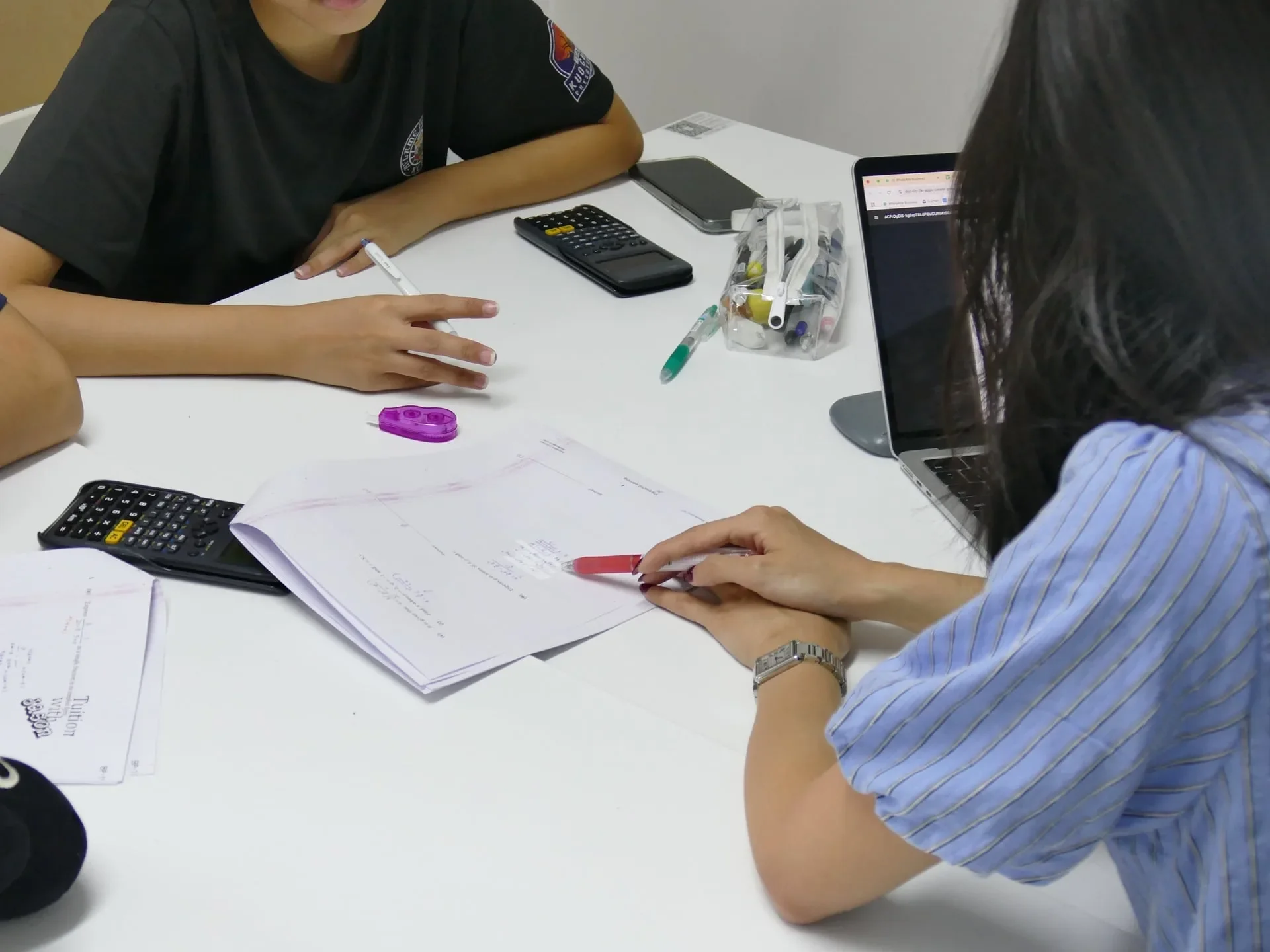
Ebbinghaus Memory Theory
Spaced retrieval of grammar rules, vocabulary, and comprehension techniques — weekly language quizzes, fortnightly essay rewrites, and term-end timed practices — so skills stay exam-ready rather than crammed and forgotten.
Socratic Questioning
Targeted questions on passages and compositions — 'What is the author's purpose here?' and 'Can you rephrase this more precisely?' — training students to evaluate language critically and revise their own writing.
Bruner's Scaffolding
From annotated model answers to guided drafts to independent composition — tutors progressively withdraw sentence starters, planning scaffolds, and editing checklists as students internalise the writing process.
Key Learning Outcomes
Master Key Concepts
Deep understanding of core topics aligned with MOE syllabus
Critical Thinking
Develop analytical and problem-solving skills
Exam Confidence
Strategic exam techniques and time management
Consistent Results
Improved grades and academic performance
What parents have shared with us:
- Improved ability to interpret and analyse texts with accuracy
- More structured and creative writing, with attention to detail
- Greater confidence in oral expression and class participation
Course Structure
Duration
1.5 hours per lesson
Full coverage with interactive learning time
Class Size
3-6 students per class
Close guidance, timely feedback, and ample practice
Materials
All materials provided
No material fees — all worksheets and resources included
Curriculum Overview
- ✓Reading comprehension: Skills to identify key ideas, infer meaning, and evaluate characters and themes in texts.
- ✓Vocabulary and expressions: Expansion through thematic texts, idioms, and descriptive words for writing and speech.
- ✓Grammar proficiency: Stronger command of tenses, conjunctions, pronouns, and sentence variety.
- ✓Writing development: Construction of well-organised paragraphs leading into full compositions, with attention to coherence and creativity.
- ✓Comprehension strategies: Ability to answer literal, inferential, and applied questions with confidence.
- ✓Oral communication: Storytelling, reading aloud, and group discussions to build fluency and persuasive expression.
Why Is P3 English So Much Harder Than P2?
- 1
Inferential comprehension — understanding implied meanings rather than just stated facts
- 2
Paragraph organisation — structuring ideas with topic sentences and supporting details
- 3
Vocabulary in context — using contextual clues to understand unfamiliar words
- 4
Grammar agreement — maintaining consistency in tense and subject-verb agreement
- 5
Composition planning — organising ideas before writing rather than just starting
Learning Progression
Builds On
P2 English with sentence construction, basic comprehension, and simple writing
Prepares For
P4 English with longer compositions, deeper analysis, and more complex grammar
Key Transition
Composition structure takes shape in P3, the final lower primary year — students develop planning strategies to craft stories with purposeful openings, engaging middles, and satisfying endings.
“In P1 to P3, reading confidence is everything — children who enjoy books naturally build the vocabulary and sentence patterns that make writing easier later. We focus on phonics, guided reading, and creative expression so that English feels exciting, not intimidating.”
Early Childhood & Primary Education Specialist
Related Courses
Explore other courses that complement your learning journey
P3 Maths
Master fractions and bar model drawing for problem-solving
P3 Science
Explore scientific concepts through observation and inquiry
P4 English
Progress to full-length compositions and advanced comprehension
P2 English
Review P2 foundations for stronger continuity.
P1 English
Same subject family: P1.
P5 English
Same subject family: P5.
P6 English
Same subject family: P6.
Frequently Asked Questions
P3 marks the transition to structured writing and deeper comprehension. Students move from sentence-level work to planning full compositions with beginnings, middles, and endings. Comprehension passages become longer and require inferential thinking. Read our guide on building strong language foundations.
We teach students to look beyond stated facts — to understand implied meanings, character motivations, and author intentions. Through guided practice with various question types, students develop the critical thinking skills needed for higher-order questions.
We teach explicit planning strategies including story maps, paragraph frameworks, and outlining techniques. Students learn to brainstorm, organise, and develop their ideas systematically before writing, using topic sentences and supporting details for each paragraph. This results in more coherent, well-structured, and engaging compositions. Read our primary English tips.
Our Primary 3 English tuition is available at our Bishan centre (10 min from Bishan MRT, Circle and North-South Lines) and Woodlands centre (5 min from Woodlands South MRT, Thomson-East Coast Line). Students from Kuo Chuan Presbyterian Primary, Catholic High Primary, Ai Tong School in Bishan, and Woodlands Primary, Admiralty Primary, Greenwood Primary, Innova Primary in Woodlands, attend our classes.
Our small-group classes are capped at 6 students and typically run 3 to 6, so every learner receives close guidance, timely feedback, and ample practice.
Each lesson is 1.5 hours, providing ample time for thorough coverage of topics and interactive learning.
Yes. All lesson materials and worksheets are provided and included in the fees. Students should bring regular stationery and, where applicable, school textbooks/workbooks for reference.
Yes. Our materials and pacing align with the MOE syllabus. External syllabuses (e.g. IGCSE, IB) are available upon request.
Helpful Resources for Parents
In-depth guides on preparation strategies and learning tips
SAP School English Tuition Bishan: Ai Tong, Catholic High
English tuition addressing SAP-specific challenges for Ai Tong, Catholic High, and Kuo Chuan students in Bishan — bridging Chinese-dominant immersion gaps in vocabulary, composition, and comprehension.
Read more →PSLE English: Strategies That Help Students Score
Score higher in PSLE English with structured composition openings, synthesis and transformation shortcuts, and oral stimulus-based conversation techniques.
Read more →Primary English Tuition in Woodlands: P1-P4 Guide
P1-P4 English tuition in Woodlands — composition, comprehension, oral skills. Strategies for Woodlands, Marsiling, Fuchun Primary in groups of 3-6.
Read more →Signs Your Child Needs Tuition: An Honest Assessment
Not every grade drop means your child needs tuition. Evidence-based signs that external support helps — and situations where tuition wastes money.
Read more →Best Subjects for Tuition: A Singapore Parent's ROI Guide
Not all subjects need tuition equally. Learn which subjects typically benefit most from tuition, when to invest, and how to maximise your tuition ROI.
Read more →GEP Singapore: What Parents Need to Know (2026 Changes)
The GEP will stop admitting new students from 2027. MOE replaces it with advanced modules at 15 schools and expanded school-based HAL provisions.
Read more →P1-P2 English Tuition in Bishan: Lower Primary Guide
Lower primary English tuition guide for Bishan parents. Phonics, reading, and early writing strategies for P1-P2 students at Kuo Chuan, Ai Tong, and Catholic High.
Read more →P1-P2 English Tuition in Woodlands: Lower Primary Guide
P1-P2 English tuition in Woodlands builds phonics, reading fluency, and early writing. Strategies for Woodlands, Marsiling, and Fuchun Primary students.
Read more →Deepen Your Learning
Comprehensive topic guides covering everything in this subject area.
PSLE
Everything parents and students need to know about the Primary School Leaving Examination — from subject-specific strategies to scoring, stress management, and school selection.
Browse guide →English
Master English Language in Singapore — from composition writing and comprehension skills at Primary level to argumentative essays and summary writing for O-Level / SEC.
Browse guide →Study Tips & Exam Prep
Practical study tips and exam preparation strategies that work — from effective revision techniques and time management to past year paper strategies and exam day tips for Singapore students.
Browse guide →
Ready to Get Started?
Enquire now and experience our proven teaching methodology
💬 Have questions? WhatsApp us anytime — we typically respond within 2 hours
Also from Ancourage: Art classes for kids, teens & adults →