JC 1 H2 Chemistry Tuition
Ancourage Academy · JC · JC1
Content reviewed: Sep 2026
JC1 (J1) H2 Chemistry tuition at Ancourage Academy in Singapore (Bishan & Woodlands) offers personalised classes of 3-6 students, following Singapore's MOE A-Level syllabus. Weekly 2-hour lessons use our ESB methodology to build advanced skills in organic mechanisms, inorganic chemistry, and practical techniques for medicine and science pathways. "Understanding chemical principles unlocks patterns that make complex reactions predictable," shares our curriculum director. Our structured approach develops the mechanistic thinking and precision required for top A-Level performance.
In person at our Bishan and Woodlands centres.
What Makes Us Different
Our proven teaching methodology combines evidence-based approaches for maximum learning effectiveness
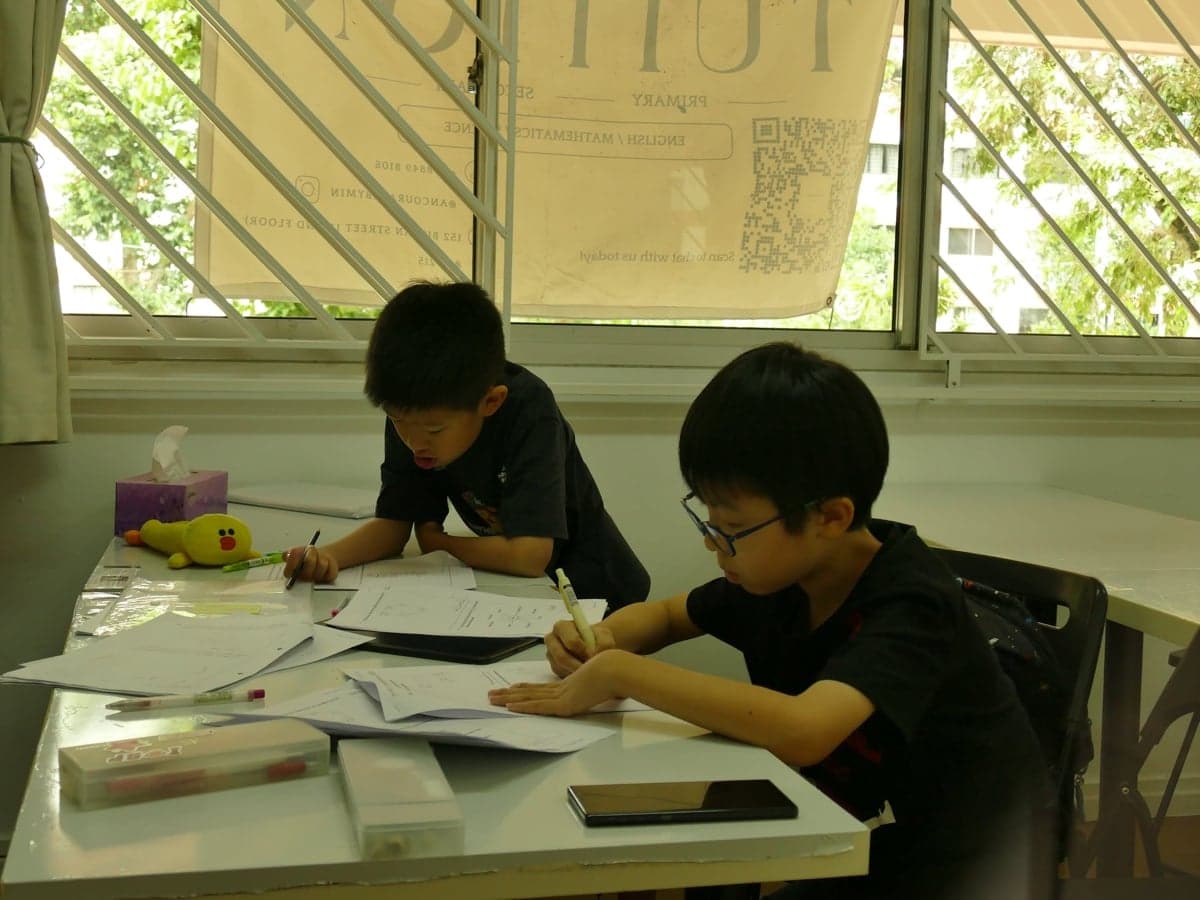
Ebbinghaus Memory Theory
Student-managed revision across specialised science disciplines — identifying weak topics through past-paper analysis and scheduling retrieval cycles accordingly — developing the self-assessment skills essential for the A-Level science papers.
Socratic Questioning
Rigorous questioning on experimental design and data interpretation — 'What are the limitations of this method?' and 'How does this finding challenge the accepted model?' — cultivating the analytical depth expected in higher-level science.
Bruner's Scaffolding
Minimal guidance on open-ended problems — tutors present unfamiliar experimental scenarios and observe, intervening only to correct fundamental misconceptions — preparing students for the independent investigation demands of advanced science.
Key Learning Outcomes
Master Key Concepts
Deep understanding of core topics aligned with MOE syllabus
Critical Thinking
Develop analytical and problem-solving skills
Exam Confidence
Strategic exam techniques and time management
Consistent Results
Improved grades and academic performance
Progress shows through:
- Improved accuracy in applying chemical principles to unfamiliar contexts
- Greater confidence in handling both data-based and free-response questions
- Stronger performance in practicals and written assessments
Course Structure
Duration
2 hours per lesson
Full coverage with interactive learning time
Class Size
3-6 students per class
Close guidance, timely feedback, and ample practice
Materials
All materials provided
No material fees — all worksheets and resources included
Curriculum Overview
- ✓Structure and bonding — Mastery of atomic structure, periodicity, ionic, covalent, and metallic bonding; explaining physical and chemical properties.
- ✓The gaseous state — Ideal gas equation (pV=nRT), kinetic theory of gases, and real gas behaviour.
- ✓Energetics — Enthalpy changes, Hess's Law, bond energies, and applications to energy cycles.
- ✓Kinetics — Factors affecting reaction rates, collision theory, and energy profiles.
- ✓Chemical equilibria — Dynamic equilibrium, Le Chatelier's Principle, equilibrium constants (Kc, Kp), and solubility product (Ksp) calculations.
- ✓Electrochemistry and redox — Balancing redox equations, electrode potentials, and electrochemical cells.
- ✓Acids, bases and buffers — Theories of acids and bases, pH calculations, buffer systems, and titration curves.
- ✓Inorganic chemistry — Periodic trends across Groups 2 and 17, transition element chemistry, and industrial applications.
- ✓Organic chemistry — Structure, nomenclature, mechanisms, and reactions of hydrocarbons, halogenoalkanes, alcohols, aldehydes, ketones, carboxylic acids, esters, amines, amides, arenes, amino acids, and proteins.
- ✓Thermodynamics — Entropy, Gibbs free energy, Born-Haber cycles, and predicting the feasibility of reactions.
- ✓Experimental skills — Planning and carrying out experiments, mastering qualitative analysis, and accurate data interpretation.
- ✓Examination readiness — Familiarity with H2 Chemistry exam structure (Papers 1–4), precision in using chemical terminology, and strategies for structured and essay-type questions.
What JC1 H2 Chemistry students commonly work on
- 1
Organic synthesis — planning multi-step reaction pathways and mechanism explanations
- 2
Equilibrium calculations — computing Kc, Kp, and pH for complex systems
- 3
Electrochemistry — predicting cell EMF and electrode reactions from first principles
- 4
Thermodynamics — deciding reaction feasibility from entropy and Gibbs free energy changes
- 5
Practical design — planning experiments with appropriate controls and variables
Learning Progression
Builds On
O-Level Chemistry and strong mathematical foundations
Prepares For
A-Level H2 Chemistry examination and medicine/chemistry degrees at university
Key Transition
H2 Chemistry requires mechanistic thinking — students must understand why reactions occur, not just what products form.
“A-Level Chemistry stops being a pile of separate topics once you see that energetics, equilibrium and kinetics all answer the same two questions: will this reaction happen, and how fast? Students who hold that thread stop relearning each chapter from scratch.”
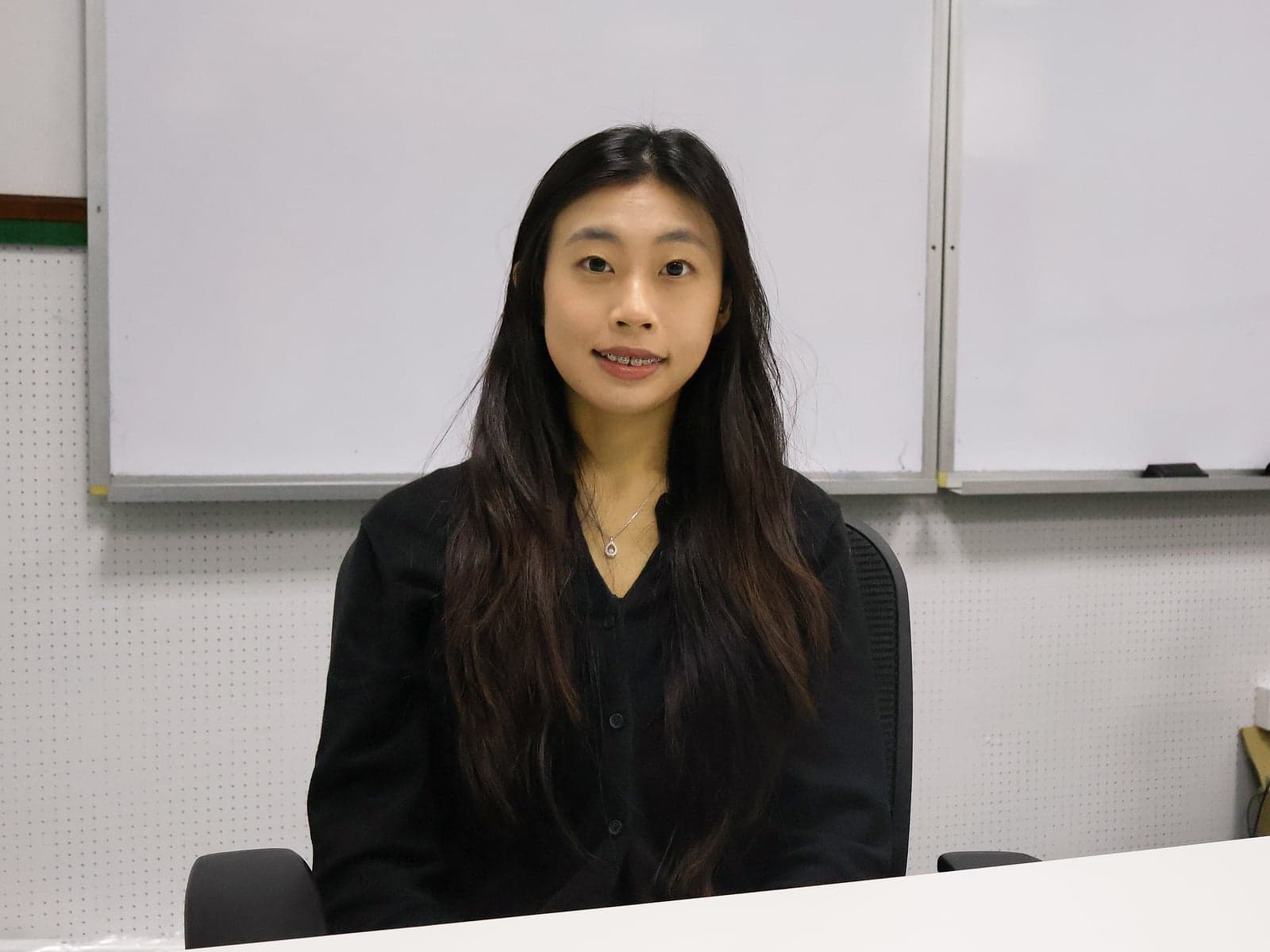
Woodlands Centre Manager & Teacher
Related Courses
Explore other courses that complement your learning journey
JC1 H2 Biology
Common combination for medical and life sciences pathways
JC1 H2 Maths
Strong maths foundations support chemistry calculations
JC2 H2 Chemistry
Continue to A-Level preparation with intensive exam strategies
JC 1 H1 Chemistry
Same subject family: JC1 · H1 track.
JC 2 H1 Chemistry
Same subject family: JC2 · H1 track.
JC 1 H2 Physics
Recommends this course as a related programme.
Frequently Asked Questions
Yes. H2 Chemistry is a required prerequisite for medicine at both NUS Yong Loo Lin School of Medicine and NTU Lee Kong Chian School of Medicine, alongside an H2 pass in either Biology or Physics. Our JC Chem programme at the H2 level provides rigorous training in organic chemistry, biochemistry concepts, and laboratory skills — essential preparation for medical studies. Read our H2 Chemistry guide.
Organic chemistry requires understanding mechanisms rather than memorising reactions. We teach students to reason through electron movements and predict products, building systematic understanding that works for unfamiliar compounds.
The practical paper (Paper 4) is significant for H2 Chemistry. We develop laboratory skills through hands-on practice, teach qualitative analysis systematically, and prepare students for the planning and data interpretation aspects of the practical exam.
Yes — our Bishan centre is a 10-minute walk from Bishan MRT (Circle and North-South Lines). JC1 students from Eunoia Junior College, Raffles Institution, Catholic Junior College and surrounding schools attend our H2 Chemistry classes. We also have a Woodlands centre for families in the North. Book a trial class at Bishan.
Our small-group classes are capped at 6 students and typically run 3 to 6, so every learner receives close guidance, timely feedback, and ample practice.
Each lesson is 2 hours, providing ample time for thorough coverage of topics and interactive learning.
Yes. All lesson materials and worksheets are provided and included in the fees. Students should bring regular stationery and, where applicable, school textbooks/workbooks for reference.
Yes. Our materials and pacing align with the MOE syllabus. External syllabuses (e.g. IGCSE, IB) are available upon request.
Helpful Resources for Parents
In-depth guides on preparation strategies and learning tips
Secondary to JC Transition: What Students Must Know
The jump from Secondary to JC is one of the toughest academic transitions. Learn what changes, how to prepare, and strategies to thrive in Junior College.
Read more →H2 Chemistry JC Guide: Syllabus 9476 & Exam Strategy
H2 Chemistry (Syllabus 9476) tests physical, inorganic, and organic chemistry across four papers. Here is how JC students can prepare for the A-Level exam.
Read more →JC Tuition in Bishan: A-Level Preparation Guide
JCs near Bishan include Eunoia JC, Raffles Institution, and Catholic JC. A-Level preparation strategies across key H1 and H2 subjects.
Read more →Deepen Your Learning
Comprehensive topic guides covering everything in this subject area.
Science
Your guide to Science education in Singapore — from Primary school foundations to Secondary combined and pure sciences, including Biology, Chemistry, and Physics.
Browse guide →Junior College (JC)
Navigate Junior College life in Singapore — from choosing H1/H2 subject combinations to mastering A-Level content, managing the JC workload, and preparing for university admissions.
Browse guide →Study Tips & Exam Prep
Practical study tips and exam preparation strategies that work — from effective revision techniques and time management to past year paper strategies and exam day tips for Singapore students.
Browse guide →
Ready to Get Started?
Enquire now and experience our proven teaching methodology
💬 Have questions? WhatsApp us anytime — we typically respond within 2 hours
Also from Ancourage: Art classes for kids, teens & adults →