IB PYP 4 Maths Tuition
Ancourage Academy · IB PYP · PYP 4
Content reviewed: Sep 2026
IB PYP 4 Mathematics tuition at Ancourage Academy in Singapore (Bishan & Woodlands) offers small-group classes of 3-6 students, aligned with the IB Primary Years Programme. Weekly 1.5-hour lessons use our ESB methodology to develop fraction operations, decimal concepts, and algebraic thinking through hands-on exploration. "Mathematical thinking in PYP starts with curiosity—students who ask questions develop deeper number sense," shares our curriculum director. Our structured approach helps children develop confident problem-solving skills and mathematical reasoning for complex multi-step applications.
In person at our Bishan and Woodlands centres.
What Makes Us Different
Our proven teaching methodology combines evidence-based approaches for maximum learning effectiveness
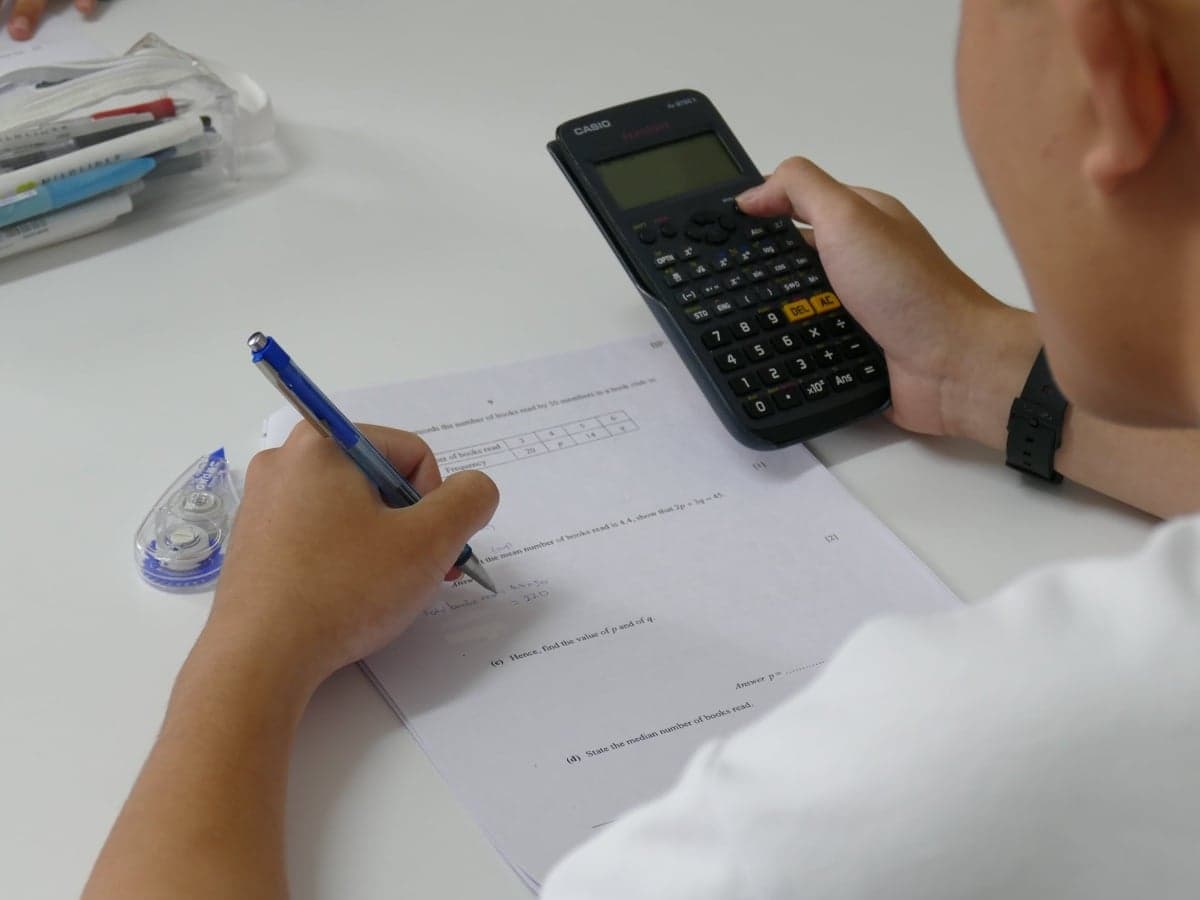
Ebbinghaus Memory Theory
Planned retrieval of problem-solving heuristics and formulae at expanding intervals — weekly topical practices, monthly mixed-topic papers, and term revision cycles — keeping methods accessible so exam performance matches classroom understanding.
Socratic Questioning
Questions that probe mathematical reasoning — 'Why did you choose this heuristic?' and 'What changes if the ratio doubles?' — exposing gaps between procedural fluency and conceptual understanding before they compound.
Bruner's Scaffolding
From fully worked examples to guided practice with prompts to independent problem-solving — tutors systematically fade hints so students develop their own approach to unfamiliar question types.
Key Learning Outcomes
Master Key Concepts
Deep understanding of core topics aligned with MOE syllabus
Critical Thinking
Develop analytical and problem-solving skills
Exam Confidence
Strategic exam techniques and time management
Consistent Results
Improved grades and academic performance
Progress shows through:
- Greater fluency with multiplication, division, and fractions
- Improved ability to solve multi-step word problems logically
- More confidence in applying maths across inquiry themes and everyday contexts
Course Structure
Duration
1.5 hours per lesson
Full coverage with interactive learning time
Class Size
3-6 students per class
Close guidance, timely feedback, and ample practice
Materials
All materials provided
No material fees — all worksheets and resources included
Curriculum Overview
- ✓Number sense — Understanding place value to 100,000; comparing and ordering large numbers; applying number patterns and sequences.
- ✓Operations — Fluency in multiplication and division; solving multi-step problems involving all four operations; exploring factors and multiples.
- ✓Fractions and decimals — Understanding equivalence, comparing fractions, adding/subtracting like denominators, and introduction to decimals.
- ✓Patterns and algebraic thinking — Identifying complex patterns; forming general rules; simple use of variables in problem contexts.
- ✓Measurement — Using standard units for perimeter, area, mass, volume, and time; solving applied measurement problems.
- ✓Geometry — Classifying 2D and 3D shapes by properties; exploring angles, symmetry, and transformations.
- ✓Data handling — Collecting, organising, and interpreting data using bar graphs, line plots, and pictograms.
- ✓Mathematical communication — Justifying reasoning using numbers, diagrams, and mathematical vocabulary with clarity.
What PYP 4 Maths students commonly work on
- 1
Fraction operations — adding and subtracting fractions with different denominators
- 2
Multi-step problem-solving — breaking complex problems into manageable steps
- 3
Algebraic thinking — recognising patterns and expressing them with variables
- 4
Measurement application — calculating perimeter and area of compound shapes
- 5
Mathematical justification — explaining not just what they did but why it works
Learning Progression
Builds On
PYP 3 foundations in multiplication/division fluency and fraction concepts
Prepares For
PYP 5 Mathematics with decimal operations and more complex algebraic reasoning
Key Transition
PYP 4 deepens fractional thinking — students develop conceptual understanding of fractions as numbers, not just parts of shapes.
“IB PYP Mathematics emphasises conceptual understanding over rote procedures — students explore number patterns, spatial reasoning, and data handling through inquiry. We strengthen these conceptual foundations with targeted fluency practice so students feel equally confident in both the investigative and the skills-based aspects of the PYP framework.”
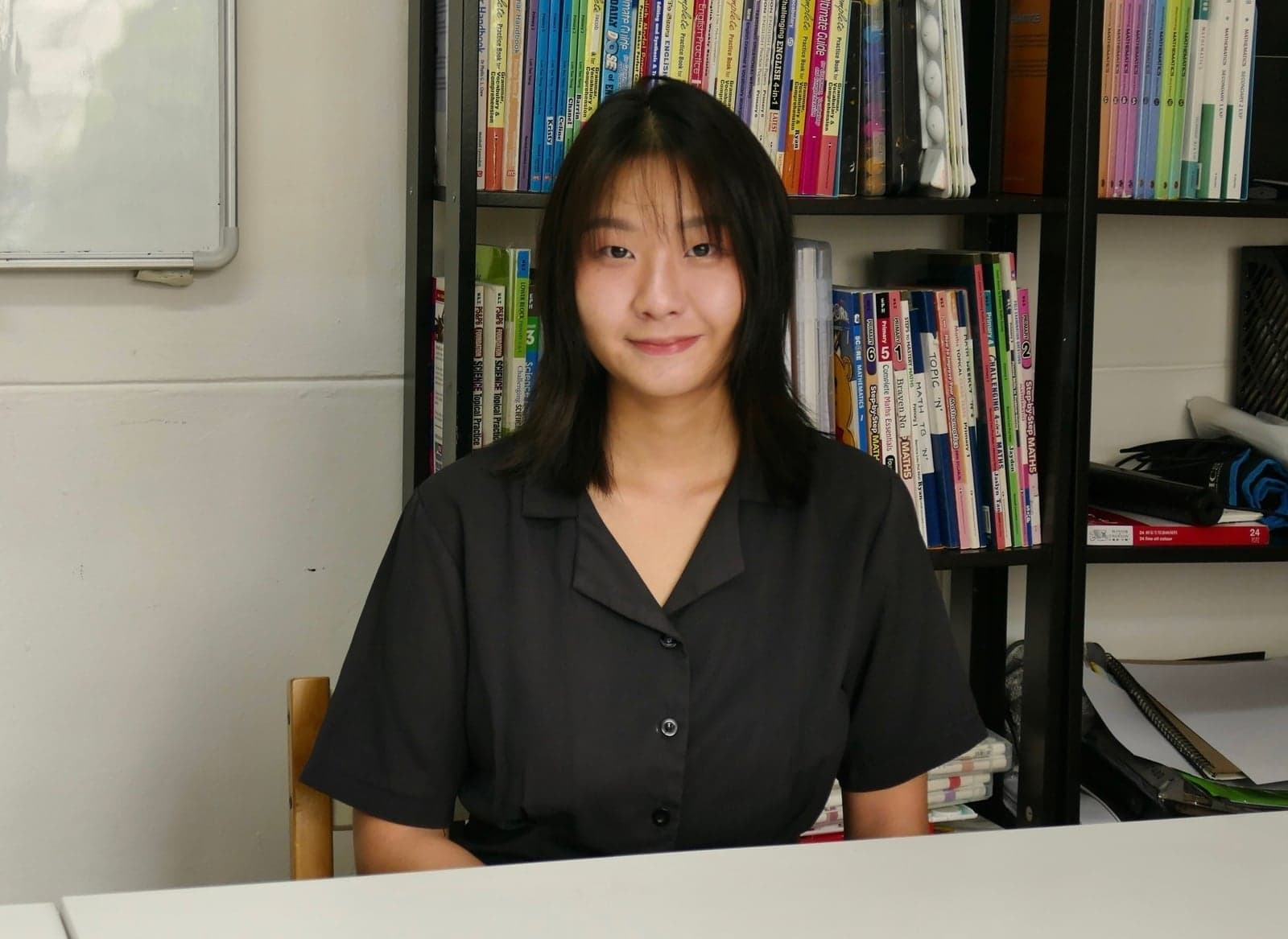
Early Childhood & Primary Education Specialist
Related Courses
Explore other courses that complement your learning journey
IB PYP 4 English
Develop communication skills for mathematical reasoning
IB PYP 4 Science
Apply mathematical skills in scientific investigations
IB PYP 5 Mathematics
Progress to decimal operations and algebraic reasoning
PYP 3 Mathematics
Review PYP 3 foundations for stronger continuity.
IB PYP 1 Maths
Same subject family: PYP 1.
IB PYP 2 Maths
Same subject family: PYP 2.
IB PYP 6 Maths
Same subject family: PYP 6.
IB PYP 4 Chinese
Recommends this course as a related programme.
Frequently Asked Questions
Fractional thinking means understanding fractions as numbers on a number line, not just parts of shapes. PYP 4 students develop deep conceptual understanding of equivalence, comparison, and operations with fractions, preparing them for decimals and percentages. Read our IB vs MOE curriculum comparison.
PYP 4 introduces variables and patterns that can be expressed as rules. Students learn to identify patterns, form general rules, and begin using simple algebraic expressions to describe relationships, building the foundation for formal algebra.
PYP 4 focuses on multi-step problem-solving where students must break complex problems into manageable steps, choose appropriate operations, and justify their reasoning. This develops mathematical thinking that transfers across contexts.
Our small-group classes are capped at 6 students and typically run 3 to 6, so every learner receives close guidance, timely feedback, and ample practice.
Each lesson is 1.5 hours, providing ample time for thorough coverage of topics and interactive learning.
Yes. All lesson materials and worksheets are provided and included in the fees. Students should bring regular stationery and, where applicable, school textbooks/workbooks for reference.
Yes. Our materials and pacing align with the MOE syllabus. External syllabuses (e.g. IGCSE, IB) are available upon request.
Helpful Resources for Parents
In-depth guides on preparation strategies and learning tips
IB vs MOE Curriculum: Which Path Is Right for Your Child?
IB and MOE curricula suit different learning styles and goals. Compare teaching approaches, assessment methods, and outcomes to choose the right path.
Read more →Primary Maths Mistakes in Singapore: What Fixes Work
After years of tutoring Primary students in Singapore, here are the maths mistakes we see regularly — and the practical strategies that work.
Read more →How to Choose the Right Tuition Centre in Singapore
An estimated 1,000-plus tuition centres compete in Singapore. How to evaluate class size, teaching methods, tutor qualifications, and pricing transparency before enrolling.
Read more →Deepen Your Learning
Comprehensive topic guides covering everything in this subject area.
Mathematics
Your complete guide to Mathematics education in Singapore — from Primary school foundations through Secondary E-Maths and A-Maths to JC H2 Mathematics and beyond.
Browse guide →Study Tips & Exam Prep
Practical study tips and exam preparation strategies that work — from effective revision techniques and time management to past year paper strategies and exam day tips for Singapore students.
Browse guide →
Ready to Get Started?
Enquire now and experience our proven teaching methodology
💬 Have questions? WhatsApp us anytime — we typically respond within 2 hours
Also from Ancourage: Art classes for kids, teens & adults →