Sec 3 G3 Chemistry Tuition
Ancourage Academy · Secondary · Sec 3
Content reviewed: Sep 2026
Secondary 3 (Sec 3) Pure Chemistry tuition at Ancourage Academy in Singapore (Bishan & Woodlands) offers focused classes capped at 6 students, following Singapore's MOE syllabus. Weekly 2-hour lessons use our ESB methodology to build conceptual mastery, experimental skills, and real-world application for O-Level / SEC preparation. "Chemistry clicks when students visualise molecular interactions, not just memorise equations," observes our academic specialists. Our structured approach helps students connect particle theory with observable phenomena.
In person at our Bishan and Woodlands centres.
What Makes Us Different
Our proven teaching methodology combines evidence-based approaches for maximum learning effectiveness

Ebbinghaus Memory Theory
Student-managed revision within the relevant science discipline or subject pair — identifying weak topics through past-paper analysis and scheduling retrieval cycles accordingly — developing the self-assessment skills the O-Level / SEC science papers demand.
Socratic Questioning
Rigorous questioning on experimental design and data interpretation — 'What are the limitations of this method?' and 'How does this finding challenge the accepted model?' — cultivating the analytical depth expected in higher-level science.
Bruner's Scaffolding
Minimal guidance on open-ended problems — tutors present unfamiliar experimental scenarios and observe, intervening only to correct fundamental misconceptions — preparing students for the independent investigation demands of advanced science.
Key Learning Outcomes
Master Key Concepts
Deep understanding of core topics aligned with MOE syllabus
Critical Thinking
Develop analytical and problem-solving skills
Exam Confidence
Strategic exam techniques and time management
Consistent Results
Improved grades and academic performance
Tangible improvements include:
- Improved confidence in balancing equations and applying chemical principles
- Stronger experimental and analytical skills during practicals
- Greater accuracy in structured and open-ended examination questions
Course Structure
Duration
2 hours per lesson
Full coverage with interactive learning time
Class Size
3-6 students per class
Close guidance, timely feedback, and ample practice
Materials
All materials provided
No material fees — all worksheets and resources included
Curriculum Overview
- ✓Experimental techniques and measurement: Laboratory safety, separation methods, and qualitative analysis.
- ✓Atomic structure and bonding: Elements, compounds, mixtures, ionic and covalent bonding, metallic structures.
- ✓Chemical reactions: Acids, bases, salts, redox reactions, energy changes, and stoichiometry.
- ✓Periodic table and chemical families: Group trends (1, 17, 18), transition metals, and reactivity patterns.
- ✓Metals and materials: Properties, extraction, reactivity series, and corrosion prevention.
- ✓Electrolysis: Principles, applications, and industrial processes.
- ✓Energy and rates of reaction: Exothermic and endothermic changes, catalysts, and factors affecting rate.
- ✓Organic chemistry (introduction): Hydrocarbons, alkanes, alkenes, functional groups, and basic naming conventions.
- ✓Environmental chemistry: Air pollutants, water treatment, fuels, and sustainable use of resources.
- ✓Examination readiness: Mastery of chemical equations, use of scientific keywords, and familiarity with O-Level / SEC assessment formats.
What Sec 3 Pure Chemistry students commonly work on
- 1
Equation balancing — writing and balancing equations with correct state symbols
- 2
Stoichiometry — calculating moles, masses, and volumes in reactions
- 3
Bonding concepts — understanding why substances have particular properties
- 4
Qualitative analysis — identifying unknown substances through systematic tests
- 5
Reaction mechanisms — explaining what happens at the particle level
Learning Progression
Builds On
Lower secondary Science with basic atomic structure and chemical reactions
Prepares For
Sec 4 Pure Chemistry and O-Level / SEC Pure Chemistry examinations
Key Transition
Upper secondary Pure Chemistry requires deeper understanding of particle theory and quantitative calculations — students must connect abstract concepts to observable phenomena.
“Most Chemistry marks lost at O-Level / SEC are not lost on chemistry — they go on unbalanced equations and missing state symbols. Fixing that habit early is worth more than any amount of extra content.”
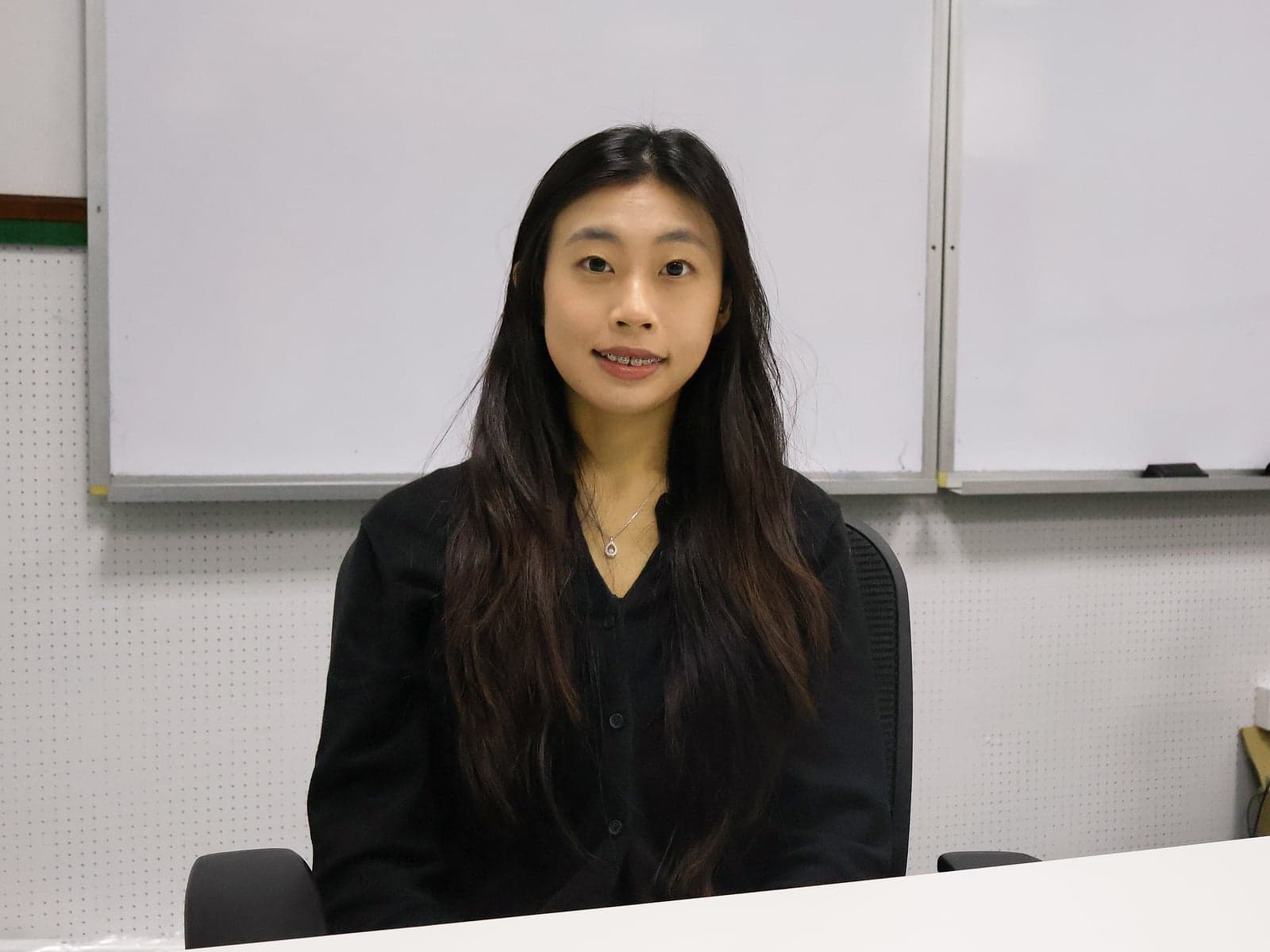
Woodlands Centre Manager & Teacher
Related Courses
Explore other courses that complement your learning journey
Frequently Asked Questions
Pure Chemistry covers more topics in greater depth, including organic chemistry, detailed stoichiometry, and advanced electrolysis. It requires stronger quantitative skills and understanding of particle theory. The practical component also demands more precision.
Not at O-Level / SEC — the requirement is set at A-Level. NUS Medicine asks for a good H2 pass in Chemistry plus an H2 pass in either Biology or Physics (NUS's central admissions table lists the Chemistry bar as a plain H2 pass; the medical school's own prerequisites page states a good H2 pass, so plan for the stricter one), while NTU Lee Kong Chian School of Medicine asks for a pass in H2 Chemistry plus a pass in H2 Biology or Physics, NUS Dentistry asks for an H2 pass in Chemistry and either Biology or Physics, and NUS Pharmacy asks for a very good H2 Chemistry pass alongside a very good pass in H2 Biology, Physics, Mathematics or Further Mathematics. Pure Chemistry matters because it is the usual route into H2 Chemistry at JC, which is the subject those courses actually require.
We teach systematic approaches: identifying elements, balancing polyatomic ions first, then adjusting coefficients methodically. Regular practice with immediate feedback helps students develop accuracy. Most students improve significantly with consistent drilling. Read our secondary Science tuition guide.
We combine topical mastery with timed practice papers, exam technique coaching, and detailed feedback. Our small groups of 3-6 ensure each student gets individual attention on their weakest areas, with targeted revision and error pattern analysis to maximise improvement before the exam. For O-Level / SEC Chemistry (K324, formerly 6092), we strengthen understanding of atomic structure, chemical bonding, organic chemistry, and quantitative analysis. Learn more in our secondary Science tuition guide.
Chemistry lessons at our Bishan and Woodlands centres run weekly for 2 hours, with classes of 3-6 students. As Sec 3 marks the start of the O-Level / SEC syllabus, our small class sizes let tutors closely track each student's progress and address gaps early. Check our pricing page for packages and what is included, or book a trial class — free (usually $18).
Yes — our Bishan centre is a 10-minute walk from Bishan MRT (Circle and North-South Lines). Sec 3 students from Whitley Secondary, Guangyang Secondary, Kuo Chuan Presbyterian Secondary and surrounding schools attend our Chemistry classes. We also have a Woodlands centre for families in the North. Book a trial class at Bishan.
Our small-group classes are capped at 6 students and typically run 3 to 6, so every learner receives close guidance, timely feedback, and ample practice.
Each lesson is 2 hours, providing ample time for thorough coverage of topics and interactive learning.
Yes. All lesson materials and worksheets are provided and included in the fees. Students should bring regular stationery and, where applicable, school textbooks/workbooks for reference.
Yes. Our materials and pacing align with the MOE syllabus. External syllabuses (e.g. IGCSE, IB) are available upon request.
This course covers G3 (mapped from Express standard) Chemistry under Singapore's Full Subject-Based Banding (Full SBB). We also support students at other G-levels. Contact us to discuss your child's current G-level and the best class arrangement.
Helpful Resources for Parents
In-depth guides on preparation strategies and learning tips
Secondary Science Tuition: Physics, Chemistry, Biology
Secondary science tuition guide for Singapore students. Pure Physics, Chemistry, Biology, and Combined Science strategies for O-Level / SEC exams.
Read more →O-Level Science Preparation for Bishan Secondary Schools
O-Level Science strategies for Bishan students — Physics, Chemistry, Biology, Combined Science at Kuo Chuan, Peirce, and Whitley Secondary.
Read more →O-Level Science for Woodlands: Physics, Chemistry, Biology
O-Level Science guide for Woodlands — Pure Physics, Chemistry, Biology and Combined Science formats, school profiles, and common challenges.
Read more →Science Practical and Lab Exam Prep in Singapore
Science practical exams test observation, measurement, and data analysis — skills that textbook study alone cannot build. Here is how to prepare for Physics, Chemistry, and Biology practicals.
Read more →Combined Science vs Pure Science: Which to Choose
Combined Science covers two subjects in one O-Level grade while Pure Sciences give separate grades. Here is how to decide which path suits your child.
Read more →Deepen Your Learning
Comprehensive topic guides covering everything in this subject area.
O-Level / SEC
Your complete guide to the GCE O-Level and upcoming SEC examinations — subject breakdowns, revision strategies, and practical tips for secondary school students in Singapore.
Browse guide →Science
Your guide to Science education in Singapore — from Primary school foundations to Secondary combined and pure sciences, including Biology, Chemistry, and Physics.
Browse guide →Study Tips & Exam Prep
Practical study tips and exam preparation strategies that work — from effective revision techniques and time management to past year paper strategies and exam day tips for Singapore students.
Browse guide →
Ready to Get Started?
Enquire now and experience our proven teaching methodology
💬 Have questions? WhatsApp us anytime — we typically respond within 2 hours
Also from Ancourage: Art classes for kids, teens & adults →