IB MYP 8 Chinese Tuition
Ancourage Academy · IB MYP · MYP 8
Content reviewed: Sep 2026
IB MYP 8 (MYP Year 3) Chinese (Mandarin) tuition at Ancourage Academy in Singapore (Bishan & Woodlands) offers intimate groups of up to 6 students, aligned with the IB Middle Years Programme framework. Weekly 2-hour lessons use our ESB methodology to develop evidence-based analysis, well-structured compositions, and clear oral reasoning. "MYP Year 3 demands greater analytical precision—students learn to justify claims with textual evidence and logical arguments," shares our curriculum director. Our approach develops confident, precise communicators.
In person at our Bishan and Woodlands centres.
What Makes Us Different
Our proven teaching methodology combines evidence-based approaches for maximum learning effectiveness
Ebbinghaus Memory Theory
Self-directed retrieval scheduling where students learn to identify their own weak areas and plan review cycles accordingly — developing the metacognitive skills essential for MYP criterion-based assessment and a confident move into the IB Diploma.
Socratic Questioning
Rigorous dialectic questioning where students must justify their reasoning and consider counterarguments — 'What evidence supports this?' and 'Where could this logic break down?' — building the analytical rigour expected in higher education.
Bruner's Scaffolding
Minimal scaffolding with maximum autonomy — tutors pose challenging problems and observe, intervening only when students are genuinely stuck — preparing students to structure their own approach to unfamiliar problems.
Key Learning Outcomes
Master Key Concepts
Deep understanding of core topics aligned with MOE syllabus
Critical Thinking
Develop analytical and problem-solving skills
Exam Confidence
Strategic exam techniques and time management
Consistent Results
Improved grades and academic performance
Course Structure
Duration
2 hours per lesson
Full coverage with interactive learning time
Class Size
3-6 students per class
Close guidance, timely feedback, and ample practice
Materials
All materials provided
No material fees — all worksheets and resources included
Curriculum Overview
- ✓Textual evidence and commentary
- ✓Argument development and clarity
- ✓Editing for precision
- ✓Oral reasoning and Q&A
- ✓Assessment readiness: the four MYP criteria, Analysing, Organizing, Producing Text and Using Language (Language and Literature), or Listening, Reading, Speaking and Writing (Language Acquisition)
What IB MYP 8 Chinese students commonly work on
- 1
Evidence-based writing — integrating quotations and textual references effectively
- 2
Argument clarity — developing logical, well-supported arguments
- 3
Precision editing — refining language for accuracy and impact
- 4
Oral reasoning — defending interpretations and responding to challenges
- 5
Criterion excellence — consistently meeting higher bands in MYP assessment
Learning Progression
Builds On
IB MYP 7 Chinese with comparative analysis and coherent structure
Prepares For
IB MYP 9 Chinese with advanced interpretation and sophisticated responses
Key Transition
Evidence-based reasoning takes precedence in MYP 8 — students construct arguments methodically, anchoring each claim in textual support and logical analysis.
“MYP’s criterion-based assessment requires a different preparation approach from traditional exams. We help students understand what each criterion actually demands and develop the analytical and communication skills that consistently earn top achievement levels.”
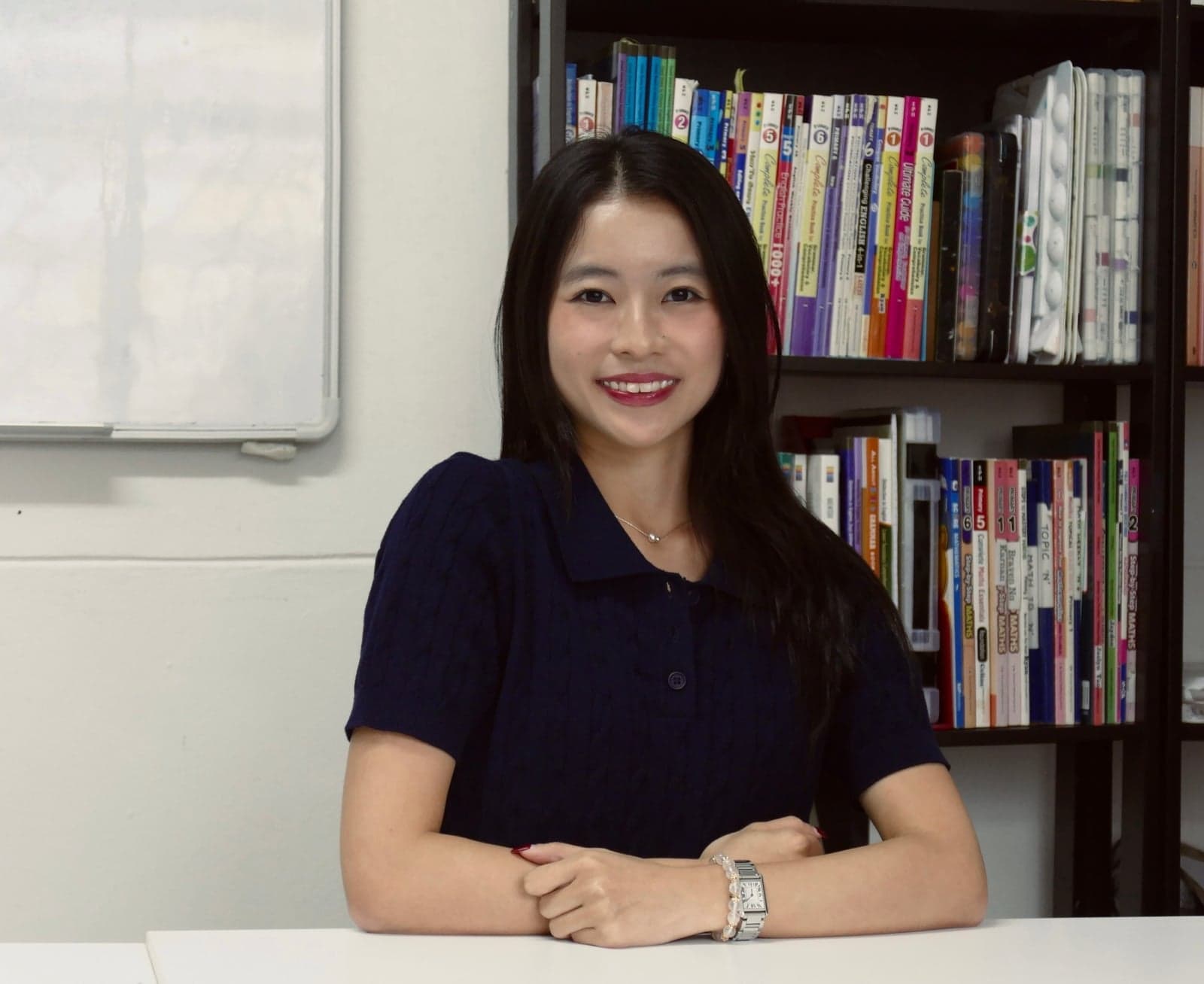
Founder & Academic Director
Related Courses
Explore other courses that complement your learning journey
MYP 8 History
Develop complementary analytical writing across humanities subjects
MYP 9 Chinese
Continue with advanced interpretation and sophisticated responses
MYP 8 Mathematics
Develop logical reasoning and problem-solving skills
MYP 7 Chinese
Review MYP 7 foundations for stronger continuity.
MYP 6 Chinese
Same subject family: MYP 6.
MYP 10 Chinese
Same subject family: MYP 10.
MYP 6 华文
Same subject family: MYP 6 (Chinese-language page).
MYP 7 华文
Same subject family: MYP 7 (Chinese-language page).
MYP 9 华文
Same subject family: MYP 9 (Chinese-language page).
Also available: MYP 10 华文
Frequently Asked Questions
MYP 8 (MYP Year 3) develops the independent research, analytical writing, and communication skills that feed the Community Project, which schools ending the MYP at Year 3 or 4 run, and the Personal Project, completed in MYP Year 5 where the school runs the full five years. Students practise formulating questions, evaluating sources, and presenting findings in structured formats. Chinese students may explore cultural themes or Chinese literature topics for their projects. Read our IB vs MOE curriculum comparison.
Students develop analytical essays, comparative responses, creative writing, and persuasive texts. They learn to adapt their writing style for different purposes and audiences while maintaining academic rigour. In Chinese, this includes 议论文 (argumentative essays) and 记叙文 (narrative essays).
Students learn to evaluate authorial choices, compare multiple interpretations, and develop their own critical perspectives. They practise supporting arguments with evidence and engaging with complex themes and ideas. In Chinese class, students examine Chinese literary techniques and cultural perspectives.
Our small-group classes are capped at 6 students and typically run 3 to 6, so every learner receives close guidance, timely feedback, and ample practice.
Each lesson is 2 hours, providing ample time for thorough coverage of topics and interactive learning.
Yes. All lesson materials and worksheets are provided and included in the fees. Students should bring regular stationery and, where applicable, school textbooks/workbooks for reference.
Yes. Our materials and pacing align with the MOE syllabus. External syllabuses (e.g. IGCSE, IB) are available upon request.
Helpful Resources for Parents
In-depth guides on preparation strategies and learning tips
IB vs MOE Curriculum: Which Path Is Right for Your Child?
IB and MOE curricula suit different learning styles and goals. Compare teaching approaches, assessment methods, and outcomes to choose the right path.
Read more →Secondary Chinese: Strategies for O-Level / SEC Success
O-Level / SEC Chinese strategies — comprehension, essay writing, and oral exam techniques for secondary students preparing for Chinese exams in Singapore.
Read more →Higher Chinese in Singapore: Worth It and How to Excel
Higher Chinese offers SAP posting advantage and JC Mother Tongue exemption but demands effort. Who should take it, how to prepare, and key strategies.
Read more →Deepen Your Learning
Comprehensive topic guides covering everything in this subject area.
Chinese
Navigate Chinese language education in Singapore — from building foundations in Primary school to excelling in Higher Chinese, including composition, comprehension, and language-use strategies.
Browse guide →Study Tips & Exam Prep
Practical study tips and exam preparation strategies that work — from effective revision techniques and time management to past year paper strategies and exam day tips for Singapore students.
Browse guide →
Ready to Get Started?
Enquire now and experience our proven teaching methodology
💬 Have questions? WhatsApp us anytime — we typically respond within 2 hours
Also from Ancourage: Art classes for kids, teens & adults →