IB MYP 8 Chemistry Tuition
Ancourage Academy · IB MYP · MYP 8
Content reviewed: Sep 2026
IB MYP 8 (MYP Year 3) Chemistry tuition at Ancourage Academy in Singapore (Bishan & Woodlands) offers focused classes capped at 6 students, aligned with the IB Middle Years Programme Sciences framework. Weekly 2-hour lessons use our ESB methodology to develop advanced chemical understanding, experimental analysis, and quantitative reasoning for MYP criterion-based assessment. "Understanding scientific principles means seeing the invisible forces that shape our world," according to our educators. Our structured approach helps students build confident chemical reasoning with precise laboratory techniques and environmental awareness.
In person at our Bishan and Woodlands centres.
What Makes Us Different
Our proven teaching methodology combines evidence-based approaches for maximum learning effectiveness

Ebbinghaus Memory Theory
Student-managed revision across the MYP Sciences strands — identifying weak topics through practice tasks and scheduling retrieval cycles accordingly — developing the self-assessment skills MYP criterion-based assessment and eAssessment reward.
Socratic Questioning
Rigorous questioning on experimental design and data interpretation — 'What are the limitations of this method?' and 'How does this finding challenge the accepted model?' — cultivating the analytical depth expected in higher-level science.
Bruner's Scaffolding
Minimal guidance on open-ended problems — tutors present unfamiliar experimental scenarios and observe, intervening only to correct fundamental misconceptions — preparing students for the independent investigation demands of advanced science.
Key Learning Outcomes
Master Key Concepts
Deep understanding of core topics aligned with MOE syllabus
Critical Thinking
Develop analytical and problem-solving skills
Exam Confidence
Strategic exam techniques and time management
Consistent Results
Improved grades and academic performance
Parents often notice:
- Greater accuracy in using scientific terms to explain chemical changes
- Increased confidence in carrying out experiments and interpreting results
- Stronger ability to connect chemistry concepts to everyday materials and environmental issues
Course Structure
Duration
2 hours per lesson
Full coverage with interactive learning time
Class Size
3-6 students per class
Close guidance, timely feedback, and ample practice
Materials
All materials provided
No material fees — all worksheets and resources included
Curriculum Overview
- ✓Structure of matter — Expanding on the particle model; understanding atoms, elements, and compounds.
- ✓Periodic table (introductory) — Learning how the periodic table organises elements and predicts properties.
- ✓Chemical reactions — Observing and representing reactions with word equations; introduction to simple chemical symbols.
- ✓Acids, bases and indicators — Investigating properties of acids and bases; using indicators to test pH.
- ✓Mixtures and separation — Exploring chromatography, distillation, and filtration; linking to practical uses.
- ✓Energy in reactions — Observing endothermic and exothermic processes; linking reactions to energy change.
- ✓Scientific inquiry — Designing experiments, collecting accurate data, and evaluating results critically.
- ✓Global connections — Linking chemistry to pollution, recycling, energy use, and sustainable development.
- ✓Assessment readiness — Building familiarity with MYP Sciences criteria: Knowing and Understanding, Inquiring and Designing, Processing and Evaluating, Reflecting on the Impacts of Science.
What MYP 8 Chemistry students commonly work on
- 1
Atomic understanding — grasping atomic structure and periodic table organisation
- 2
Chemical equations — writing and balancing word equations correctly
- 3
Practical skills — executing experiments with precision and safety
- 4
Connecting concepts — linking particle theory to observable changes
- 5
Scientific reasoning — explaining results using chemical principles
Learning Progression
Builds On
MYP 7 foundations in matter, reactions, and practical skills
Prepares For
MYP 9-10 advanced bonding, stoichiometry, and examination preparation
Key Transition
MYP 8 introduces atomic thinking — students begin to explain chemistry at the atomic and molecular level.
“The IB sciences reward inquiry as much as coverage. A student who can design a fair test and justify why they chose those variables is already doing the thing the Diploma actually rewards.”
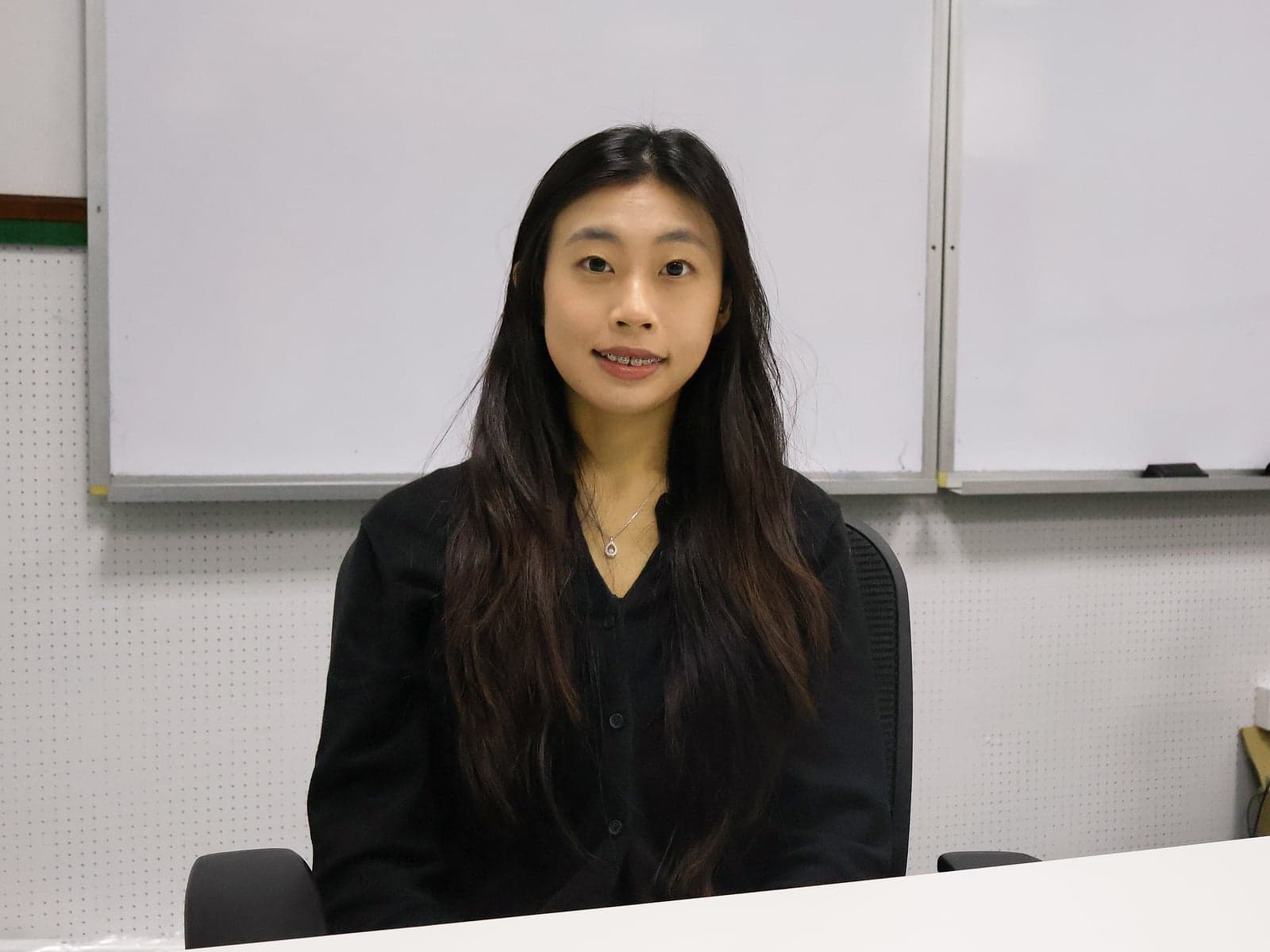
Woodlands Centre Manager & Teacher
Related Courses
Explore other courses that complement your learning journey
MYP 8 Physics
Explore physical principles that complement chemical understanding
MYP 9 Chemistry
Continue with bonding, stoichiometry, and examination preparation
MYP 8 Mathematics
Strengthen quantitative skills for chemical calculations
MYP 7 Chemistry
Review MYP 7 foundations for stronger continuity.
IB MYP 6 Chemistry
Same subject family: MYP 6.
IB MYP 10 Chemistry
Same subject family: MYP 10.
IB MYP 8 Biology
Recommends this course as a related programme.
Frequently Asked Questions
MYP 8 Chemistry develops experimental design, data analysis, and scientific communication skills valuable for chemistry-related projects — the Community Project, which schools ending the MYP at Year 3 or 4 run, and the Personal Project, completed in MYP Year 5 where the school runs the full five years. Students learn to investigate questions systematically and present findings clearly. Read our IB vs MOE curriculum comparison.
Students begin exploring atomic structure, the organisation of the periodic table, and how electron arrangement relates to element properties. This atomic-level understanding prepares them for bonding concepts in MYP 9-10.
MYP 8 Chemistry examines pollution, recycling, energy use, and sustainable development. Students learn how chemical knowledge informs solutions to environmental challenges and responsible material use.
Our small-group classes are capped at 6 students and typically run 3 to 6, so every learner receives close guidance, timely feedback, and ample practice.
Each lesson is 2 hours, providing ample time for thorough coverage of topics and interactive learning.
Yes. All lesson materials and worksheets are provided and included in the fees. Students should bring regular stationery and, where applicable, school textbooks/workbooks for reference.
Yes. Our materials and pacing align with the MOE syllabus. External syllabuses (e.g. IGCSE, IB) are available upon request.
Helpful Resources for Parents
In-depth guides on preparation strategies and learning tips
IB vs MOE Curriculum: Which Path Is Right for Your Child?
IB and MOE curricula suit different learning styles and goals. Compare teaching approaches, assessment methods, and outcomes to choose the right path.
Read more →Pure and Combined Science: O-Level / SEC Strategies
O-Level Science techniques — focused strategies for Physics, Chemistry, and Biology. Stronger answering structure and consistent exam performance.
Read more →Combined Science vs Pure Science: Which to Choose
Combined Science covers two subjects in one O-Level grade while Pure Sciences give separate grades. Here is how to decide which path suits your child.
Read more →Deepen Your Learning
Comprehensive topic guides covering everything in this subject area.
Science
Your guide to Science education in Singapore — from Primary school foundations to Secondary combined and pure sciences, including Biology, Chemistry, and Physics.
Browse guide →Study Tips & Exam Prep
Practical study tips and exam preparation strategies that work — from effective revision techniques and time management to past year paper strategies and exam day tips for Singapore students.
Browse guide →
Ready to Get Started?
Enquire now and experience our proven teaching methodology
💬 Have questions? WhatsApp us anytime — we typically respond within 2 hours
Also from Ancourage: Art classes for kids, teens & adults →