IB MYP 7 Economics Tuition
Ancourage Academy · IB MYP · MYP 7
Content reviewed: Sep 2026
IB MYP 7 (MYP Year 2) Economics tuition at Ancourage Academy in Singapore (Bishan & Woodlands) offers personalised classes of 3-6 students, aligned with the IB Middle Years Programme Individuals and Societies framework. Weekly 2-hour lessons use our ESB methodology to develop economic reasoning, resource understanding, and decision-making analysis for MYP criterion-based assessment. "Economics understanding deepens when students connect abstract concepts to everyday choices," according to our educators. Our structured approach helps students build confident economic thinking with real-world application and critical analysis skills.
In person at our Bishan and Woodlands centres.
What Makes Us Different
Our proven teaching methodology combines evidence-based approaches for maximum learning effectiveness

Ebbinghaus Memory Theory
Planned retrieval practice at expanding intervals — weekly topic quizzes, monthly mixed reviews, and term revision cycles — timed to strengthen memory just before it weakens, so knowledge stays accessible under exam pressure.
Socratic Questioning
Probing questions that surface each student's reasoning — 'Why did you choose that method?' and 'What if the question changed this detail?' — revealing gaps in understanding early so misconceptions are corrected before they compound.
Bruner's Scaffolding
Graduated support from fully guided to fully independent — tutors first model the solution, then prompt during practice, then observe silently — systematically building competence while ensuring students do not develop reliance on hints.
Key Learning Outcomes
Master Key Concepts
Deep understanding of core topics aligned with MOE syllabus
Critical Thinking
Develop analytical and problem-solving skills
Exam Confidence
Strategic exam techniques and time management
Consistent Results
Improved grades and academic performance
Parents often notice:
- Greater awareness of how everyday choices connect to economic principles
- Improved ability to explain concepts like scarcity, trade, and sustainability
- More confidence in applying basic economic reasoning to social and global issues
Course Structure
Duration
2 hours per lesson
Full coverage with interactive learning time
Class Size
3-6 students per class
Close guidance, timely feedback, and ample practice
Materials
All materials provided
No material fees — all worksheets and resources included
Curriculum Overview
- ✓Scarcity and choice — Understanding the problem of limited resources and how societies allocate them.
- ✓Needs, wants and opportunity cost — Distinguishing between needs and wants; introduction to trade-offs and decision-making.
- ✓Markets and trade — Exploring how goods and services are exchanged; introduction to supply, demand, and local/global trade.
- ✓Money and value — Understanding money as a medium of exchange; exploring how prices work.
- ✓Economic systems — Comparing different ways societies organise production and distribution (e.g., market vs planned systems).
- ✓Sustainability and resources — Linking economics to environmental stewardship and responsible use of natural resources.
- ✓Global connections — Exploring how local economic choices are connected to global issues such as poverty, inequality, and trade.
- ✓Assessment readiness — Building familiarity with MYP Individuals and Societies assessment criteria: Knowing and Understanding, Investigating, Communicating, Thinking Critically.
What MYP 7 Economics students commonly work on
- 1
Economic vocabulary — understanding and using key terms like scarcity, opportunity cost, and trade-offs
- 2
Abstract reasoning — applying economic principles to real-world situations
- 3
Decision analysis — evaluating choices from multiple stakeholder perspectives
- 4
Data interpretation — reading economic graphs and data displays
- 5
Global connections — linking local economic issues to international trade and development
Learning Progression
Builds On
Understanding of basic social and community organisation
Prepares For
MYP 8-9 deeper economic analysis and policy evaluation
Key Transition
MYP 7 introduces economic thinking — students learn to analyse choices and trade-offs systematically.
“MYP Individuals and Societies challenges students to analyse perspectives, evaluate sources, and construct evidence-based arguments — skills that are directly transferable to the IB Diploma. We develop the structured essay-writing and critical analysis techniques that help students consistently meet Criterion D expectations.”
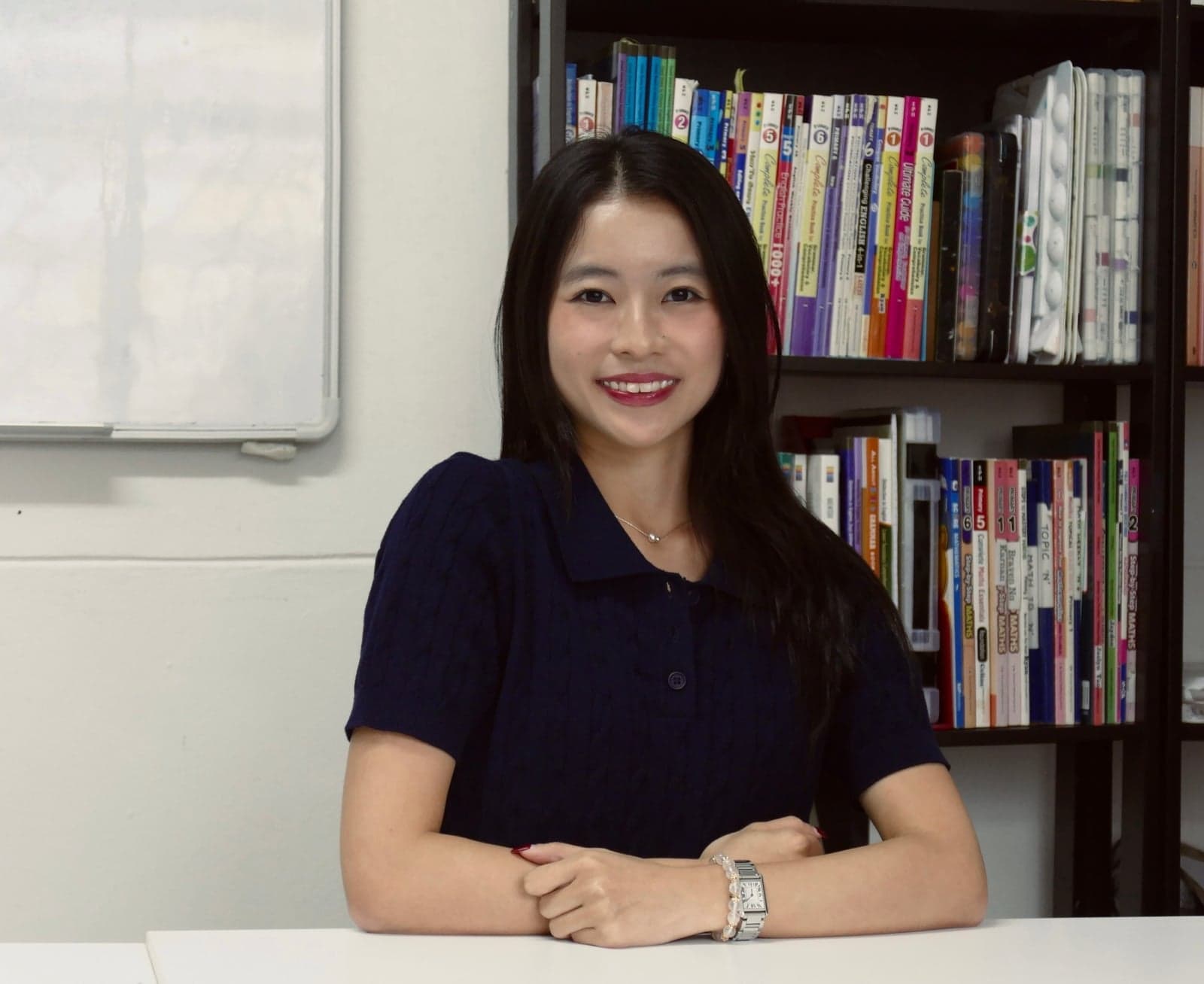
Founder & Academic Director
Related Courses
Explore other courses that complement your learning journey
MYP 7 Geography
Explore connections between economics and environmental sustainability
MYP 8 Economics
Continue with deeper economic analysis and policy evaluation
MYP 7 Mathematics
Apply quantitative reasoning to economic data and analysis
IB MYP 9 Economics
Same subject family: MYP 9.
IB MYP 10 Economics
Same subject family: MYP 10.
Frequently Asked Questions
MYP 7 introduces fundamental economic concepts like scarcity, opportunity cost, and markets. Students learn to analyse how individuals, businesses, and governments make decisions about resources and examine the impact of these choices. Read our IB vs MOE curriculum comparison.
Economics is one option within Individuals and Societies, sharing the same four assessment criteria. It develops critical thinking about social and global issues while building specific economic vocabulary and analytical skills.
MYP Economics introduces economic thinking and basic concepts that provide a foundation for IB DP Economics. Students develop analytical skills and familiarity with economic models that will be extended in the Diploma Programme.
Our small-group classes are capped at 6 students and typically run 3 to 6, so every learner receives close guidance, timely feedback, and ample practice.
Each lesson is 2 hours, providing ample time for thorough coverage of topics and interactive learning.
Yes. All lesson materials and worksheets are provided and included in the fees. Students should bring regular stationery and, where applicable, school textbooks/workbooks for reference.
Yes. Our materials and pacing align with the MOE syllabus. External syllabuses (e.g. IGCSE, IB) are available upon request.
Helpful Resources for Parents
In-depth guides on preparation strategies and learning tips
IB vs MOE Curriculum: Which Path Is Right for Your Child?
IB and MOE curricula suit different learning styles and goals. Compare teaching approaches, assessment methods, and outcomes to choose the right path.
Read more →O-Level / SEC Chinese Exam Prep Checklist: Tips Week by Week
A revision checklist for Secondary 3-4 O-Level Chinese — weekly study schedules, composition tips, oral practice, and vocabulary building methods.
Read more →How to Choose the Right Tuition Centre in Singapore
An estimated 1,000-plus tuition centres compete in Singapore. How to evaluate class size, teaching methods, tutor qualifications, and pricing transparency before enrolling.
Read more →Deepen Your Learning
Comprehensive topic guides covering everything in this subject area.
Ready to Get Started?
Enquire now and experience our proven teaching methodology
💬 Have questions? WhatsApp us anytime — we typically respond within 2 hours
Also from Ancourage: Art classes for kids, teens & adults →