IB MYP 6 Geography Tuition
Ancourage Academy · IB MYP · MYP 6
Content reviewed: Sep 2026
IB MYP 6 (MYP Year 1) Geography tuition at Ancourage Academy in Singapore (Bishan & Woodlands) offers small groups of 3-6 learners, aligned with the IB Middle Years Programme Individuals and Societies framework. This subject runs on request rather than on a fixed weekly timetable — we confirm class and trial dates after your enquiry. Two-hour lessons use our ESB methodology to develop geographical inquiry, data interpretation, and global awareness for MYP criterion-based assessment. "Geography understanding deepens when students connect local observations to global patterns," explains our teaching faculty. Our structured approach helps students transition smoothly from PYP with confident map skills and environmental analysis.
In person at our Bishan and Woodlands centres.
What Makes Us Different
Our proven teaching methodology combines evidence-based approaches for maximum learning effectiveness

Ebbinghaus Memory Theory
Planned retrieval practice at expanding intervals — weekly topic quizzes, monthly mixed reviews, and term revision cycles — timed to strengthen memory just before it weakens, so knowledge stays accessible under exam pressure.
Socratic Questioning
Probing questions that surface each student's reasoning — 'Why did you choose that method?' and 'What if the question changed this detail?' — revealing gaps in understanding early so misconceptions are corrected before they compound.
Bruner's Scaffolding
Graduated support from fully guided to fully independent — tutors first model the solution, then prompt during practice, then observe silently — systematically building competence while ensuring students do not develop reliance on hints.
Key Learning Outcomes
Master Key Concepts
Deep understanding of core topics aligned with MOE syllabus
Critical Thinking
Develop analytical and problem-solving skills
Exam Confidence
Strategic exam techniques and time management
Consistent Results
Improved grades and academic performance
Parents often notice:
- Stronger skills in map and data interpretation
- Greater interest in environmental and societal issues
- Improved confidence in applying geographical concepts to real-world contexts
Course Structure
Duration
2 hours per lesson
Full coverage with interactive learning time
Class Size
3-6 students per class
Close guidance, timely feedback, and ample practice
Materials
All materials provided
No material fees — all worksheets and resources included
Curriculum Overview
- ✓Geographical inquiry skills — Asking meaningful questions, gathering information, and drawing evidence-based conclusions.
- ✓Map and spatial skills — Reading maps, using scale, interpreting symbols, and recognising spatial patterns.
- ✓Physical geography — Introduction to weather, climate, landforms, and natural hazards.
- ✓Human geography — Exploring population distribution, settlement patterns, and urbanisation.
- ✓Environment and sustainability — Examining human impacts on the environment and exploring solutions for sustainability.
- ✓Data handling — Interpreting graphs, tables, and diagrams; presenting information clearly.
- ✓Global connections — Relating local issues to regional and global challenges such as climate change and resource use.
- ✓Assessment readiness — Building familiarity with MYP Individuals and Societies assessment criteria: Knowing and Understanding, Investigating, Communicating, and Thinking Critically.
What MYP 6 Geography students commonly work on
- 1
Map skills — reading and interpreting maps, scales, and symbols accurately
- 2
Data interpretation — analysing graphs, charts, and geographical data
- 3
Geographical vocabulary — using correct terminology for physical and human processes
- 4
Human-environment connections — understanding how people interact with their surroundings
- 5
Global awareness — connecting local issues to wider global challenges
Learning Progression
Builds On
IB PYP exploration of environments and communities
Prepares For
MYP 7-8 deeper study of physical processes and human geography
Key Transition
MYP 6 develops geographical thinking — students learn to analyse spatial patterns and human-environment interactions systematically.
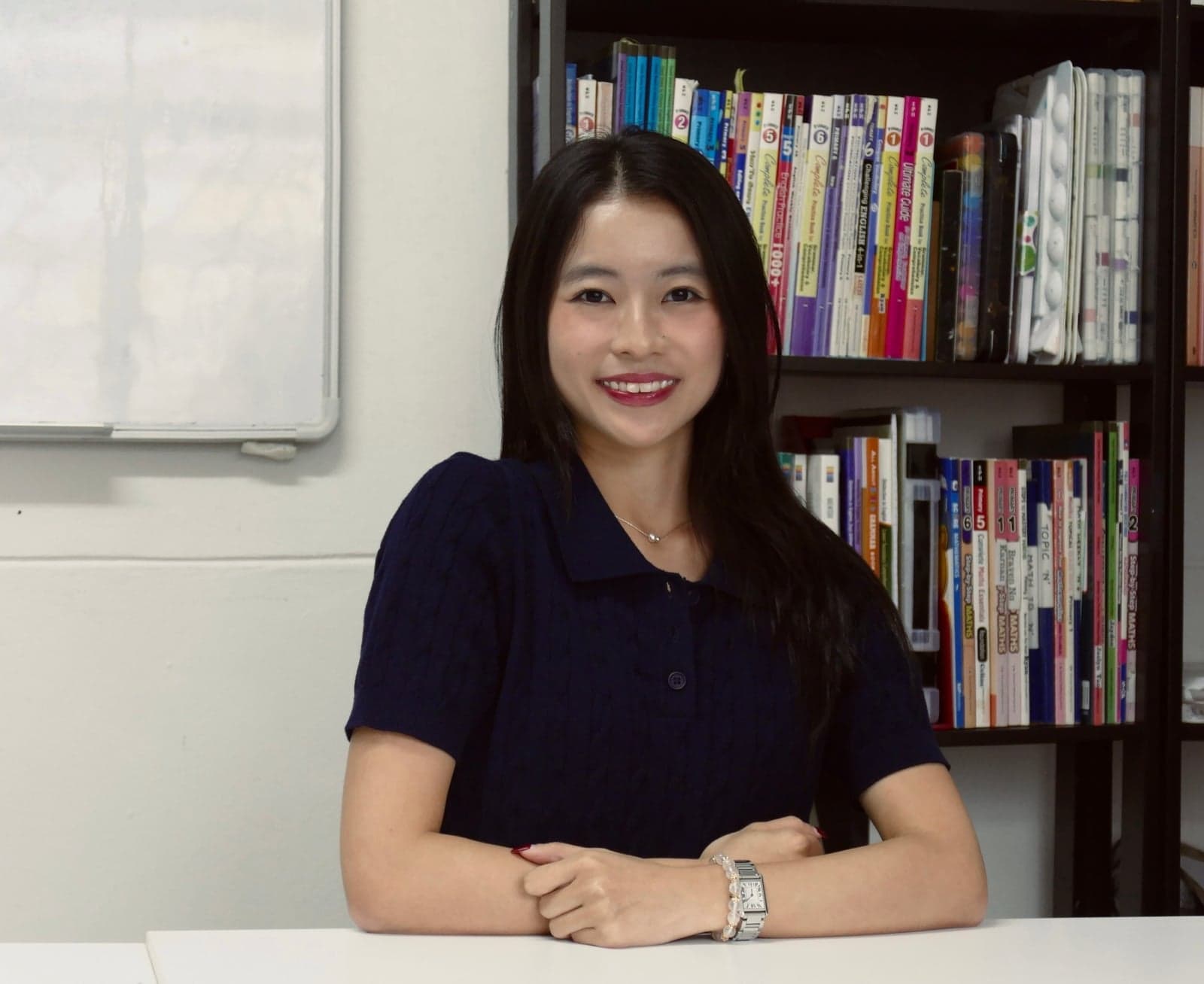
“MYP Individuals and Societies challenges students to analyse perspectives, evaluate sources, and construct evidence-based arguments — skills that are directly transferable to the IB Diploma. We develop the structured essay-writing and critical analysis techniques that help students consistently meet Criterion D expectations.”
Founder & Academic Director
Related Courses
Explore other courses that complement your learning journey
MYP 6 History
Complement geographical understanding with historical perspectives
MYP 7 Geography
Continue with deeper study of physical processes and human geography
MYP 6 Integrated Science
Connect geographical concepts to environmental science and sustainability
IB MYP 8 Geography
Same subject family: MYP 8.
IB MYP 9 Geography
Same subject family: MYP 9.
IB MYP 10 Geography
Same subject family: MYP 10.
IB MYP 6 Maths
Recommends this course as a related programme.
Frequently Asked Questions
MYP 6 introduces systematic geographical inquiry with criterion-based assessment. Students develop formal map skills, data interpretation, and analytical writing about human-environment interactions, moving beyond PYP exploration to disciplinary geography. Read our IB vs MOE curriculum comparison.
Students develop map reading, data interpretation, graphical analysis, and geographical writing skills. They learn to analyse spatial patterns, understand physical and human processes, and connect local issues to global challenges.
MYP Geography connects to global contexts like Globalisation and Sustainability, examining climate change, urbanisation, and resource management. Students develop informed perspectives on environmental and social challenges facing our world.
Our small-group classes are capped at 6 students and typically run 3 to 6, so every learner receives close guidance, timely feedback, and ample practice.
Each lesson is 2 hours, providing ample time for thorough coverage of topics and interactive learning.
Yes. All lesson materials and worksheets are provided and included in the fees. Students should bring regular stationery and, where applicable, school textbooks/workbooks for reference.
Yes. Our materials and pacing align with the MOE syllabus. External syllabuses (e.g. IGCSE, IB) are available upon request.
Helpful Resources for Parents
In-depth guides on preparation strategies and learning tips
IB vs MOE Curriculum: Which Path Is Right for Your Child?
IB and MOE curricula suit different learning styles and goals. Compare teaching approaches, assessment methods, and outcomes to choose the right path.
Read more →O-Level Humanities: History, Geography & SS Guide
O-Level Combined Humanities — compulsory Social Studies with elective History, Geography, or Literature. How to prepare for each component.
Read more →How to Choose the Right Tuition Centre in Singapore
An estimated 1,000-plus tuition centres compete in Singapore. How to evaluate class size, teaching methods, tutor qualifications, and pricing transparency before enrolling.
Read more →Deepen Your Learning
Comprehensive topic guides covering everything in this subject area.
Ready to Get Started?
Enquire now and experience our proven teaching methodology
💬 Have questions? WhatsApp us anytime — we typically respond within 2 hours
Also from Ancourage: Art classes for kids, teens & adults →